
Divine India · Spiritual Places
Spiritual Places in India

By Beauty of Bharat — India travel guide, every place, every flavour.
Guides covering all 36 States and UTs, researched from official sources and checked at publish time. Corrections welcome — see About Beauty of Bharat.
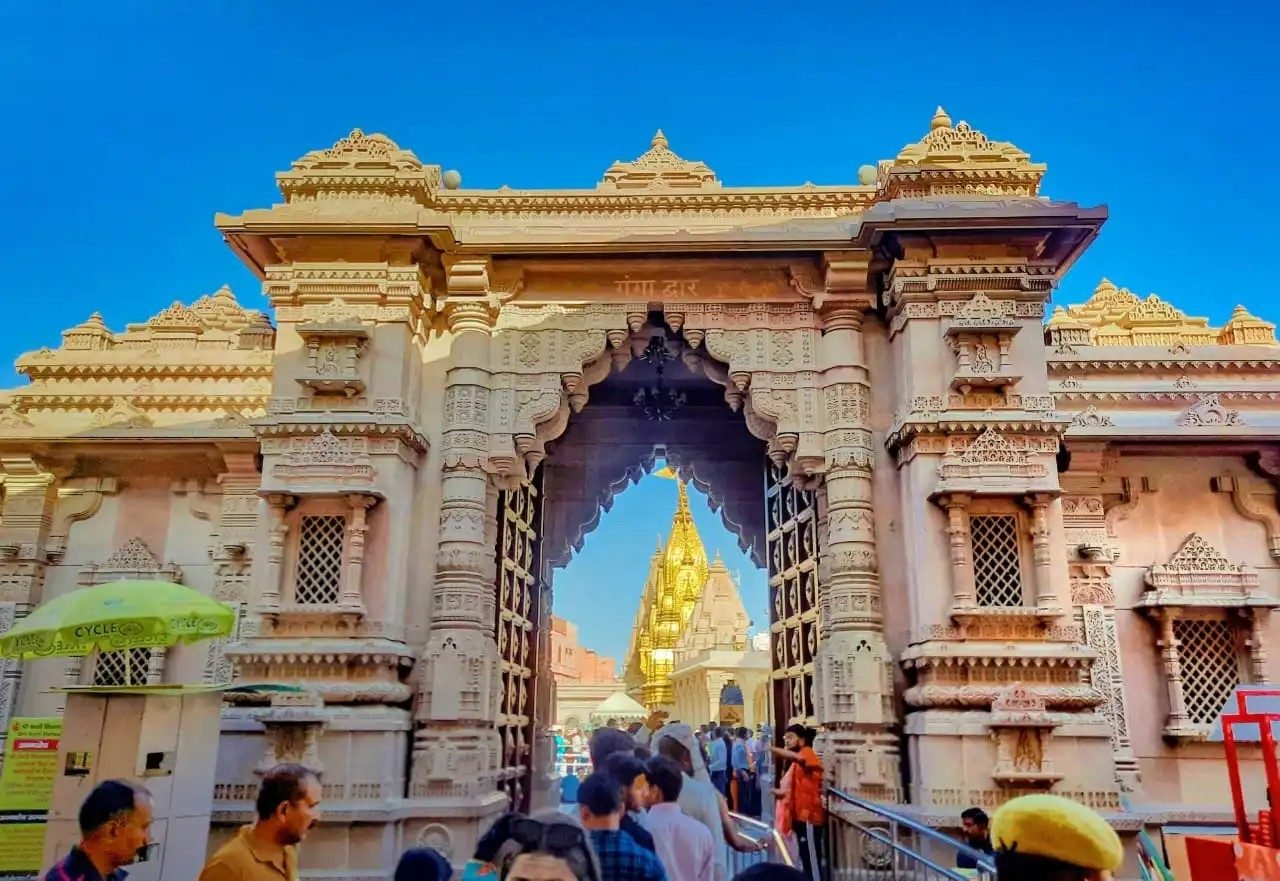
India’s spiritual places are not a niche. At the FHRAI convention in September 2025, government figures put Varanasi at around 11 crore visitors against Goa’s 1 crore, and Agoda’s India head said Tirupati was the most-searched Indian town on Agoda in early 2025. Pilgrimage is India’s biggest travel story — and this section is our way into it, one verified guide at a time.
The four guides below are the ones with their facts fully verified: the Char Dham yatra, the twelve Jyotirlingas, Bodh Gaya and the Golden Temple. Each guide says what the place is, who it suits, what it costs where that is officially stated, and what to check before you travel. Where a date has not been announced, or a rule is still contested, the guide says so instead of guessing. More guides are coming — Kamakhya, Vaishno Devi, Kalighat, the Buddhist circuit, the Jain temples, the Sufi shrines, Hemkund Sahib, Bom Jesus and Velankanni are all named below.
At a glance
- Guides in this section: 4 built, 9 more coming
- Best season: October to March for most places at low altitude
- High Himalaya: Char Dham and Hemkund Sahib, May to June and September to October
- Entry: rules vary by place — read the entry-rules box on the Divine India hub before you book
- Photography: banned inside the sanctum almost everywhere
Spiritual places in India: the guides
 Spiritual PlacesNew
Char Dham Yatra
Yamunotri, Gangotri, Kedarnath and Badrinath — the four Himalayan dhams in one yatra, written for the 2027 season. Registration is mandatory and free, and Kedarnath is the highest and hardest leg: a 16 km trek from Gaurikund.
Uttarakhand · 2027 season
 Spiritual PlacesNew
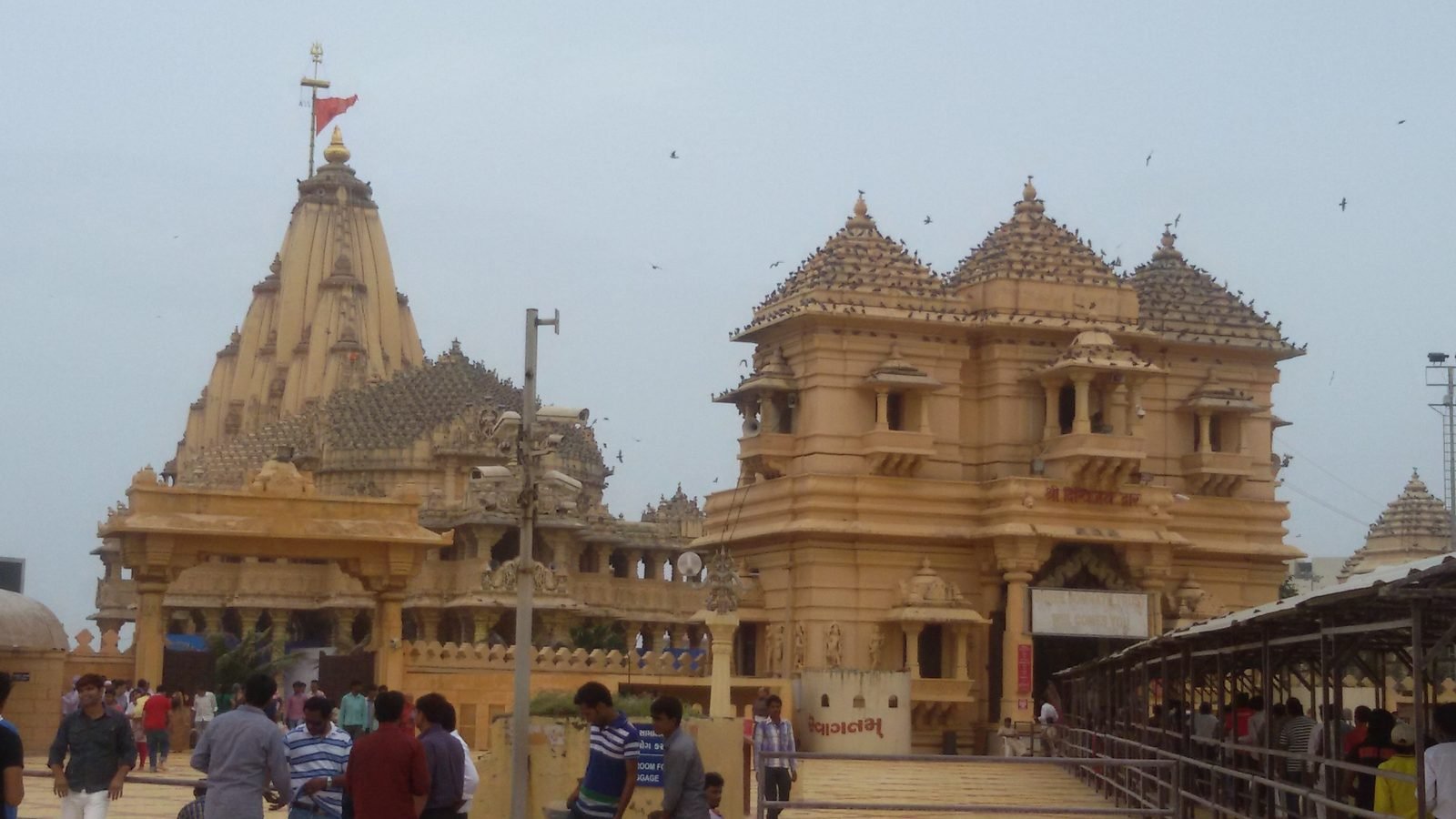
12 Jyotirlingas in India
All twelve Shiva shrines in the traditional order, from Somnath on the Arabian Sea to Rameshwaram at the southern tip. Kedarnath is the only seasonal, trek-only one; Kashi Vishwanath admits foreign visitors.
12 temples · 8 states
 Spiritual PlacesNew
Bodh Gaya
Where the Buddha attained enlightenment under the Bodhi Tree — a UNESCO World Heritage site since 2002. The complex is open 05:00–21:00 daily with free entry, and phones and cameras are prohibited inside.
Bihar · UNESCO since 2002
 Spiritual PlacesNew
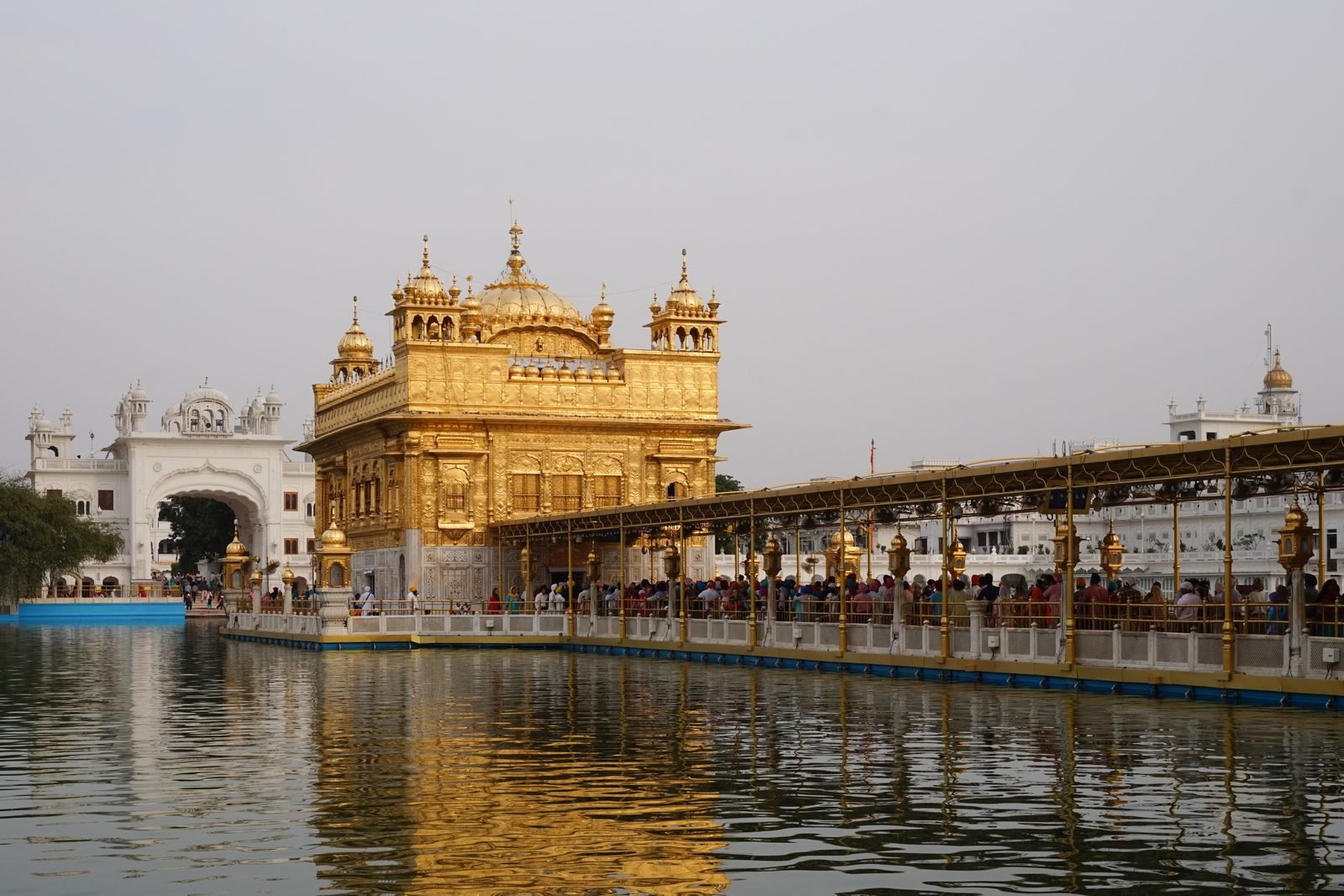
Golden Temple, Amritsar
The spiritual heart of Sikhism — four doors open to all, continuous kirtan, and a free langar that feeds tens of thousands every day. Open 24 hours, 365 days, with no ticket or booking.
Amritsar, Punjab · Open 24 hours
What to know before you visit
Dress and etiquette. Shoes come off in every temple, gurdwara, mosque, dargah and monastery — often for the whole compound. Shoulders and knees stay covered everywhere; heads are covered in gurdwaras and dargahs, for men and women alike. No alcohol or tobacco on religious premises, and no leather in Jain temples or at the Golden Temple. At the ghats of Varanasi, do not photograph cremations.
Entry rules are changing. In March 2026 the Badrinath-Kedarnath Temple Committee resolved to bar non-Hindus from the 47 temples it runs, including Badrinath and Kedarnath; Sikhs, Jains and Buddhists are exempt, and later reports say non-Hindus must submit an affidavit affirming faith in Sanatan Dharma. How the rule is applied to foreign visitors at the gate is unclear, and the state government had made no decision of its own when the resolution passed. Separately, the Madras High Court (Madurai Bench, 23 October 2026) barred non-Hindus who do not sign a reverence undertaking from Agamic temples in Tamil Nadu. Both are flagged as check-before-you-travel, never as settled law — the full wording is in the entry-rules box on the Divine India hub. Many places welcome everyone with no test at all: the Golden Temple, both dargahs in this section, both churches, Bodh Gaya and the Buddhist sites, and the Jain temples.
Photography. Photography is banned inside the sanctum almost everywhere. At Bodh Gaya the ban goes further: phones, cameras and laptops are prohibited inside the whole Mahabodhi complex, with free storage at the entrance. At the Golden Temple photography is allowed on the outer parikrama around the pool, but strictly prohibited inside the inner sanctum and on the causeway. Do not photograph people bathing or eating langar.
English. English is strongest at Bodh Gaya, Sarnath and Varanasi, where licensed guides work in English, French and Russian, and at the Golden Temple, where free English booklets and an English-signed langar are part of the visit. At the Char Dham temples, Hemkund, Kamakhya, Kalighat, the Jain hill climbs and Ajmer, English help is operator-dependent, not guaranteed — the guides say so where it matters.
More guides coming
These pages are researched and queued. They will be built one at a time, each with its own verified photo — no page goes up without one.
- Kamakhya Temple, Guwahati — the foremost Tantric peetha. The sanctum has no idol: the Goddess is worshipped as a stone over which a natural spring flows. The Ambubachi Mela closes the sanctum for around three days every June.
- Vaishno Devi, Katra — the cave shrine of the Mother Goddess as three natural rock pindis. The Shrine Board recorded 94.83 lakh pilgrims in 2024. It is not in the classical 51-peetha or 18-peetha lists, whatever devotees call it.
- Kalighat Kali Temple, Kolkata — one of the four Adi Shakti Peethas, on the Adi Ganga. The present temple was built in 1798–1809, and a major renovation was completed in 2024.
- Buddhist Circuit — Sarnath, where the Buddha gave his first sermon and which became a UNESCO World Heritage site in 2026, India’s 45th; Kushinagar, where he attained Mahaparinirvana; Rajgir and Nalanda, the great monastic university and UNESCO site since 2016.
- Jain temples — Palitana, the holiest Svetambara tirtha, climbed barefoot up 3,750–3,800 stone steps; Shravanabelagola and its 57-ft monolithic Bahubali; Ranakpur, famed for its 1,444 pillars; and the marble Dilwara temples of Mount Abu.
- Sufi shrines — Ajmer Sharif, the tomb of Khwaja Moinuddin Chishti (d. 1236), and Nizamuddin Dargah in Delhi, open 05:00–22:30 daily with qawwali every Thursday evening. Both welcome visitors of every faith.
- Hemkund Sahib — the Sikh pilgrimage at 4,329 m beside a glacial lake, reached by a steep 6 km climb from Ghangaria. The season runs late May to early October.
- Basilica of Bom Jesus, Old Goa — the Jesuit church of 1594–1605, part of the UNESCO “Churches and Convents of Goa” inscription of 1986, holding the relics of St Francis Xavier.
- Velankanni, Tamil Nadu — the Basilica of Our Lady of Good Health on the Bay of Bengal, raised to minor basilica in 1962, with its annual feast from 29 August to 8 September.
Inside the four guides
Char Dham Yatra. The Chota Char Dham runs west to east across Garhwal: Yamunotri, Gangotri, Kedarnath and Badrinath. Do not confuse it with the Bada Char Dham — Badrinath, Dwarka, Puri and Rameshwaram, the four corners of India. Yamunotri, for the goddess Yamuna, sits at around 3,293 m with a final approach of five to six kilometres on foot from Janki Chatti. Gangotri, for the goddess Ganga, sits at around 3,048 m and is road-accessible. Kedarnath, Shiva and one of the twelve Jyotirlingas, is the highest and hardest leg at around 3,580 m, a sixteen-kilometre trek from Gaurikund that takes most walkers six to eight hours uphill. Badrinath, Vishnu as Badrinarayan, sits at around 3,133 m on the Alaknanda and is the most accessible dham. Allow ten to twelve days for the full road circuit. The 2026 season closed between 10 and 16 November — Gangotri on 10 November, Yamunotri and Kedarnath on 11 November, Badrinath on 16 November — and the 2027 dates are not yet announced, though openings are expected around Akshaya Tritiya, around 9 May 2027.
The 12 Jyotirlingas. The twelve follow the traditional order of the Dwadasha Jyotirlinga Stotram, attributed to Adi Shankaracharya: Somnath, Mallikarjuna, Mahakaleshwar, Omkareshwar, Kedarnath, Bhimashankar, Kashi Vishwanath, Trimbakeshwar, Vaidyanath, Nageshwar, Ramanathaswamy and Grishneshwar. Maharashtra has three, Gujarat and Madhya Pradesh two each. The list is not undisputed: Vaidyanath is also claimed by Parli Vaijnath in Maharashtra and Baijnath in Himachal, and Nageshwar by Aundha Nagnath and Jageshwar — Deoghar and Dwarka are the widely accepted listings, and the guide says so. October to March suits most of the twelve; Shravan, in July and August, is peak for Vaidyanath and Mahakaleshwar but very crowded.
Bodh Gaya. The Mahabodhi Temple Complex is where Siddhartha Gautama attained enlightenment under the Bodhi Tree. UNESCO calls it the holiest place of Buddhist pilgrimage in the world. The first temple was built by Emperor Ashoka in the third century BCE; the present temple dates to the fifth and sixth centuries and is one of the earliest brick temples still standing, fifty metres high, with the Vajrasana, the Diamond Throne, and a Bodhi Tree said to be a direct descendant of the original. The complex is open from around 05:00 to 21:00 daily with free entry, and dawn and evening chanting are the key hours. December and January are peak — Tibetan Monlam and teaching gatherings, hotels booking out, dawn fog and six to eight degrees.
Golden Temple, Amritsar. The sanctum sits in the Amrit Sarovar, the Pool of Nectar, with four doors open to all and continuous kirtan. The langar feeds tens of thousands daily regardless of faith, and the complex is managed by the SGPC. The sanctum routine is seasonal — in winter the doors open at around 03:00, the morning Palki Sahib leaves the Akal Takht at around 05:00 and the evening Palki Sahib leaves the sanctum at around 21:45; in summer the morning is around 04:00 and the evening around 22:30 to 23:00 — so check the SGPC daily routine for the month of your visit rather than relying on one fixed time. The best hours are 04:00 to 07:00 and after 21:00; 16:00 to 19:00 is the most crowded. Amritsar’s Sri Guru Ram Dass Jee International Airport is around 11 km from the city. The temple is on UNESCO’s Tentative List — not inscribed, so do not call it a World Heritage Site.
Frequently asked questions
What are the most visited spiritual places in India?
By the numbers, Varanasi leads: government figures quoted at the FHRAI convention in September 2025 put the city at around 11 crore visitors, against Goa’s 1 crore. Vaishno Devi recorded 94.83 lakh pilgrims in 2024, and Tirupati was the most-searched Indian town on Agoda in early 2025. The Golden Temple, Bodh Gaya and the Char Dham dhams draw lakhs every season.
When is the best time to visit spiritual places in India?
October to March for almost everything at low altitude. May to June and September to October for Char Dham and Hemkund Sahib. December to January is the Buddhist peak at Bodh Gaya — book ahead and expect dawn fog. Avoid April to June on the plains, when afternoons approach 40–45°C, and July to September in the hills, when the monsoon brings landslide and road-closure risk.
Can non-Hindus visit temples in India?
Many sacred places welcome everyone with no test: the Golden Temple, both dargahs, both churches, Bodh Gaya and the Buddhist sites, and the Jain temples. Two rules are contested and must be checked before you travel: the Badrinath-Kedarnath Temple Committee’s March 2026 resolution on its 47 temples, and the Madras High Court’s October 2026 ruling on Agamic temples in Tamil Nadu. For other temples, no specific restriction has been verified — check at the gate.
Is photography allowed inside temples in India?
Almost never inside the sanctum. At Bodh Gaya, phones, cameras and laptops are prohibited inside the whole Mahabodhi complex. At the Golden Temple, photography is allowed on the outer parikrama but strictly prohibited inside the inner sanctum and on the causeway. Exteriors and courtyards are usually fine — ask before photographing people.
Do I need to register for the Char Dham Yatra?
Yes. Registration is mandatory and free for every pilgrim, foreigners included, on the Uttarakhand Tourist Care portal or its app. Carry the registration letter — unregistered pilgrims are stopped at checkpoints. The 2026 season has closed; the 2027 dates are not yet announced.
Plan the journey: Kedarnath trek · How to reach Kedarnath · How to reach Badrinath · Varanasi · Bodh Gaya · Amritsar · Treks in India · Best time to visit India · Divine India