
Festival Guide · Gujarat
Rann Utsav 2026–27: Winter in the White Desert
By Beauty of Bharat — India travel guide, every place, every flavour.
Guides covering all 36 States and UTs, researched from official sources and checked at publish time. Corrections welcome — see About Beauty of Bharat.
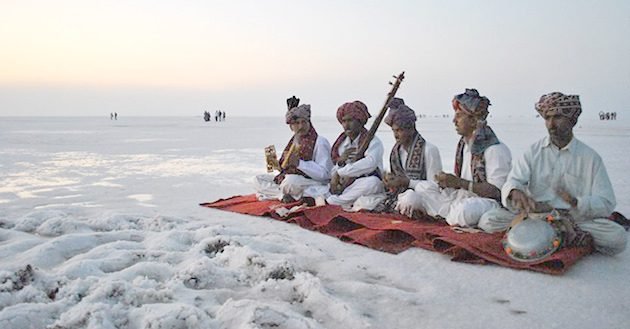
The Great Rann of Kutch is one of the world's largest salt deserts — a flooded marsh in the monsoon that dries, each winter, into a blinding white plain running to the horizon. On its edge at Dhordo village, Gujarat Tourism raises a seasonal Tent City and holds Rann Utsav: four months of folk music, craft bazaars, desert excursions and, on full-moon nights, a landscape that glows silver under the moon like snow under lamplight.
The 2026–27 season runs from 1 November 2026 to 7 March 2027. Unlike most festivals on this page, the Rann is not a single week but a season — the planning art is choosing your nights, and the full-moon windows (around 24 November, 23 December, 22 January and 20 February) are the ones that book out first.
Rann Utsav at a Glance
| Next edition | 1 November 2026 – 7 March 2027 (full season; full-moon nights are the marquee dates) |
| Main venue | Rann Utsav – The Tent City, Dhordo, on the White Rann |
| State | Gujarat |
| Best for | Couples, photographers and first-time Kutch travellers timing a full-moon night |
The Story Behind Rann Utsav
Rann Utsav began in 2005 as a three-day festival, part of Kutch's revival after the devastating 2001 earthquake — a way to bring the world's attention (and income) back to the district's weavers, embroiderers, bell-makers and musicians. It worked: the festival grew into a four-month season, Dhordo was named among the world's best tourism villages by UN Tourism, and the tent city model became India's template for seasonal festival tourism.
The festival's real subject is Kutchi culture. The region's communities — Rabari, Ahir, Meghwal, Mutwa and others — produce some of India's great crafts: Rogan painting, Ajrakh block printing, mirror-work embroidery, copper bells, lacquered wood. The Utsav puts those makers in its bazaar every night, against a soundtrack of Sindhi and Kutchi folk — Sufi songs, bhajans and the desert's own instruments.
When It Happens: Dates & How They Are Set
The season's dates are set by Gujarat Tourism and the Tent City operator: 1 November 2026 to 7 March 2027, confirmed on the official Rann Utsav booking site. Within the season, the hierarchy is simple. Full-moon nights are the signature experience — moonlight on white salt is the image the festival is famous for — and the nights around them carry premium demand. The Diwali week (from 8 November) and the Christmas–New Year stretch are the busiest periods; mid-January to February offers the coldest, whitest desert with slightly thinner crowds.
Daylight matters too: the Rann excursions run at sunset and sunrise, when the salt plain turns gold and pink. A two-night stay gives you one sunset, one full day for Kutch excursions, and — if you have timed it right — one moonlit night.
What Happens: Highlights & Where to Be
The White Rann itself, at three times of day: sunset, when the plain burns amber and the crowds gather at the viewing points; full-moon night, when you can walk out onto the salt under a silver sky; and dawn, near-empty and blue-white. Entry to the Rann requires a permit, arranged at the Bhirandiyara checkpost or online — the Tent City packages handle it for their guests.
Give a day to Kutch beyond the salt: Kala Dungar, the Black Hill, Kutch's highest point, with its magnetic anomaly and a 400-year-old temple fed by jackals; the craft villages of Nirona (Rogan art), Nakhatrana and Hodka; and Bhuj, with the Aina Mahal palace and the region's museums. Mandvi's beaches and shipbuilding yards make another fine day if you have three nights.
Inside the Tent City, the evenings are the festival: folk performances on the main stage, the craft bazaar and food courts, camel carts and cultural troupes. The standard pattern — arrive, sunset on the Rann, dinner, cultural night, moonlit walk — is well honed, and the stargazing from the dark desert edge is superb on moonless nights.
How to Attend
Bhuj is the gateway: flights from Mumbai and Delhi, trains from across western India, then about 80 km (under two hours) by road to Dhordo — Tent City packages include transfers from Bhuj. Routes are in our Kutch transport guide and bases, from Bhuj hotels to village homestays, in the stay section. Staying outside the Tent City is possible (resorts and homestays around Dhordo and Hodka), but only Tent City guests are inside the festival campus.
Entry to the festival grounds is through booked accommodation or day-visit arrangements, not a walk-up ticket — this is the one festival on this page where the stay is the ticket. Book full-moon and holiday windows months ahead. Carry serious warm clothing: desert winter nights drop close to freezing, and the moonlit walk is colder than it looks in photographs.
Good to Know Before You Go
The Rann is a sensitive border district (Pakistan is across the salt): carry government ID at all times, expect permit checks, and do not wander off the designated Rann areas or fly drones without permission — photography of the salt and festival is fine, border infrastructure is not a subject. The white plain is blinding at midday (sunglasses are essential) and featureless — stay with your group on night walks. For the wider region, see our Kutch destination guide and the Gujarat guide.
Frequently Asked Questions
When is Rann Utsav 2026–27?
The season runs from 1 November 2026 to 7 March 2027 at the Tent City in Dhordo, Kutch, as confirmed on the official Rann Utsav site. The full-moon nights — around 24 November, 23 December, 22 January and 20 February — are the most sought-after dates.
Are the dates confirmed?
Yes. The 2026–27 season dates (1 November 2026 – 7 March 2027) are published by the festival's official booking site and Gujarat Tourism. Individual activity schedules within the Tent City are set by the operator for each stay.
How many nights should I stay at Rann Utsav?
Two nights is the sweet spot: a sunset on the White Rann, a full-moon night if you time it right, one evening of the cultural programme, and a day trip to Kala Dungar or the craft villages. Add a night for Mandvi or Bhuj sightseeing.
Do I need a permit for the White Rann?
Yes — a permit is required to enter the White Rann area, checked at Bhirandiyara. Tent City packages include it; independent travellers can arrange it at the checkpost or online. Carry government photo ID.
Is Rann Utsav only at the Tent City?
The festival campus is the Tent City at Dhordo, and its cultural programme is for its guests and day visitors with arrangements. The Rann, Bhuj and the craft villages can be visited independently, and homestays and resorts outside Dhordo serve travellers who prefer them.
Keep Planning
Return to the festivals hub for the year-round calendar, read the Kutch destination guide for the full picture of the place, and browse the Gujarat travel guide. Pair this festival with Pushkar Camel Fair and Navratri Garba.