
Offbeat Place · North India
Kumbhalgarh: The Great Wall of the Aravallis

By Beauty of Bharat — India travel guide, every place, every flavour.
Guides covering all 36 States and UTs, researched from official sources and checked at publish time. Corrections welcome — see About Beauty of Bharat.
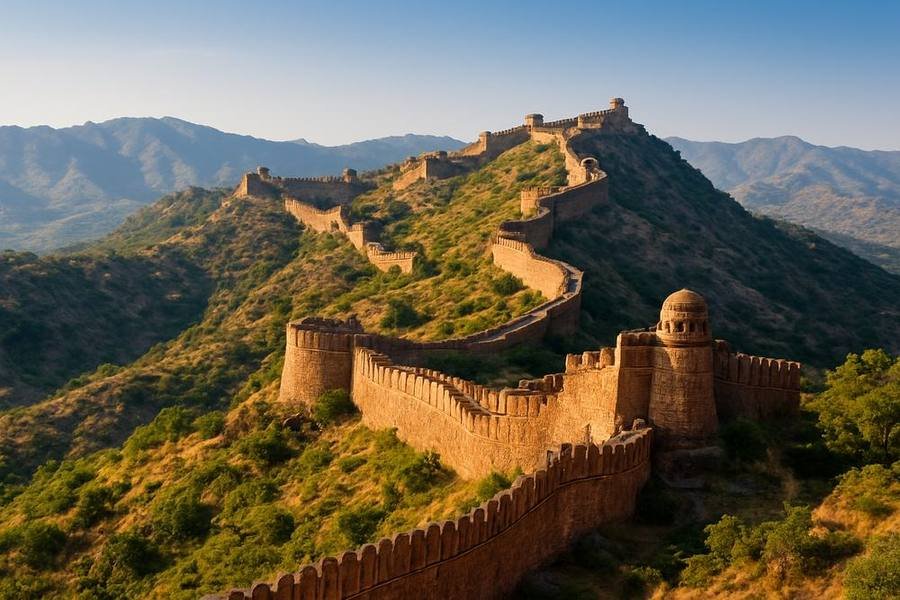
Kumbhalgarh rises in the Aravalli hills of southern Rajasthan, northwest of Udaipur. Built under Rana Kumbha in the fifteenth century, the fort was Mewar's great refuge — tradition also names it as the birthplace of Maharana Pratap. Its defences follow the ridges in a vast enclosing wall, one of the longest fort walls in the world, within which stand palaces, Jain and Hindu temples, stepwells and the remains of a whole hilltop settlement above forested valleys.
Kumbhalgarh feels offbeat beside Udaipur's lake palaces because getting here takes commitment: winding hill roads, no city attached, and far fewer visitors than Rajasthan's headline forts. Walk the ramparts and the scale slowly registers — ridge after green ridge, wall disappearing into haze, jungle below where the surrounding wildlife sanctuary protects leopards, wolves and antelope. It is a fort to hike rather than glance at, best taken slowly over a full day, ending as evening light turns the Aravallis gold. Practical walkers should carry water, start climbs in the cool of morning, and give the wall itself more time than the palace rooms — up on the ramparts, with wind moving through the pines and not another visitor in sight, Kumbhalgarh's lonely grandeur finally makes complete sense.
Kumbhalgarh at a Glance
| State | Rajasthan |
| Region | North India |
| Known for | A mighty Mewar fortress in Rajasthan's Aravalli hills, known for its massive fort and landscape: one of the… |
| Gateway | Udaipur airport & railway station |
| Best time to visit | October to March brings cool, clear weather for walking Kumbhalgarh's walls and exploring the sanctuary, with… |
| Time needed | one full day at the fort |
| State capital | Jaipur |
| More offbeat in Rajasthan | 5 more places in this guide |
Why Kumbhalgarh Stays Off the Beaten Path
A mighty Mewar fortress in Rajasthan's Aravalli hills, known for its massive fort and landscape: one of the longest fort walls in the world snaking over green ridges, a hilltop citadel of palaces and temples, and the forest sanctuary below. Nothing about Kumbhalgarh is staged for visitors. Come outside the short peak window and you may share its best hours with almost no one — that, more than any single sight, is the luxury here.
Presented honestly as lesser-known, never as an “undiscovered secret”: Kumbhalgarh is known and loved locally, and facilities are plainer than in Jaipur. Go for the place itself — the slower mornings, the unhurried conversations, the sense of Rajasthan without a crowd in front of it — and it will not disappoint.
Things to Do in Kumbhalgarh
The highlights below are the reasons to make the detour. None of them need a packed schedule — Kumbhalgarh rewards travellers who pick two or three and linger over them.
Walk the great wall
Follow stretches of the massive perimeter wall as it rides the ridges, the definitive Kumbhalgarh experience, with valleys and forest falling away on both sides.
Explore the citadel and temples
Climb through gateways to the Badal Mahal palace and the fort's Jain and Hindu temples, reading centuries of Mewar history in carved stone.
Take a sanctuary safari
Head into the Kumbhalgarh Wildlife Sanctuary below the fort, where forested Aravalli slopes shelter leopards, sloth bears, wolves, hyenas and grazing antelope.
Watch sunset from the ramparts
Stay late as light floods the hills and the wall glows; the fort at dusk, emptied of day crowds, is quietly overwhelming.
Visit nearby village Rajasthan
Stop in the small settlements and temples on the approach roads for a taste of rural Mewar life beyond the fort gates.
Best Time to Visit Kumbhalgarh
October to March brings cool, clear weather for walking Kumbhalgarh's walls and exploring the sanctuary, with the Aravallis greenest just after the monsoon. Winter mornings can be misty and cold at altitude. Summer is harsh on exposed ramparts, so start early if visiting then.
Across Rajasthan the wider season runs like this: October–March for most travel; summer is very hot in desert areas. Time Kumbhalgarh inside that window and you get the place at its best — and, this being the offbeat list, usually without the peak-season pressure of the headline stops.
How to Reach Kumbhalgarh
Kumbhalgarh is reached by hill roads from Udaipur, southern Rajasthan's main gateway with an airport and railway station. Most visitors hire a car in Udaipur and drive up into the Aravallis, often combining the fort with Ranakpur's temples on the same circuit.
Most travellers fold Kumbhalgarh into a wider Rajasthan trip rather than coming only for it — paired with Jaipur or the state guide's headline stops, it becomes the quiet chapter of the journey.
Kumbhalgarh — Transport at a Glance
| Nearest airport | Udaipur Airport (UDR), southern Rajasthan's main gateway |
| Nearest railway station | Udaipur's railway station is the railhead for the Aravalli side |
| By road | By hill roads from Udaipur; most visitors hire a car in Udaipur and drive up into the Aravallis, often combining the fort with Ranakpur's temples on the same circuit |
| Getting around | The great wall is walked in sections from the fort gates; your car links the sanctuary side |
More Offbeat Places in Rajasthan
Kumbhalgarh is one of 6 offbeat corners in the Rajasthan state guide — pair it with a sibling below for a slower, deeper trip.
Bundi
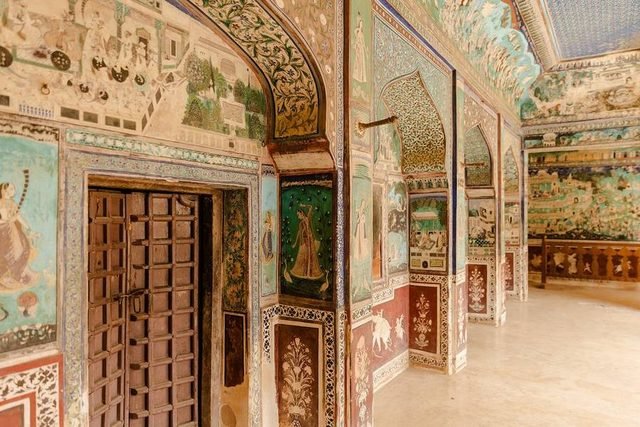
Known for: murals, stepwells and old-city charm. Nothing about Bundi is staged for visitors. Come outside the short peak window and you may share its best hours with almost no one — that, more than any single sight, is the luxury here.
Osian
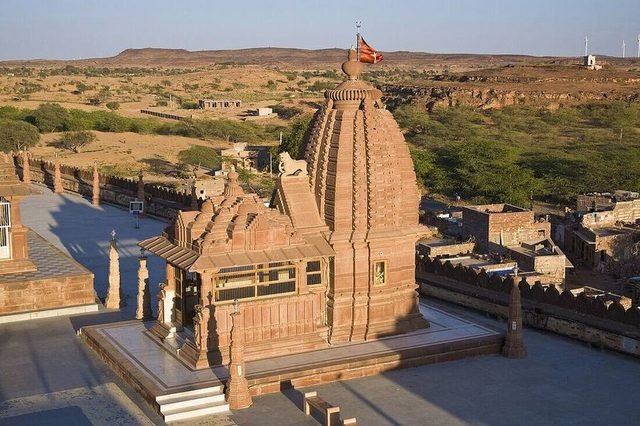
Known for: temples and desert edge. Osian has stayed off the standard circuit because it sits a little beyond the usual route through Rajasthan — close enough to reach in a day, far enough to keep its quiet.
Barmer
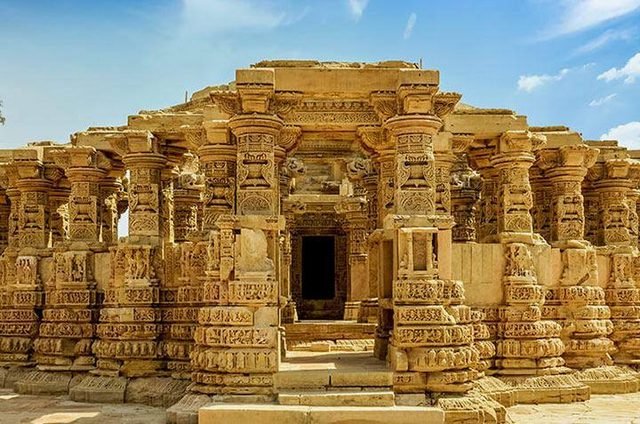
Known for: textiles and folk traditions. Barmer has stayed off the standard circuit because it sits a little beyond the usual route through Rajasthan — close enough to reach in a day, far enough to keep its quiet.
Chandelao

Known for: village/heritage stay. Nothing about Chandelao is staged for visitors. Come outside the short peak window and you may share its best hours with almost no one — that, more than any single sight, is the luxury here.
Tal Chhapar

Known for: blackbuck and birding. The headline sights of Rajasthan draw the crowds for good reason, but Tal Chhapar moves at a different pace: fewer signboards, fewer queues, and more of the state as its own people know it.
While You Are in Rajasthan
Start from the full Rajasthan travel guide for the complete picture. Headline destinations to pair with this trip: Jaipur · Udaipur · Jodhpur. And eat the state properly while you are there — Dal bati churma · Gatte ki sabzi lead the table in the Food Atlas.
Frequently Asked Questions
What is Kumbhalgarh known for?
A mighty Mewar fortress in Rajasthan's Aravalli hills, known for its massive fort and landscape: one of the longest fort walls in the world snaking over green ridges, a hilltop citadel of palaces and temples, and the forest sanctuary below. It sits in this atlas on Rajasthan's offbeat list — the state's quieter, lesser-visited side.
What is the best time to visit Kumbhalgarh?
October to March brings cool, clear weather for walking Kumbhalgarh's walls and exploring the sanctuary, with the Aravallis greenest just after the monsoon. Winter mornings can be misty and cold at altitude. Summer is harsh on exposed ramparts, so start early if visiting then. For Rajasthan as a whole, October–March for most travel; summer is very hot in desert areas.
How do I reach Kumbhalgarh?
Kumbhalgarh is reached by hill roads from Udaipur, southern Rajasthan's main gateway with an airport and railway station. Most visitors hire a car in Udaipur and drive up into the Aravallis, often combining the fort with Ranakpur's temples on the same circuit. The usual gateway is Udaipur airport & railway station.
How many days do I need for Kumbhalgarh?
Plan on one full day at the fort. Most travellers pair Kumbhalgarh with Bundi and Osian or the headline stops in the Rajasthan state guide rather than rushing it as a whistle-stop.
How long is the Kumbhalgarh wall, really?
It is celebrated as one of the longest fort walls in the world, running for many kilometres along the Aravalli ridges around the fortress. Walking even part of it, with the wall vanishing over successive hills, conveys its extraordinary scale.
Every Place. Every Flavour.
Kumbhalgarh is one of 154 offbeat places in this atlas — alongside 36 states and union territories, 188 destinations and 213 regional dishes, each with its own full guide page.
Explore all 36 states Read the blog