
Food Atlas · Kerala
Sadya: Kerala's great banana-leaf feast — dozens of dishes, one sitting

By Beauty of Bharat — India travel guide, every place, every flavour.
Guides covering all 36 States and UTs, researched from official sources and checked at publish time. Corrections welcome — see About Beauty of Bharat.

To understand the table in Kerala, begin with Sadya: a dish whose flavour carries the state's ingredients and habits in miniature. Sadya is Kerala's traditional vegetarian feast: a served-in-order banquet of many dishes on a banana leaf — a feast format, not a single recipe.
A detail worth knowing before the first bite: dishes have set positions on the leaf — chips and pickles top-left, rice centre, payasam at the end. Keep that in mind as you read on, because Sadya rewards eaters who notice how Kerala seasons, serves and shares its food.
Sadya at a Glance
| State / UT | Kerala |
| Capital / base | Thiruvananthapuram |
| What it is | Sadya is Kerala's traditional vegetarian feast: a served-in-order banquet of many dishes on a banana leaf — a feast format, not a single recipe |
| Main ingredients | rice, sambar, avial, thoran and olan, parippu and ghee, pachadi and kichadi, banana chips and sharkara varatti, payasam (usually more than one) and pappadam and banana |
| Taste | An orchestrated range: sour, salty, bitter, sweet and spicy dishes in sequence, closing with sweet payasam |
| Texture | Contrasts by design — crisp chips and pappadam, soft rice and curries, crunchy thoran and flowing payasam on one leaf |
| Usually eaten | Served as a midday feast on a banana leaf, eaten in one generous sitting |
| Occasion | Onam, weddings, temple festivals and special celebrations in Kerala |
The Story on Kerala’s Table
Sadya is the feast of Onam above all, and of Kerala weddings and temple festivals, eaten seated with the leaf laid in a set arrangement and dishes served in a traditional order and position. The Onam sadya is tied to the harvest festival and the legend of King Mahabali's annual return, which tradition celebrates with a feast for all. A full sadya can run to well over twenty items, and serving it correctly is itself a skill. That context is essential in Kerala, where a plate can signal a harvest, a religious calendar, a market habit or the meeting of communities. Sadya belongs in this atlas under Kerala because this is the setting in which its ingredients, accompaniments and meaning come together.
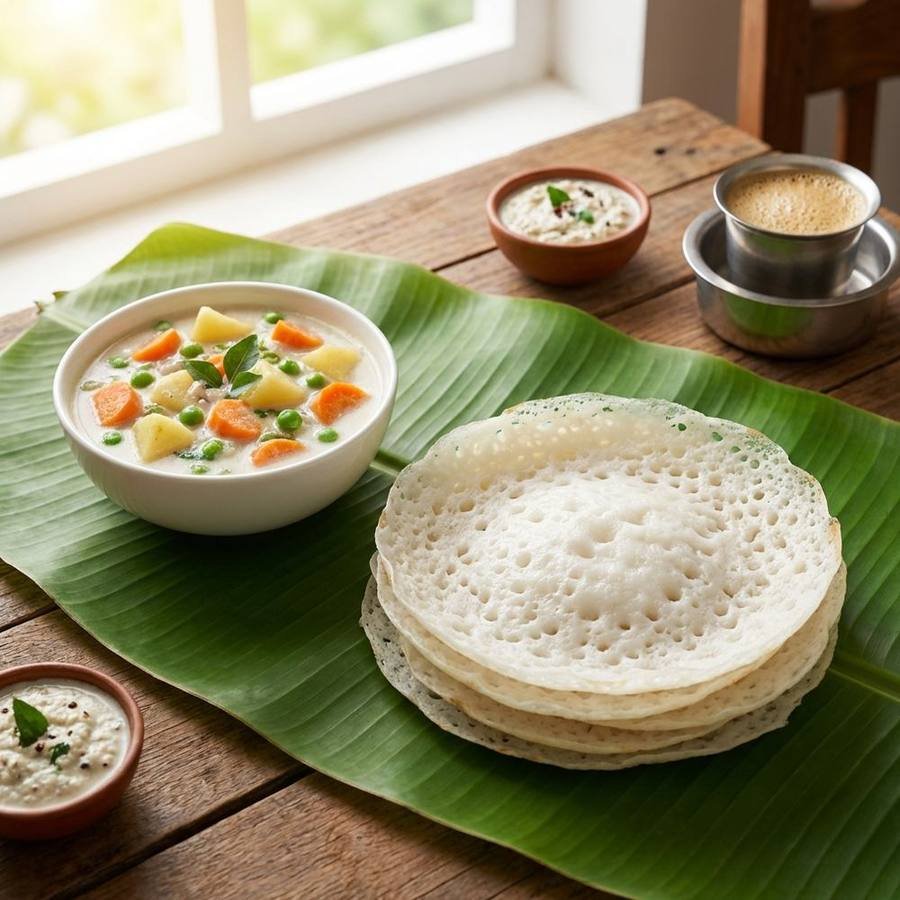
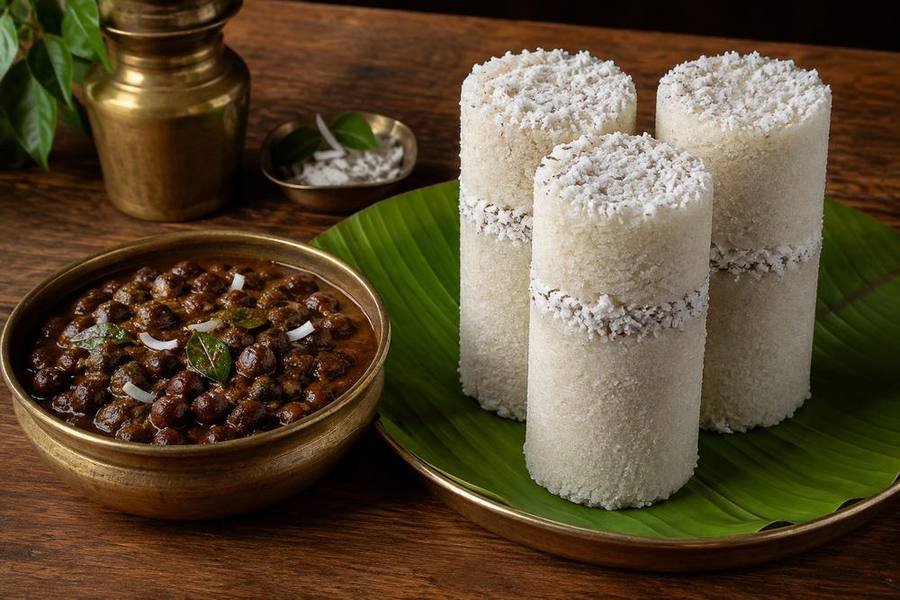
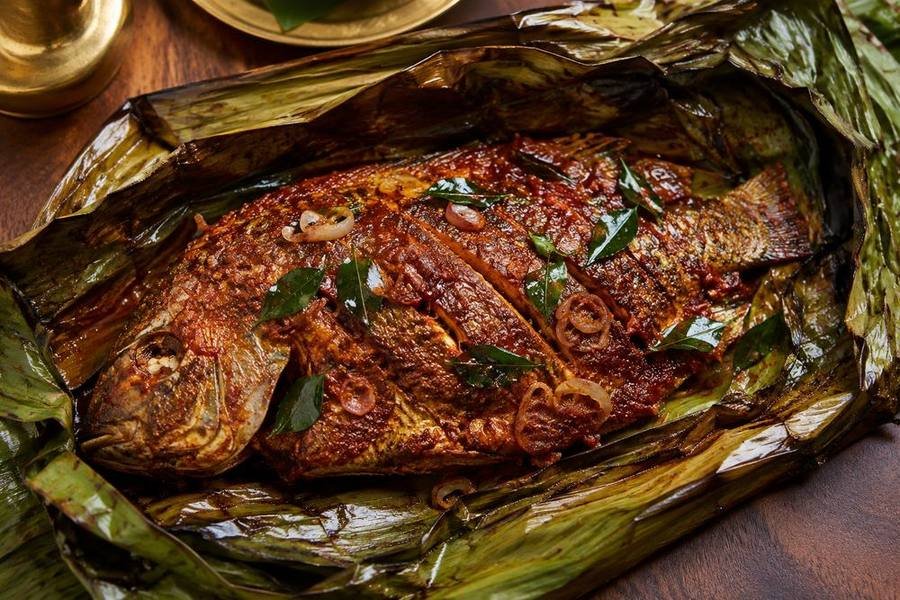
The state guide places Sadya alongside Appam & stew, Puttu & kadala and Karimeen pollichathu. Start with the Kerala travel and food guide if you are planning where this tasting fits into a route.
Taste, Texture and Ingredients
Expect an orchestrated range: sour, salty, bitter, sweet and spicy dishes in sequence, closing with sweet payasam. Think contrasts by design — crisp chips and pappadam, soft rice and curries, crunchy thoran and flowing payasam on one leaf.
The ingredient list is best read as a structure rather than a shopping list: rice, sambar, avial, thoran and olan, parippu and ghee, pachadi and kichadi, banana chips and sharkara varatti, payasam (usually more than one) and pappadam and banana.
How Sadya Is Made
Each component is cooked separately in quantity — curries, stir-fries, chutneys like inji puli, chips and payasams — then served in sequence onto the leaf over rice by experienced servers. Diners eat with the hand, mixing each course as it arrives, finishing with payasam over banana and pappadam. The cooking rewards attention to sequence and balance rather than a long list of additions.
When Sadya is made for a gathering, that timing also becomes social — food reaches the table as part of a shared rhythm, not as an isolated plate.
When and How It Is Eaten
Served as a midday feast on a banana leaf, eaten in one generous sitting. Its natural moment is onam, weddings, temple festivals and special celebrations in Kerala.
Kerala’s broader food culture helps explain the serving style. The state is known for backwaters, beaches and ayurveda, and its calendar includes Onam and Thrissur Pooram.
Where to Try It in Kerala
Try an Onam sadya in Kerala during the festival (August–September), or a wedding-style sadya at traditional restaurants in Kochi and Thiruvananthapuram. Do not reduce the search to the most famous address; freshness and context are better guides.
Sadya pairs naturally with time in Kochi and Alappuzha, and can sit just as comfortably beside a quieter excursion to Kumbalangi or Marayoor.
More Dishes of Kerala
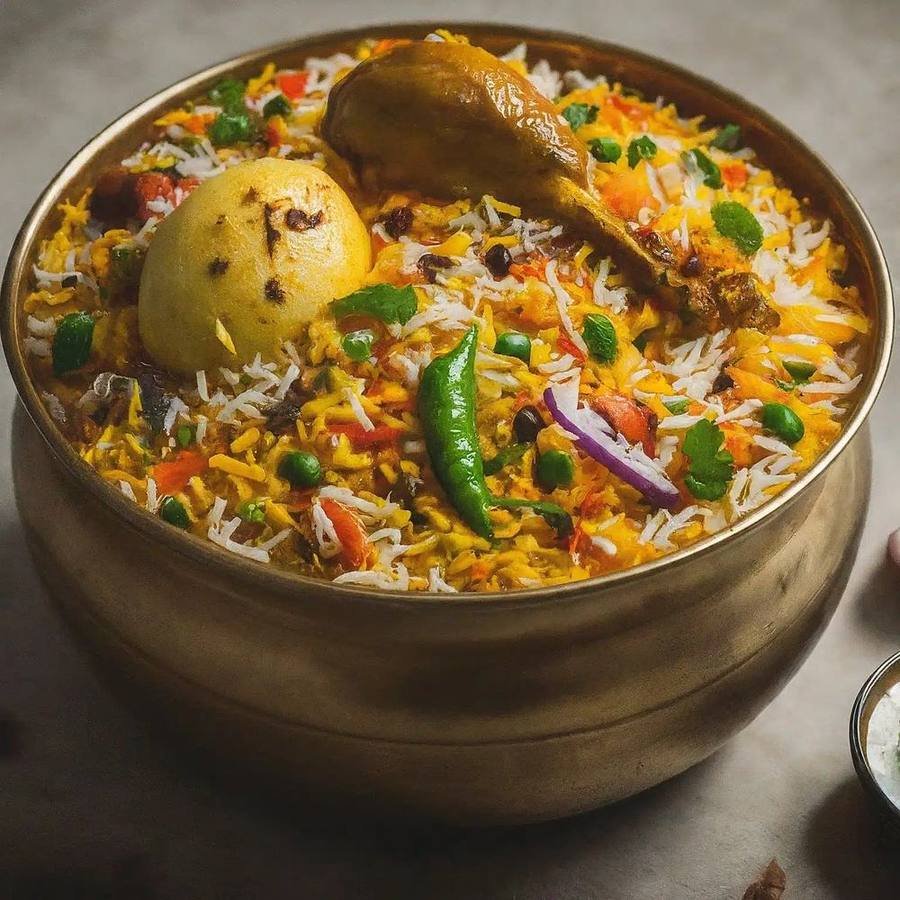
Continue through Kerala’s other signature plates and drinks below — each has its own page, photograph and story.

Frequently Asked Questions
What is Sadya?
Sadya is Kerala's traditional vegetarian feast: a served-in-order banquet of many dishes on a banana leaf — a feast format, not a single recipe. Expect an orchestrated range: sour, salty, bitter, sweet and spicy dishes in sequence, closing with sweet payasam.
What are the main ingredients in Sadya?
The defining ingredients or components are rice, sambar, avial, thoran and olan, parippu and ghee, pachadi and kichadi, banana chips and sharkara varatti, payasam (usually more than one) and pappadam and banana. Each component is cooked separately in quantity — curries, stir-fries, chutneys like inji puli, chips and payasams — then served in sequence onto the leaf over rice by experienced servers. Diners eat with the hand, mixing each course as it arrives, finishing with payasam over banana and pappadam.
What does Sadya taste like?
Expect an orchestrated range: sour, salty, bitter, sweet and spicy dishes in sequence, closing with sweet payasam. Think contrasts by design — crisp chips and pappadam, soft rice and curries, crunchy thoran and flowing payasam on one leaf. Serving pattern: Served as a midday feast on a banana leaf, eaten in one generous sitting.
When is Sadya eaten in Kerala?
Onam, weddings, temple festivals and special celebrations in Kerala. Onam is its greatest occasion, when even small eateries serve a full sadya.
Where can I try Sadya in Kerala?
Try an Onam sadya in Kerala during the festival (August–September), or a wedding-style sadya at traditional restaurants in Kochi and Thiruvananthapuram. Pair a first tasting with Appam & stew and Puttu & kadala to see how Sadya sits within the wider Kerala table.
Every Place. Every Flavour.
Sadya is one of 6 dishes and drinks profiled from Kerala — and one of 213 regional dishes across all 36 states and union territories in this atlas.
Open the Kerala guide Read the blog