
International Travellers · From the UK
Travelling to India from the UK: e-Visa, Flights & Your First Days, Explained
From Britain, India is the friendliest long haul: eight to nine hours from London, nonstop, with an e-Visa applied for online and no consulate appointment for most travellers. The connections run both ways — family, food, cricket, history — and the practical questions are the same whichever brings you: which visa, when to come, what happens at immigration, and how money and phones work when you land. This guide answers them in order.
India at a Glance for UK Visitors
| Main gateways | New Delhi (DEL) and Mumbai (BOM), plus direct London services to Bengaluru, Hyderabad and Chennai |
| Time difference | India is 4½ hours ahead of the UK in winter and 5½ ahead during British Summer Time; India never changes its clocks. |
| Currency | Indian Rupee (₹). Cards widely accepted in cities; cash for small purchases. |
| Languages | Hindi and English are official; English is spoken throughout hotels, airports and tourism. |
| Emergency number | 112 — India's single emergency number for police, fire and ambulance. |
| Best months | October to March for most of the country. |
| Power | 230V, plug types C, D and M. Type D looks like the old British round-pin plug, but modern UK square-pin plugs do not fit — pack an adapter. |
1. Visa: What UK Citizens Need
British citizen passport holders need a visa to enter India — there is no visa-on-arrival for tourism. The standard route is the e-Visa, from the Government of India's official portal, indianvisaonline.gov.in. Eligibility is by passport, on the same terms for every British citizen. The tourist e-Visa comes in three main forms:
- 30-day e-Visa — double entry; right for most first trips.
- 1-year e-Visa — multiple entry, for return visits within the year.
- 5-year e-Visa — multiple entry for regular travellers. Stays are currently capped at 180 days per calendar year for UK passport holders, and the 30-day visa cannot be extended or converted. Your conditions are printed on your approval.
How applying works
- Apply on the official portal only: fill in the form, upload a photo and your passport page, pay online.
- Apply at least 4 days before travel — the official minimum. Two to four weeks ahead is the sensible margin.
- Your passport must be valid for at least 6 months from arrival, with at least 2 blank pages.
- The approval (an ETA) arrives by email. Print it and carry it with your passport — airlines check it at boarding.
- You may be asked for a return or onward ticket and evidence of sufficient funds.
- British visitors of Indian origin may instead hold an OCI card — if you have one, travel with it and your passport and skip the e-Visa.
Alternative: for long or unusual trips, a regular paper visa is lodged via the India visa application centres in the UK (VFS Global runs centres in London, Birmingham, Edinburgh). For a straightforward holiday, the e-Visa is quicker.
2. Before You Travel: The Complete Checklist
Flights
Heathrow has nonstop flights to Delhi, Mumbai, Bengaluru, Hyderabad and Chennai (British Airways, Virgin Atlantic and Air India), with further services from Gatwick — typically 8 to 9½ hours. From Manchester, Birmingham, Edinburgh and Glasgow, one-stop routings via London, Europe or the Gulf are easy. Overnight flights land in the morning; keep day one light.
Timing
October to March is the classic window: dry, warm days in the north and beach season in the south. Christmas and New Year are peak — book early. Plan around the rains: June to September brings the monsoon to most of the country (green and quieter, but hard work for a first trip), with Ladakh and the high Himalaya the exceptions, best in summer. Cricket fans: Eden Gardens in Kolkata is the pilgrimage.
Insurance and health
- Travel insurance is essential — your EHIC/GHIC card does nothing in India. Arrange proper cover for medical care, repatriation and disruption.
- No vaccines are mandatory for direct travel from the UK. NHS Fit for Travel commonly advises hepatitis A, typhoid and up-to-date tetanus; see your GP or a travel clinic six to eight weeks ahead and ask about malaria for your route.
- Money: warn your bank. The rupee is a closed currency — you cannot readily buy it in the UK — so plan on an ATM on arrival; sterling exchanges easily in India as backup. Cards work widely in cities.
- Phone: UK networks charge steeply for India roaming — "roam like at home" does not apply. A data eSIM bought in advance, or a local SIM on arrival (passport and photo needed), costs a fraction.
- Apps to install: WhatsApp (hotels and drivers all use it), Uber and Ola, IRCTC for trains, and offline maps.
- Packing: a Type C/D/M adapter, layers for cool northern winter mornings, modest clothing for temples and mosques, medicines in hand luggage, strong sunscreen.
- Documents: passport, printed e-Visa ETA (or OCI card), first hotel's address (for the arrival form), insurance details.
3. After You Land: Your First Hours in India
Most UK flights arrive in Delhi or Mumbai. At immigration, e-Visa holders use the marked e-Visa counters — fingerprints and a photograph are captured on your first e-Visa arrival — and your passport is stamped. Complete the landing card (increasingly online) along the way.
Collect your bags and walk the customs green channel if you have nothing to declare; check current official guidance if carrying gifts or new electronics. In arrivals: SIM counters (activation may take a few hours), forex desks — change only a little here; city rates are better — and ATMs, usually the best first stop. Reach the city via the prepaid taxi counter inside the terminal, Delhi's Airport Express metro, or the signed Uber/Ola pickup areas. Decline taxis from anyone touting in the hall; official counters are indoors and signed.
Your first 24 hours: the time shift is gentle (4½–5½ hours), so a normal day works: daylight, a walk, an early night. Drink bottled or filtered water, eat freshly cooked food, and save the adventurous street stalls for day two, choosing busy stalls.
4. Getting Around, Money & Staying Comfortable
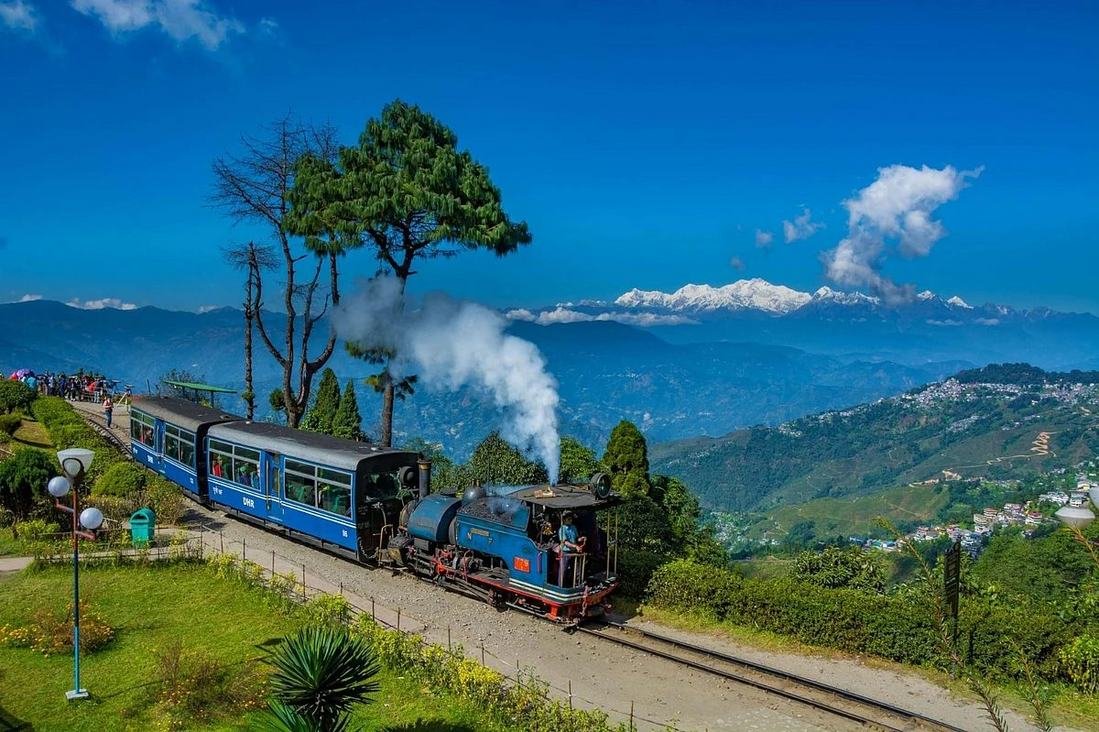
India is a subcontinent: use domestic flights for long legs and trains for classic corridors — the Delhi–Agra express takes about two hours. Book trains ahead on IRCTC, which holds a foreign-tourist quota. Heritage lines like the Darjeeling toy train are experiences in themselves. In cities, use metros, Uber/Ola, or a car-and-driver for multi-day circuits — the local norm, and good value.
Money runs on cards plus cash: cards at hotels, restaurants and bigger shops; ATMs everywhere in cities — keep small notes for autos, markets and chai stalls. UPI, India's instant payment system, generally requires an Indian bank account, so don't plan around it. Tipping: 5–10% in restaurants without a service charge; small notes for porters and drivers. Etiquette: dress modestly, shoes off at religious sites, ask before photographing people, and 112 for emergencies.
5. Your First Trip: Golden Triangle + Kerala (10 Days)
Days 1–2 · Delhi: Two unhurried halves — Old Delhi's Red Fort, Jama Masjid and Chandni Chowk's food lanes, then New Delhi's India Gate and Humayun's Tomb. Start with our state guides.
Day 3 · Delhi → Agra: The morning express train. Agra Fort in the afternoon; the Taj at sunset from Mehtab Bagh.
Day 4 · Agra → Jaipur: Sunrise inside the Taj — worth the early alarm — then the road west via Fatehpur Sikri. Our full Agra guide.
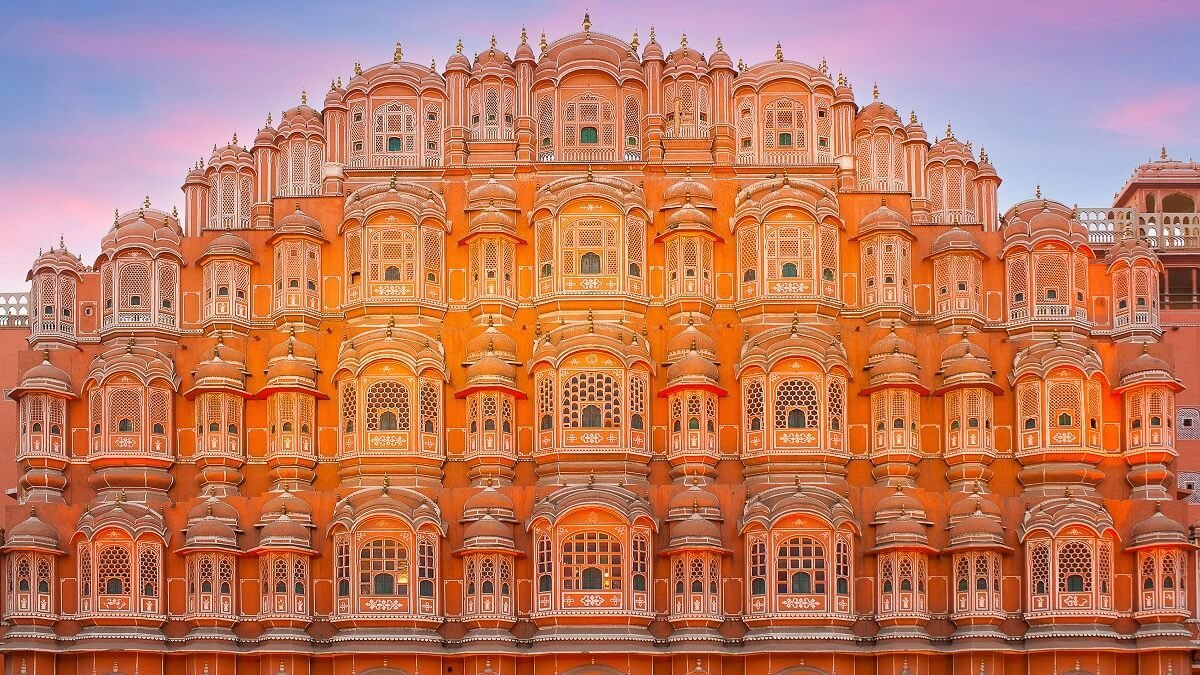
Days 5–6 · Jaipur: Amer Fort first thing, the City Palace and Jantar Mantar, Hawa Mahal, an evening in the bazaars. Our full Jaipur guide.
Day 7 · Jaipur → Udaipur: A short flight to the lake city — lake palaces, a sunset boat ride, old-city lanes. Our Udaipur guide.
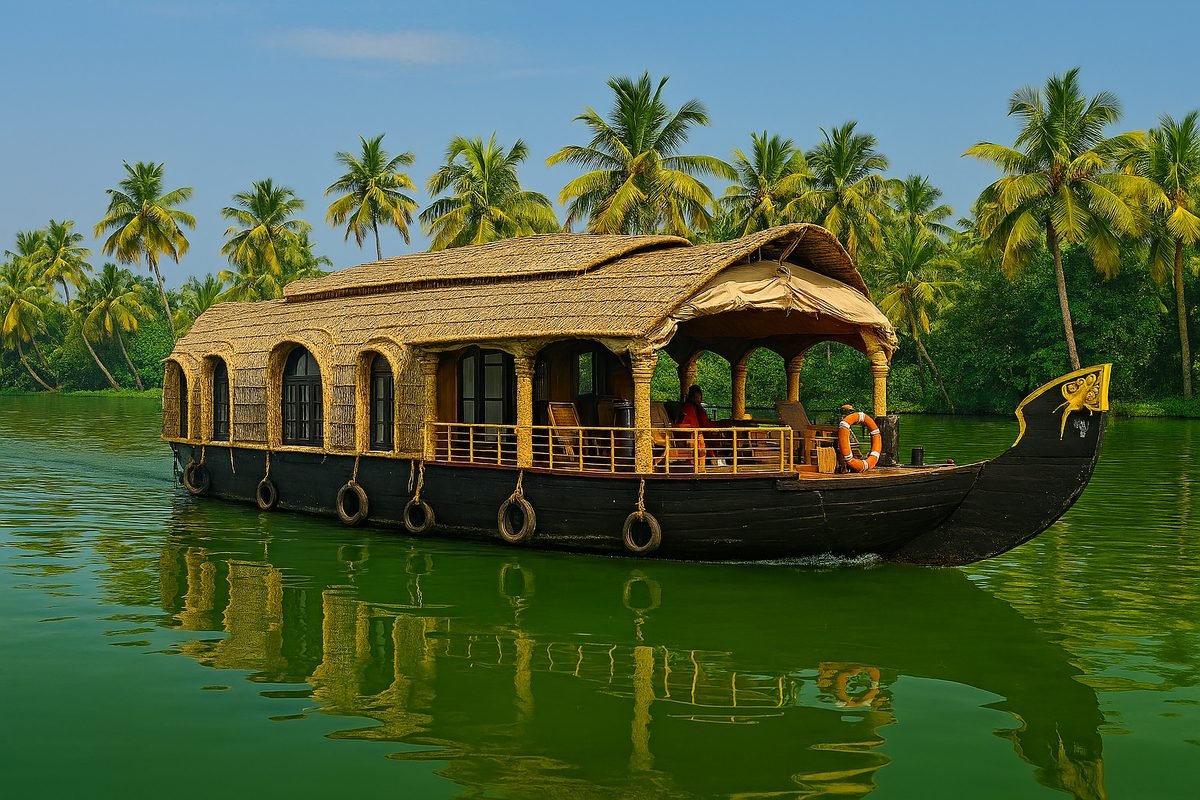
Days 8–10 · Kerala: Fly south to Kochi: a night on a private houseboat through the Alappuzha backwaters, then spice-scented Fort Kochi. Our Alappuzha backwaters guide and the Kerala state guide plan it in detail.
Short on time? The Triangle alone fits 6–7 days. Long on time? Our 25 best places to visit in India ranks what to add — and our companion guides cover the USA, Canada and Europe.
Frequently Asked Questions
Do UK citizens need a visa for India?
Yes — British citizen passport holders need a visa, and there is no visa-on-arrival for tourism. The standard route is the tourist e-Visa from the official portal, indianvisaonline.gov.in (30-day double-entry, or 1-year and 5-year multiple-entry), applied for at least 4 days before travel — 2 to 4 weeks is wiser — with a passport valid 6+ months and 2 blank pages. Valid OCI cardholders enter visa-free.
How long does an India e-Visa take to come through?
Approvals arrive by email within a few days, but there is no guaranteed turnaround — hence the official minimum of 4 days before departure, and why 2–4 weeks is the margin. Print the ETA and carry it with your passport; airlines check it at check-in.
How long can I stay in India on an e-Visa?
On the 30-day e-Visa, up to 30 days from first entry (double entry in that window); it cannot be extended. On 1-year and 5-year e-Visas you can come and go, but stays are currently capped at 180 days per calendar year for UK holders — the conditions are printed on your ETA.
When is the best time to visit India from the UK?
October to March suits most of the country: dry, warm days in the north, beach weather in the south, and Christmas–New Year the busiest (and priciest) weeks. June to September is monsoon across most regions — lush but disruptive for a first trip; Ladakh is best in summer.
How long is the flight from the UK to India, and who flies direct?
London Heathrow flies nonstop to Delhi, Mumbai, Bengaluru, Hyderabad and Chennai (8 to 9½ hours), with more services from Gatwick. Manchester, Birmingham, Edinburgh and Glasgow connect with one stop.
Can I use UK bank cards and pounds in India?
UK Visa and Mastercard cards are widely accepted in Indian cities, and ATMs give rupees at fair rates — tell your bank before you go. Pounds are not accepted for spending: change a little at a city forex or rely on ATMs. UPI payments generally need an Indian bank account, so plan on cards plus cash.
Every Place. Every Flavour.
Your visa is sorted and the route is planned — now explore the rest. Beauty of Bharat covers all 36 states and union territories: 550+ destinations, offbeat places and regional dishes, each with its own full guide.
Explore all 36 states Read the blog