
International Travellers · From Canada
Travelling to India from Canada: e-Visa, OCI, Flights & Your First Days
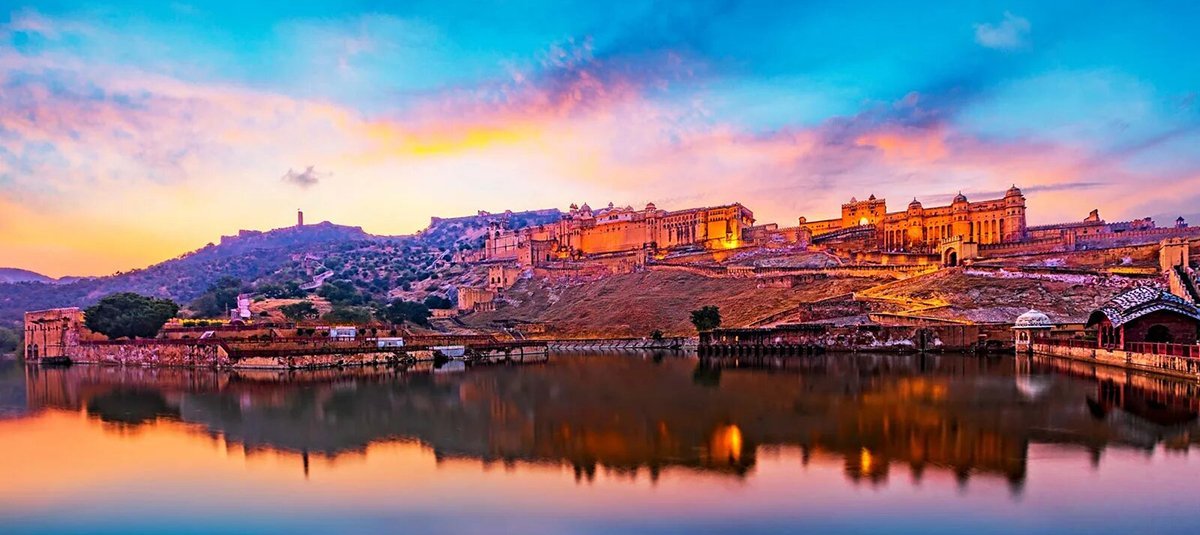
India is easier from Canada than it has ever been. Canadian citizens can apply for a tourist e-Visa entirely online, and nonstop flights run from Toronto and Vancouver straight to Delhi — board in a parka, land in the sun. Two kinds of travellers make this trip most: winter-sun holidaymakers, and Indo-Canadian families visiting friends and relatives. This guide serves both: visa or OCI first, then pre-flight arrangements, landing, and a first route that works.
India at a Glance for Canadian Visitors
| Main gateway | New Delhi (DEL) — nonstop from Toronto and Vancouver; Mumbai (BOM) is the other hub |
| Time difference | India is 9½–10½ hours ahead of Eastern Time and 12½–13½ ahead of Pacific Time (varies with Canadian daylight saving); India never changes its clocks. |
| Currency | Indian Rupee (₹). Cards widely accepted in cities; cash for small purchases. |
| Emergency number | 112 — India's single emergency number for police, fire and ambulance. |
| Best months | October to March — peak winter-sun season. |
| Power | 230V, plug types C, D and M. Canadian plugs do not fit — pack an adapter. |
1. Visa or OCI: What Canadian Citizens Need
Canadian citizens need a visa to enter India — there is no visa-on-arrival for tourism. For most, the answer is the e-Visa, from the Government of India's official portal, indianvisaonline.gov.in. The tourist e-Visa comes in three main forms:
- 30-day e-Visa — double entry; the most common first-trip choice.
- 1-year e-Visa — multiple entry, if a return visit within the year is likely.
- 5-year e-Visa — multiple entry, popular with families who visit regularly. Stays are capped at 180 days per calendar year for Canadian holders; the 30-day visa cannot be extended. Your conditions are on your approval.
How applying works
- Apply on the official portal only: complete the form, upload a photo and your passport page, pay online.
- Apply at least 4 days before travel (the official minimum); 2–4 weeks ahead is sensible.
- Your passport must be valid for at least 6 months from arrival, with at least 2 blank pages.
- The approval (an ETA) arrives by email. Print it and carry it with your passport — airlines check it at boarding.
- You may be asked for a return or onward ticket and proof of sufficient funds.
The OCI alternative — important for Indo-Canadian families
If you are of Indian origin, you may not need a visa at all. The OCI (Overseas Citizen of India) card is a lifelong, multiple-entry status: with a valid OCI card and your Canadian passport, you enter India without a visa, for any length of stay. Former Indian citizens, their children and grandchildren, and spouses of Indian citizens or OCI holders may be eligible. India does not recognise dual citizenship — as a Canadian citizen you travel on a visa or OCI, never on an old Indian passport — and the older PIO scheme was merged into OCI, so a PIO card alone no longer suffices. OCI applications from Canada go through the Indian consulates and BLS International centres. OCI pays for itself if you visit regularly; for a one-off holiday, the e-Visa is simpler. Alternative for everyone: a regular paper visa, also lodged through BLS, suits long or unusual stays.
2. Before You Travel: The Complete Checklist
Flights
Nonstops link Toronto Pearson and Vancouver with Delhi (roughly 13–15 hours); Montreal connects via Toronto or Europe. Travelling in December or January? Allow generous Canadian connections — winter storms are the most common way this trip goes wrong early.
Timing
October to March is the season: while Canada sits at −20°C, most of India is dry, sunny and in the mid-20s — though northern dawns can be near 5°C, and December–January fog can delay northern trains and flights, so keep connections loose. Ladakh and the Himalaya reverse the pattern (best May–September).
Insurance and health
- Travel insurance is essential — provincial health plans cover little or nothing in India. Arrange medical and evacuation cover.
- No vaccines are mandatory for direct travel from Canada. Routine immunisations plus hepatitis A and typhoid are commonly recommended; visit a travel clinic six weeks out.
- Money: tell your bank you are travelling. Cards work widely in cities; ATMs give the best rate. Rupees cannot be bought in quantity in Canada (a restricted currency), so plan on an ATM on arrival, with modest Canadian cash as backup.
- Phone: Canadian roaming is expensive in India. Arrange a travel eSIM before you fly, or buy a local SIM after landing (passport and photo required); download offline maps either way.
- Apps to install: WhatsApp (India's default for hotels and drivers), Uber and Ola, IRCTC for trains, Google Maps offline.
- Packing: layers for northern winter mornings, modest clothing for temples and mosques, a Type C/D/M adapter (230V), medicines in hand luggage, sunscreen.
- Documents: passport, printed e-Visa ETA or OCI card, your first hotel's address (for the arrival form), and insurance details.
3. After You Land: Your First Hours in India
Follow the signs to immigration: e-Visa holders use the marked e-Visa counters (fingerprints and photo captured on first arrival; passport stamped); OCI holders use the regular counters. You will also complete a landing card — increasingly an online e-Arrival form.
Then baggage and customs: walk the green channel if you have nothing to declare, and check official customs guidance in advance if you are carrying gifts, electronics or gold. In arrivals you will find SIM-card counters (passport required), forex desks — change only a little here; city rates are better — and ATMs, usually the best first move. For the city: the prepaid taxi counter inside the terminal, Delhi's Airport Express metro, or the marked Uber/Ola pickup zones. Ignore anyone offering an unbooked taxi or luggage help — official counters are signed and inside.
Your first 24 hours: with a 10-to-13-hour time shift, plan daylight, a walk and an early night. Drink bottled or filtered water (never tap water), and eat familiar, freshly cooked food.
4. Getting Around, Money & Staying Comfortable
Domestic flights shrink cross-country distances. Trains are the classic way between Golden Triangle cities — book ahead on IRCTC (a foreign-tourist quota exists). In cities, metros (Delhi's is excellent), Uber/Ola and hotel cars beat haggling; a car-and-driver is good value.
On money: ATMs are plentiful — withdraw larger amounts less often, and keep small notes for taxis, tips and markets. Cards are accepted at hotels, restaurants and larger shops. One surprise: UPI generally requires an Indian bank account, so your working system is cards plus cash. Tipping: 5–10% in restaurants without a service charge; small notes for porters and guides.
For comfort and etiquette: dress modestly at religious sites (carry a light scarf), remove shoes where asked, ask before photographing people, and give and receive with your right hand. The emergency number is 112. Women-only coaches run on many metros. If family in Punjab is part of the trip, build in slack — the invitations are the trip.
5. Your First Trip: Winter Sun — Golden Triangle + Beach or Family (9–10 Days)
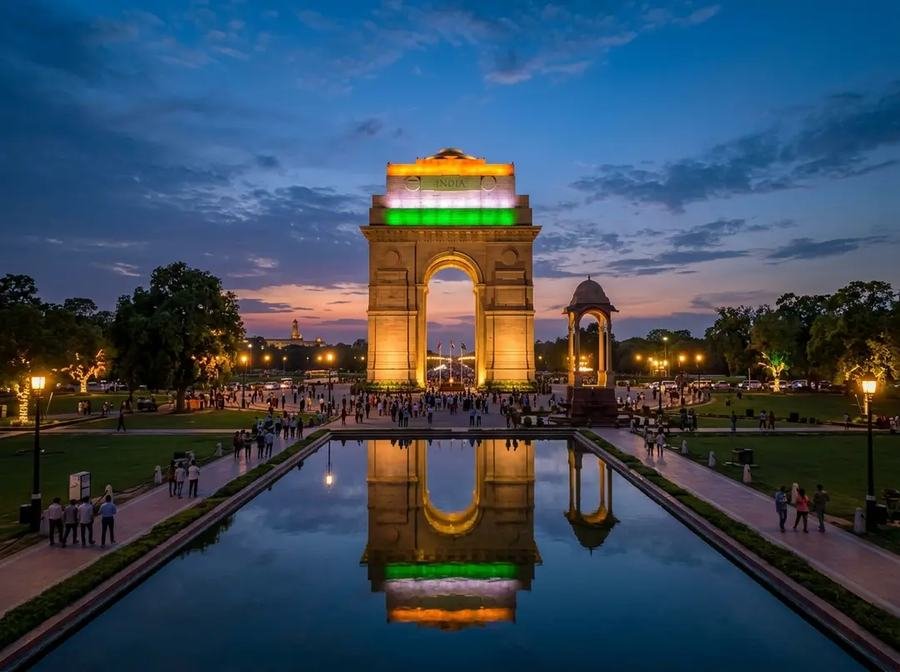
Days 1–2 · Delhi: Take the capital in two halves: Old Delhi's Red Fort, Jama Masjid and Chandni Chowk food lanes; New Delhi's India Gate and Humayun's Tomb. Start with our state guides.
Day 3 · Delhi → Agra: Morning express train (2 hours). Agra Fort in the afternoon; the Taj at sunset from Mehtab Bagh.
Day 4 · Agra → Jaipur: The Taj at sunrise, then drive to Jaipur via Fatehpur Sikri. Our full Agra guide.
Days 5–6 · Jaipur: Amer Fort at opening, City Palace, Hawa Mahal, a bazaar evening. Our full Jaipur guide.
Days 7–9 · Choose your finish: Fly south to Goa for three slow beach days (our Goa guide), or drift the Kerala backwaters by houseboat (our Alappuzha guide). Diaspora travellers often swap the beach for Amritsar — the Golden Temple at dawn, family time in Punjab.
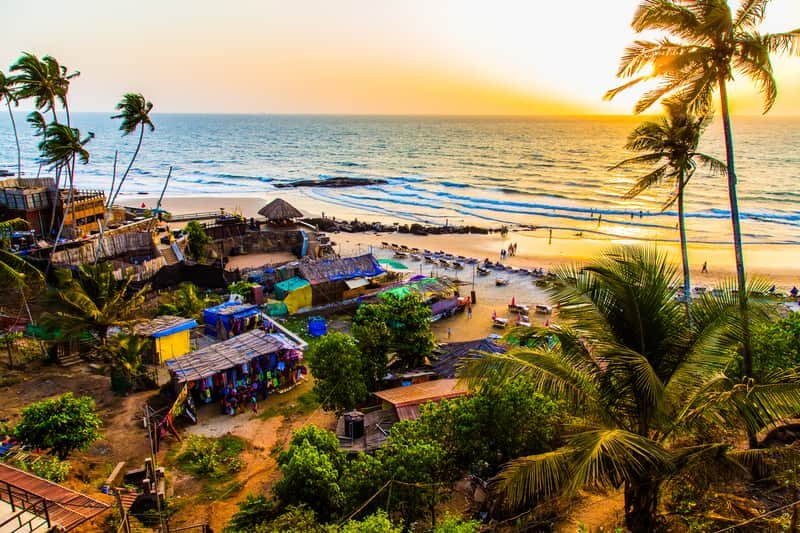
Day 10 · Fly home: Goa and Kochi connect back to Delhi or Mumbai for the nonstop home. For trip two, see our 25 best places to visit in India — and our companion guides for the USA, the UK and Europe.
Frequently Asked Questions
Do Canadian citizens need a visa for India?
Yes — there is no visa-on-arrival for Canadian tourists, but the process is fully online: apply for a tourist e-Visa on the official portal, indianvisaonline.gov.in (30-day double-entry, or 1-year and 5-year multiple-entry), at least 4 days before travel — 2–4 weeks is wiser — with a passport valid 6+ months and 2 blank pages. Valid OCI cardholders need no visa at all.
What is OCI, and should I get it instead of a visa?
OCI (Overseas Citizen of India) is a lifelong, multiple-entry status for people of Indian origin — former citizens, their children and grandchildren, and eligible spouses. With a valid OCI card and your Canadian passport you enter India freely, with no visa and no stay limit — ideal for diaspora families who visit regularly. It takes longer to obtain than an e-Visa, so for a one-off holiday the e-Visa is simpler.
How long can I stay in India on an e-Visa?
On the 30-day e-Visa, up to 30 days from first entry (double entry in that window); it cannot be extended. On 1-year and 5-year e-Visas entries are multiple, but stays are currently capped at 180 days per calendar year for Canadian holders — the conditions are printed on your ETA.
Are there direct flights from Canada to India?
Yes — nonstop from Toronto and Vancouver to Delhi (around 13–15 hours); Montreal connects via Toronto or Europe. Most visitors land in Delhi and start the Golden Triangle there.
When is the best time to visit India from Canada?
November to February: dry, sunny days in the mid-20s while Canada is deep in winter. Pack layers anyway — northern mornings can be near 5°C, and December–January fog can delay northern trains and early flights. The Himalaya and Ladakh are the exception, best May to September.
Can I use Canadian credit and debit cards in India?
Yes — Visa and Mastercard are widely accepted in Indian cities, and ATMs are the easiest way to get rupees (tell your bank first). Canadian dollars are not used for spending, and UPI payments generally need an Indian bank account — plan on cards plus cash, with small notes for daily spending.
Every Place. Every Flavour.
Your visa is sorted and the route is planned — now explore the rest. Beauty of Bharat covers all 36 states and union territories: 550+ destinations, offbeat places and regional dishes, each with its own full guide.
Explore all 36 states Read the blog