
Festival Guide · Nagaland
Hornbill Festival 2026: Nagaland's Festival of Festivals
By Beauty of Bharat — India travel guide, every place, every flavour.
Guides covering all 36 States and UTs, researched from official sources and checked at publish time. Corrections welcome — see About Beauty of Bharat.

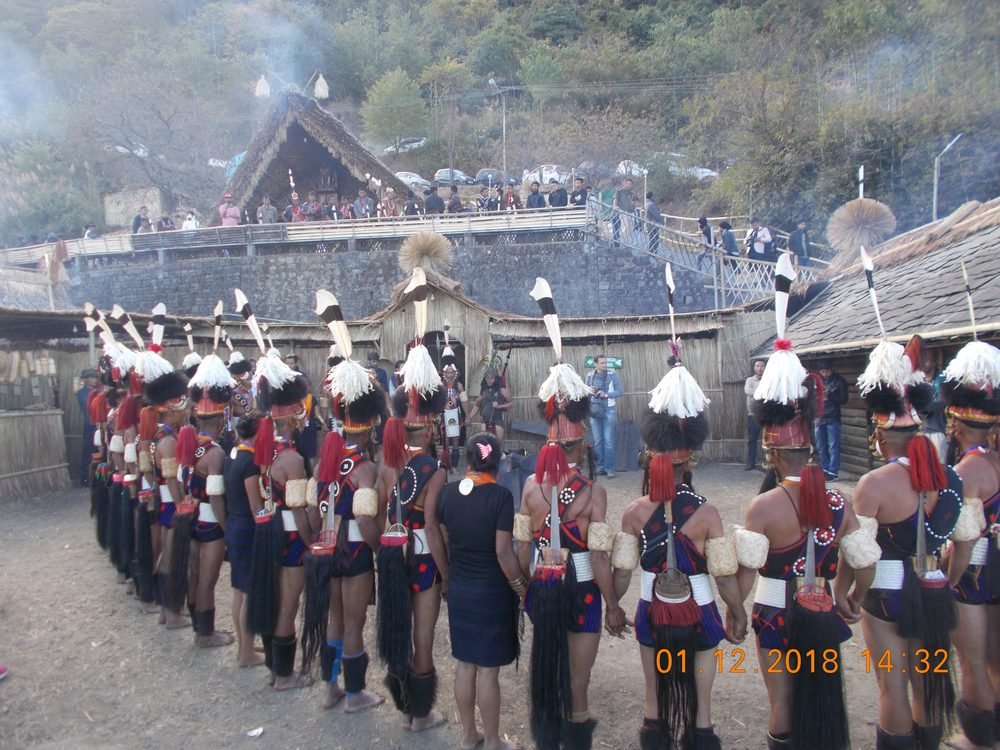
Every December, Nagaland gathers itself into one hillside amphitheatre and shows the world everything it is. All of the state's major Naga tribes — Angami, Ao, Sumi, Konyak, Lotha, Phom and more — build their traditional morungs (youth dormitories) around the arena at Kisama Heritage Village, and for ten days the ground fills with warrior dances, war cries, log drums, woven shawls, smoked meat and rice beer. The Hornbill Festival is called the Festival of Festivals, because it compresses a whole state's separate tribal celebrations into one place and week.
The 27th edition runs from 1 to 10 December 2026 at Kisama, about 12 km south of Kohima. Days belong to the cultural arena and the food and craft stalls; nights to one of India's best rock and music scenes and the Kohima night carnival.
Hornbill Festival at a Glance
| Next edition | Tuesday, 1 December – Thursday, 10 December 2026 |
| Main venue | Naga Heritage Village, Kisama (12 km from Kohima) |
| State | Nagaland |
| Best for | Culture travellers, music lovers and anyone heading to the Northeast for the first time |
The Story Behind Hornbill Festival
The festival began on 1 December 2000 — Nagaland's Statehood Day — created by the Government of Nagaland to protect and promote Naga heritage and to encourage the tribes to celebrate together. It is named for the hornbill, the great forest bird that runs through Naga folklore as a symbol of fidelity, beauty and festival itself; a huge hornbill figure presides over the Kisama arena.
The morungs are its genius: each tribe's traditional dormitory, rebuilt in its own architecture and carving, doubles as that tribe's living exhibition — elders in full regalia, young performers rehearsing dances, cooks serving the tribe's dishes, weavers and woodcarvers at work. What could have been a stage show is instead a walkable village of sixteen-plus cultures, and the festival has grown satellite events across the state — at Kohima, Dimapur, Wokha and beyond.
When It Happens: Dates & How They Are Set
Hornbill is one of India's reliably fixed festivals: it always runs 1–10 December, opening on Nagaland Statehood Day. Preparations for the 27th edition were formally launched by the state government in October 2026, so the 2026 dates — Tuesday, 1 December to Thursday, 10 December — are confirmed. Only the daily programme of which tribes perform when is published closer to the festival.
Ten days is the full edition, but the festival rewards even a three-day visit. The opening day (1 December) has the grand inauguration and all tribes on parade; weekends are the most crowded; closing day (10 December) ends with a unity dance and bonfire. Cultural performances run in morning and afternoon sessions in the main arena most days.
What Happens: Highlights & Where to Be
Start in the arena: the cultural troupes perform in full ceremonial dress — the Konyak's headhunting-era regalia, the Sumi war dance, the Ao's log drum, pulled and played by a whole team. Between sessions, walk the morungs and eat your way around Nagaland: smoked pork with axone (fermented soybean), bamboo shoot curries, king chilli in everything, and sticky rice beer served in bamboo mugs — each morung cooks its own tribe's food.
The signature contests are pure Hornbill: Naga wrestling, the fiery king-chilli-eating competition, pork-fat eating, traditional archery and greased-bamboo climbing. The crafts market (run with the state's handloom and handicraft bodies) is the best single place in India to buy Naga shawls, beadwork, wood carving and bamboo work directly from makers.
Stay for the nights. The Hornbill music festival and rock contest draw bands from across India and abroad — Nagaland's music scene is legendary — and Kohima's night carnival fills the town centre with food stalls and street performance. A side trip to the Kohima War Cemetery and the state museum completes the picture.
How to Attend
Kohima has no airport or railhead of its own: fly or take the train to Dimapur (about 2.5–3 hours by road up into the hills), or fly to Imphal and cross by road. Full routes are in our Kohima transport guide, and bases in the stay section — Kohima town fills up, and homestays in nearby villages such as Khonoma are a loved alternative. Book transport and rooms well ahead; shared taxis and festival shuttles run between Kohima and Kisama through the day.
Permits matter: Indian citizens from other states need an Inner Line Permit (ILP) for Nagaland, available online — arrange it before you travel. Foreign nationals need a Protected Area Permit (PAP). Entry to the Kisama grounds is by a modest day pass sold at the gate; carry cash for stalls and food.
Good to Know Before You Go
Nagaland is a Christian-majority, proudly traditional state: Sundays are quiet (many stalls and services pause), alcohol is officially restricted across the state (rice beer at the festival is the cultural exception, served in the morungs), and elders and regalia deserve respectful distance — ask before photographing individuals, especially performers in ceremonial dress. December in Kohima is properly cold at night; pack real warm layers. More in our Kohima destination guide and the Nagaland guide.
Frequently Asked Questions
When is the Hornbill Festival in 2026?
The 27th Hornbill Festival runs from Tuesday, 1 December to Thursday, 10 December 2026, at the Naga Heritage Village, Kisama, near Kohima. The festival always runs 1–10 December, opening on Nagaland's Statehood Day.
Are the dates confirmed?
Yes. The festival's dates are fixed (1–10 December every year), and the Government of Nagaland formally launched preparations for the 27th edition in October 2026. The day-by-day performance programme is published closer to the festival.
Do I need a permit for Hornbill Festival?
Indian citizens from outside Nagaland need an Inner Line Permit (ILP), which can be applied for online before travel. Foreign nationals need a Protected Area Permit (PAP). Carry the permit and ID with you — they are checked on the Dimapur–Kohima road.
How do I reach Kisama?
Fly or take a train to Dimapur, then a taxi or shared cab up to Kohima (about 2.5–3 hours). Kisama is 12 km from Kohima, with festival buses and shared taxis running through the day.
How many days should I spend at Hornbill?
Three to four days covers the arena sessions, the morungs, a night of music and a day in Kohima. Festival completists stay a week and add side trips to Khonoma or the Dzukou Valley trailhead.
Keep Planning
Return to the festivals hub for the year-round calendar, read the Kohima destination guide for the full picture of the place, and browse the Nagaland travel guide. Pair this festival with Sangai Festival and Ziro Festival of Music.