
Destination Guide · Nagaland
Kohima Travel Guide: War Cemetery, Naga Heritage & the Hornbill's Capital

By Beauty of Bharat — India travel guide, every place, every flavour.
Guides covering all 36 States and UTs, researched from official sources and checked at publish time. Corrections welcome — see About Beauty of Bharat.

Kohima's name is written into world history: in April 1944, on the tennis court of the Deputy Commissioner's bungalow and the terraces of Garrison Hill, British-Indian and Japanese armies fought one of the war's most ferocious battles — the 'Stalingrad of the East'. The Kohima War Cemetery, immaculate on the hillside, carries its famous epitaph: 'When you go home, tell them of us and say, for your tomorrow we gave our today.'.
Around that memory stands a living Naga capital: the State Museum's tribal collections, the Catholic cathedral on the hill (among the Northeast's largest), the markets full of Naga shawls, spears and king chillies, and Kisama's Heritage Village just south, where each December the Hornbill Festival gathers all of Nagaland's tribes in one arena of dance, song and feasting. Come in December if you can; come anyway whenever you do.
Kohima at a Glance
| State / UT | Nagaland |
| Region | Northeast India |
| Known for | Naga heritage and war cemetery |
| Best time to visit | October to May — and above all the Hornbill Festival (1–10 December); the monsoon is very wet and the… |
| Nearest gateway | Road from Dimapur (airport & station) |
| Good for | Tribal Culture, Mountains, Food, Festivals and Trekking |
| Famous food | Smoked pork, Axone/akhuni dishes and Bamboo shoot preparations |
| Full state guide | Nagaland Travel Guide |
Highlights: Best Things to Do in Kohima
Kohima War Cemetery
The beautifully kept terraced cemetery on Garrison Hill — allow quiet time; it is one of the most moving war memorials in Asia.
Kisama Heritage Village
The Hornbill Festival ground — tribal morungs (youth halls) of all the major Naga tribes in one amphitheatre of a village, open year-round, electric in December.
Nagaland State Museum
The essential primer: tribal dress, weapons, drums, jewellery and the great log drums of the Naga hills.
Kohima Cathedral & the city ridges
The striking hilltop cathedral built with Japanese goodwill contributions, and the ridge walks of the capital.
Khonoma (day trip)
The famous green village of the Angami — terraced fields, a hunting-banished conservation story, and the last battle ground of Naga resistance (1879).
Best Time to Visit Kohima
October to May — and above all the Hornbill Festival (1–10 December); the monsoon is very wet and the approach roads suffer.
That window is when Kohima shows its best side. It also matches the wider season for Nagaland — the Nagaland guide sets out the state's full calendar, festivals included, so you can time Kohima alongside Hornbill Festival area/Kisama and Dimapur on one trip.
What Makes Kohima Different
Kohima's name is written into history. In April 1944, on the tennis court of the Deputy Commissioner's bungalow and the terraces of Garrison Hill, British-Indian and Japanese armies fought one of the war's fiercest battles, the Stalingrad of the East. The Kohima War Cemetery, immaculate on the hillside, carries its epitaph: for your tomorrow, they gave their today.
Around that memory stands a living capital. The State Museum holds tribal dress, weapons, jewellery and the log drums; the hilltop cathedral was built with Japanese goodwill, and the markets are full of Naga shawls, spears and king chillies. South, Kisama's Heritage Village gathers the morungs, the youth halls, of all the Naga tribes in one village, open year-round, electric in December, when the Hornbill Festival gathers Nagaland's tribes in dance, song and feasting. October to May is best, above all the Hornbill Festival from 1 to 10 December.
A signature day begins at the War Cemetery on Garrison Hill, allowing quiet time among its terraces, then to the State Museum for its log drums, and on to the cathedral and the ridges, closing south at Kisama, where the tribes' morungs stand together.
Going further, smoked pork is the Nagaland taste in Kohima's markets. Dzukou Valley, the valley of flowers behind the Japfu range, is the capital's trekking counterpart. Khonoma, India's green village, is the Angami village west of Kohima, and the Hornbill Festival, at Kisama, crowns a December visit.
How to Reach Kohima
The nearest airport and railhead are at Dimapur (about two and a half hours down the highway); shared taxis climb to Kohima daily. Inner Line Permits are needed for Indian visitors from other states; foreign visitors should check the current protected-area rules.
Most travellers route into Nagaland through Kohima or the nearest transport hub and continue by road; local taxis and shared transport cover the last stretch in season. Build in buffer time for hill and island routes, and confirm festival and permit rules for Nagaland before you set out.
Kohima — Transport at a Glance
| Nearest airport | Dimapur Airport (DMU), ≈ 2½ hrs by the highway |
| Nearest railway station | Dimapur station is the railhead; shared taxis climb to Kohima daily |
| By road | Inner Line Permits are needed for Indian visitors from other states; foreign visitors should check the current protected-area rules |
| Getting around | Shared taxis and walking — the war cemetery, cathedral and bazaar ridge are close together |
Where to Stay in Kohima
Kohima's hotels line the main town road and the PR Hill–Midland side — mid-range properties, family guesthouses and homestays that fill the whole town during the Hornbill Festival (December 1–10: book months ahead). Staying in town keeps the war cemetery, the cathedral and the Kisama shuttle all close. Stays here run to mid-range hotels, guesthouses and homestays. The honest way to choose is live, because the season moves prices fast — the buttons below pull today's listings with photos and guest ratings from Google Maps, and live rates from Booking.com, for Kohima itself. Plan the base around the sights: travellers come to Kohima for Kohima War Cemetery, Kisama Heritage Village and Nagaland State Museum — the areas above keep the first of these within easy reach, which matters most on short trips.
See live hotels & ratings — Google MapsCompare prices — Booking.com
This button opens a hotel search on Booking.com. Some travel tools on this site are provided by affiliate partners — if you book through one, we may earn a commission at no extra cost to you.
Markets & Shopping in Kohima
The shopping heart of Kohima is Kohima's main market and the MAO market; the Kisama crafts at Hornbill time. The buys: Naga tribal shawls (each tribe's weave is a signature), wood carving, beadwork and dried king chilli. Buy shawls tribe-aware — a Lotha, Ao and Angami weave are different languages; sellers here are proud to explain. Take some home on a plate, too: Kohima's edible signatures start with Smoked pork and Axone/akhuni dishes and Bamboo shoot preparations — try them at the source, and ask the food stalls what packs well for the journey.
A Taste of Nagaland
No stop in Nagaland is complete at the table. The state's kitchen is best met through Smoked pork, Axone/akhuni dishes and Bamboo shoot preparations — look for them in Kohima's own markets and eateries, where the cooking is at its most local. Each dish has a full page in the Food Atlas: Smoked pork · Axone/akhuni dishes · Bamboo shoot preparations · Galho.
More Destinations in Nagaland
Kohima is one of 5 destinations in the Nagaland atlas. The others pair with it naturally — each has its own full guide page.
Hornbill Festival area/Kisama

cultural showcase.
Dimapur
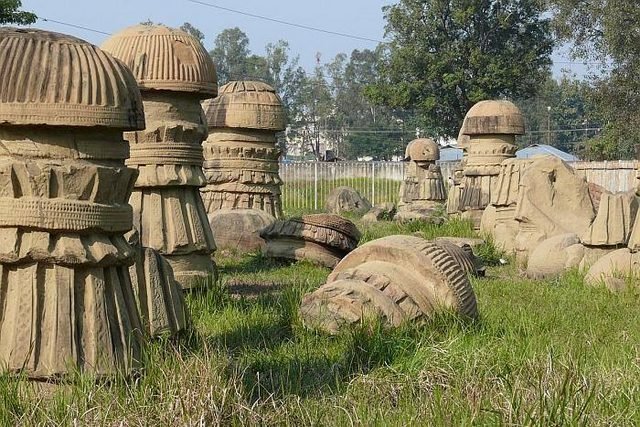
gateway and historic ruins.
Dzukou Valley
trekking and mountain landscape.
Mon
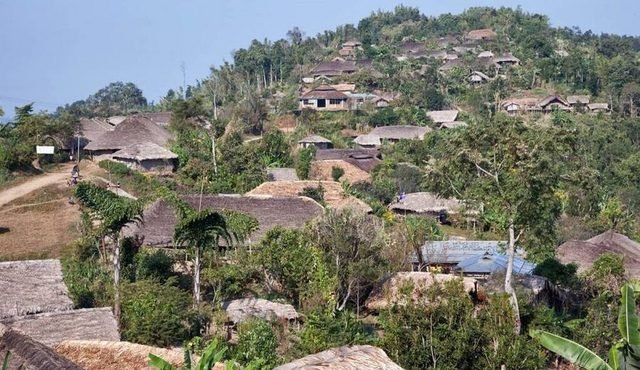
Konyak cultural region.
Offbeat Nagaland: Beyond Kohima
When the headline sights are done, Nagaland keeps a quieter register — Longwa · Khonoma · Mokokchung · Japfu are the state's lesser-known corners, profiled in the Nagaland guide. Expect fewer facilities and more of the state as its own people know it.
Frequently Asked Questions
What is Kohima famous for?
Kohima is Nagaland's hill capital — immortalised by the 1944 battle that turned the war in Burma, and today the centre of Naga tribal culture and the great Hornbill Festival.
What are the best things to do in Kohima?
The essential experiences in Kohima are Kohima War Cemetery, Kisama Heritage Village, Nagaland State Museum and Kohima Cathedral & the city ridges. The beautifully kept terraced cemetery on Garrison Hill — allow quiet time; it is one of the most moving war memorials in Asia.
What is the best time to visit Kohima?
October to May — and above all the Hornbill Festival (1–10 December); the monsoon is very wet and the approach roads suffer.
How do I reach Kohima?
The nearest airport and railhead are at Dimapur (about two and a half hours down the highway); shared taxis climb to Kohima daily. Inner Line Permits are needed for Indian visitors from other states; foreign visitors should check the current protected-area rules.
How many days do I need in Kohima?
Plan two days for the capital, three across the Hornbill days in Kohima. It pairs naturally with the other Nagaland stops in this atlas, and the Nagaland state guide links them into one route.
Every Place. Every Flavour.
Kohima is one of 188 destinations in this atlas — with 154 offbeat places and 213 regional dishes, each with its own full guide page.
Nagaland Travel Guide Read the blog