
Food Atlas · West Bengal
Mishti doi: Bengal's caramel-sweet baked curd

By Beauty of Bharat — India travel guide, every place, every flavour.
Guides covering all 36 States and UTs, researched from official sources and checked at publish time. Corrections welcome — see About Beauty of Bharat.

To understand the table in West Bengal, begin with Mishti doi: a dish whose flavour carries the state's ingredients and habits in miniature. A sweetened, set yoghurt made from reduced milk and caramelised sugar, traditionally set in earthen pots.
A detail worth knowing before the first bite: the pinkish-brown colour comes from caramelised sugar, not flavouring. Keep that in mind as you read on, because Mishti doi rewards eaters who notice how West Bengal seasons, serves and shares its food.
Mishti doi at a Glance
| State / UT | West Bengal |
| Capital / base | Kolkata |
| What it is | A sweetened, set yoghurt made from reduced milk and caramelised sugar, traditionally set in earthen pots |
| Main ingredients | milk, caramelised sugar or jaggery and yoghurt culture |
| Taste | Mellow, creamy sweetness with a gentle caramel depth, less sharp than plain curd |
| Texture | Dense, smooth and spoon-firm, with a custard-like body from slow reduction and setting |
| Usually eaten | Eaten chilled or at room temperature as dessert, often still in its earthen cup with a wooden spoon |
| Occasion | A festive and celebratory sweet, served at weddings, pujas and as the end of a Bengali meal |
The Story on West Bengal’s Table
Mishti doi is one of Bengal's defining sweets, served at celebrations and sold in clay cups in sweet shops across West Bengal. The earthen pot is functional as well as traditional, absorbing moisture so the curd sets thick, and the caramelised sugar gives the doi its blush colour and toffee note. That context is essential in West Bengal, where a plate can signal a harvest, a religious calendar, a market habit or the meeting of communities. Mishti doi belongs in this atlas under West Bengal because this is the setting in which its ingredients, accompaniments and meaning come together.
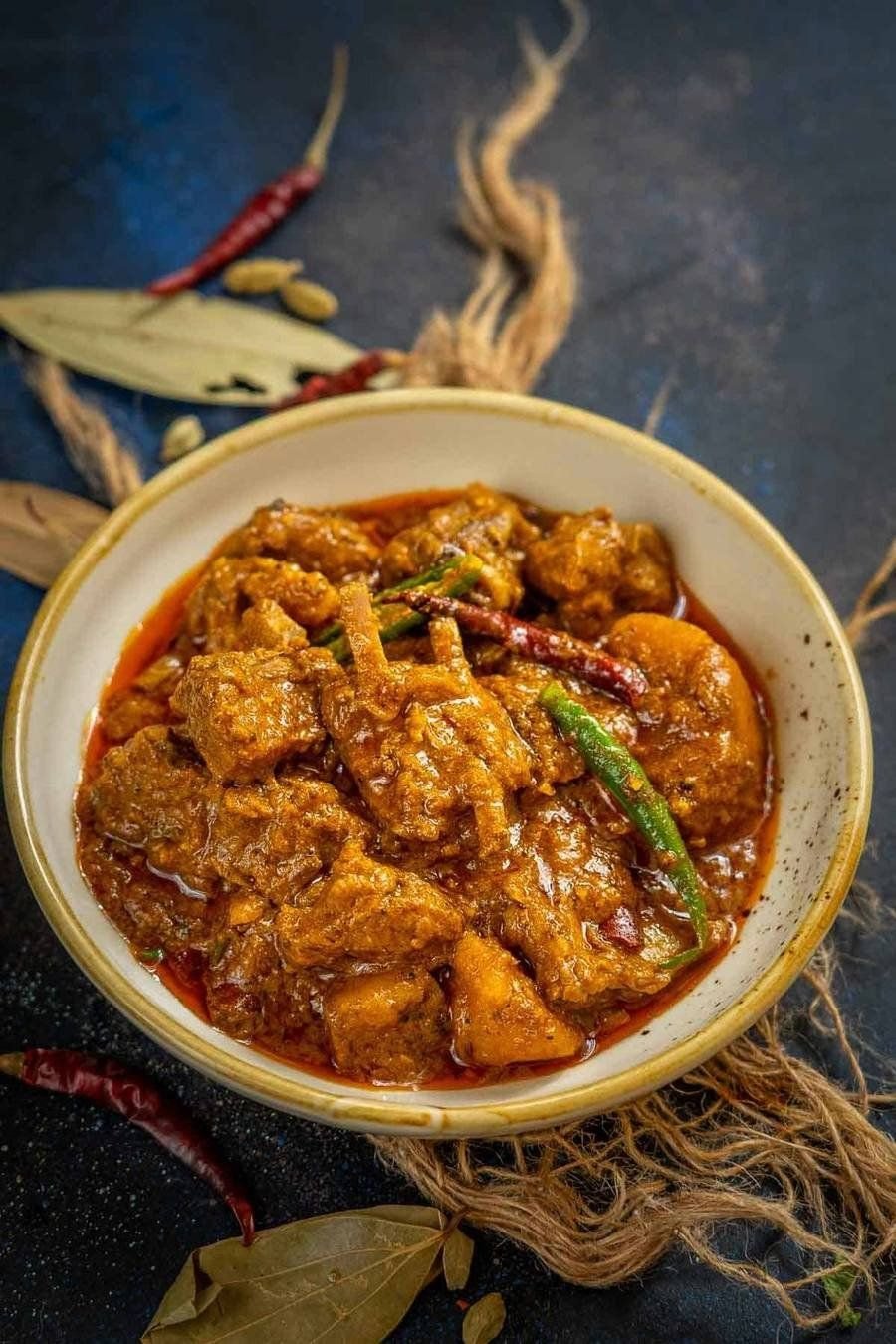
The state guide places Mishti doi alongside Macher jhol, Shorshe ilish and Kosha mangsho. Start with the West Bengal travel and food guide if you are planning where this tasting fits into a route.
Taste, Texture and Ingredients
Expect mellow, creamy sweetness with a gentle caramel depth, less sharp than plain curd. Think dense, smooth and spoon-firm, with a custard-like body from slow reduction and setting.
The ingredient list is best read as a structure rather than a shopping list: milk, caramelised sugar or jaggery and yoghurt culture.
How Mishti doi Is Made
Milk is reduced, sweetened with caramelised sugar, cooled, inoculated with curd culture and left to set undisturbed in pots. A winter variation uses date-palm jaggery instead of sugar caramel. The cooking rewards attention to sequence and balance rather than a long list of additions.
When Mishti doi is made for a gathering, that timing also becomes social — food reaches the table as part of a shared rhythm, not as an isolated plate.
When and How It Is Eaten
Eaten chilled or at room temperature as dessert, often still in its earthen cup with a wooden spoon. Its natural moment is a festive and celebratory sweet, served at weddings, pujas and as the end of a Bengali meal.
West Bengal’s broader food culture helps explain the serving style. The state is known for culture, tea and wildlife, and its calendar includes Durga Puja and Poila Boishakh.
Where to Try It in West Bengal
Buy it from Kolkata's renowned sweet shops, and in winter look for the nolen gur, date jaggery, version. The most convincing first plate usually comes from paying attention to where local people already eat.
Mishti doi pairs naturally with time in Kolkata and Darjeeling, and can sit just as comfortably beside a quieter excursion to Bishnupur or Shantiniketan.
More Dishes of West Bengal
Continue through West Bengal’s other signature plates and drinks below — each has its own page, photograph and story.


Frequently Asked Questions
What is Mishti doi?
A sweetened, set yoghurt made from reduced milk and caramelised sugar, traditionally set in earthen pots. Expect mellow, creamy sweetness with a gentle caramel depth, less sharp than plain curd.
What are the main ingredients in Mishti doi?
The defining ingredients or components are milk, caramelised sugar or jaggery and yoghurt culture. Milk is reduced, sweetened with caramelised sugar, cooled, inoculated with curd culture and left to set undisturbed in pots. A winter variation uses date-palm jaggery instead of sugar caramel.
What does Mishti doi taste like?
Expect mellow, creamy sweetness with a gentle caramel depth, less sharp than plain curd. Think dense, smooth and spoon-firm, with a custard-like body from slow reduction and setting. Serving pattern: Eaten chilled or at room temperature as dessert, often still in its earthen cup with a wooden spoon.
When is Mishti doi eaten in West Bengal?
A festive and celebratory sweet, served at weddings, pujas and as the end of a Bengali meal. The clay pot helps the curd set firm by absorbing whey.
Where can I try Mishti doi in West Bengal?
Buy it from Kolkata's renowned sweet shops, and in winter look for the nolen gur, date jaggery, version. Pair a first tasting with Macher jhol and Shorshe ilish to see how Mishti doi sits within the wider West Bengal table.
Every Place. Every Flavour.
Mishti doi is one of 6 dishes and drinks profiled from West Bengal — and one of 213 regional dishes across all 36 states and union territories in this atlas.
Open the West Bengal guide Read the blog