
Delhi · Food & Culture
Famous Food of Delhi: 12 Dishes from Chandni Chowk to Karol Bagh

By Beauty of Bharat — India travel guide, every place, every flavour.
Guides covering all 36 States and UTs, researched from official sources and checked at publish time. Corrections welcome — see About Beauty of Bharat.
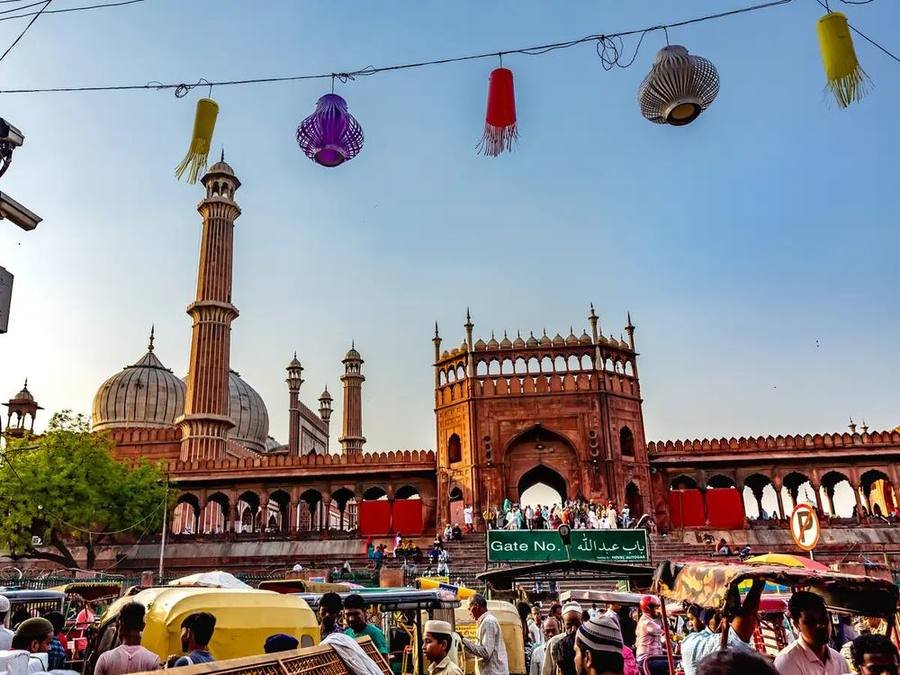
Delhi has a dessert that disappears by noon. Daulat ki chaat — a cloud of sweetened milk foam, whisked overnight in the cold winter air — is sold from brass trays in Chandni Chowk on winter mornings, and by midday it has melted away. It is the perfect first taste of this city: Delhi’s food is seasonal, street-level and layered with history. The short answer: start with parathas in Paranthe Wali Gali, chole bhature for breakfast and butter chicken and kebabs from the old Mughlai kitchens, snack on chaat along Chandni Chowk, and finish with jalebi, kulfi falooda and a tall lassi. For the streets behind the food, see our Old Delhi guide.
What Is the Famous Food of Delhi?
Delhi’s food comes from two traditions that grew up side by side. The first is Mughlai cooking — the rich, meat-forward court food of the Mughal emperors: kebabs, nihari, korma and biryani, slow-cooked with saffron, cardamom and rose water in the kitchens of Shahjahanabad, the walled city Shah Jahan founded around 1650. The second is the food of the city’s traders and, after Partition in 1947, of the Punjabi families who arrived with the clay tandoor: tandoori chicken, butter chicken, dal makhani, naan and chole bhature. Around both sits the chaat and sweet shops of Old Delhi, small specialist counters that have held the same corner for generations. Eat in Old Delhi and you taste all three at once.
What to Eat in Delhi
The twelve dishes below run from breakfast to dessert: the first five are the savoury backbone of the city, the next two are its seasonal sweets, and the last five carry you from the Mughlai kitchens to the sweet shops. Every one of them is tied to a Delhi lane or market.
| Dish | What it is | Try it |
| Parathas | Deep-fried stuffed flatbreads | Paranthe Wali Gali, Chandni Chowk |
| Chole Bhature | Spiced chickpeas, puffy fried bread | Breakfast, Paharganj or Kamla Nagar |
| Butter Chicken | Tandoori chicken in tomato-butter gravy | Daryaganj, the dish’s birthplace |
| Kebabs | Charcoal-grilled seekh and shami | Gali Kababian, near Jama Masjid |
| Chaat | Golgappe, dahi bhalla, aloo tikki | Chandni Chowk and Karol Bagh |
| Daulat Ki Chaat | Winter milk-foam dessert | November to February, mornings only |
| Kulfi Falooda | Dense kulfi, rose syrup, noodles, ice | Summer afternoons |
| Nihari | Slow-cooked mutton stew | Early morning, with khameeri roti |
| Old Delhi Biryani | Light, dum-cooked rice and meat | Matia Mahal, near Jama Masjid |
| Bedmi Aloo | Stuffed puri, potato curry, halwa | Winter breakfast in Old Delhi |
| Jalebi with Rabri | Crisp syrup spirals, thickened milk | Dariba Kalan, Chandni Chowk |
| Lassi | Thick churned-yoghurt drink | With any heavy meal |
Dish names vary by spelling — daulat ki chaat is also written daulat ki chat, golgappe as gol gappa or pani puri, and bhature as bhatura. Menus and street carts use them interchangeably.
1. Parathas of Paranthe Wali Gali
If one lane explains Delhi’s food, it is Paranthe Wali Gali, the paratha lane off Chandni Chowk. The shops here fry stuffed flatbreads in ghee instead of griddling them, which makes them heavier and crisper than the home version, and the fillings run well past potato: paneer, mixed vegetables, and sweet ones stuffed with banana, rabri or even crushed papad. They arrive with tangy chutneys, pickles and a sabzi on the side. The family shops say the lane has served parathas since the 1870s, though those founding dates are the shops’ own accounts rather than records. See our parathas guide for the lane’s story.

2. Chole Bhature
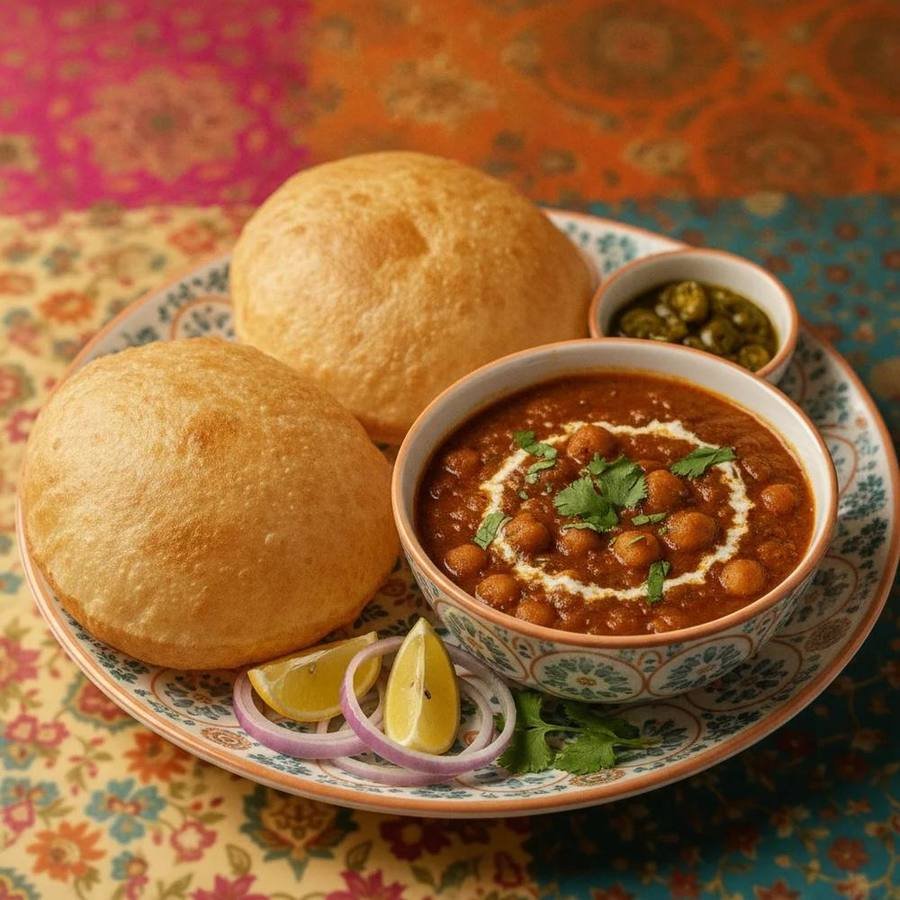
Few things announce a Delhi morning like a plate of chole bhature: puffy bhature, deep-fried until they balloon, paired with chickpeas simmered in a masala that is both fiery and tangy. A Punjabi dish that became a city-wide ritual after Partition, Delhi now treats it as its own breakfast. The classic addresses are Sita Ram Diwan Chand in Paharganj and Chache Di Hatti near Kamla Nagar. Eat it hot, with pickled onions and green chillies on the side — it is rich, spicy and heavy, and Delhi eats it as a proper meal, not a snack. See our chole bhature guide.
3. Butter Chicken
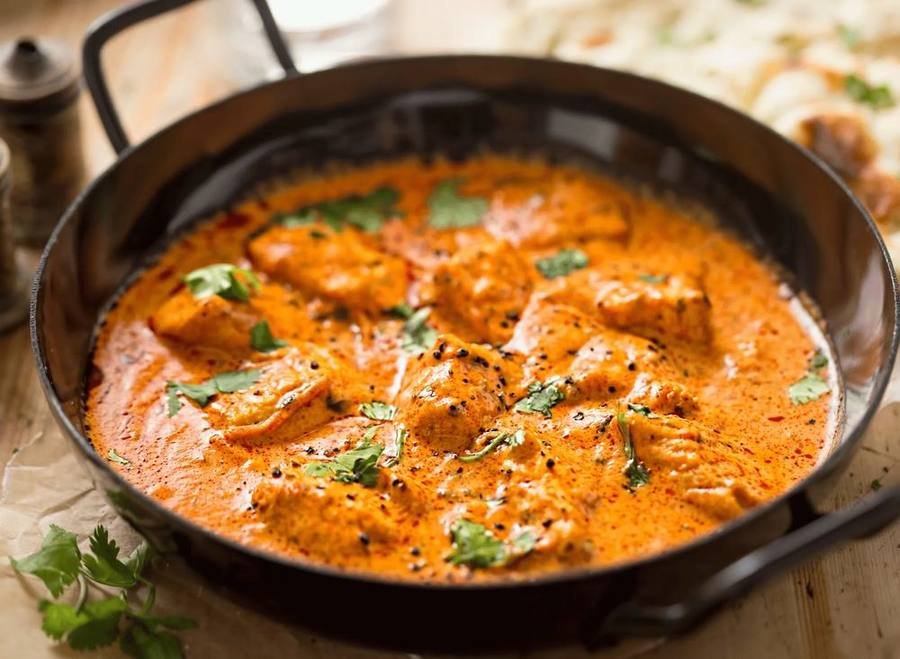
Delhi gave India one of its most beloved exports: butter chicken, or murgh makhani. It is usually credited to Moti Mahal in Daryaganj, where in the 1950s cooks from Peshawar simmered leftover tandoori chicken in tomato, butter and cream — and created a dish the whole world now orders. The credit is disputed, honestly: two Delhi restaurant families have contested the invention, including in court, so the story has two sides and this guide does not pick one. The dish itself is beyond dispute: smoky chicken in a rich, mildly sweet gravy, eaten with naan or rice. See our butter chicken guide.
4. Kebabs of Jama Masjid
The lanes behind the Jama Masjid are the deepest kebab territory in the country, and Gali Kababian — the lane of kebabs — has made them for generations. Seekh kebab is minced meat pressed onto skewers and grilled over charcoal; shami is a soft patty of meat and lentils; mutton burra is the charred chop. Karim’s, in Gali Kababian since 1913, is the famous name, a family that traces its cooking to the Mughal court kitchens. Order a mixed plate and eat it standing. See our kebabs guide.

5. Chaat: Golgappe, Dahi Bhalla and Aloo Tikki
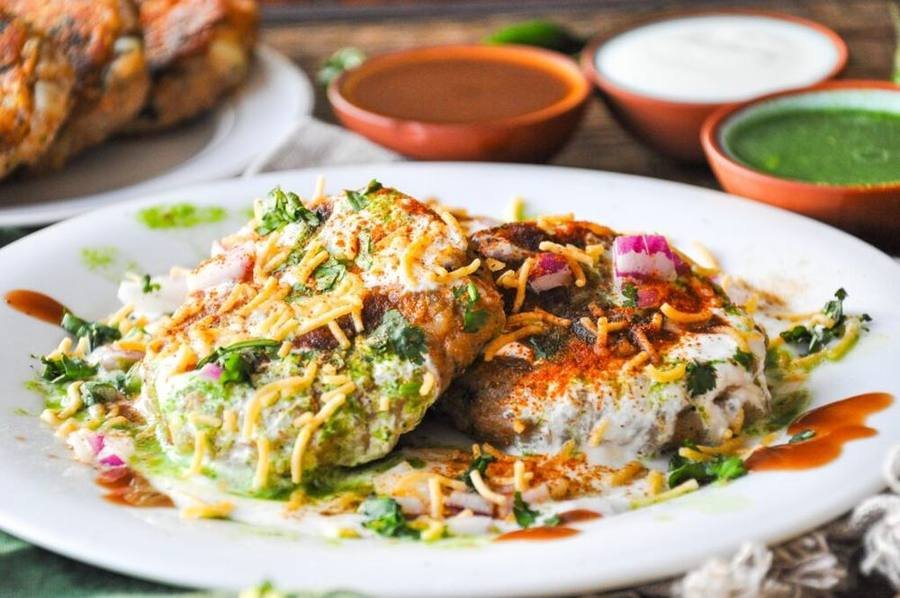
Chaat is Delhi’s contribution to snacking, and it is a whole grammar rather than a single dish: crisp, tangy, sweet and sour at once. Golgappe are hollow puffs filled with spiced water, eaten in one bite standing at the cart. Dahi bhalla is a soft lentil dumpling soaked in whipped yoghurt with sweet tamarind and green chutneys. Aloo tikki is a crisp potato patty crushed and drowned in the same chutneys and yoghurt. The classic address is Natraj Dahi Bhalle Wala on Chandni Chowk, serving the same two-item menu since 1940, and Bittu Tikki Wala in Karol Bagh is the other name regulars give. See our chaat guide.
6. Daulat Ki Chaat
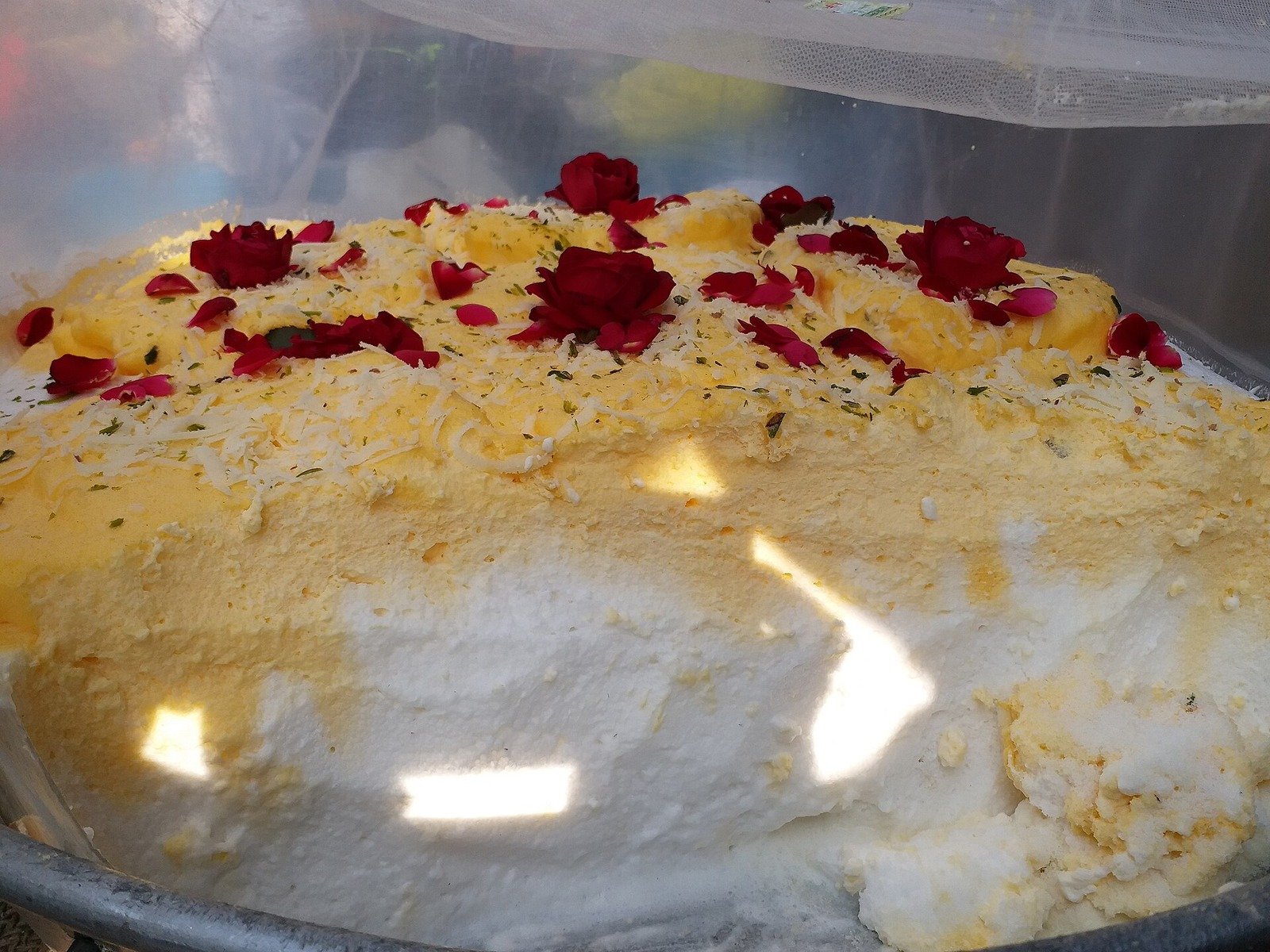
And here is the promise from the opening, paid off. Daulat ki chaat is a winter-only dessert of sweetened milk foam, made by whisking milk and cream by hand through the cold night air until it turns into a cloud, then finishing it with saffron, sugar, pistachio and khoya. It is sold from brass trays near Kinari Bazar on winter mornings, roughly November to February, and it cannot survive warm weather — by midday it has melted away. A dessert you can only eat in Delhi, only in winter, only in the morning.
7. Kulfi Falooda
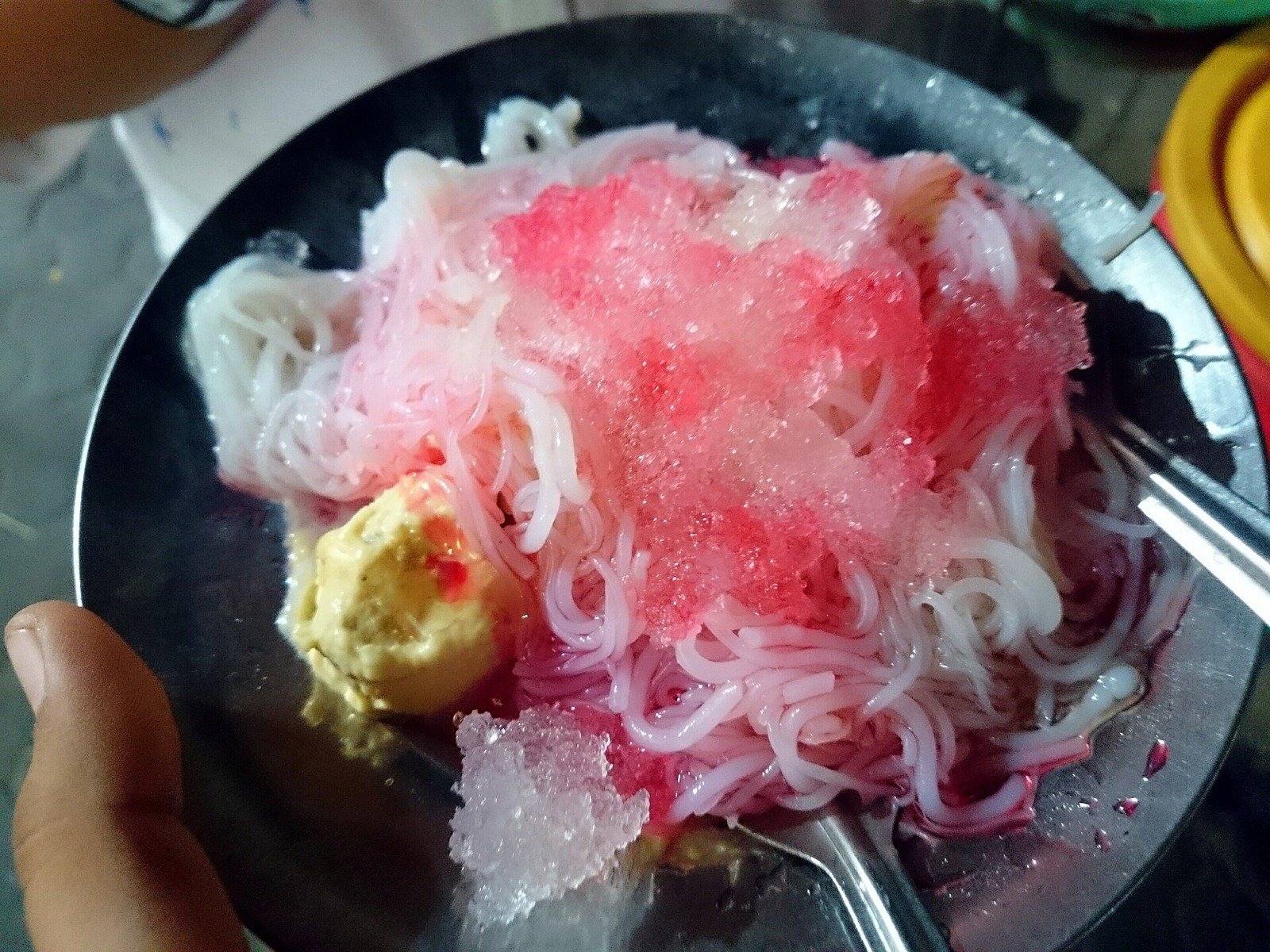
If daulat ki chaat is Delhi’s winter dessert, kulfi falooda is its summer answer. A slab of dense, slow-reduced kulfi sits over rose-syrup falooda noodles with crushed ice, Kulfi is not ice cream — it is milk reduced for hours until it is thick and caramel-sweet, then frozen without churning, so it is dense where ice cream is airy. In Delhi it is the dessert after a heavy Mughlai meal, and on a summer afternoon in Chandni Chowk it is the meal itself. Look for the old kulfi carts and sweet shops: the hand-set kulfi is the point.
8. Nihari
Delhi wakes slowly on winter mornings, but nihari has always been ready before sunrise. The name comes from nahar, the Arabic word for morning: this slow-cooked stew of mutton, spiced with cardamom, cinnamon and chillies, was once the breakfast of Mughal royals, eaten after the dawn prayer. Today the shops near Jama Masjid still ladle it out before dawn, served with soft khameeri rotis that soak up the rich gravy, finished with lemon, ginger and green chilli. Go early and go hungry. See our nihari guide.

9. Old Delhi Biryani
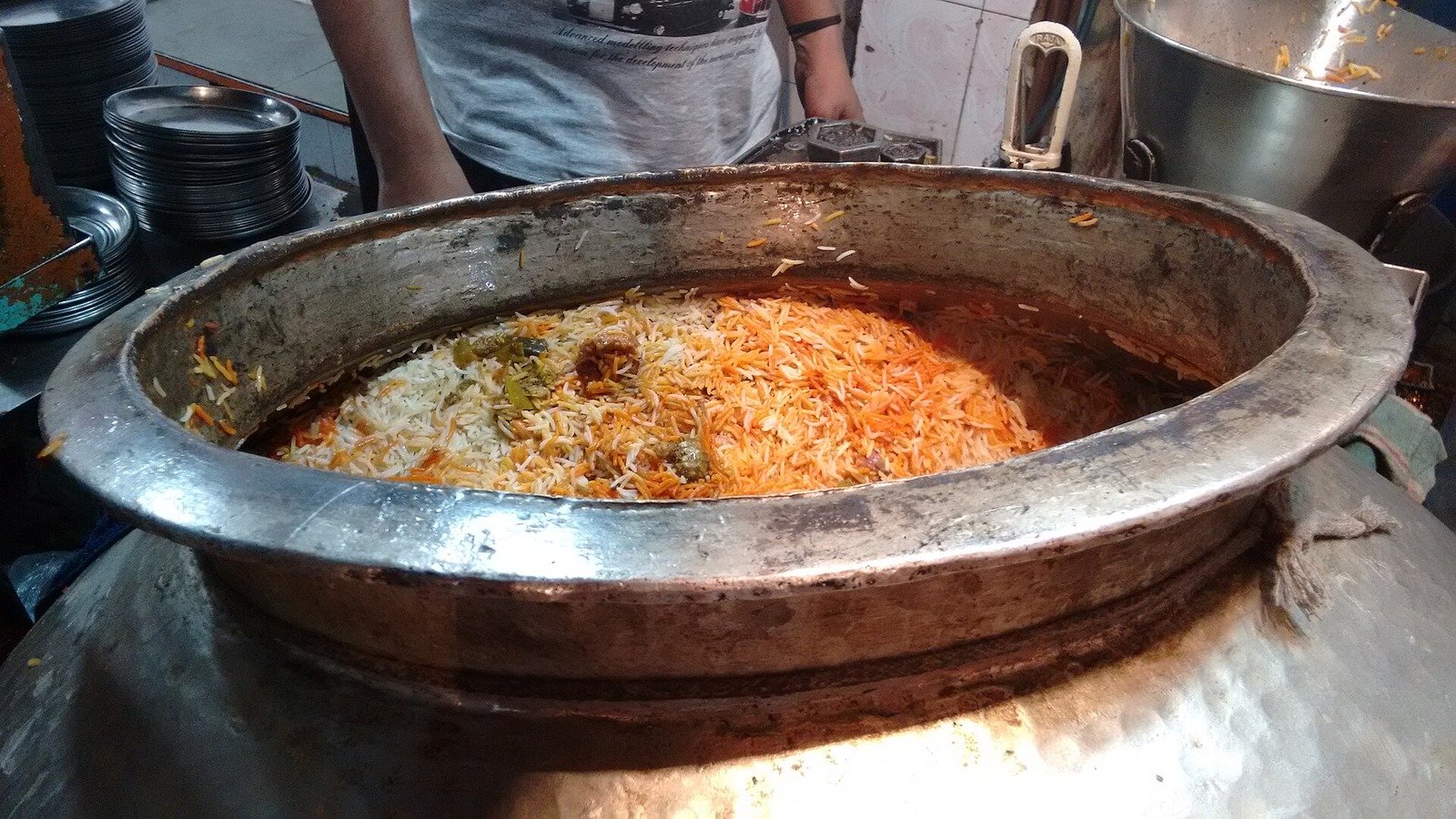
Delhi’s biryani is its own thing, and visitors expecting Hyderabad’s fiery version or Lucknow’s delicate one will be surprised. The Old Delhi style is lighter and drier: long-grained rice layered with meat and sealed on dum, cooked gently over coals, served with raita and salad rather than a heavy gravy. The big handis of Matia Mahal, behind Jama Masjid, are where to see it — rice steaming as the seal is broken, saffron streaks running through it. It is Mughlai food at its most restrained.
10. Bedmi Aloo with Nagori Halwa
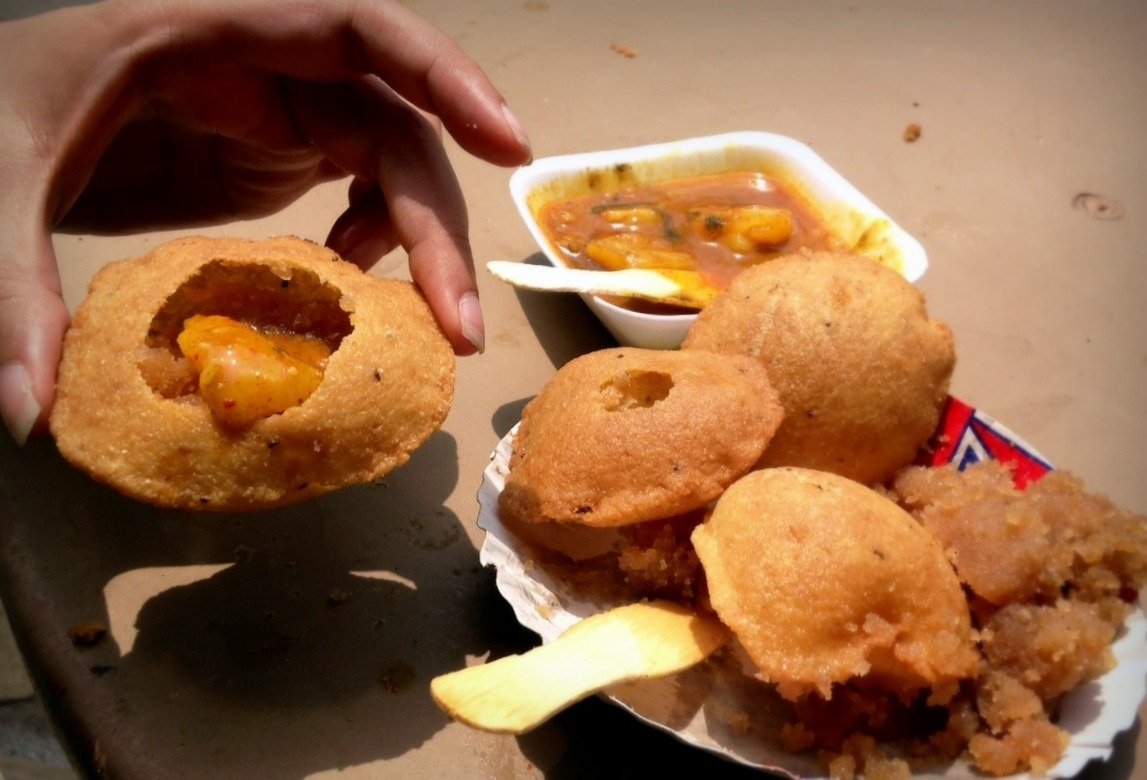
Bedmi aloo is Old Delhi’s winter breakfast, and it is a study in opposites. The bedmi is a deep-fried puri stuffed with spiced urad dal, torn open and filled with a fiery potato curry, while beside it sits nagori halwa — a small, crisp semolina disc with sweet, crumbly halwa. Spicy against sweet, crisp against soft, eaten standing at a counter in the morning cold. It is an old-city winter breakfast, and the pairing is the point: order both together, never one without the other.
11. Jalebi with Rabri
The Old Famous Jalebi Wala at the corner of Dariba Kalan on Chandni Chowk has fried jalebis for generations, and they are the size of a palm: crisp spirals of batter fried in desi ghee, dunked in syrup until they glisten, and eaten hot with a spoonful of thick rabri. A jalebi is at its best in the first minute, while the outside is still crisp — wait too long and it softens. It is the sweet Delhi eats at every hour, after every meal. See our jalebi guide.

12. Lassi
Every heavy Delhi meal ends the same way: with a tall glass of lassi. The Punjabi lassi Delhi adopted is thick churned yoghurt, sweet or salted, with a cap of malai on top. It is almost a meal in itself, which is the point — after parathas or chole bhature, it is the cooler that settles everything. Sweet lassi is the default order; salted lassi, with roasted cumin and black salt, is the one regulars ask for with chaat. On a summer afternoon it is the simplest pleasure on this list: cold, thick and unhurried.

Where to Eat Delhi’s Famous Food
Delhi’s food is mapped by neighbourhood, and one day covers the best of it if you plan by area rather than by dish. Start in Chandni Chowk in the morning: parathas in Paranthe Wali Gali, dahi bhalla and aloo tikki on the main road, jalebi at Dariba Kalan, and daulat ki chaat near Kinari Bazar if it is winter. Walk to Jama Masjid for the afternoon: kebabs in Gali Kababian, nihari in the lanes behind the mosque, biryani from the handis of Matia Mahal. Karol Bagh is the third stop, for tikki and chole bhature away from the Old Delhi crowds. Eat where the queue is, order one dish per shop, and go in the morning when the frying is fresh. For the full walk, see our best street food in Delhi guide and our Delhi 3-day itinerary; for the markets between meals, see our best shopping markets in Delhi.
Watch: Delhi’s Food on Film
Videos are by their respective creators.
Famous Food of Delhi FAQs
What is the famous food of Delhi?
The famous food of Delhi is parathas from Paranthe Wali Gali, chole bhature, butter chicken, kebabs and nihari from the lanes near Jama Masjid, chaat on Chandni Chowk, and jalebi, kulfi falooda and lassi to finish. Our famous food of Punjab guide covers the neighbouring table across the border.
What is Delhi’s most famous food?
Delhi’s most famous food is butter chicken — created in Daryaganj in the 1950s and now served around the world — with chole bhature close behind. For a single dish that exists nowhere else, though, the answer is daulat ki chaat: a winter-morning milk foam that melts away by midday.
What is the food of Delhi?
The food of Delhi is two traditions side by side: Mughlai court cooking — kebabs, nihari, korma and biryani — and Punjabi tandoor cooking — butter chicken, dal makhani, naan and chole bhature — with Old Delhi’s chaat and sweet shops around both.
What is famous in Delhi to eat?
In Delhi, eat parathas in Paranthe Wali Gali, chole bhature in Paharganj or Kamla Nagar, butter chicken in Daryaganj, kebabs and nihari near Jama Masjid, chaat on Chandni Chowk and in Karol Bagh, and jalebi with rabri at Dariba Kalan. In winter, look for daulat ki chaat; in summer, kulfi falooda and lassi.
What is Delhi’s famous street food?
Delhi’s famous street food is chaat — golgappe, dahi bhalla and aloo tikki — plus stuffed parathas, chole bhature, kebabs and jalebi, most of it in Chandni Chowk and the lanes around Jama Masjid. See our best street food in Delhi guide for the full walk.
What is the traditional food of Delhi?
The traditional food of Delhi is Mughlai cooking from the kitchens of Shahjahanabad — slow-cooked kebabs, nihari, korma and biryani — layered with the Punjabi food that arrived after Partition and the vegetarian chaat and sweets of Old Delhi’s trading families. Chandni Chowk and Matia Mahal still cook it the same way.
Twelve dishes, one capital: parathas and chole bhature for breakfast, butter chicken and kebabs from the old kitchens, chaat on every corner, a dessert that melts by noon and a kulfi that carries the summer — proof that Delhi eats its history three times a day. Next, read our Delhi state guide and plan the trip — Red Fort and India Gate are good places to start, and our best places to visit in India guide and our state-by-state guide put Delhi in the wider picture.
Plan your Delhi trip
Twelve dishes from Chandni Chowk to Karol Bagh — start in Paranthe Wali Gali in the morning, eat your way to Jama Masjid by afternoon, and let the old city show you the rest.
Delhi state guide →