
Himachal Pradesh · Adventure & Offbeat
Bir Billing: India's Paragliding Capital — Complete Guide

By Beauty of Bharat — India travel guide, every place, every flavour.
Guides covering all 36 States and UTs, researched from official sources and checked at publish time. Corrections welcome — see About Beauty of Bharat.
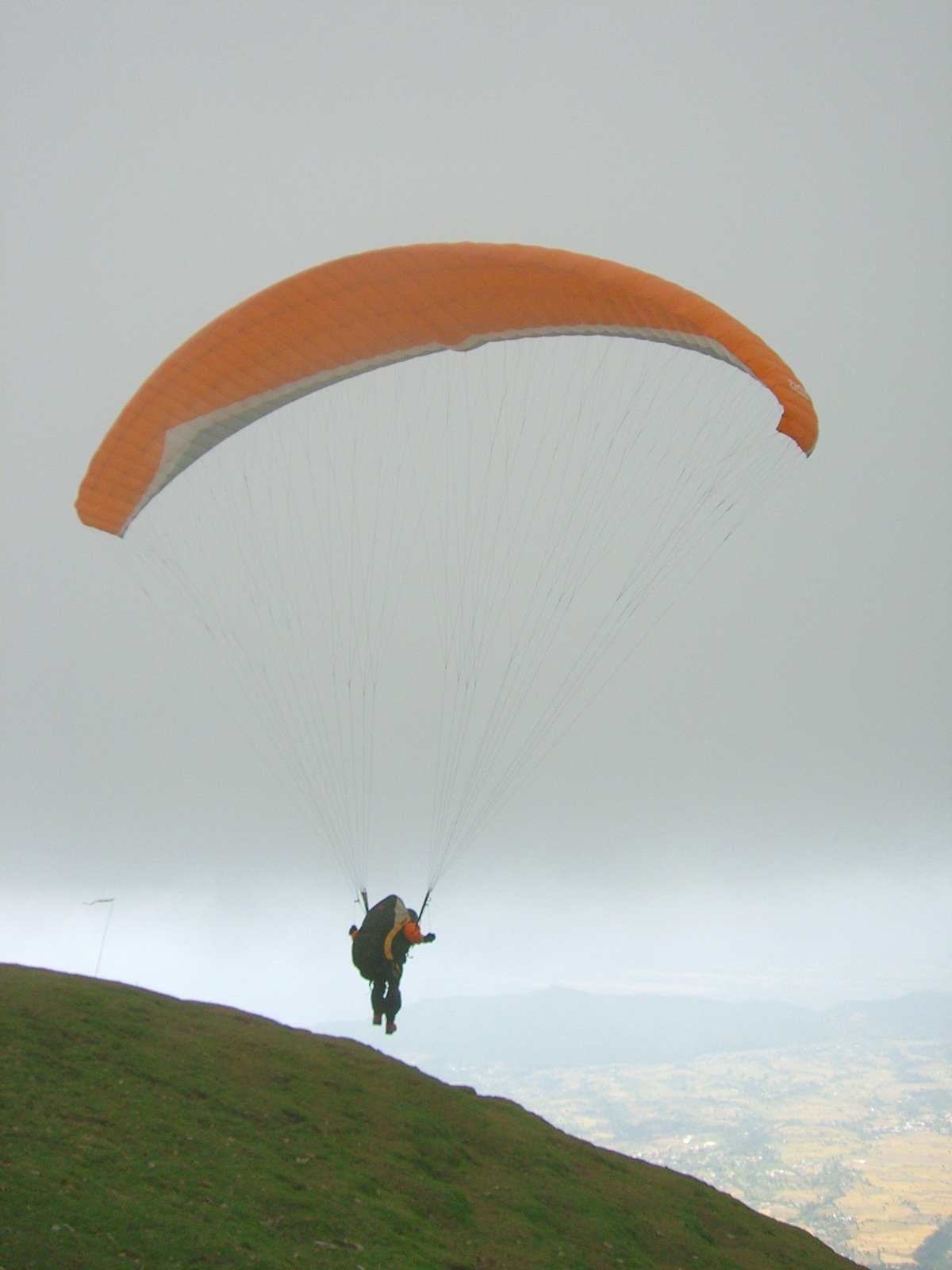
In October 2015, about 130 of the world’s best paragliders, from more than 35 countries, flew into a small Kangra Valley village for the first Paragliding World Cup ever held in India. They came because Bir Billing has something almost no other site offers: a grassy takeoff at about 2,400 metres, a wide landing field 14 kilometres away and nearly 1,000 metres below, and thermals so reliable that pilots stay up for hours. The short answer for first-timers: a standard tandem flight lasts 15 to 20 minutes, costs about &rupee;2,500 to &rupee;3,500, and needs no experience at all — you run a few steps with your pilot, and the ground falls away. The best months are October and November, and late November brings the clearest winter skies.
Bir Billing Paragliding at a Glance
| Takeoff | Billing, about 2,400 m | 14 km above Bir by road |
| Landing | Bir landing field, Kangra district | Wide, flat, open meadow |
| Standard tandem | 15–20 minutes in the air | About &rupee;2,500–&rupee;3,500 |
| Best months | October–November, March–June | September–November also strong |
| Closed | Monsoon, roughly mid-July to mid-September | Rain and low cloud ground flying |
| Flying windows | About 9–11:30 am and 12–3 pm | Last tandems by about 4 pm |
| Nearest airport | Kangra (Gaggal), about 65–70 km | Taxi or pre-booked cab |
| Nearest railhead | Pathankot, about 140 km | Then by road or narrow-gauge rail |
Prices vary by season and operator; confirm what is included — jeep ride, photos, video — before you pay.
Why Bir Billing Is India’s Paragliding Capital
Bir is the village; Billing is the takeoff, 14 kilometres up a winding road. Together they form one of the world’s great paragliding sites, and the claim rests on geography rather than marketing. The Dhauladhar range rises behind the valley, the Kangra plains spread below it, and the gap between them generates the steady thermals — columns of rising warm air — that let gliders climb and stay up. A tandem passenger feels it as a long, unhurried float rather than a quick drop: 15 to 20 minutes in the air on a standard flight, with experienced pilots riding the same thermals for hours and covering long cross-country distances. The site’s reputation was sealed in October 2015, when Bir Billing hosted the Paragliding World Cup — the first World Cup in India, organised by the Billing Paragliding Association with the Airports Authority of India as title sponsor, with about 130 pilots from more than 35 countries flying from 23 to 31 October. Bir Billing went on to host the FAI Paragliding World Championship in 2019. It is also a working village, not a resort built around a runway: Tibetan monasteries, tea gardens and cafés sit within walking distance of the landing field, which is half the reason people stay an extra day.
The Flight: From Billing Takeoff to the Bir Landing Field
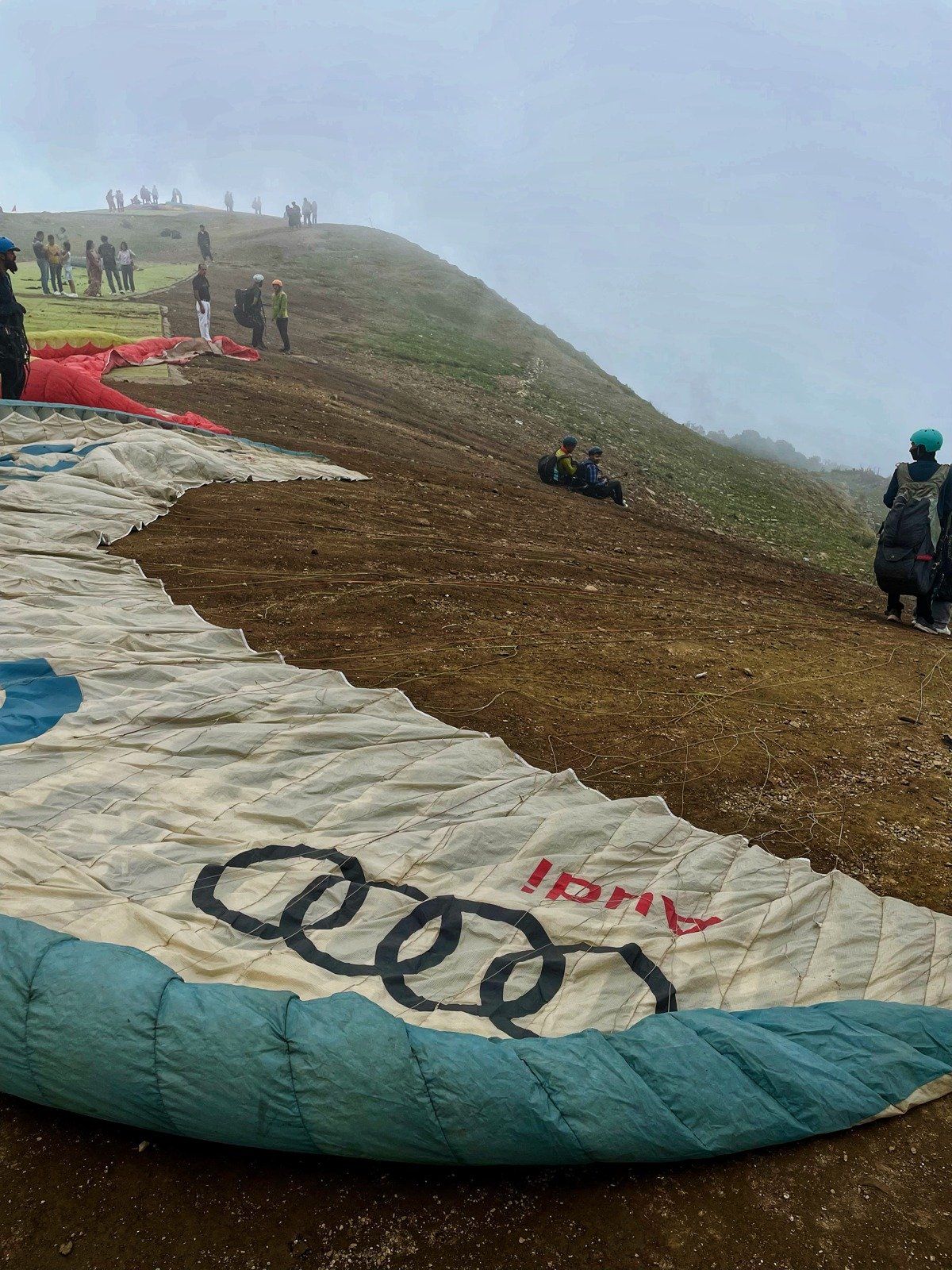
The day starts on the ground, not in the air. You meet your operator in Bir, and a shared jeep carries you 14 kilometres up to Billing — a 30 to 45 minute climb through pine forest and tea gardens. At the takeoff, a grassy slope facing the valley, your pilot lays out the wing, clips you into the harness in front of them, and talks you through the only thing you have to do: run. A short briefing of five to ten minutes, a few running steps down the slope, and the wing lifts you off the ground. There is no jump and no drop — the ground simply falls away, and suddenly you are floating above the Kangra Valley with the Dhauladhar peaks ahead of you. The pilot steers; you sit back and look around. The whole experience, from leaving Bir to landing back in the village, takes about three to four hours, most of it the road transfer and the wait for your slot. Flying follows the sun: the first window usually opens around 9 to 11:30 am, once the morning sun has warmed the slope and set off the thermals, and a second window runs roughly 12 to 3 pm, with most operators stopping by about 4 pm. A GoPro video of the flight costs about &rupee;500 to &rupee;1,000 extra, and it is worth deciding before takeoff — the landing comes up faster than you expect.
Bir Billing Paragliding Cost: What a Tandem Flight Costs
Bir Billing paragliding cost is the question every first-timer asks, and the honest answer is a range, not a single price. A standard tandem flight of 15 to 20 minutes costs about &rupee;2,500 to &rupee;3,500 per person; short joy rides start near &rupee;1,600, and longer or cross-country flights of 30 to 60 minutes run about &rupee;4,000 to &rupee;6,500. Prices firm up in the peak months of October and November, when pilot slots book out, and soften in the quieter weeks. Before you pay, confirm exactly what the quote includes: the jeep ride from Bir up to Billing (&rupee;200 to &rupee;400 if charged separately), the GoPro photos and video (&rupee;500 to &rupee;1,000), and whether there is any insurance. Book a day or two ahead in peak season — the good weather windows fill fast — and book through your stay, a known operator, or a verified channel rather than a roadside tout. If you catch the bug, Bir Billing is also a training ground: beginner P1 courses run three to five days and full P2 courses run ten to fourteen days, with October to November and March to May the best seasons to learn. Compare two or three schools and confirm the certification before you commit.
Best Time to Visit Bir Billing for Paragliding
The best time to visit Bir Billing for paragliding is March to June and September to November, when the air is clear and the thermals are strong and predictable. October and November are the peak: post-monsoon skies, the Dhauladhar range dusted with fresh snow, and the strongest flying of the year — the World Cup itself was flown in late October for exactly this reason. That is also why late November, right now, is such a good moment: the October crowds have thinned and the views are at their sharpest. December continues the season — October to December is the classic flying window — but expect cold mornings and shorter, lower flights than in October, and keep your plans flexible, since a cloudy day can ground flying entirely. The one window to avoid is the monsoon, roughly mid-July to mid-September, when rain and low cloud shut the site down for days at a stretch. Winter, from December to February, still flies on clear days, but it suits short scenic flights and camping better than long soaring days. If you are planning a wider Himachal trip around the flight, see our best places to visit in Himachal Pradesh guide, our Himachal in winter guide, and our Manali in December guide.
How to Reach Bir Billing from Delhi
How to reach Bir Billing from Delhi is straightforward, and the overnight bus is the route most travellers take. Volvos and buses run overnight from Delhi towards Baijnath and Bir; from there it is a short taxi ride to your stay. The road journey takes about 8 to 10 hours depending on traffic and stops, so an overnight bus that arrives in the morning leaves the whole day for the flight. If you would rather fly, the nearest airport is Kangra (Gaggal), about 65 to 70 kilometres away, with taxis and pre-booked cabs for the final leg. By train, the nearest major railhead is Pathankot, about 140 kilometres away, from where you continue by road. The slower, more scenic option is the narrow-gauge Kangra Valley Railway from Pathankot towards Joginder Nagar — getting off at Baijnath Paprola and taking a short taxi to Bir. Bir is about 65 kilometres from Dharamshala, a two to three hour drive, so the two towns pair naturally: fly into Kangra, spend a day around Dharamshala and McLeod Ganj, then come down to Bir for the flight. Most travellers combine Bir Billing with a wider Himachal loop — our how to reach Manali guide and our Spiti Valley guide cover the roads beyond.
Where to Stay in Bir Billing
Stay in Bir village, near the landing field, and the whole trip stays on foot: the takeoff jeeps leave from the village, the cafés and monasteries are a short walk, and you can watch gliders landing over your evening tea. The village has guesthouses, homestays and hostels across budgets, plus camps up at Billing for those who want sunrise over the Dhauladhars from the takeoff itself. Book ahead in October and November, when the flying season fills the village. Staying two nights is the sensible plan: paragliding is weather-dependent, and a spare day means a cloudy morning costs you nothing. If the flight is cancelled, the second day is your monastery and café day, not a wasted one.
Beyond the Flight: Monasteries, Cafés and Slow Days
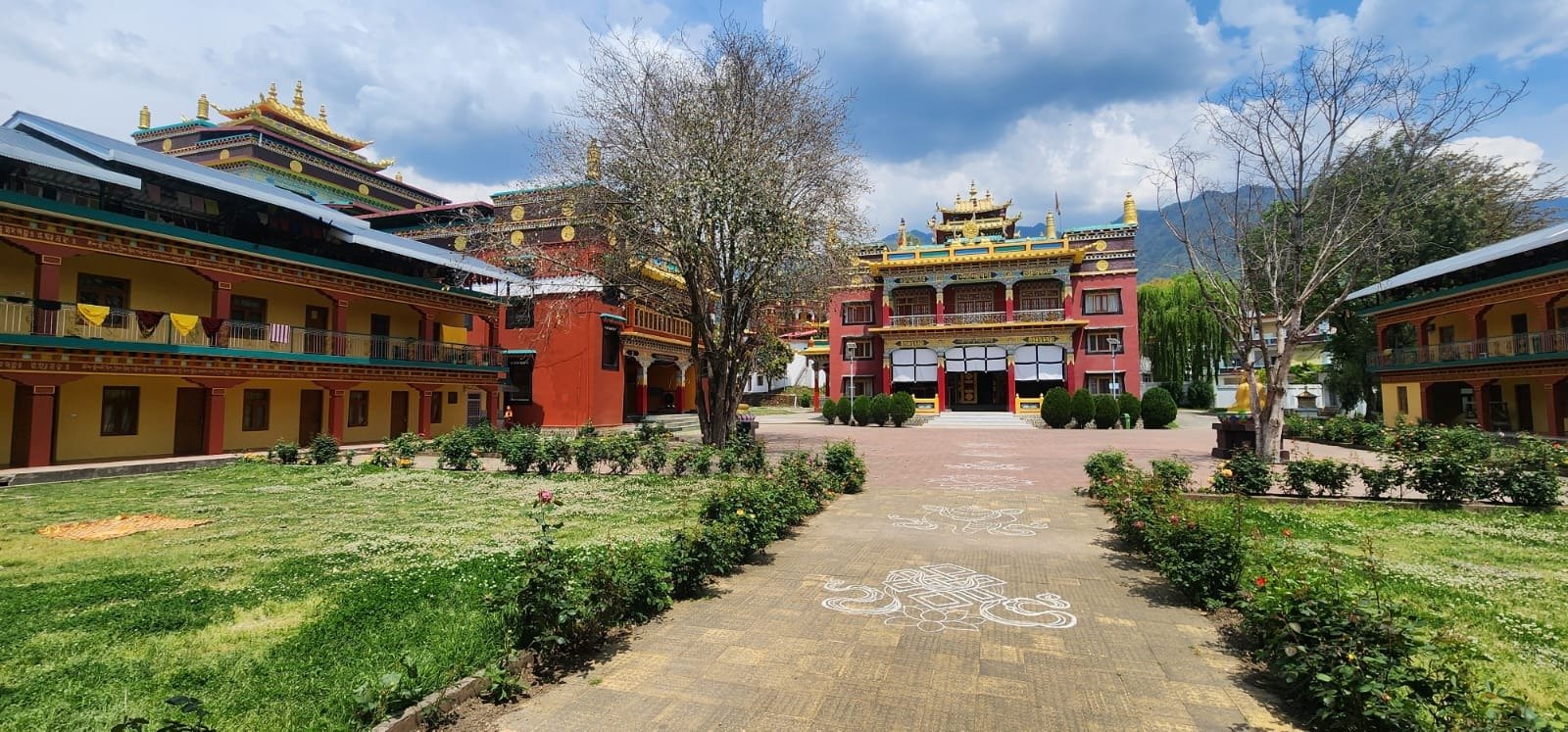
Bir Billing rewards the traveller who stays after landing, because the village is a Tibetan settlement as much as a flying site. Chokling Monastery, whose story traces to 1966, when Tibetan refugees made Bir their home, sits minutes from the landing field — go in the morning, when the chanting drifts across the courtyard. Palpung Sherabling, the monastic seat above the valley, is the larger monastery to pair with it. Between the two, the village runs at a slower pace: cafés around the landing field fill up at sunset as the last gliders come in, the tea gardens on the valley floor make an easy walk, and a short hike leads to Bangoru Waterfall, the village’s hidden cascade. It is a place built for unhurried days. And when the light goes, try the local food: our famous food of Himachal Pradesh guide covers the dishes to look for.
Staying Safe: Licences, Weather and Common Sense
Paragliding at Bir Billing is as safe as the pilot and the weather call you fly with, so both deserve a check. Around 150 paragliders are licensed by the Himachal Pradesh Tourism Department to run tandem flights here — ask to see the licence, and treat any operator who cannot show one as a reason to walk away. Flying is weather-dependent by design: if the wind is wrong or the cloud is low, a good operator cancels, and a cancelled flight is a sign the system is working, not a disappointment. Wear closed shoes with grip for the takeoff run, a windproof layer for the cold air at 2,400 metres, and sunscreen — the mountain sun is strong even in December. Check weight and age limits with your operator before booking. The monsoon closure, roughly mid-July to mid-September, exists for the same reason: some days are simply not flying days, and Bir Billing is honest about that.
Watch & Feel the Place
Videos are by their respective creators.
Bir Billing Paragliding FAQs
How much does paragliding in Bir Billing cost?
A standard tandem flight of 15 to 20 minutes costs about ₹2,500 to ₹3,500 per person. Short joy rides start near ₹1,600, and longer or cross-country flights run about ₹4,000 to ₹6,500. A GoPro video is usually ₹500 to ₹1,000 extra, and the shared jeep up to Billing is ₹200 to ₹400 if it is not included. Prices vary by season and operator, so confirm what is bundled before you pay.
What is the height of paragliding in Bir Billing?
You take off from Billing at about 2,400 metres above sea level and land at Bir, roughly 1,000 metres below, after a flight of about 14 kilometres. The height difference is what gives Bir Billing its long, soaring flights — a standard tandem stays up for 15 to 20 minutes, and experienced pilots riding thermals stay up far longer.
What is the best time to visit Bir Billing for paragliding?
March to June and September to November, with October and November the peak months — clear skies, strong thermals and the Dhauladhar peaks dusted with snow. Flying stops during the monsoon, roughly mid-July to mid-September, when rain and low cloud shut the site down.
How to reach Bir Billing from Delhi?
Take an overnight Volvo or bus from Delhi to Baijnath or Bir, then a short taxi to your stay — the road journey takes about 8 to 10 hours. By train, come to Pathankot, about 140 km away, then by road; the narrow-gauge Kangra Valley Railway from Pathankot towards Joginder Nagar is the slower, scenic option. The nearest airport is Kangra (Gaggal), about 65 to 70 km away.
Is December a good time to visit Bir Billing?
Yes — October to December is the classic flying season, with clear winter skies and some of the best views of the snow-dusted Dhauladhar range. December mornings are cold, and flights can be shorter and lower than in October, so dress warmly and keep your plans flexible. It is also one of the quieter months after the October crowds.
What are the paragliding timings in Bir Billing?
Flying follows the sun, not the clock. The first window usually opens around 9 to 11:30 am, once the morning sun has warmed the launch slope and set off the thermals, and a second window runs roughly 12 to 3 pm. Most operators stop sending tandems up by about 4 pm as the air cools. Timings shift with the weather, so the day's flights are confirmed on the morning itself.
The flight lasts twenty minutes; the memory lasts much longer. Book the tandem, keep a spare day for the weather, and leave an afternoon for the monasteries and the landing-field sunset. Next, read our Christmas in Manali, Shimla and Kasol guide — and our Himachal Pradesh in January guide if the mountains keep calling.
Plan your Bir Billing trip
Two nights, one tandem flight, and a spare day for the weather — that is the whole plan. October to December has the clearest skies.
Himachal Pradesh state guide →