
Himachal Pradesh · January Travel Guide
Himachal Pradesh in January: Snow, Solang & Winter Hills

By Beauty of Bharat — India travel guide, every place, every flavour.
Guides covering all 36 States and UTs, researched from official sources and checked at publish time. Corrections welcome — see About Beauty of Bharat.

Last January, Shimla and Manali waited until 23 January for their first snow. December 2025 had been so dry that the India Meteorological Department recorded a 100% rain-and-snow shortfall for Himachal up to 22 December — and then, three weeks into the new year, the hills finally turned white in a single storm. That is the honest truth about Himachal Pradesh in January: it is the state's best month for snow, and snow is still a chance, never a promise. This guide tells you where the snow actually falls, what is open and what is closed, and how to plan a January trip that works with or without a snowfall. For the state as a whole, see our Himachal Pradesh guide and our best places to visit in Himachal Pradesh.
Himachal Pradesh in January at a glance
| Best month for snow | January — the coldest month, and the most reliable for snowfall across the state |
| Most reliable snow | Solang Valley, the Atal Tunnel and Sissu side, Kufri and Narkanda — the high places, not the towns |
| Snow in the towns | Episodic. Shimla and Manali towns may see 2–3 snowfalls in a good January — or, as last year showed, none until late in the month |
| Rohtang Pass | Closed all winter; the Atal Tunnel is the winter route to Lahaul |
| Spiti Valley | Open only via Kinnaur, in extreme cold — for prepared travellers only |
| Booking | Book 4–6 weeks ahead; Christmas–New Year is the priciest week, late January is cheaper and often snowier |
Himachal Pradesh in January weather: what the cold actually feels like
January is the coldest month in Himachal, and the temperature depends almost entirely on altitude. The rule that governs the whole month is simple: height beats everything. A place 500 metres higher will hold snow weeks longer than the town below it, which is why people stand in slush in Manali town while Solang Valley, 13 km away, is white.
| Altitude zone | Places | Day | Night | January snow |
|---|---|---|---|---|
| Lower hills (1,300–2,200 m) | Shimla, Dharamshala, Dalhousie | 5–12 °C | −1 to 4 °C | Town snow possible, usually mid-month |
| Mid hills (2,200–2,900 m) | Kufri, Manali, Narkanda, Solang | 2–9 °C | −4 to 2 °C | Regular, settled snow; skiable slopes |
| High valleys (3,000 m and up) | Spiti, Sangla–Kalpa, Rohtang, Hatu | −8 to 2 °C | −15 to −25 °C | Deep snow; several roads closed |
Days are short — dark by about 5:30 pm — so start early and plan your driving in daylight. After a heavy fall, roads close for a few hours while they are cleared; that is routine in January, not an emergency, but build slack into every day. Check a live forecast the morning you travel, and pack layers rather than one heavy jacket: sunny afternoons in the lower hills can feel mild, and the same evening can freeze.
Shimla in January
Shimla is the easiest January snow trip in Himachal. At about 2,200 metres, the old summer capital is a comfortable drive from Delhi and Chandigarh, and the ride up on the UNESCO-listed Kalka–Shimla toy train is worth building the trip around. In January the Ridge is the town's postcard — a wide, traffic-free promenade with Christ Church at one end — and Mall Road's cafés are at their cosiest, with heaters on and the smell of wood smoke in the air. The Shimla Winter Carnival now runs every year from 24 December to 1 January, so its closing night falls on New Year's Day, with cultural evenings, folk dance and food stalls on the Ridge and Mall Road. If your dates run past 1 January, the carnival is over — but the town is quieter, cheaper, and often snowier in the second half of the month. See our Shimla guide.
When does it snow in Shimla?
Shimla's snow season runs from late December to February, and January gives you the best odds — a good January brings two or three snowfalls, and the Ridge and Mall Road turn white in the postcard state. But "best odds" still means maybe, not certainly. Shimla town's snow is the celebrated rarity: in the winter of 2025–26 the town waited until 23 January for its first fall, after a December with no rain or snow at all. The year before, the first snow came on 8 December. So do not book Shimla for a single date and expect snow on it. The fix is built into the geography: Kufri, about 16 km away, sits higher and holds snow far more reliably, and Narkanda, 60 km beyond Shimla at about 2,700 metres, is where the region's snow really lives. If Shimla town is dry, drive up — the snow is usually waiting a short climb away.
Manali in January snow: Solang is where the promise is kept

Manali is the January anchor for most snow trips, and the town sits at about 2,050 metres — but the real action is up at Solang Valley, around 2,560 metres, where skiing, snow tubing and cable-car rides run through the season. Manali town's snow is episodic, just like Shimla's; Solang's is reliable, holding snow from December into March. If snow is your priority, stay near Solang rather than in Manali town, and go up early in the day — after a fresh fall, police stop vehicles beyond Solang until the road is cleared. The town itself stays lively all winter: Mall Road, the old Manali lanes, hot momos and cafés with fireplaces. The Manali Winter Carnival is usually held in the first week of January, with parades and ski events at Solang — check the dates before you lock your travel days, as the schedule shifts each year. See our Manali guide and our best places to visit in Himachal in winter.
Is Rohtang Pass open in January?
No. Rohtang Pass, at about 3,978 metres, is shut through the winter and usually reopens somewhere between late April and June. If an itinerary promises you Rohtang in January, that is a reason to ask questions. The winter route is the Atal Tunnel, which stays open through the season: cross it and you reach Sissu, on the Lahaul side, in deep snow on a day trip — something that was impossible before the tunnel existed. Sissu's snowfields and frozen waterfalls are the closest thing January offers to a high Himalayan winter without a multi-day expedition, and the drive back through the tunnel to a warm Manali café is one of the best days the state offers in winter.
Narkanda and Kufri: Shimla's snow insurance
Kufri, about 16 km from Shimla, is the quick snow fix — a half-day trip, crowded on weekends, with pony rides and a small ski slope. Go early, and agree any ride price before you start. Narkanda, 60 km beyond Shimla at about 2,700 metres, is the serious snow destination within reach of the capital: reliable January–February cover, small ski slopes that are among India's oldest skiing spots, and the climb to Hatu Peak through snow-laden deodar forest. It is far quieter than Kufri, and the apple orchards stand in their winter skeletons around the town. Between the two, the choice is simple: Kufri for a quick taste of snow, Narkanda for a proper winter day.
Dalhousie and Khajjiar: the quieter white
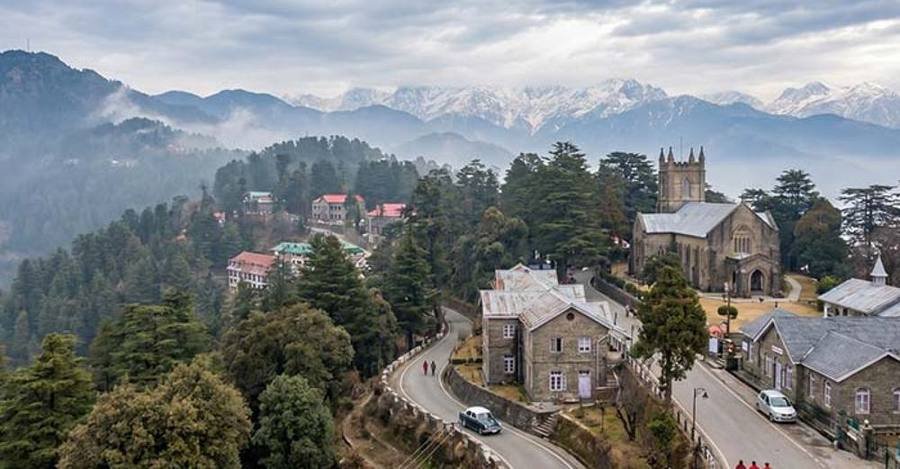
Dalhousie is the January choice for travellers who want snow without the crowds of Shimla and Manali. The quiet colonial hill station, named after the British governor-general Lord Dalhousie, turns its pine-lined walks and sloping rooftops white from December to February, and the snow here feels more private — fewer hotels, fewer horns, longer silences. Nearby Khajjiar, about 21 km away, is the meadow often called the "Mini Switzerland of India": in January its green bowl becomes a snowfield ringed by deodars. One warning: the Khajjiar road can close for days after a heavy fall, so treat it as a day trip you attempt when the weather allows, not a fixed booking. See our Dalhousie guide.
Dharamshala and McLeodganj in January
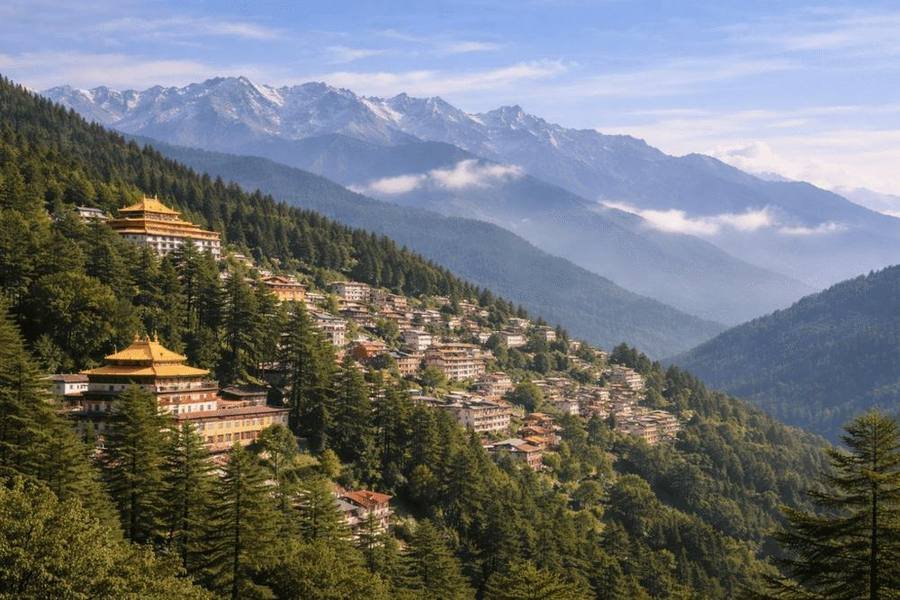
Dharamshala and McLeodganj are the January trip that works with or without snow. The towns stay open and lively all winter — the airport at Gaggal keeps flying, the monasteries, cafés and markets of McLeodganj carry on, and the Dhauladhar range stands snow-covered above you even when the streets are clear. Snow in the lower town is rare, but the upper areas — McLeodganj, Bhagsu, Naddi and Dharamkot — see snow on a few days each winter; on 23 and 24 January 2026, Dharamkot got about three inches and Naddi about two. It is the best January base for culture and food rather than snow play, and for fit hikers the Triund ridge above McLeodganj holds deep snow — note that winter treks above 3,000 metres need permission, so go with a guide and check the current order before you set out. See our Triund Trek guide.
Spiti Valley in January: beautiful, brutal, and only for the prepared
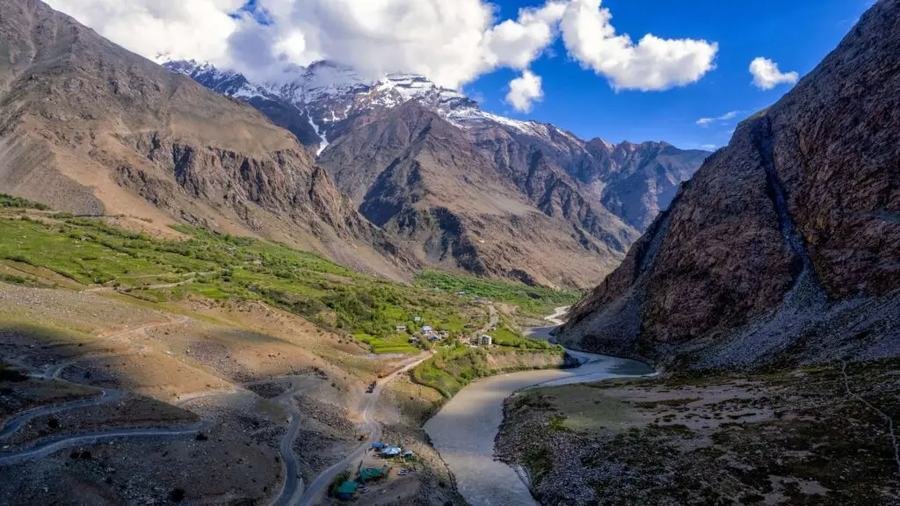
Spiti in January is the most beautiful and the most demanding winter in Himachal. The high desert sits around 3,800 metres, nights fall to −15 to −25 °C, and the valley is reachable only via Kinnaur — the Manali side, over Kunzum Pass, is closed. Monasteries stand in frozen silence, rivers freeze, and the snow leopard country around Kibber is at its starkest. This is not a trip to improvise: go with a local operator who runs winter Spiti, carry proper cold-weather gear, and accept that roads and plans can change with the weather. If that sounds like an expedition rather than a holiday, it is — and that is exactly why the people who go love it. Read our full Spiti Valley complete guide before you decide.
Tirthan Valley in January: the quiet corner
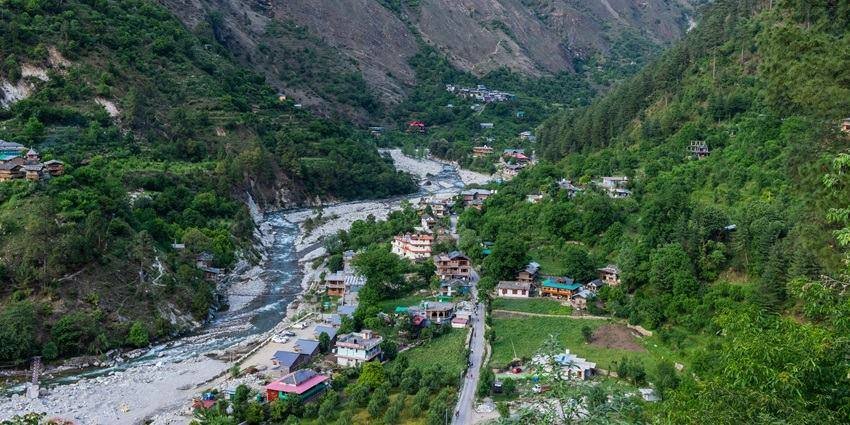
For travellers who want Himachal's winter without the snow crowds at all, Tirthan Valley is the quiet corner. The river runs cold and clear between pine-covered slopes, the homestays light their wood stoves, and the valley is at its most peaceful — a place for slow walks, trout fishing and long breakfasts rather than snow play. Snow falls on the higher reaches around the valley, but the valley floor stays walkable, which makes it a good January base for families and anyone travelling with older parents. Read our Tirthan Valley guide.
What is open and what is closed in January
Most of Himachal stays open in January — it is the high passes and the high treks that shut. Use this as your planning checklist, and confirm road status on the morning you travel.
| Open in January | Closed or restricted |
|---|---|
| Atal Tunnel, year-round, to Sissu and Lahaul | Rohtang Pass — closed all winter |
| Kalka–Shimla toy train (check for weather delays) | Kunzum Pass and the Manali–Spiti road |
| Solang Valley skiing, tubing and cable car | High treks above 3,000 m without permission (Triund included) |
| Shimla, Manali, Dharamshala, Dalhousie hotels, cafés and markets | Khajjiar road — can close for days after heavy snow |
| Shimla's natural ice-skating rink, when the ice holds | Some high-altitude homestays and camps shut for the season |
Planning a January trip: five practical notes
Pick one region per trip. Shimla–Kufri–Narkanda for easy access, or Manali–Solang–Sissu for serious snow. Trying to cover both in a short trip means long drives on winter roads.
Go mid- to late January if you can. The Christmas–New Year week is the priciest and most crowded; the last week of January and February are cheaper and often snowier.
Book 4–6 weeks ahead for Shimla and Manali in January — the peak snow month sells out, especially over weekends.
Pack for −5 °C even if the forecast says 10 °C. Thermals, a windproof outer layer, waterproof boots with grip, gloves, and lip balm. Roads ice overnight even when the day is sunny.
Keep your days short and your plans loose. Dark falls around 5:30 pm, and a morning snowfall can close a road for a few hours. The travellers who enjoy January most are the ones with a spare day and no fixed checklist.
Watch & Feel the Place: Himachal in Winter on Film
Videos are by their respective creators.
Himachal Pradesh in January FAQs
Does Himachal Pradesh get a lot of snow in January?
Yes — January is the snowiest month in Himachal, with the heaviest falls at Solang Valley, Kufri, Narkanda and the Atal Tunnel–Sissu side. But snow is weather, not a timetable: in the winter of 2025–26, Shimla and Manali waited until 23 January for their first snow, after a completely dry December.
Is Rohtang Pass open in January?
No. Rohtang Pass is closed all winter and usually reopens between late April and June. In January, use the Atal Tunnel instead — it stays open year-round and takes you to Sissu and Lahaul in deep snow.
When does it snow in Shimla?
Shimla's snow season runs from late December to February, with January giving the best odds — a good January brings two or three snowfalls. Kufri, about 16 km away, and Narkanda, 60 km away, hold snow far more reliably than Shimla town itself.
Which month has the most snow in Himachal?
January and February. January is the coldest month and the most reliable for fresh snowfall, while February usually has the deepest settled snow base with better weather — many travellers call February the best month overall.
Where is snow most certain in Himachal?
Solang Valley above Manali and the Atal Tunnel–Sissu area, in January and February. Both sit high enough to hold snow all season, with ski slopes, cable cars and snow activities running — unlike the towns, where snow comes and goes.
Which month is snow heavy in Manali?
January sees the heaviest snow in Manali, blanketing Solang Valley with deep layers ideal for skiing and snow play. Manali town itself gets snow from mid-December to February, but it falls episodically — Solang, 13 km up the valley, is where the snow is dependable.
January in Himachal rewards the traveller who plans for the altitude, not the calendar: base yourself high, keep a spare day, and let the snow come to you. Next, read our best places to visit in Himachal in winter and our state-by-state guide to India — or start with the big picture in best places to visit in India.
Plan your Himachal winter trip
Snow, Solang and the winter hills — pick one region, book early, and travel light on plans.
Himachal Pradesh state guide →