
Offbeat Spotlight · Himachal Pradesh
Spiti Valley Guide: A Desert That Was Once a Sea

By Beauty of Bharat — India travel guide, every place, every flavour.
Guides covering all 36 States and UTs, researched from official sources and checked at publish time. Corrections welcome — see About Beauty of Bharat.
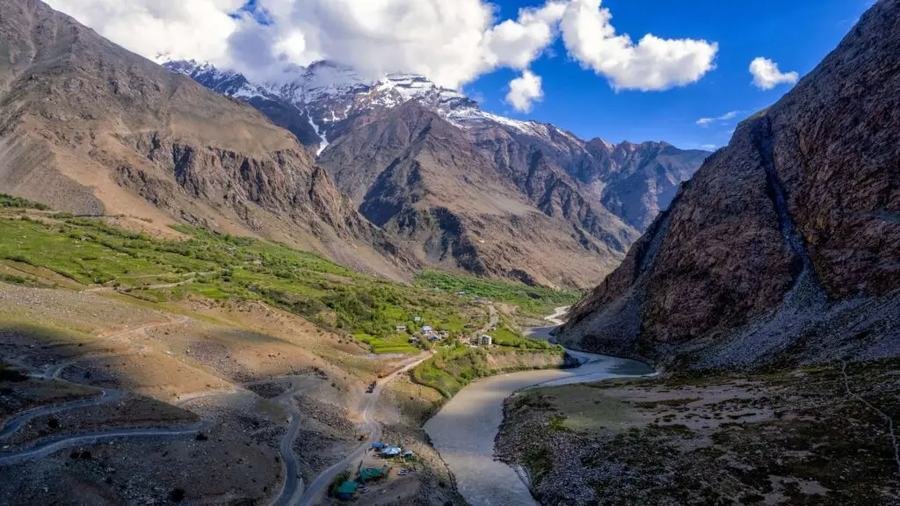
Walk the hills above Langza village in Spiti and you can find the shells of sea creatures — at around 4,000 metres above sea level, in one of India's driest deserts. That is the key to this valley: Spiti, whose name means "the middle land", was once under an ancient sea, and the seabed was lifted into the Himalaya. Today it is a cold desert in Himachal Pradesh's Lahaul and Spiti district, a land of bare ochre rock, whitewashed monasteries and villages so high that the post office at Hikkim is among the highest in the world. This guide covers the whole valley — Kaza, Key Monastery, Chicham Bridge, Hikkim, Langza, Chandratal and Kunzum Pass — with the best time to go, the two road routes, and the altitude advice that matters more here than anywhere else in Himachal.
One honest note first: Spiti is not a place to rush. The valley sits roughly between 3,000 and 4,500 metres, the air is thin, facilities thin out with altitude, and the roads run on the mountain's terms. Come with buffer days, a slow first day, and a plan that can bend — and Spiti gives you some of the most extraordinary landscapes in India.
Spiti Valley at a glance
Spiti is a high-altitude desert valley carved by the Spiti River, tucked between Tibet to the east and the great Himalayan ranges around it. Its character is the opposite of the green Himachal of Shimla and Manali: almost no rain, almost no trees, and a landscape of eroded cliffs, scree slopes and sudden green oases wherever a stream reaches a village. That dryness is also why the night sky here is so clear — on a moonless night at Chandratal or Langza, the Milky Way is not a faint smear but a bright river overhead.
The valley's culture is Buddhist, and its monasteries are its landmarks: Key, stacked like a fortress above the river, is the largest and most iconic; Tabo, on the Kinnaur approach, was founded in 996 CE and is famed for its ancient murals; Dhankar, the old capital, perches on a crag above two rivers. A Spiti trip is, at heart, a monastery-and-village journey through a desert.
Best time to visit Spiti Valley
June to September is the best time for a first Spiti trip. This is the road season: the full circuit is generally open, both approaches are usable, and Chandratal Lake is reachable. September is a favourite with returning travellers — clearer autumn light, thinner crowds and the valley turning gold. June brings the freshness of the newly opened passes, but also the year's highest water crossings on the Manali side, so early-season drivers should be cautious and check conditions.
Do not plan the classic circuit outside summer without specialist advice. The Manali side over Kunzum Pass closes in winter, and even the Shimla–Kinnaur approach faces snow disruption in deep winter. Winter brings extreme cold and most stays closed from roughly November to April. Spiti is emphatically not accessible year-round by road in the normal touring sense.
How to reach Spiti Valley: the two road routes
There is no airport and no railway in Spiti; you arrive by road, and the choice of route shapes the whole trip. The Shimla–Kinnaur route runs up the old Hindustan–Tibet road along the Sutlej, through Reckong Peo, Nako and Tabo into Spiti. It is longer, but it climbs gradually — which is much kinder for acclimatisation — and it stays open much longer than the Manali side. The Manali route runs through the Atal Tunnel and over Kunzum Pass to Kaza; it is shorter and more dramatic, but steeper, rougher, and open only in the summer season. The classic advice, and the best of both worlds, is to enter via Shimla and exit via Manali, so you gain height slowly and leave over the high pass.
Whichever way you come, Kaza is your base. It is the valley's main town and commercial centre, with the best range of stays, food, fuel and transport connections. From Kaza, shared taxis and hired SUVs cover the day trips below, and the villages themselves are explored on foot.
Kaza: the base town
Kaza sits along the Spiti River at around 3,800 metres and is where every Spiti trip settles into its rhythm. Its main bazaar street is the valley's shopping heart — Spitian woollens, sea-buckthorn and apricot products, and, in season, the valley's peas and apples. Spend your first day here doing very little: walk the bazaar, eat simply, drink water, and let your body adjust. The monasteries and high villages will still be there tomorrow, and they are far more enjoyable without a headache.
Stay in Kaza for small hotels, guesthouses and homestays; village homestays at Tabo, Dhankar and Langza offer family cooking and far quieter nights, but facilities are basic and winter closes most doors. Book ahead in summer, and carry cash: ATMs and card machines cannot be relied on at altitude.
Key Monastery: the fortress on the hill
Key Monastery (also spelt Ki or Kye) is Spiti's signature sight — a hill of whitewashed cells stacked like a fortress above the river, a working monastery and school of monks rather than a museum. Its origins go back to the 11th century, and its assembly halls hold ancient murals and manuscripts. Visit in the morning, when the light is soft and the monks are at prayer, dress modestly, keep your voice down, and ask before photographing people. Pair it with nearby Kibber village, one of the highest inhabited villages in the region, on the same half-day trip.
Chicham Bridge: Asia's highest bridge
From Kibber, the road crosses Chicham Bridge, described as Asia's highest suspension bridge, spanning a deep gorge between Kibber and Chicham village. Before the bridge, the journey between the villages was a long detour; today it is a short, vertiginous crossing and a Spiti rite of passage. Stop at the viewpoint and look down — the drop is the point.
Hikkim, Komic and Langza: the high villages
This trio, done as one day trip from Kaza, is the heart of the Spiti experience. Hikkim is home to a post office counted among the highest in the world — send a postcard home from it, and you will understand why travellers queue for the stamp. Komic is one of the highest villages connected by a motorable road, with its own monastery and a stillness that feels like the edge of the inhabited world. Langza is the fossil village: a giant Buddha statue watches over the village, and the surrounding hills hold marine fossils from the ancient sea this guide began with.
That is the payoff of the opening mystery. Millions of years ago, the Tethys Sea covered this region; as the Himalaya rose, the seabed rose with it, carrying its shells to 4,000 metres. The fossils around Langza are that evidence, lying in a desert that was once an ocean floor. Look, photograph, and leave them where they are.
Chandratal and Kunzum Pass: the moon lake
Chandratal, the "Moon Lake", is a crescent of startling blue at around 4,300 metres on the Manali side, reached over Kunzum Pass — a high crossing at over 4,500 metres that links Lahaul with Spiti. The lake is reachable only in the summer season, when the pass is open, and camps operate near it from roughly June to September. The last stretch to the lake is on foot, the water is sacred to many visitors, and swimming is not the done thing — walk the shore, watch the colours change with the light, and stay for the stars if you are camping.
Treat Kunzum Pass with respect: it is high and exposed, weather can change fast even in peak season, and the road past Batal is rough and stream-crossed. Cross in the morning, keep fuel topped up, and never let a timetable push you over a pass in bad weather.
A simple 6-day Spiti plan
For a first trip: day one, arrive in Kaza and acclimatise; day two, Key Monastery, Kibber and Chicham Bridge; day three, the Hikkim–Komic–Langza loop; day four, Tabo and Dhankar or a slow Kaza day; days five and six, Kunzum Pass and Chandratal, with a lake camp if the season allows, then exit towards Manali — or reverse the plan if you entered from Manali. Add a buffer day; Spiti repays the traveller who is not in a hurry.
Pack for a desert at altitude, not for a hill station: sun protection and a hat (the sun is fierce and the air is thin), layers for cold nights even in summer, sturdy shoes, water, and basic medicines. Eat light on arrival days, avoid alcohol at altitude, and descend and seek help if altitude symptoms worsen rather than improve — that is the one rule that matters more than any itinerary.
Watch & feel the place
Spiti is hard to describe and easy to feel on film. Watch these two journeys before you plan yours:
Videos are by their respective creators and are embedded for viewing; please check the creators' channels for the latest Spiti road updates before travelling.
Spiti Valley FAQs
What is the best time to visit Spiti Valley?
June to September is the best time for a first trip, when the full circuit is generally open and Chandratal is reachable. September offers clear autumn light and thinner crowds; winter is for specialists only.
How do I reach Spiti Valley?
Only by road — from Shimla through Kinnaur, which stays open much longer, or from Manali through the Atal Tunnel and over Kunzum Pass in the summer season. Kaza is the base town.
Is Spiti Valley accessible all year by road?
No. The Manali side over Kunzum Pass closes in winter, and even the Shimla–Kinnaur approach faces snow disruption in deep winter. Plan the classic circuit for summer.
What are the must-see places in Spiti Valley?
Kaza as base, Key Monastery, Chicham Bridge, the high villages of Hikkim, Komic and Langza, and Chandratal via Kunzum Pass in season — plus Tabo and Dhankar on the Kinnaur approach.
Why is Langza called a fossil village?
Its hills hold marine fossils from an ancient sea that once covered this region before the Himalaya rose. Look and photograph them, but leave them where you find them.
How many days do I need for Spiti Valley?
At least six days for a Kaza-based trip with the high villages and Chandratal, plus travel days to and from Shimla or Manali — and an acclimatisation day at the start.
Spiti does something no other Himachal trip quite does: it makes you feel small in the best way — under a sky that has not changed since the seabed became a mountain. If this valley has caught you, keep going: start with our offbeat places in India guide for the wider world of hidden corners, check Himachal Pradesh in winter before planning a cold-season trip, and read the full Spiti Valley destination guide and the Himachal Pradesh state guide to build your route.
Plan your Himachal trip
Start with Spiti's high villages and moon lake, then set it beside Shimla, Manali and the rest of the state.
Himachal Pradesh state guide →