
Himachal Pradesh · State Guide
Best Places to Visit in Himachal Pradesh: Shimla to Spiti

By Beauty of Bharat — India travel guide, every place, every flavour.
Guides covering all 36 States and UTs, researched from official sources and checked at publish time. Corrections welcome — see About Beauty of Bharat.

In one Indian state you can post a letter from the world's highest post office, drive to one of the highest villages on Earth reached by road, and ride a toy train through 102 tunnels to a town that was once the summer capital of an empire. That state is Himachal Pradesh — and the post office, at Hikkim in Spiti Valley, sits at about 4,400 metres. The best places to visit in Himachal Pradesh are Shimla, Manali, Dharamshala and McLeodganj, Spiti Valley, Dalhousie and Khajjiar, Kasauli, Kasol, Bir Billing, Chamba and Kufri.
In brief: start in Shimla for the colonial hill-station classic, cross to Manali for the Beas valley and the Atal Tunnel, then choose your second half — Tibetan culture around Dharamshala and Dalhousie, or the high cold desert of Spiti, which needs its own trip. This is the year-round guide; for snow-season planning, see our Himachal Pradesh in winter guide.
Himachal Pradesh at a glance
| Best time to visit | March to June and September to November for most of the state; Spiti Valley only from June to early October |
| UNESCO site | The Kalka–Shimla Railway, inscribed in 2008 as part of the Mountain Railways of India |
| Start here | Shimla — the state capital and main gateway from Kalka and Chandigarh; see the Himachal Pradesh state guide |
| High-altitude anchor | Spiti Valley — a separate 6-to-8-day loop; allow time to acclimatise and check road status before you go |
| Adventure anchor | Bir Billing — India's paragliding capital, which hosted the Paragliding World Cup in 2015 |
| Food to try | Siddu, dham and trout from the valley streams |
Why Himachal Pradesh surprises first-time visitors
Most people arrive expecting one hill station and find five different states in one. Shimla is colonial India preserved on a ridge; McLeodganj is Little Lhasa, home to Tibetan monasteries and cafes under the Dhauladhar range; and Spiti is a cold desert of thousand-year-old monasteries. That is the payoff to the opening claim: Hikkim's post office, at about 4,400 metres, really does post letters from the top of the world, and Komic, at 4,587 metres, is one of the highest villages on Earth reached by road. The Kalka–Shimla toy train and the Atal Tunnel add engineering records most travellers never expect. Plan it as two trips, not one: the green hill stations, and the high desert.
1. Shimla — the Queen of the Hills
Shimla was the summer capital of British India, and it still wears that history on the Ridge — the open promenade where Christ Church, the Gaiety Theatre and the old Town Hall stand above the Mall Road. The Viceregal Lodge, now the Indian Institute of Advanced Studies, hosted the talks over Partition, and Jakhoo Temple watches over the town from its highest point. The best way to arrive is the Kalka–Shimla toy train: opened on 9 November 1903, the narrow-gauge line climbs about 96 kilometres through 102 tunnels — the longest, at Barog, is about 1,144 metres — and was inscribed by UNESCO in 2008. Give Shimla two days, with a day trip to Kufri. See the Shimla guide.
2. Manali — the classic Himalayan holiday
Manali, at 2,050 metres on the Beas River in the upper Kullu Valley, is Himachal's most versatile base. The 16th-century Hadimba Temple stands hushed inside its deodar grove in Old Manali, the hot springs at Vashisht are a short walk away, and Solang Valley, 13 kilometres out, is the base for paragliding and winter skiing. The modern marvel is the Atal Tunnel: opened on 3 October 2020, the 9.02-kilometre tunnel runs under the Rohtang Pass, cuts the Manali to Leh road by 46 kilometres, and gives Lahaul year-round connectivity. Rohtang Pass itself remains regulated, and tourist vehicles need the applicable permit, so check the current rules before you go. See the Manali guide and the Hampta Pass trek.

3. Dharamshala and McLeodganj — Little Lhasa under the Dhauladhar
Dharamshala is where Himachal changes character. The lower town holds the cricket stadium with the Dhauladhar range rising behind it; the upper town, McLeodganj, at about 2,082 metres, is the seat of the Central Tibetan Administration, which moved here from Mussoorie in 1960, and home to the Dalai Lama's temple complex. Monasteries, prayer flags and Tibetan cafes fill the lanes, and the Triund trek — about 2,875 metres, a moderate walk through oak and deodar forest — is the classic day out. Dharamshala is also the state's winter capital, and the Kangra valley below it is greener and gentler than the high Himalaya. See the Dharamshala and McLeodganj guide and the Triund trek.
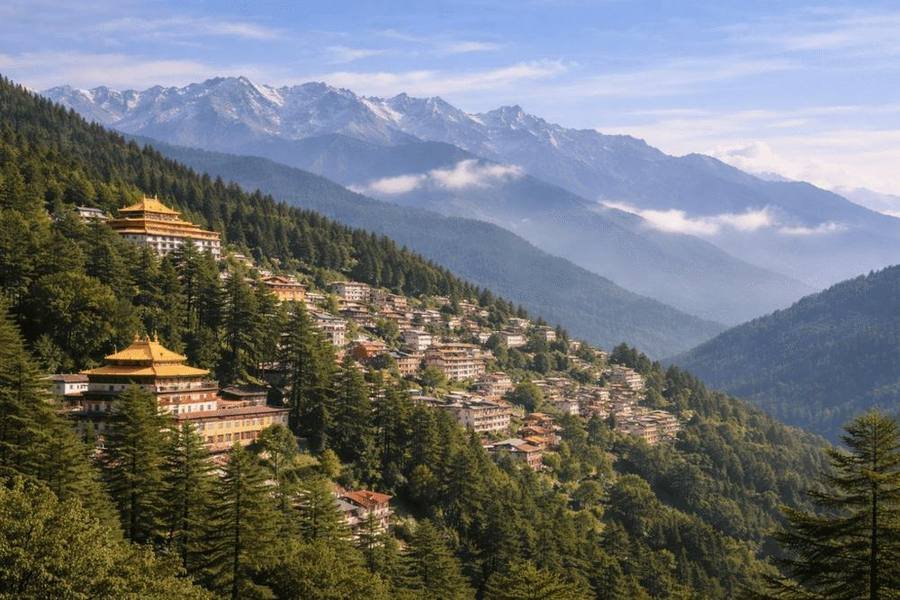
4. Spiti Valley — the cold desert at the top of the world
Spiti is where Himachal stops feeling like a hill station and starts feeling like another planet: a high cold-desert valley of brown mountains, white monasteries and villages above 4,000 metres. Key Monastery, more than 1,000 years old and perched at 4,166 metres above the Spiti River, is the valley's largest monastery; around Kaza, the base at about 3,800 metres, one day trip takes in the fossil village of Langza, Komic at 4,587 metres — one of the highest villages on Earth reached by road — and Hikkim, home to the world's highest post office at about 4,400 metres, where travellers still send postcards home. Tabo, the valley's oldest monastery, and the crescent lake of Chandratal complete the circuit. Spiti is only viable from June to early October, when the passes are open; acclimatise slowly, and note that medical facilities are limited, so preparation matters. See the Spiti Valley guide.
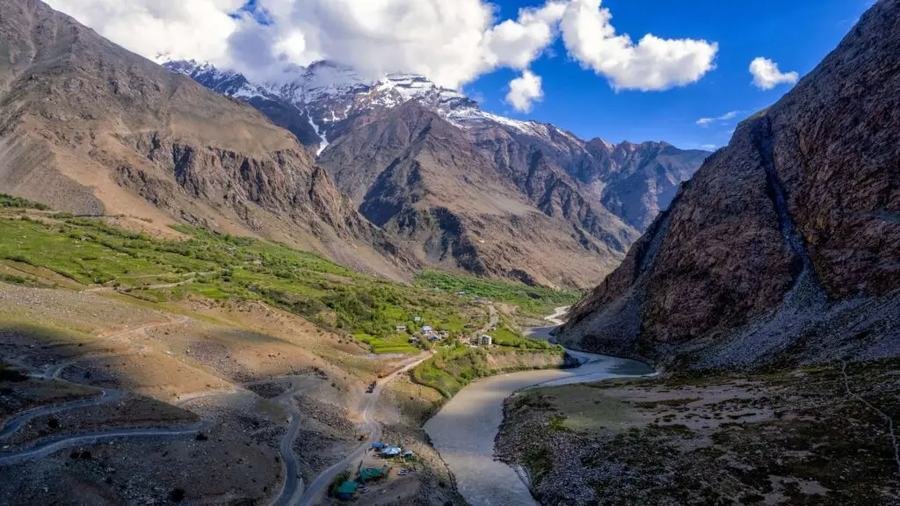
5. Dalhousie and Khajjiar — the quiet colonial hill station and Mini Switzerland
Dalhousie, named after Lord Dalhousie, is the hill station for travellers who found Shimla too busy: five low hills, pine forests, colonial churches and long walks with views across the Pir Panjal. The essential side trip is Khajjiar, about 24 kilometres away — a saucer-shaped meadow ringed by deodar forest, with a small lake at its centre, at about 1,980 metres. Khajjiar was named Mini Switzerland by the Swiss envoy on 7 July 1992, and a yellow Swiss hiking sign still greets visitors at the entrance. Chamba, the old princely town on the Ravi, is the natural third stop on this circuit. See the Dalhousie guide.
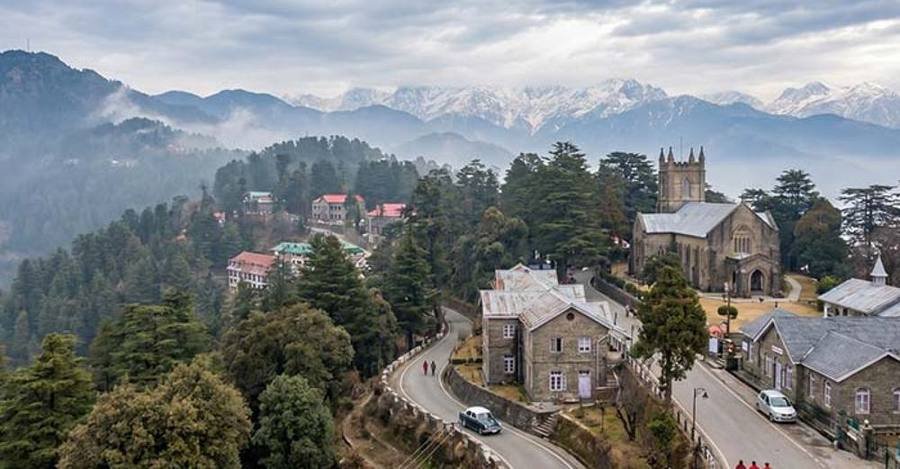
6. Kasauli and Chail — the slow hill stations
Kasauli is a cantonment town that time seems to have agreed to leave alone: a single ridge road, Christ Church, the Gilbert Trail through the pines, and views down to the plains. Chail, nearby, is its quieter sibling, known for its palace and one of the world's highest cricket grounds. Neither town asks for more than a day — come here to do very little, very well.
7. Kasol and the Parvati Valley — riverside cafes and trailheads
Kasol, on the Parvati River in Kullu district, is Himachal's backpacker base: riverside cafes and trailheads into the Parvati Valley, including the popular Kheerganga trek. The hot springs at Manikaran, a short drive away, are the classic side trip. Kasol is at its best in October–November and March–May, when the valley is green and the trails are open.
8. Bir Billing — India's paragliding capital
Bir Billing is where Himachal takes flight. Billing is the takeoff, Bir the landing, and between them lies one of the world's great paragliding sites — the reason Bir hosted the Paragliding World Cup in 2015 and draws pilots from across the world. Even if you never leave the ground, Bir is worth a day: Tibetan monasteries, slow cafes and sunset over the Kangra valley. October to December and March to June are the flying seasons.
9. Chamba — the old town on the Ravi
Chamba is one of Himachal's oldest towns, set above the Ravi River with the Chaugan — its great open ground — at its heart. Its temples and the Bhuri Singh Museum hold the art of a princely state that survived centuries in these hills. Most travellers pass through on the way to Khajjiar; give it half a day instead of an hour, and the old town repays the pause.
10. Kufri — Shimla's mountain playground
Kufri, a short drive from Shimla, is the day trip every Shimla itinerary includes: the Himalayan Nature Park, horse rides through the deodars, apple orchards, and in winter, some of the most accessible skiing in the state. It is small and busy at weekends — visit on a weekday morning.
A suggested 7-day Himachal Pradesh route
Days 1–2 — Shimla. Ride the toy train in from Kalka, walk the Ridge and Mall Road, visit the Viceregal Lodge, and take a morning trip to Kufri.
Day 3 — Shimla to Manali. The long valley drive through Kullu; arrive in Old Manali by evening.
Day 4 — Manali. Hadimba Temple in the morning, Solang Valley in the afternoon, and a drive through the Atal Tunnel towards Sissu.
Day 5 — Manali to Dharamshala. Down the Beas valley to the Kangra side; evening in McLeodganj.
Day 6 — McLeodganj. The Dalai Lama temple complex, the monasteries, and the Triund trailhead — or the full Triund trek if you start early.
Day 7 — Dalhousie and Khajjiar. The meadow at Khajjiar in the morning, Dalhousie's pine walks in the afternoon, and out via Pathankot or Chandigarh. Spiti does not fit in this week — give it a separate 6-to-8-day loop when the passes are open.
What to eat in Himachal Pradesh
Himachali food is the thread that ties this trip together: siddu, steamed bread stuffed with walnuts or poppy seeds and served with ghee; dham, the festive platter of lentils, rajma and rice served at celebrations; and trout from the valley streams around Manali and Kullu. Eat where the locals queue — the roadside maggi-and-chai stop is a Himachal institution.
Best time to visit Himachal Pradesh
March to June is the classic season: green valleys, clear roads and the hill stations at their best. September to November brings the clearest skies of the year and the paragliding season at Bir Billing. December to February brings snow to Shimla, Manali and Kufri — our Himachal in winter guide covers the snow season in full. Spiti is the exception: go only from June to early October, when both passes are open. If you can only pick one month, pick October.
Himachal Pradesh travel tips
Acclimatise in Spiti. Kaza sits at about 3,800 metres and the villages above it higher still — take it slow on day one and keep it easy.
Book the toy train early. The Kalka–Shimla services are popular and seats are limited — reserve ahead on IRCTC, and keep the morning free in case of mist on the Ridge.
Check passes and permits before you go. Rohtang Pass access is regulated, Spiti's roads depend on the season, and connectivity is patchy in the high valleys — download offline maps and carry cash in Spiti.
Watch & feel the place
See Shimla in cinematic light, then watch Bir Billing from the air:
Videos are by their respective creators and are embedded for viewing; please check the creators' channels for the latest Himachal Pradesh content before travelling.
Best places to visit in Himachal Pradesh FAQs
What are the best places to visit in Himachal Pradesh?
Shimla, Manali, Dharamshala and McLeodganj, Spiti Valley, Dalhousie and Khajjiar, Kasauli, Kasol, Bir Billing, Chamba and Kufri. Shimla is the classic first stop, Manali the adventure base, McLeodganj the cultural stop, and Spiti the high-altitude highlight.
How many days do you need for Himachal Pradesh?
Seven days covers the classic loop: two in Shimla, two in Manali, one in McLeodganj and one in Dalhousie and Khajjiar. Spiti Valley needs a separate 6-to-8-day trip, and with only three or four days, pick Shimla plus either Manali or Dharamshala, not everything.
What is the best time to visit Himachal Pradesh?
March to June and September to November for most of the state, when the weather is pleasant and the skies are clear. December to February brings snow to Shimla and Manali, while Spiti Valley is only accessible from June to early October.
Is the Kalka–Shimla toy train worth it?
Yes — the narrow-gauge railway opened in 1903, climbs about 96 kilometres through 102 tunnels, and was inscribed by UNESCO in 2008 as part of the Mountain Railways of India. Book ahead, as seats are limited, and ride in daylight for the views.
Do you need a permit for Rohtang Pass?
Access to Rohtang Pass is regulated and tourist vehicles need the applicable permit, so check the current rules before you go. The Atal Tunnel, opened in 2020, gives year-round road access from Manali towards Lahaul without crossing the pass.
Is Spiti Valley safe for first-time travellers?
Yes, with preparation: go between June and early October when the passes are open, acclimatise slowly at Kaza's altitude of about 3,800 metres, carry cash as connectivity is patchy, and remember medical facilities are limited. First-timers should travel with an experienced driver rather than self-driving.
Himachal Pradesh keeps answering the opening question with something higher. If this guide has you thinking about the snow season, read our Himachal Pradesh in winter guide next.
Plan your Himachal Pradesh trip
Start in Shimla, cross to Manali, then choose the monasteries of McLeodganj or the high desert of Spiti.
Himachal Pradesh state guide →