
Himachal Pradesh · Food and Culture
Famous Food of Himachal Pradesh: 12 Dishes from Siddu to Dham

By Beauty of Bharat — India travel guide, every place, every flavour.
Guides covering all 36 States and UTs, researched from official sources and checked at publish time. Corrections welcome — see About Beauty of Bharat.

Himachal Pradesh’s most famous meal is one you will almost never find on a restaurant menu. The dham — a vegetarian feast cooked by hereditary cooks called botis and served on leaf plates to guests sitting in rows on the floor — happens at weddings, temple fairs and family occasions, not in dining rooms. That is the honest starting point for the famous food of Himachal Pradesh: the best of it is home, festival and dhaba cooking. Here are the 12 dishes worth travelling for — from Siddu, the steamed bread of Kullu, to Chha Gosht, the lamb curry of Chamba, and the trout of the valley’s rivers.
| Dish | Where it belongs | What it is | Veg / non-veg |
| 1. Dham | All over the state; Kangra, Mandi, Chamba styles | Festive vegetarian feast on leaf plates | Vegetarian |
| 2. Siddu | Kullu, Shimla, Mandi | Steamed wheat bun, stuffed, eaten with ghee | Vegetarian |
| 3. Chana Madra | Chamba, Kangra | Chickpeas slow-cooked in a yoghurt gravy | Vegetarian |
| 4. Babru | Shimla and the lower hills | Fried bread stuffed with black gram paste | Vegetarian |
| 5. Tudkiya Bhath | Chamba | Slow-cooked rice with lentils, potato and yoghurt | Vegetarian |
| 6. Chha Gosht | Chamba | Lamb in a gram-flour and yoghurt gravy | Non-vegetarian |
| 7. Kullu Trout | Kullu, Tirthan Valley | Freshwater trout, lightly spiced | Non-vegetarian |
| 8. Sepu Badi | Mandi, Kullu | Urad dal dumplings in spinach or yoghurt gravy | Vegetarian |
| 9. Aktori | Lahaul-Spiti | Festive buckwheat pancake | Vegetarian |
| 10. Kadoo ka Khatta | Kangra (in the dham) | Sweet-and-sour pumpkin | Vegetarian |
| 11. Mittha | All over the state (closes the dham) | Sweet rice with ghee, sugar and dry fruits | Vegetarian |
| 12. Patrode | Chamba, across the hills | Colocasia-leaf rolls with spiced gram flour | Vegetarian |
Names and recipes vary between villages and districts — the same dish can taste different in Kangra and in Chamba. Check locally before you go.
What is the most famous food of Himachal Pradesh?
Two dishes share the crown, and the honest answer depends on what you mean. The most famous meal is the dham: the festive vegetarian feast every Himachali food guide names first, cooked by botis and served on leaf plates at weddings and festivals. The most famous single dish is Siddu — the steamed, stuffed wheat bun of Kullu and Shimla that has become the state’s best-known snack. Between them they explain the whole cuisine: the dham is the celebration, Siddu is the everyday hill food, and the other ten dishes fill the table in between.
1. Dham — the festive feast on a leaf plate
Dham is not a dish so much as a whole meal — the signature of Himachali cooking. Botis — hereditary cooks from Brahmin families — cook it in large brass vessels over wood fires and serve it by the ladle onto leaf plates called pattal, to guests seated in rows on the floor. A Kangra dham usually includes madra, black gram dal, a sweet-and-sour khatta — often pumpkin or chickpeas — and sweet rice to finish. Mandi, Chamba and Kangra each have their own style, so the same word covers several different plates. It is always entirely vegetarian, and always cooked for a crowd — a wedding, a temple fair, a family occasion. See our dham guide.
2. Siddu — the steamed bread of Kullu

Siddu is the dish most travellers remember from Himachal. It is a soft, yeasted wheat bun, rolled around ground walnut, poppy seed or lentil filling, steamed, and eaten hot with ghee, often with green chutney or dal. It belongs to Kullu and Shimla above all, and it is winter food in the truest sense: filling and warm, made for the cold. Fillings vary — savoury, sweet, and a few stuffed with spicy mutton — but the walnut and poppy-seed versions are the ones to ask for first. See our siddu guide.
3. Chana Madra — chickpeas in a yoghurt gravy

Madra is the dish that makes the dham taste like the dham. Chickpeas — or sometimes kidney beans — are slow-cooked in a spiced yoghurt gravy with ghee and whole spices until the sauce turns rich, creamy and mildly tangy. It comes from Chamba, and it is the dish Himachali cooks are judged by: the yoghurt must not split, the chickpeas must hold their shape, and the tang must be there without sourness. Eat it with steamed rice. See our madra guide.
4. Babru — Himachal’s answer to the kachori
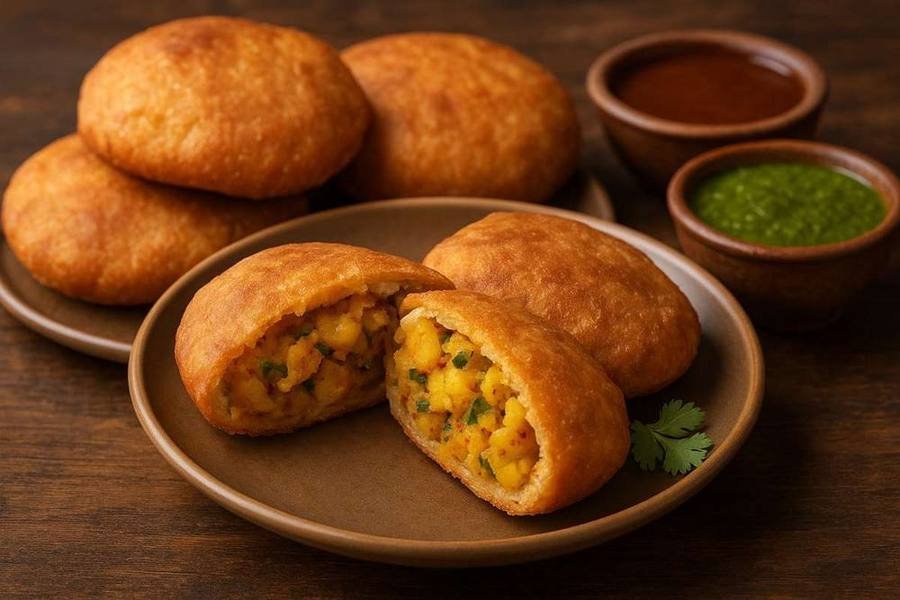
Babru is the snack of Shimla’s lanes and Mandi’s old markets. Wheat dough is stuffed with a seasoned paste of soaked black gram (urad), then deep-fried until golden — crisp outside, soft and spiced inside. It is Himachal’s answer to the kachori, usually eaten with tamarind chutney. Look for it at market stalls and tea shops in Shimla and the lower hills, made fresh through the day. See our babru guide.
5. Tudkiya Bhath — Chamba’s slow-cooked rice

Tudkiya Bhath is the pulao of Himachal, and a Chamba dish through and through. Soaked rice is slow-cooked with masoor dal, yoghurt, potatoes and vegetables, with fragrant spices — dagad phool, mace and star anise among them — until the rice turns soft, tangy and rich. It is often served with mashed dal and chutney, and it tastes better the slower it is cooked. Some call it a pulao; the yoghurt and spice mix make it unmistakably Himachali. See our tudkiya bhath guide.
6. Chha Gosht — lamb in a buttermilk gravy
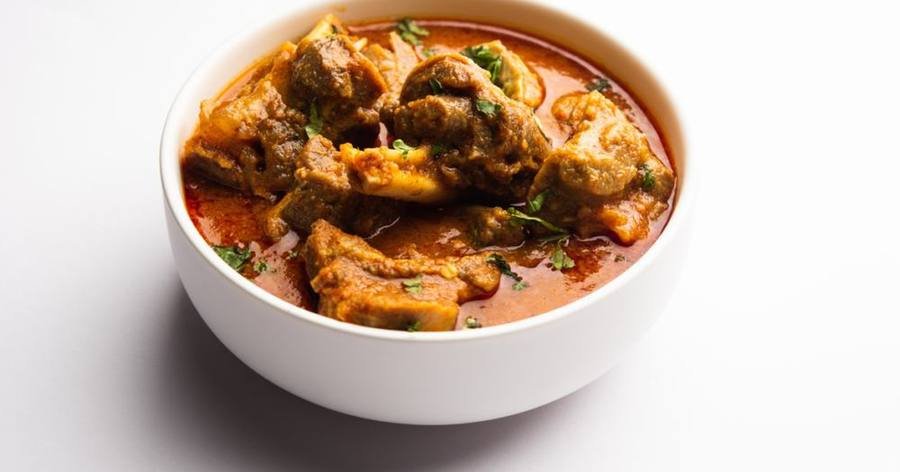
Chha Gosht is the non-vegetarian dish Himachal is proudest of, and it comes from Chamba too. Marinated lamb — traditionally the chest and leg — is slow-cooked in a gram-flour and yoghurt or buttermilk gravy with cardamom, red chilli, coriander, bay leaf, asafoetida and ginger-garlic. The result is tangy and mildly spicy rather than fiery — it is also called khatta gosht for that sour note — and it is served with steaming hot rice. See our chha gosht guide.
7. Kullu Trout — the river fish of the valley
The Beas and its tributaries run cold and clear through Kullu, and they are full of trout. Kullu trout — rainbow and brown trout — is cooked with just a few spices, so the fish does the talking: grilled or pan-fried, often with lemon and herb butter. It depends entirely on where you eat it: the fish is best within a short drive of the river. Tirthan Valley and the Kullu valley are the places to order it. No verified photo of Kullu trout in our library — this dish runs text-only.
8. Sepu Badi — the dumplings of Mandi
Sepu Badi — also written Sepu Vadi — is Mandi’s signature dish, a clever piece of mountain cooking. Split urad dal is ground with spinach and spices, shaped into dumplings, steamed and fried, then simmered in a rich, spiced gravy — spinach-based in some versions, yoghurt-based in others. The dumplings soak up the gravy and turn soft inside. It is a high-protein dish, served with steamed rice, and it appears at feasts and festivals across Mandi and Kullu. No verified photo of Sepu Badi in our library — this dish runs text-only.
9. Aktori — the buckwheat pancake of Lahaul-Spiti
Aktori is the festive pancake of the high valleys of Lahaul-Spiti. Buckwheat flour — sometimes buckwheat leaves, in older versions — is mixed with wheat flour, sugar and milk, pan-fried like a pancake and eaten with ghee, jaggery or honey. It is made during local celebrations, when buckwheat — the hardy grain of the cold desert — is at its best. Sweet, nutty and filling, it is the taste of a valley where wheat struggles and buckwheat thrives. No verified photo of Aktori in our library — this dish runs text-only.
10. Kadoo ka Khatta — the sweet-and-sour pumpkin
Every dham needs its sour note, and in Kangra that note is often Kadoo ka Khatta: pumpkin cooked sweet-and-sour with tamarind or amchoor. On the leaf plate it sits between the rich madra and the plain rice, cutting through the ghee and resetting the palate — the reason a dham moves, course by course, from tangy to sweet. The same khatta idea appears with chickpeas too, but the pumpkin version is the one in the Kangri dham thali. No verified photo of Kadoo ka Khatta in our library — this dish runs text-only.
11. Mittha — the sweet rice that closes the feast
Mittha is how a Himachali feast ends. Sweetened rice — sometimes called meetha bhaat — is simmered with ghee, sugar, raisins and dry fruits until soft, fragrant and gently sweet. It is the last thing served on the dham leaf plate, and it is also made on its own for festivals and family occasions. Simple as it sounds, it lingers: ghee and dry fruits carry the whole meal’s warmth into the finish. No verified photo of Mittha in our library — this dish runs text-only.
12. Patrode — the monsoon leaf rolls
Patrode — patrodu in Himachal — is the monsoon snack of the hills. Tender colocasia leaves (arbi ke patte) are spread with spiced gram-flour paste, layered, rolled tightly and steamed, then sliced and sometimes shallow-fried in mustard oil. It is a Gaddi festival dish in Chamba and a tea-time favourite across the state, served with chutney, curd or roti. The same leaf-roll idea exists in several parts of India under other names, but the Himachali version — steamed, spiced, eaten in the rains when the leaves are young — is its own. No verified photo of Patrode in our library — this dish runs text-only.
What is the main food of Himachal Pradesh?
The everyday answer is simpler than the feast. The staples of Himachal Pradesh are rice, wheat and maize, with lentils, vegetables and yoghurt alongside — and the dham is the traditional main meal for celebrations. On an ordinary day that means rajma-chawal at a dhaba, dal and rice at a homestay, and Siddu or Babru as a snack between meals. Yoghurt is the thread through almost everything: it goes into madra, tudkiya bhath, chha gosht and the khatta that balances the feast. If you eat one thing at every meal in Himachal, it will be something made with curd.
Where to eat Himachali food
Here is the practical truth the guides agree on: real Himachali food is mostly cooked at home, at weddings and at temple feasts, not in restaurants. Your best chances are a homestay that cooks for its guests, a village feast, a temple fair, or a dhaba on a mountain road — Kullu and Manali dhabas serve siddu, trout and local rajma, and Shimla’s market lanes serve babru. A dham is the hardest to find as a walk-in: it is cooked for an occasion, so ask your homestay host or a local guide whether a feast is happening while you are there. For the trip itself, see our best places to visit in Himachal Pradesh guide and the Himachal in winter guide — cold weather is siddu weather.
Watch & Feel the Place: Siddu on Film
Videos are by their respective creators.
Famous Food of Himachal Pradesh FAQs
What is the most famous food of Himachal Pradesh?
The most famous meal is the dham — the festive vegetarian feast of rice, dal, madra, khatta and sweet rice, cooked by botis and served on leaf plates at weddings and festivals. The most famous single dish is Siddu, the steamed, stuffed wheat bun of Kullu and Shimla, eaten hot with ghee.
What is the main food of Himachal Pradesh?
Dham, Madra, Siddu and Chha Gosht are the prominent dishes eaten across the state. The everyday staples are rice, wheat and maize, with lentils, vegetables and yoghurt — yoghurt goes into madra, tudkiya bhath, chha gosht and the khatta that balances the feast.
What is Himachal Pradesh’s famous dish?
Dham is considered the state’s famous dish: a lavish vegetarian meal of rice, dal, rajma, madra and sweet rice, served on leaf plates at celebrations. It is cooked by specialist cooks called botis and varies by district — Kangra, Mandi and Chamba each have their own style.
Is Himachali food vegetarian?
Largely, yes. Dham, Siddu, Madra, Babru, Tudkiya Bhath and Sepu Badi are all vegetarian, and the traditional feast is entirely vegetarian — so vegetarians eat very well in Himachal. The main exceptions are Chha Gosht, the lamb curry of Chamba, and Kullu trout from the valley’s rivers.
Where can I eat real Himachali food?
At a homestay that cooks for its guests, a village feast or temple fair, or a dhaba on a mountain road — Kullu and Manali dhabas serve siddu, trout and local rajma, and Shimla’s market lanes serve babru. A dham is cooked for an occasion, so ask your host or a local guide whether a feast is happening during your stay.
Eat the dham where it is cooked, save a morning for siddu in Kullu, and then walk it off in the hills. Next, read our best places to visit in India guide, the state-by-state guide, and the famous food of Uttarakhand and famous food of Punjab guides.
Plan your Himachal trip
Siddu in Kullu, dham at a village feast, trout by the Beas — and the hills to walk it all off.
Himachal Pradesh state guide →