
Practical Guide · Food & Travel
Eating Vegan in India: What to Eat, What to Watch For, and Where It Is Easiest
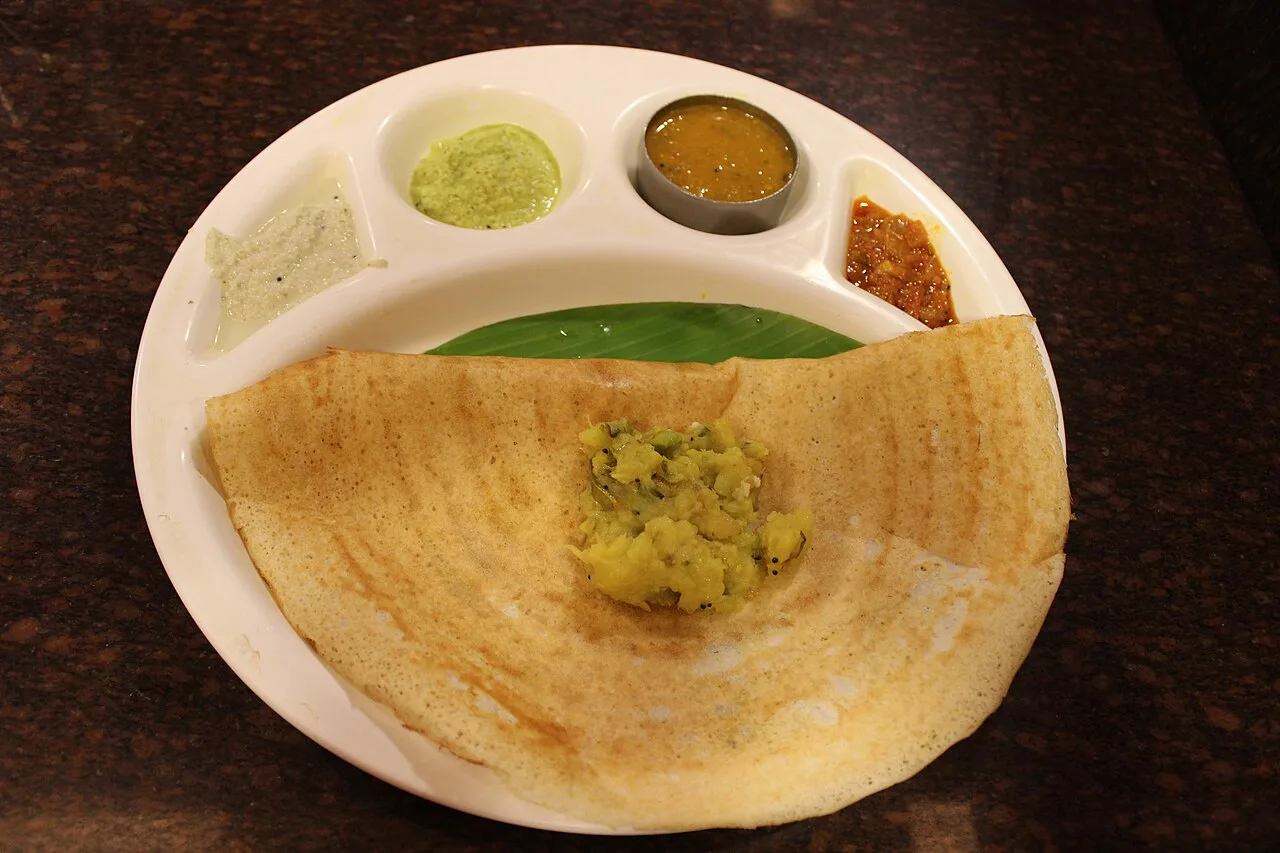
You can eat vegan in India for a week without ever ordering a dish labelled “vegan”. Breakfast can be a crisp dosa with lentil sambar. Lunch can be dal, rice and a dry vegetable sabzi from a thali. Dinner can be chana masala scooped up with roti. None of these dishes was invented for vegans — they are everyday Indian food, cooked the way they have been cooked for generations. That is exactly why India is one of the easiest countries in the world to eat vegan in, and also why it catches so many vegans out.
The catch is a single word: vegetarian. India has the largest vegetarian population on Earth, and vegetarian food here is not a side menu — it is the main event, taken seriously everywhere from temple towns to five-star hotels. But Indian vegetarian food is not automatically vegan. Dairy is woven into it: ghee as the default cooking fat, paneer as the protein, curd on the side of almost everything, milk in the chai, cream swirled into gravies. The difference between a great vegan trip and a frustrating one is knowing which dishes are vegan by default, which ones hide dairy, and the phrases that get a kitchen on your side.
This guide covers all of it: the dishes you can order with confidence, the dairy traps, how to order vegan in Hindi and Tamil, the regions where vegan eating is effortless and the ones where you need a plan, verified vegan restaurants in Delhi, Mumbai, Bengaluru, Goa and Rishikesh, street food that works, and what to pack for trains and remote places. Where a dish has its own guide on Beauty of Bharat, we link to it rather than repeat it.
Eating Vegan in India at a Glance
| Overall | One of the easiest countries in the world to eat vegan — with knowledge. Vegetarian food is everywhere; vegan food is a small step from it. |
| Easiest regions | South India, Gujarat and Jain kitchens, Buddhist Ladakh, temple towns such as Rishikesh and Pushkar. |
| Hardest spots | Dairy-heavy Punjab and Rajasthan, meat-heavy Northeast and Kashmir, highways and overnight trains. |
| Safest default meal | South Indian breakfast — idli or dosa with sambar — or a thali with the curd skipped and ghee swapped for oil. |
| Main thing to watch | Ghee. It is cooked into dishes, not served beside them, so a curry can look entirely plant-based and still contain dairy. |
| Most useful phrase | “Bina ghee, bina doodh” — without ghee, without milk. |
| Best time to eat well | October to March, when markets are full and most cafes run full hours; many Goa and mountain cafes shorten hours in the monsoon. |
Is Indian Food Vegan? The Honest Answer
No — not automatically. But a very large part of it is, and the vegan-friendly part is the part Indians actually eat every day, not a special diet menu. The honest answer has two halves, and you need both.
The first half is the good news. Indian cooking is built on lentils, chickpeas, beans, rice, vegetables and spices. Dal, chana masala, rajma, sambar, rasam, aloo gobi, baingan bharta and most sabzi are complete meals in their own right. South Indian cooking leans on coconut oil rather than ghee. Jain cooking goes further still: no meat, no eggs, and no root vegetables. And because vegetarianism is a cultural norm rather than a trend, no waiter will look surprised when you ask for something without dairy.
The second half is the dairy. Milk, curd, paneer, butter, cream and ghee are not occasional ingredients in Indian food — in North Indian cooking especially, they are the base of the dish. A creamy dal gets its silkiness from butter or cream, curries are finished with yoghurt, rotis are brushed with ghee, and almost all Indian sweets are milk-based. Because dairy is considered pure and auspicious in Hindu tradition, it is added generously and often without being mentioned on a menu.
One more distinction worth knowing: in India, eggs count as non-vegetarian. Under Hindu and Jain dietary traditions, eggs fall outside vegetarian food. That works in your favour — a “pure vegetarian” restaurant guarantees no meat, no fish and no eggs anywhere in the kitchen, narrowing what you need to watch for to dairy alone.
How to Tell Veg from Non-Veg at a Glance
India has a built-in labelling system worth learning on day one. Packaged food, takeaway containers and buffet spreads must carry a small symbol: a green dot inside a green square means vegetarian — no meat, no fish, no eggs — and a brown or red dot in a square means non-vegetarian. It will not tell you a dish is vegan, but it instantly rules out meat, fish and eggs.
For packaged food there is a second mark: the Food Safety and Standards Authority of India (FSSAI) vegan logo, a green leaf-style “V” that approved vegan products can carry. In restaurants, look for the words on the board: “pure veg” means a 100% vegetarian kitchen; “Jain food” means no onion, no garlic and no root vegetables; “sattvic” food, served near temples and ashrams, usually means no onion or garlic and often very little dairy.
Dishes That Are Vegan by Default
These are the dishes to learn first. Order them as they come, with one check — ask whether ghee was used. We link each dish to its full Beauty of Bharat guide where one exists.
- Masala dosa and plain dosa — crisp fermented rice-and-lentil crepes with spiced potato filling, served with sambar and coconut chutney. Ask for no ghee on the griddle.
- Idli and vada with sambar — steamed rice cakes and savoury lentil doughnuts. Vegan as made almost everywhere; skip any side of curd.
- Sambar and rasam — South Indian lentil stews, tamarind-sour and peppery. Vegan by default in most kitchens.
- Dal (most dals) — lentil dishes of every colour. Ask for the tadka (tempering) in oil rather than ghee, and skip any butter or cream finish.
- Chana masala — chickpeas in spiced tomato-onion gravy, naturally vegan unless cream is added. Note the trap: the bhature bread served with it is usually made with curd, so order chana with roti or rice instead.
- Rajma — kidney beans in tomato gravy, vegan unless cream is added.
- Most sabzi — dry vegetable dishes: aloo gobi (potato and cauliflower), bhindi (okra), baingan bharta (smoky mashed aubergine). Ask about ghee in the tempering.
- Puttu and kadala curry — steamed rice cylinders with black chickpea curry, a Kerala breakfast, vegan as made.
- Dalma — Odisha’s lentil-and-vegetable stew; ask for it tempered in oil, not ghee.
- Dhokla — steamed chickpea-flour cakes from Gujarat, usually vegan with an oil-based tempering.
- Poha — flattened rice with peanuts and turmeric, a breakfast across central and western India, vegan as made.
- Neer dosa — Karnataka’s lacy rice crepe with coconut chutney; vegan when no ghee is used.
- Dal pitha — Bihar’s steamed rice-flour dumplings stuffed with spiced lentils, vegan as made.
- Vegetable pulao and most vegetable biryanis — vegan as long as ghee is not used in the rice; ask, because ghee is common here.
A thali is the single most useful vegan meal in India: a platter of dal, two vegetable sabzi, rice, roti, pickle and usually a small bowl of curd. Ask them to leave out the curd and cook with oil instead of ghee, and you have a complete, filling, inexpensive vegan meal in almost any town. The Gujarati thali is a good example, and the Kerala sadya, served on a banana leaf, is mostly vegan apart from the curd and the milk-based payasam dessert.
The Dairy Traps: What Looks Vegan But Is Not
These are the dishes and ingredients that catch vegans out most often. Each one has a simple workaround.
| Trap | Why it is not vegan | What to do instead |
|---|---|---|
| Ghee | Clarified butter, the default cooking fat in much of North Indian cooking; cooked in, so you cannot see it. | Ask “bina ghee, tel mein banaiye” — without ghee, made in oil. |
| Paneer | Fresh pressed cheese made from milk; the protein in countless North Indian curries. | Order chana, dal, rajma or a vegetable sabzi instead. |
| Curd, dahi and raita | Yoghurt, served beside thalis, dosas and biryanis, and stirred into dals. | Ask for it to be left out; it is a side dish, so this is the easiest fix of all. |
| Butter and cream | Finished into dals (dal makhani), gravies and rice; roti and parathas are brushed with butter. | Order roti instead of butter roti; ask for dal without the cream finish. |
| Naan | Dough usually contains yoghurt or milk, and naan is brushed with butter. | Order roti or plain rice instead — both are almost always fully plant-based. |
| Chai and filter coffee | Made with milk by default; masala chai is milk, tea, sugar and spices. | Ask for black tea, lemon tea or nimbu chai; in the south, ask for filter coffee with hot water or skip it — see below. |
| Sweets (mithai) | Almost all Indian sweets are milk-based: gulab jamun, ras malai, kheer, barfi and lassi. | Skip them unless a shop confirms a vegan version; fruit is the safe sweet ending to a meal. |
| Bhature and some parathas | Bhature dough is made with curd; parathas are often cooked in ghee. | Eat the chana with roti; ask for parathas cooked in oil. |
| Pav bhaji and sarson da saag | Both are traditionally finished with a generous knob of white butter. | Ask for pav bhaji without butter; eat makki di roti (vegan) and check the saag. |
| Khandvi and bisi bele bath | Khandvi batter contains curd; bisi bele bath is often finished with ghee. | Enjoy dhokla or thepla instead; ask for bisi bele bath made with oil. |
One honest warning: the hardest dairy to avoid is the kind you never see. A vegetable curry that looks entirely plant-based may have been cooked in ghee, and a dal may have had butter stirred in at the end. That is why the question matters more than the menu — ask every time, even when the dish looks safe. Indian kitchens are among the most accommodating in the world once they understand what you need.
How to Order Vegan in India: Phrases That Actually Work
English works in most hotels, cafes and tourist restaurants, and “vegan” is now understood in India’s big cities. Outside them, the words that work are the ingredients, not the label — “vegan” is still unfamiliar in small towns, while “no ghee, no milk” is understood instantly everywhere.
In Hindi (understood across North and Central India)
- “Main vegan hoon.” — I am vegan.
- “Main doodh, dahi, ghee aur paneer nahi khata / nahi khati.” — I don’t eat milk, curd, ghee or paneer. (Khata if you are a man, khati if you are a woman.)
- “Isme ghee hai kya?” — Does this have ghee in it?
- “Bina ghee, bina doodh.” — Without ghee, without milk. The single most useful phrase on this page.
- “Tel mein banaiye, please.” — Please make it in oil.
- “Dahi mat daliye.” — Please don’t add curd.
- “Chai bina doodh, nimbu chai?” — Tea without milk — lemon tea?
In Tamil (Tamil Nadu and Puducherry)
- “Ghee vendaam.” — I don’t want ghee.
- “Paal vendaam.” — No milk.
- “Thayir vendaam.” — No curd.
- “Idhu vegan-a?” — Is this vegan?
- “Ennaiyil seiyyunga.” — Please make it in oil.
Three ordering habits make everything easier. First, ask about ghee before you order, not after the food arrives — once ghee is in, it cannot come out. Second, order dishes that are vegan by design rather than asking a kitchen to rebuild a dairy dish; a dosa or a dal needs one small change, a paneer butter masala needs a new recipe. Third, eat where the food is cooked to order and the cook is visible — tiffin rooms, thali restaurants and street dosa stalls are easier to negotiate with than a banquet buffet. And on chai: most roadside stalls brew tea and milk together in one pot and genuinely cannot make a dairy-free cup, so order black tea or lemon tea instead, or carry your own tea bags and ask for hot water.
Where Vegan Eating Is Easiest — and Where It Is Harder
South India: the easiest region in the country
This is the easiest place in India to eat vegan, and it is not close. South Indian cooking leans on coconut oil rather than ghee, and rice and lentils do the heavy lifting instead of dairy. Dosas, idlis, uttapams and vadas are naturally vegan or need only a small tweak, like skipping the ghee on the griddle. Sambar and rasam show up constantly and are vegan by default. Kerala adds coconut-milk curries and puttu with kadala, and Tamil Nadu adds the tiffin-room culture — small, cheap restaurants serving idli, dosa and pongal from early morning. For the gentlest possible start to a vegan trip, start in the south: Chennai, Madurai, Kochi, Bengaluru and Mysuru are all easy.
Gujarat and Jain food: strict kitchens, easy eating
Gujarat is one of India’s most vegetarian states, and its food shows it: dhokla, thepla, khandvi (check the curd), undhiyu and the Gujarati thali are built around lentils, vegetables and chickpea flour. Jain restaurants, found in Gujarat, Rajasthan, Maharashtra and Karnataka, are excellent for vegans — no meat, no eggs and no root vegetables — and Jain cooks are used to precise dietary requests.
Buddhist Ladakh and the Himalayan towns
Ladakh’s Buddhist food culture is plant-friendly in a different way: thukpa (noodle soup), momos (confirm the vegetable filling), tingmo (steamed bread) and simple vegetable-and-barley dishes, often cooked simply with oil rather than ghee. The same is true of Dharamshala and the Buddhist settlements of the Himalayas. In Ladakh, carry snacks — the distances between towns are long and roadside dhabas may have little beyond instant noodles and tea.
Temple towns: Rishikesh, Pushkar, Haridwar, Vrindavan
Rishikesh is a vegetarian town — meat is not served within the town — and the same is true of Pushkar, Haridwar and Vrindavan. That does not make them vegan by default, because dairy is still everywhere, but it removes the hardest problem (finding a vegetarian kitchen at all) and the towns are full of cafes used to travellers asking for vegan versions of dishes. Ashram and temple food is often sattvic — simple, no onion or garlic, frequently made with minimal dairy.
Where it is harder
Punjab and Rajasthan are the dairy heartlands. Punjabi food is built on butter, cream, paneer and lassi; Rajasthani food is built on ghee, from dal baati churma to the sweets. You can still eat vegan in both — dal, chana, rajma and dry sabzi exist everywhere — but you will ask for changes at almost every meal. Kashmir leans heavily on meat, and much of the Northeast is meat- and fish-centred, with fewer vegetarian restaurants; plan ahead and carry snacks. Highways and overnight trains are the other hard spot: a dhaba at midnight may have only dal, rice and chai, so pack food for the journey (see below).
Vegan Restaurants and Cafes: Delhi, Mumbai, Bengaluru, Goa, Rishikesh
Every place below was verified as currently operating in November 2026 through recent listings, reviews or its own site. We name only places we could verify. Menus and hours change — check before you go, and confirm each dish, since even vegan cafes can carry a few dairy items.
Delhi
- Greenr Cafe, Shahpur Jat and Greater Kailash 1 — Delhi’s original plant-based cafe, serving vegan burgers, bowls, pasta, smoothies and desserts. Verified live on delivery platforms in 2026 with ratings around 4.4–4.6. Note that a couple of non-vegan items appear on the breakfast menu, so double-check breakfast dishes.
- Burma Burma, Saket (and Gurgaon) — a vegetarian Burmese restaurant with a large vegan-friendly menu: khao suey, tofu dishes, salads and curries, much of it vegan or easily made so. Also in Mumbai and Bengaluru.
Mumbai
- Earth Cafe, Bandra West (Waterfield Road) and BKC — a vegan-friendly cafe built around dairy-free, gluten-free eating: smoothie bowls, avocado toast, pesto pasta, vegan pizza and desserts. The Bandra branch is listed as open daily, roughly 8am–11pm, and the BKC branch keeps similar hours.
- Burma Burma, Fort — the Mumbai branch of the chain; ask for the vegan dishes, a substantial part of the menu.
Bengaluru
- Carrots, Koramangala — India’s first vegan restaurant, founded in 2013, serving Indian and international vegan food, from chana masala and cashew curries to pizza and desserts. Note that listings show more than one Koramangala address over the years, so confirm the current address before you go.
- Burma Burma, Indiranagar — the Bengaluru branch, with the same vegan-friendly menu.
- Everyday South Indian restaurants — Bengaluru’s easiest vegan eating is not in a vegan cafe at all: tiffin rooms and darshinis serve idli, dosa, vada and sambar from early morning.
Goa
- Bean Me Up, Ozran Beach Road, Vagator — a 100% vegan restaurant and guesthouse in a garden setting, serving tofu, tempeh and seitan dishes, wood-oven pizza, pasta, Buddha bowls, kombucha and vegan desserts. Listed as open daily 9am–11pm, with recent reviews from 2026 and a HappyCow listing updated in September 2026. It also has rooms.
- Artjuna, Anjuna — a Mediterranean cafe in an old Portuguese house with a garden, lifestyle shop and library, open 7:30am–10pm daily, with vegan options throughout the menu including vegan chocolate cake, hummus and smoothie bowls. Not fully vegan, but reliably vegan-friendly and open all year.
Rishikesh
- Little Buddha Cafe, Tapovan / Lakshman Jhula area — a long-running cafe above the Ganges with Indian and international food, salads, herbal tea and a wide vegan-friendly menu. Not fully vegan, but used to vegan requests from the yoga travellers who fill the town.
- Pumpernickel German Bakery, Lakshman Jhula — the German bakery on the main street, with a rooftop view over the river and a large vegetarian menu with many vegan dishes. A good breakfast stop before a day on the ghats.
Beyond these cities, Auroville, near Puducherry, has a plant-based cafe culture of its own. And in Jaipur, Udaipur, Kochi and Varanasi, you will rarely need a dedicated vegan restaurant: South Indian restaurants, Jain restaurants and thali houses cover vegan eating so well that the cafes are a bonus, not a necessity.
Street Food That Works for Vegans
Indian street food is some of the best eating in the country, and a surprising amount of it is vegan — with the same ghee-and-curd checks as everywhere else. Eat from busy stalls with high turnover, where food is cooked in front of you, and you will eat well.
- Dosa stalls — the safest street meal in India. Ask for no ghee, and eat it with sambar and coconut chutney.
- Chaat — pani puri, bhel puri, sev puri — most chaat is vegan as made: crisp shells, potatoes, chickpeas, tamarind and mint chutneys. Avoid dahi puri and dahi bhalla, which are topped with yoghurt.
- Samosas — the potato-and-pea filling is usually vegan; ask whether they were fried in ghee or oil.
- Vada pav and misal pav — Mumbai’s potato-fritter sandwich and spicy sprouted-bean curry; skip any butter on the pav.
- Roasted corn (bhutta) — rubbed with lemon, salt and chilli, sold on street corners across India; vegan.
- Fruit chaat and fresh fruit — cut fruit with chaat masala from market stalls; cheap and everywhere.
- Jhalmuri — Kolkata’s puffed-rice, peanut and mustard-oil snack, vegan as made and sold on trains and street corners across the east.
- Roasted chana and peanuts — sold by weight in paper cones at stations and markets; the perfect train snack.
On hygiene, the usual rules apply: eat freshly cooked hot food, eat where the locals queue, drink bottled or filtered water, and carry oral rehydration salts. A stall that fries samosas all day for a crowd is a safer bet than a quiet restaurant with a buffet that has been sitting out since lunch.
Markets and Cooking Classes
India’s markets are a vegan’s playground, even if you never cook a thing. A morning vegetable market — Delhi’s INA Market, Bengaluru’s KR Market, Kochi’s Broadway — is a crash course in Indian vegetables: a dozen kinds of gourd, fresh curry leaves, green mangoes, jackfruit, drumsticks, chillies you have never seen.
For cooking, ask your homestay or guesthouse first: many run small, informal sessions where you learn dal, sabzi and roti in a home kitchen — the easiest place to control the oil. In cities, look for classes that advertise vegetarian or vegan sessions and confirm before booking that they cook with oil, not ghee, and skip the paneer and curd.
What to Pack: Snacks for Trains and Remote Places
Vegan eating in India’s cities is easy. The moments that need a plan are the in-between places: overnight trains, long bus rides, mountain roads, small towns after 9pm.
- Dry snacks: roasted chana and peanuts, trail mix, thepla (Gujarati spiced flatbread, made to keep for days), khakra, dried fruit, energy bars and biscuits — check the packet for the green dot and the FSSAI vegan logo.
- Breakfast backup: instant oats or poha and upma packets, which need only hot water — useful where hotel breakfast is a dairy-heavy buffet.
- Drinks: tea bags — ask any chai stall or hotel for hot water and you have black tea anywhere. Plant-milk sachets are worth packing for remote areas; in metros, soy, almond and oat milk are sold in supermarkets.
- A phrase card: the Hindi and Tamil phrases from this guide, saved on your phone for when nobody speaks English.
- Vitamin B12: the one nutrient vegans should not leave to chance. Indian food has no reliable B12 source, so bring a supplement you already use, or buy fortified foods in a metro supermarket — and speak to your doctor before you travel if unsure.
- Reusable essentials: a water bottle with a filter or purification tablets, a small container for market food, and cutlery — street food often comes with none.
Planning Your Route Around Vegan Food
If vegan eating matters to your trip, let it shape your route a little. A first vegan trip that starts in the south — Chennai or Kochi, then Bengaluru and Mysuru — and moves north through Mumbai and Delhi will teach you the dishes and the phrases before you reach the dairy-heavy north. If you are set on Rajasthan or Punjab, book hotels with restaurants you have checked in advance. For a first trip overall, our India first-timer guide covers SIM cards, money, packing and arrival; for timing, see the best time to visit India. Learn the dishes, learn the phrases, and the country that invented vegetarian food will feed you very well indeed.
Frequently Asked Questions
Is Indian food vegan?
Not automatically. Many Indian dishes are vegan by default — dosa, idli, sambar, dal, chana masala and most sabzi — but ghee, paneer, curd, butter, cream and milk are common, especially in the north. Always ask about ghee and dairy.
Is India vegan-friendly for travellers?
Yes, with a little knowledge. India has the largest vegetarian population in the world, pure vegetarian restaurants are everywhere, and vegetarian food is taken seriously. The main challenge is hidden dairy, particularly ghee.
What Indian dishes are vegan by default?
Masala dosa and plain dosa (without ghee), idli and vada with sambar, sambar and rasam, most dals made with oil, chana masala, rajma, aloo gobi and most dry sabzi, poha, dhokla, puttu with kadala curry, and vegetable pulao made without ghee.
What should vegans avoid in Indian food?
Ghee, paneer, curd and raita, butter and cream finishes, naan (which usually contains yoghurt or milk and is brushed with butter), milk chai and filter coffee, and almost all Indian sweets, which are milk-based. Ask for roti instead of naan, and for cooking in oil instead of ghee.
How do I order vegan food in India?
Say “bina ghee, bina doodh” — without ghee, without milk — and ask “isme ghee hai kya?” (does this have ghee?). In Tamil, “ghee vendaam, paal vendaam” means no ghee, no milk. Ask about ghee before you order, and choose dishes that are vegan by design.
Is South Indian food vegan?
Mostly, yes — South Indian food is the most naturally vegan-friendly food in India. It leans on coconut oil rather than ghee, and rice and lentils do the heavy lifting instead of dairy. Dosa, idli, sambar and rasam are vegan by default; just ask for no ghee and skip any side of curd.
Are there vegan restaurants in India?
Yes, in the big cities: Greenr Cafe in Delhi, Earth Cafe in Mumbai, Carrots in Bengaluru, Bean Me Up in Goa and Burma Burma in Delhi, Mumbai and Bengaluru all have verified vegan or strongly vegan-friendly menus. Outside the big cities, tiffin rooms, Jain restaurants and thali houses cover vegan eating well.
Is street food in India vegan?
Much of it is. Dosa stalls, pani puri and bhel puri, samosas, roasted corn, fruit chaat and jhalmuri are usually vegan as made. Avoid dahi puri and dahi bhalla, which are topped with yoghurt. Eat from busy stalls where food is cooked fresh in front of you.
Can vegans drink chai in India?
Ordinary masala chai is made with milk, so it is not vegan. Most roadside stalls brew tea and milk together and cannot make a dairy-free cup — order black tea, lemon tea or nimbu chai instead, or carry your own tea bags and ask for hot water.
What should vegans pack for travelling in India?
Dry snacks for trains and remote areas (roasted chana, peanuts, thepla, khakra, energy bars), instant oats or poha for hotel breakfasts, tea bags, a phrase card with the Hindi and Tamil phrases from this guide, a vitamin B12 supplement, and a reusable water bottle with a filter.
Before you go
Menus, hours and recipes change, and a dish that is vegan in one kitchen may contain ghee in the next. Ask about ghee every time, and check a restaurant’s current listing on the day you visit.