
Food Atlas · Gujarat
Gujarati thali: A whole cuisine on one platter — sweet, salty, sour at once
By Beauty of Bharat — India travel guide, every place, every flavour.
Guides covering all 36 States and UTs, researched from official sources and checked at publish time. Corrections welcome — see About Beauty of Bharat.
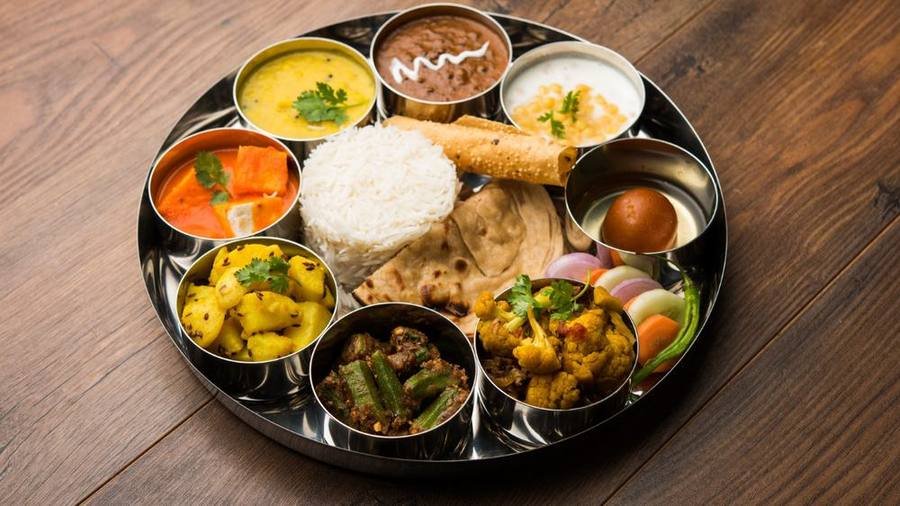
In Gujarat, Gujarati thali is not just a menu entry; it is a clue to how the state cooks, celebrates and feeds people. A Gujarati thali is not one dish but a complete meal served on a platter: breads, rice, dals, several vegetables, farsan, sweets, chutneys and accompaniments in small bowls.
A detail worth knowing before the first bite: gujarati dal is famously sweetened with jaggery and soured — both flavours together. Keep that in mind as you read on, because Gujarati thali rewards eaters who notice how Gujarat seasons, serves and shares its food.
Gujarati thali at a Glance
| State / UT | Gujarat |
| Capital / base | Gandhinagar |
| What it is | A Gujarati thali is not one dish but a complete meal served on a platter: breads, rice, dals, several vegetables, farsan, sweets, chutneys and accompaniments in small bowls |
| Main ingredients | rotli or puri, rice and khichdi (in some meals), sweet Gujarati dal and kadhi, seasonal shaak (vegetables), farsan such as dhokla or khandvi, a sweet such as shrikhand or basundi and pickles, papad and chaas (buttermilk) |
| Taste | Characteristically balances sweet, salty, sour and spicy in the same meal — the dal and kadhi are notably sweet-tangy |
| Texture | A deliberate range: soft breads, soupy dal, crisp papad and farsan, creamy sweets and thin chaas |
| Usually eaten | Served at lunch or dinner on a large steel or traditional platter, eaten with the hand, ending with chaas or a sweet |
| Occasion | Festive meals, family celebrations and the classic restaurant experience |
The Story on Gujarat’s Table
The thali expresses Gujarat's vegetarian food culture at its most complete, shaped by Jain and Vaishnav influences in many communities and by a merchant tradition of generous hospitality. Its gentle sweetness in savoury dishes surprises first-time visitors and is a defining regional marker. Thali restaurants serve unlimited refills in sequence, a format that has become an experience in itself in Ahmedabad and beyond. That context is essential in Gujarat, where a plate can signal a harvest, a religious calendar, a market habit or the meeting of communities. Gujarati thali belongs in this atlas under Gujarat because this is the setting in which its ingredients, accompaniments and meaning come together.
The state guide places Gujarati thali alongside Dhokla, Khandvi and Thepla. Start with the Gujarat travel and food guide if you are planning where this tasting fits into a route.
Taste, Texture and Ingredients
Expect characteristically balances sweet, salty, sour and spicy in the same meal — the dal and kadhi are notably sweet-tangy. Think a deliberate range: soft breads, soupy dal, crisp papad and farsan, creamy sweets and thin chaas.
The ingredient list is best read as a structure rather than a shopping list: rotli or puri, rice and khichdi (in some meals), sweet Gujarati dal and kadhi, seasonal shaak (vegetables), farsan such as dhokla or khandvi, a sweet such as shrikhand or basundi and pickles, papad and chaas (buttermilk).
How Gujarati thali Is Made
Components are cooked separately through the morning — dal simmered with jaggery and kokum or lemon, kadhi whisked from curd and besan, vegetables cooked as distinct shaaks. Service follows a set order on the platter, with servers refilling items as the meal proceeds. The method is part of the identity; shortcuts that change the texture usually change the dish itself.
When Gujarati thali is made for a gathering, that timing also becomes social — food reaches the table as part of a shared rhythm, not as an isolated plate.
When and How It Is Eaten
Served at lunch or dinner on a large steel or traditional platter, eaten with the hand, ending with chaas or a sweet. Its natural moment is festive meals, family celebrations and the classic restaurant experience.
Gujarat’s broader food culture helps explain the serving style. The state is known for rann, crafts and heritage, and its calendar includes Navratri and Rann Utsav.
Where to Try It in Gujarat
Try a full thali at a traditional thali restaurant in Ahmedabad's old city or in Rajkot and Vadodara. A first tasting is best treated as fieldwork: watch how the dish is served, what surrounds it and when it appears.
Gujarati thali pairs naturally with time in Ahmedabad and Kutch, and can sit just as comfortably beside a quieter excursion to Dholavira or Modhera.
More Dishes of Gujarat
Continue through Gujarat’s other signature plates and drinks below — each has its own page, photograph and story.



Frequently Asked Questions
What is Gujarati thali?
A Gujarati thali is not one dish but a complete meal served on a platter: breads, rice, dals, several vegetables, farsan, sweets, chutneys and accompaniments in small bowls. Expect characteristically balances sweet, salty, sour and spicy in the same meal — the dal and kadhi are notably sweet-tangy.
What are the main ingredients in Gujarati thali?
The defining ingredients or components are rotli or puri, rice and khichdi (in some meals), sweet Gujarati dal and kadhi, seasonal shaak (vegetables), farsan such as dhokla or khandvi, a sweet such as shrikhand or basundi and pickles, papad and chaas (buttermilk). Components are cooked separately through the morning — dal simmered with jaggery and kokum or lemon, kadhi whisked from curd and besan, vegetables cooked as distinct shaaks. Service follows a set order on the platter, with servers refilling items as the meal proceeds.
What does Gujarati thali taste like?
Expect characteristically balances sweet, salty, sour and spicy in the same meal — the dal and kadhi are notably sweet-tangy. Think a deliberate range: soft breads, soupy dal, crisp papad and farsan, creamy sweets and thin chaas. Serving pattern: Served at lunch or dinner on a large steel or traditional platter, eaten with the hand, ending with chaas or a sweet.
When is Gujarati thali eaten in Gujarat?
Festive meals, family celebrations and the classic restaurant experience. Chaas (spiced buttermilk) is considered the proper close to the meal.
Where can I try Gujarati thali in Gujarat?
Try a full thali at a traditional thali restaurant in Ahmedabad's old city or in Rajkot and Vadodara. Pair a first tasting with Dhokla and Khandvi to see how Gujarati thali sits within the wider Gujarat table.
Every Place. Every Flavour.
Gujarati thali is one of 6 dishes and drinks profiled from Gujarat — and one of 213 regional dishes across all 36 states and union territories in this atlas.
Open the Gujarat guide Read the blog