
Bihar · Food Guide
What to Eat in Bihar: Litti Chokha, Sattu & Champaran Mutton

By Beauty of Bharat — India travel guide, every place, every flavour.
Guides covering all 36 States and UTs, researched from official sources and checked at publish time. Corrections welcome — see About Beauty of Bharat.
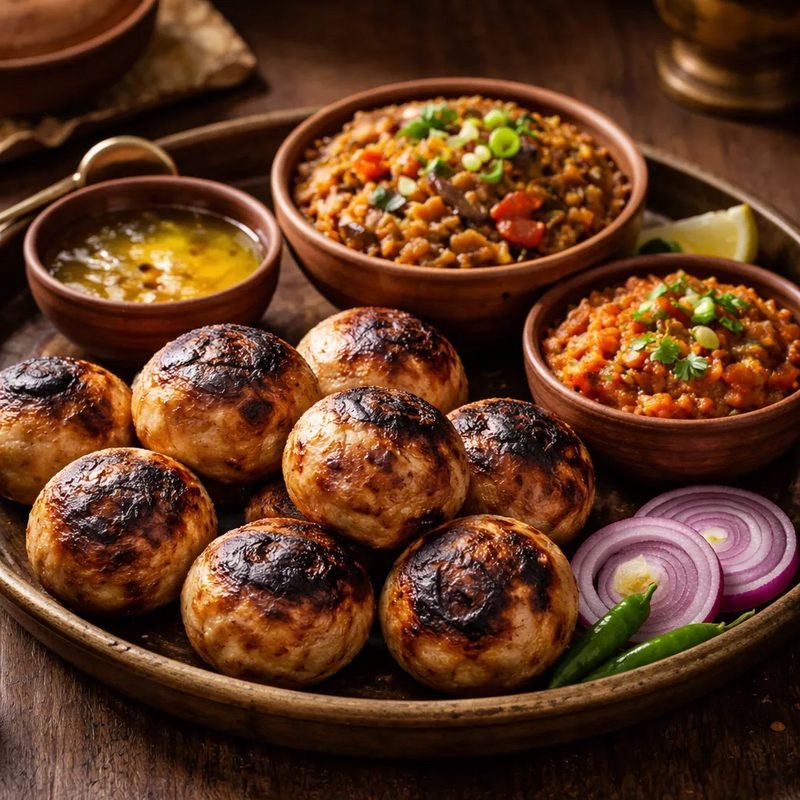
The famous food of Bihar is litti chokha — whole-wheat balls stuffed with spiced sattu (roasted gram flour), roasted over embers and served with smoky chokha of brinjal, tomato and potato. Around it sits a cuisine built on one remarkable flour: sattu powers the breakfast paratha and the cooling summer sharbat, while Champaran mutton slow-cooked in a sealed clay pot, the GI-tagged khaja of Silao and the Chhath sweet thekua complete the table.
Here is the surprise: Bihar's whole kitchen runs on a single flour, and its most celebrated sweet carries a government-protected tag and a legend that puts it on the very road the Buddha walked from Rajgir to Nalanda. Bihari cooking is the food of a farming state — wheat, rice, pulses, mustard oil and sattu, seasoned simply and cooked slowly — and its strength is patience, not a long spice list. If you are planning a trip, start with our Bihar state guide.
The famous food of Bihar at a glance
One day to eat in Bihar? Litti chokha for lunch, sattu sharbat for the afternoon heat, Champaran mutton for dinner, and thekua or Silao khaja with your tea. The table below is the short version — the sections that follow give each dish its story.
| Dish | What it is | Try it |
|---|---|---|
| Litti chokha | Roasted sattu-stuffed wheat balls with smoky vegetable mash | Everywhere in Bihar |
| Sattu sharbat | Cooling roasted-gram drink with lemon and cumin | Summer afternoons |
| Champaran mutton | Mutton slow-cooked in a dough-sealed clay handi | Patna, Motihari |
| Thekua | Jaggery-wheat cookies of Chhath Puja | Chhath, sweet shops |
| Silao khaja | Flaky layered pastry, GI-tagged since 2018 | Silao, near Nalanda |
| Dal pitha | Steamed rice-flour dumplings with spiced dal | Home kitchens |
1. Litti Chokha — the dish that is Bihar
Litti chokha is the first dish anyone names when you ask about the famous food of Bihar. A litti is a ball of whole-wheat dough stuffed with sattu mixed with garlic, ginger, green chilli, ajwain, nigella seeds, lemon juice and raw mustard oil, then roasted over embers until the crust turns crisp and nutty. It is cracked open, drowned in melted ghee, and eaten with chokha — brinjal, tomato and potato charred over the same fire, peeled while warm and mashed coarsely with mustard oil, salt, garlic and coriander. Read our full dish guide at litti chokha.
What makes it special is how little it needs: fire, wheat, gram flour and mustard oil. Litti keeps well, so it was the food of journeys and fields long before it reached restaurants in Delhi and Mumbai. Eat it the Bihari way — with your hands, the litti broken over the chokha, a green chilli on the side.
2. Sattu Sharbat — the drink that beats the Bihar summer

Sattu is a flour made by dry-roasting Bengal gram and grinding it, and it is the backbone of the Bihari kitchen. It can be eaten without further cooking, which is exactly what makes sattu sharbat so practical: roasted gram flour whisked into cool water with lemon juice, salt, roasted cumin and chopped onion. It is savoury, filling and cooling, and on a hot afternoon in Patna it does the work of both a drink and a snack. Ask for it as "sattu pani" at juice stalls and sweet shops across the state — a sweet jaggery version exists, but the salty, lemony one is the classic.
3. Sattu Paratha — breakfast, Bihari style
The same flour that fills the litti fills the morning paratha: a whole-wheat flatbread stuffed with spiced sattu — gram flour, ajwain, kalonji, green chilli, lemon and coriander — roasted on a tawa with ghee or mustard oil until the edges crisp, and served hot with curd, pickle and sometimes a simple aloo sabzi. If litti chokha is Bihar's famous dish, sattu paratha is its everyday one: one flour, endlessly reworked, never wasted. Look for it at breakfast stalls in Patna.
4. Champaran Mutton (Ahuna) — the clay-pot curry
Champaran mutton, also called ahuna, handi meat or batlohi, is the most famous non-vegetarian dish of Bihar, and its cooking method is the whole point. Mutton is marinated in mustard oil and ghee with garlic, onions, ginger and ground spices, packed into an earthen handi, and the mouth of the pot is sealed with kneaded wheat dough so no steam escapes. The sealed pot then slow-cooks over a wood fire for about an hour and a half to two hours, the meat cooking in its own juices.
It is believed to have originated in Ghorasahan, a village near the Indo-Nepal border in East Champaran, before spreading across the district that gave it its name — the same Champaran where Mahatma Gandhi launched his first Satyagraha in 1917. "Ahuna" is the Bhojpuri word for the earthen pot. In Patna, the best-known place to try it is the Old Champaran Meat House. Order it with litti or plain rice, and expect the mustard-oil heat to build slowly.
5. Thekua — the cookie of Chhath
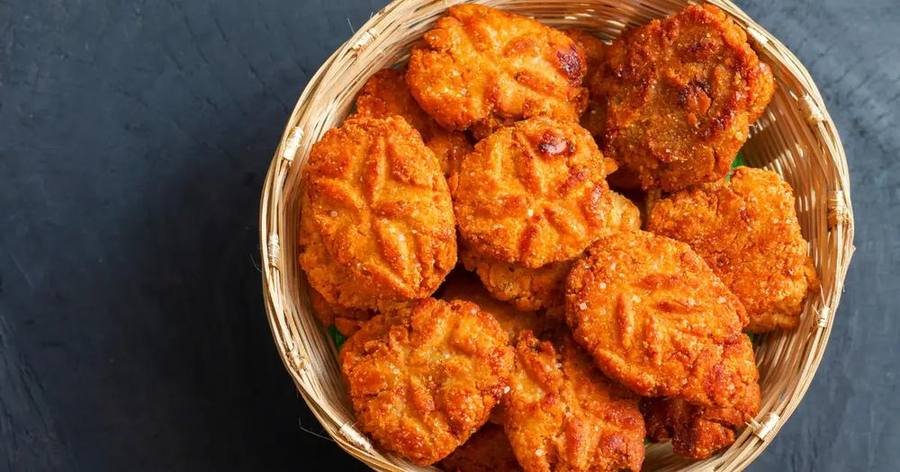
Thekua is the most sacred snack in Bihari cooking: a hard, deep-fried cookie of whole wheat, jaggery, ghee and coconut, flavoured with cardamom and pressed into decorative wooden moulds. It is the defining prasad of Chhath Puja, the four-day festival in which devotees offer prayers to the Sun — and during Chhath the ritual food is cooked on earthen stoves without salt, onion or garlic. Outside the festival, thekua is Bihar's travelling sweet: it keeps for days, so it is packed for journeys and sent to family far from home. Crisp outside and jaggery-sweet inside, it is best with tea. Read more in our dish guide at thekua.
6. Silao Khaja — the GI-tagged sweet
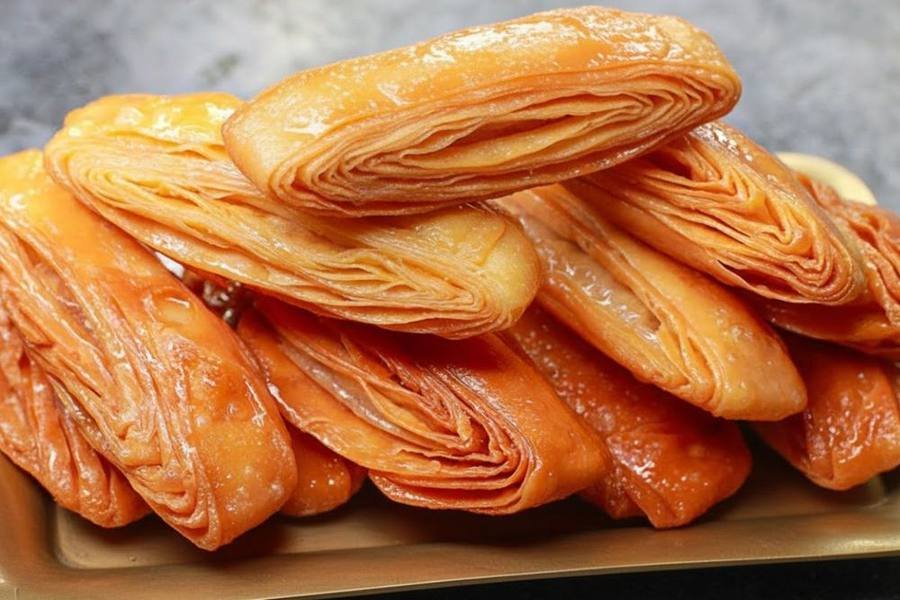
Khaja is a flaky, many-layered pastry made from refined flour, ghee and sugar syrup, and the version from Silao — a small town near Nalanda — is so distinctive that it holds a Geographical Indication tag. The GI Registry at Chennai granted Silao Khaja its tag on 11 December 2018, recognising a sweet whose makers credit the local water and climate for its shattering layers. See our dish guide at khaja.
The legend behind it is the hook this guide promised: local tradition says the Buddha himself was offered khaja as he passed through on his journey from Rajgir to Nalanda — two ancient cities you can still visit on our Rajgir and Nalanda guides. Buy it in Silao and eat it with tea while the layers are crisp.
7. Malpua — the festival pancake
Malpua is Bihar's festival pancake: a batter of refined flour, milk and a little fennel seed, fried in ghee until the edges crisp and then soaked briefly in sugar syrup. It appears at Holi and at family celebrations, and in Bihar it is often served with rabri or kheer. In Bihar it belongs to the same sweet table as thekua and khaja, and sweet shops in Patna and Gaya fry it fresh through the festival season. Order it hot; malpua eaten cold is a different, lesser dish.
8. Dal Pitha — the steamed dumpling
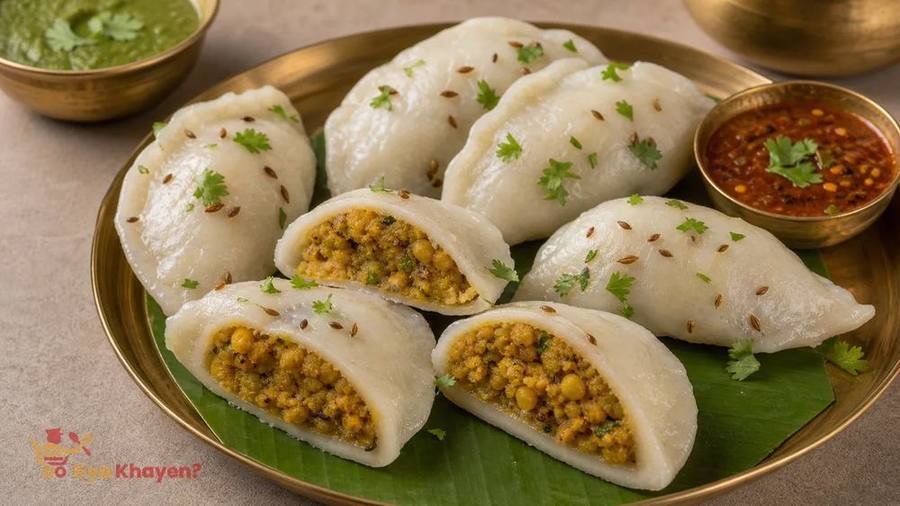
Dal pitha is the quiet, healthy counterpoint to Bihar's fried sweets: rice-flour dough shaped into small dumplings, stuffed with a spiced dal filling — usually chana dal with green chilli, ginger and cumin — and steamed until tender. It is a home dish, made for breakfast or an evening snack. Because it is steamed rather than fried, it is the dish to ask for when you want something filling but light — served plain or with ghee and green chutney.
9. Kadhi Badi — fritters in yoghurt curry
Kadhi badi is the everyday comfort dish of Bihar: soft gram-flour fritters (badi) dropped into a tangy yoghurt-and-besan kadhi, tempered with mustard seeds, dried red chillies and curry leaves. It is the food that appears on a home lunch table with steamed rice, and the dish Biharis describe when they talk about food that tastes like their mother's kitchen. The trick is in the badi — soft enough to soak up the kadhi without falling apart — and in the balance of sour and heat. It pairs best with plain rice and a papad.
10. Chana Ghugni — the street snack
Chana ghugni is dried chickpeas or white peas simmered with onion, tomato, green chilli and garam masala until soft and coated in a thick, spicy gravy, then finished with chopped onion, coriander and a squeeze of lemon. It is sold from handcarts and tea stalls across Bihar, eaten from a leaf cup or a steel plate, often with a piece of poori or on its own as an evening snack. Ghugni is also the taste of the Sonepur Mela, Bihar's great cattle fair, where food stalls feed crowds for weeks — see our Sonepur Mela 2026 guide. One snack that explains Bihari street food: cheap, spicy, filling, eaten standing up.
11. Tilkut — Gaya's winter sweet
Tilkut is a confection of sesame seeds and jaggery or sugar, pressed into round discs or bars, and it is the sweet of Makar Sankranti and the winter months. Gaya is especially famous for its tilkut, which is widely considered the best in the state. Sesame and jaggery are both warming foods, so the sweet was made for cold January mornings. Buy a box in Gaya after visiting the Mahabodhi Temple in nearby Bodh Gaya — the two pair naturally on one day trip from Patna.
12. Makhana — the lotus-seed snack of Mithila

Makhana — popped lotus seeds, or fox nuts — is the snack of Mithila, the Maithil region of north Bihar. The seeds are roasted and popped until they puff like popcorn, then eaten salted with ghee, or simmered into kheer makhana, a creamy milk pudding served at festivals and fasts. Most of India's makhana comes from Bihar's Mithila ponds, and the roasted, lightly salted version is now a pantry staple far beyond the state — the rare Bihari snack that is both a festival food and an everyday one.
Where to eat Bihari food
Start in Patna, where every dish on this page is available within a few streets — litti chokha from roadside stalls, Champaran mutton at its meat houses, and thekua, khaja and tilkut from the old sweet shops. Then day-trip to Bodh Gaya and Nalanda: khaja in Silao on the way, tilkut in Gaya on the way back. Read our best food in India guide and the first-timer's guide to Indian food before you travel, compare Bihar with our famous food of Uttar Pradesh and famous food of Odisha guides, then plan the trip with our Bihar state guide.
Watch & Feel the Place
Watch how litti chokha is made — the sattu stuffing, the roasting over flame, the smoky chokha — before you try it yourself.
Frequently asked questions
What is the most famous food of Bihar?
Litti chokha — whole-wheat balls stuffed with spiced sattu, roasted over embers and served with smoky chokha of brinjal, tomato and potato. It is the dish Bihar is known by across India, and it is served everywhere from roadside stalls to restaurants in Delhi and Mumbai.
What is sattu, and why is it so important in Bihar?
Sattu is flour made by dry-roasting Bengal gram and grinding it. It can be eaten without further cooking, so it fills littis, stuffs parathas and, whisked into water with lemon and cumin, becomes the cooling summer drink sattu sharbat. One flour powers breakfast, lunch and dinner in Bihar.
What is Champaran mutton (ahuna)?
Champaran mutton is mutton marinated in mustard oil, ghee, garlic, onion, ginger and spices, slow-cooked in an earthen handi whose mouth is sealed with dough. It is believed to have originated in Ghorasahan village in East Champaran, and "ahuna" is the Bhojpuri word for the earthen pot.
Which Bihari sweet has a GI tag?
Silao khaja — the flaky, many-layered pastry from Silao town near Nalanda. The Geographical Indications Registry granted it a GI tag on 11 December 2018, recognising its distinctive layers and heritage.
What is thekua, and when is it eaten?
Thekua is a hard cookie of whole wheat, jaggery, ghee and coconut, pressed in wooden moulds. It is the defining prasad of Chhath Puja, offered to the Sun, and it is also sold year-round in sweet shops because it keeps for days.
Where should I try Bihari food?
Start in Patna, where every dish in this guide is available within a few streets. Then take the day trip to Nalanda and Rajgir for Silao khaja, and to Gaya for tilkut after visiting Bodh Gaya. The Sonepur Mela is the best place to taste Bihari street food at scale.
One flour, one clay pot, one GI-tagged sweet — that is Bihari food in a sentence. Read our best places to visit in India guide next.
Plan your Bihar trip
Start in Patna for the food, then eat your way through Nalanda, Rajgir and Bodh Gaya.
Bihar state guide →