
Food · 6 min read
A first-timer's guide to eating across India, state by state
By Beauty of Bharat — India travel guide, every place, every flavour.
Guides covering all 36 States and UTs, researched from official sources and checked at publish time. Corrections welcome — see About Beauty of Bharat.
There is no single 'Indian food'. A region-by-region field guide to the 213 dishes in the Food Atlas — what to order first, and what the names mean.
The first thing to unlearn: 'Indian food' is not a cuisine, it's thirty-six of them sharing a subcontinent. The wheat-and-dairy richness of Punjab — sarson da saag, amritsari kulcha, lassi by the glass — has almost nothing in common with the rice, coconut and seafood logic of the coasts, or the millet-and-yoghurt cooking of Rajasthan's desert kitchens, where ker sangri and bajra roti were engineered for a land without much water.
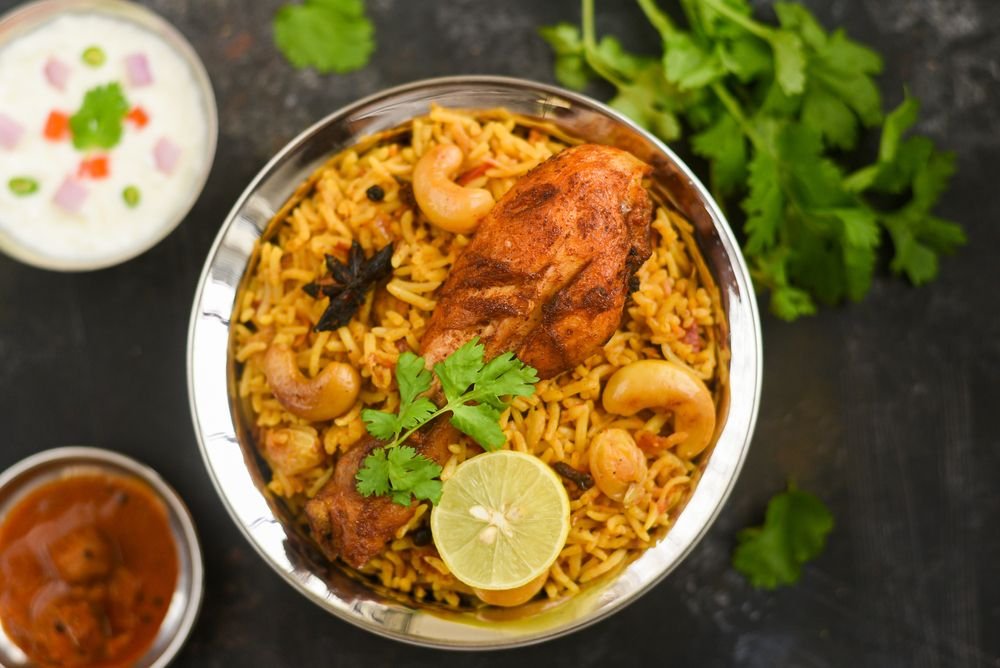
A workable strategy for a first trip: anchor each day to one signature dish from wherever you are. In Hyderabad, that's dum biryani with mirchi ka salan. In Kolkata, macher jhol and mishti doi. In Ahmedabad, a full Gujarati thali — the fastest education in balance (sweet, sour, heat) that exists. In the Northeast, follow the smoke: smoked pork in Nagaland, jadoh in Shillong, masor tenga in Assam.
Vegetarian travellers are better served here than almost anywhere on earth, and Jain, vegan and sattvic variations are ordinary requests, not special ones. Every dish in the Food Atlas has its own page — what it is, how it's served, and where travellers meet it — so you can arrive at the table already knowing what to ask for.
← Offbeat India: the places the feeds found first · Chasing the winter sun: where India travels best from October to March →