
Nagaland · State Guide
Best Places to Visit in Nagaland: Kohima, Dzukou Valley & More

By Beauty of Bharat — India travel guide, every place, every flavour.
Guides covering all 36 States and UTs, researched from official sources and checked at publish time. Corrections welcome — see About Beauty of Bharat.

There is a cemetery in India with a tennis court in the middle of it. In April 1944, British and Indian troops held Kohima Ridge against a Japanese force of 15,000, and the fighting came down to hand-to-hand combat across the tennis court of the Deputy Commissioner’s bungalow — the white lines are still marked out in the ground today, between the headstones of the 1,420 Commonwealth soldiers buried there. That is Nagaland in one image: history under your feet, a chief’s house in two countries, and a million falcons bound from Siberia to Africa. The short answer: base yourself in Kohima for the War Cemetery and the Hornbill Festival at nearby Kisama, trek Dzukou Valley, spend a day in Khonoma, India’s first green village, then push north to Mokokchung and Mon if you have the days. Five to six days covers the classic circuit. Come in December, when the 27th Hornbill Festival runs 1–10 December 2026 at Kisama; our Hornbill Festival guide covers dates, tickets and what to expect.
The Best Places in Nagaland at a Glance
| Place | Why go | Best time |
| Kohima | War Cemetery, museums, markets, Hornbill base | October–March; December for Hornbill |
| Dzukou Valley | Rolling meadows, rare lilies, the classic trek | October–November; June–July for lilies |
| Kisama Heritage Village | Hornbill Festival, tribal morungs | 1–10 December |
| Khonoma | India’s first green village, terraced fields | October–March |
| Mokokchung | Ao culture, Ungma and Longkhum villages | October–April; May for Moatsu |
| Mon & Longwa | Konyak villages, a house in two countries | October–April; December for the Mon Extension |
| Wokha | Amur falcons at Doyang, Mount Tiyi | Mid-October–early November for falcons |
| Tuensang | Chang heritage, sacred stones, the far east | October–April |
Distances and timings are as reported at publish time; confirm road conditions, festival dates and permit rules before you book.
Kohima: the War Cemetery, the Capital on the Ridge
Kohima, the capital, sits at about 1,440 metres on a ridge in the Naga Hills, and it is the base for almost every Nagaland trip. Start at the Kohima War Cemetery, maintained by the Commonwealth War Graves Commission on the exact ground where the Battle of Kohima was fought in April 1944. The terraces hold 1,420 Commonwealth graves, and a memorial inside commemorates 917 Hindu and Sikh soldiers cremated according to their faith. Look for the tennis court, still marked in white concrete lines beneath the Cross of Sacrifice, and the memorial’s famous epitaph: “When you go home, tell them of us and say, for your tomorrow, we gave our today.” It is a quiet, rose-planted place — go early, before the day warms up. See our Kohima guide.

On the same day, walk the town’s other stops: the Nagaland State Museum, which holds the arts and artefacts of the Naga tribes, and the Catholic Cathedral. Kohima’s markets are worth an unhurried hour — Naga shawls, bamboo craft and the famously fiery king chilli. Stay two nights: one for the town, one for Kisama and Khonoma, both short drives away.
Dzukou Valley: the Valley of Flowers on the Nagaland–Manipur Border
Dzukou Valley is the trek every Nagaland traveller talks about afterwards. A high bowl of rolling meadows at 2,452 metres on the Nagaland–Manipur border, about 25 km south of Kohima, it has no summit and no single viewpoint — just kilometres of dwarf bamboo grassland, clear streams and, in early summer, the rare pink Dzukou lily, which grows almost nowhere else. Most trekkers start from Viswema, the gentler route at about four to five hours up, or from Jakhama, shorter and much steeper. Plan two days from Kohima and sleep at the basic community-run rest house in the valley, where nights are cold year-round. See our Dzukou Valley guide and our full Dzukou Valley trek guide.
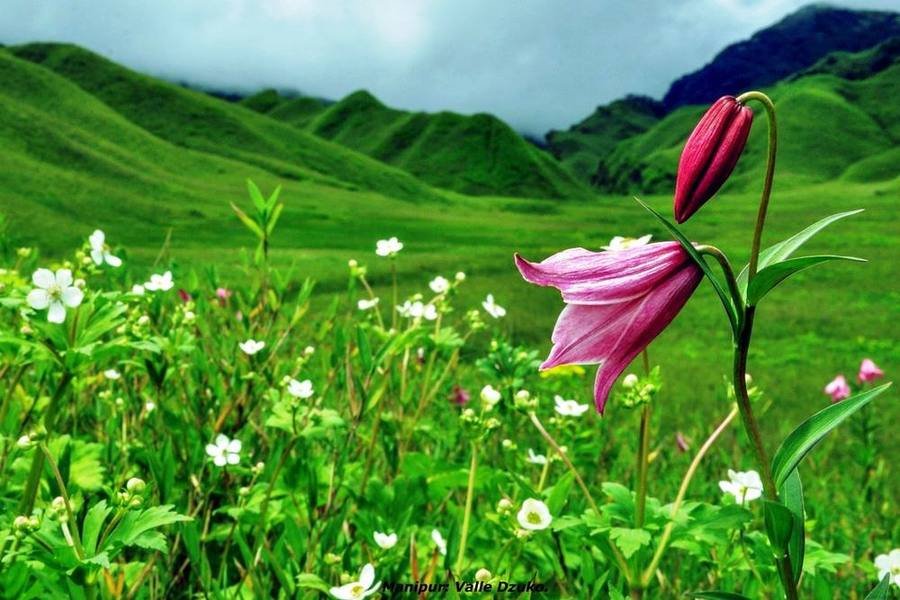
October and November give the clearest skies and golden slopes; June and July bring the lilies, with rain and leeches as the price. Two things to know: every Indian visitor needs a Nagaland Inner Line Permit, and the valley has been hit by forest fires in recent years, including in January 2026, so check its current open status with your guide before you travel.
Best Places to Visit in Nagaland in December: Kisama and the Hornbill Festival
If you can only pick one week in Nagaland, pick the first week of December. The Hornbill Festival, named after the hornbill bird of Naga folklore, runs every year from 1 to 10 December at the Naga Heritage Village in Kisama, about 12 km south of Kohima; the 27th edition in 2026 runs under the theme “Cultural Connect”, opening on Statehood Day. Conceived in 2000 as a showcase of the state’s tribal heritage, it packs traditional dance, morungs (the carved meeting houses of each tribe), indigenous games, Naga wrestling, food stalls and the Hornbill Music Festival into one amphitheatre, with the liveliest performances in the evenings. See our Kisama Heritage Village guide.

Book stays early: Kohima fills up for the festival, and many visitors sleep in village homestays around Kisama. In 2026 the festival also extends beyond Kisama — the Hornbill Festival Mon Extension runs 8–10 December at the Konyak Heritage Complex in Mon. Our Hornbill Festival guide has the verified 2026 dates, ticket and permit details, and how to reach Kisama from Dimapur.
Khonoma: India’s First Green Village
Khonoma, about 20 km west of Kohima, is the village that chose conservation over hunting — and became famous for it. Home to the Angami tribe, this centuries-old village of terraced paddy fields resisted British advances for decades in the 1800s. Then in 1998, after hundreds of endangered Blyth’s tragopans were killed in a single week of hunting, the village council banned hunting and logging and created the Khonoma Nature Conservation and Tragopan Sanctuary over some 20 square kilometres. In 2005 the Government of India named Khonoma the country’s first “green village”. Walk the terraces, look for the tragopan with a local guide, and stay a night in a homestay.

Mokokchung: Heart of the Ao Tribe
Mokokchung, about 160 km north of Kohima at roughly 1,325 metres, is the cultural capital of the Ao Naga tribe. The draw is the ring of heritage villages around it. Ungma, the oldest and largest Ao village, is where the Ao people first settled; Longkhum, about 17 km away on a rhododendron ridge, is known for its views and its eagle’s-nest cliff. Time your visit for the Moatsu festival, the Ao spring festival held 1–3 May after the sowing season, with warrior dances and feasts — or the Tsüngremong harvest festival in early August. Our Mokokchung complete guide covers the villages and festivals.

Mon and Longwa: a House in Two Countries
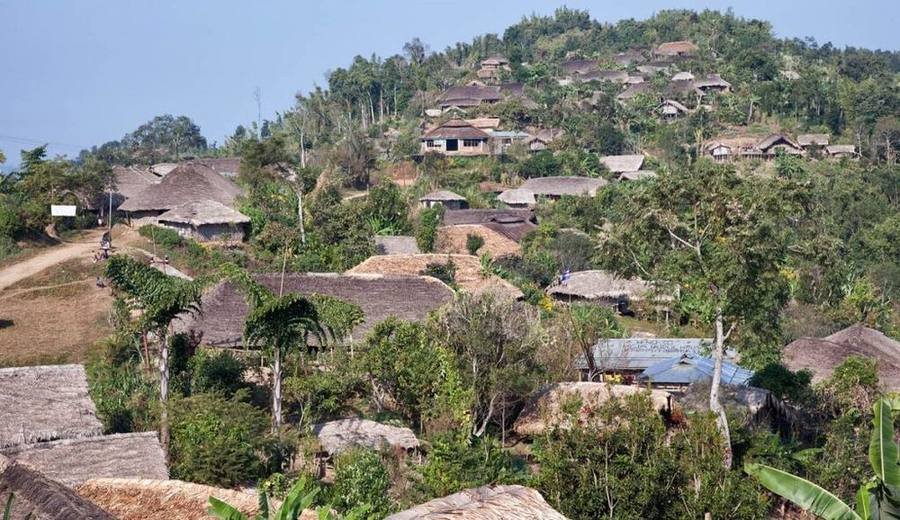
Mon, in Nagaland’s far north, is the home of the Konyak Nagas — once known as the last headhunters of India, whose tattooed elders still live in its villages. The reward is Longwa, about 42 km from Mon, a Konyak village where the international border runs straight through the house of the Angh, the hereditary chief: one half of his house stands in India, the other in Myanmar. The Konyak’s Aoling new-year festival falls in the first week of April, and in December 2026 the Hornbill Festival’s Mon Extension (8–10 December, Konyak Heritage Complex) brings the festival to the district. Mon is remote — most travellers come via Jorhat or Dibrugarh in Assam — and border rules around Longwa have tightened, so check current access locally before you travel. See our Mon guide.
Wokha: a Million Falcons Over Doyang
Wokha, home of the Lotha Nagas, holds one of the great wildlife spectacles on Earth. Every year from about mid-October to early November, the Doyang Reservoir near Pangti village becomes the roosting ground for roughly a million Amur falcons — small raptors on a 22,000 km journey from Siberia to southern Africa, stopping here to feed before the long sea crossing. The dusk fly-in is the sight to plan around; late October is usually the peak. In 2012 the falcons were hunted here in their thousands; in 2013 the villages of Pangti, Asha and Sungro banned the hunt. Wokha town sits below Mount Tiyi, and the Lotha harvest festival Tokhü Emong falls in early November — late October pairs hill, festival and falcons in one trip.
Tuensang: the Far East, and the Sacred Stones
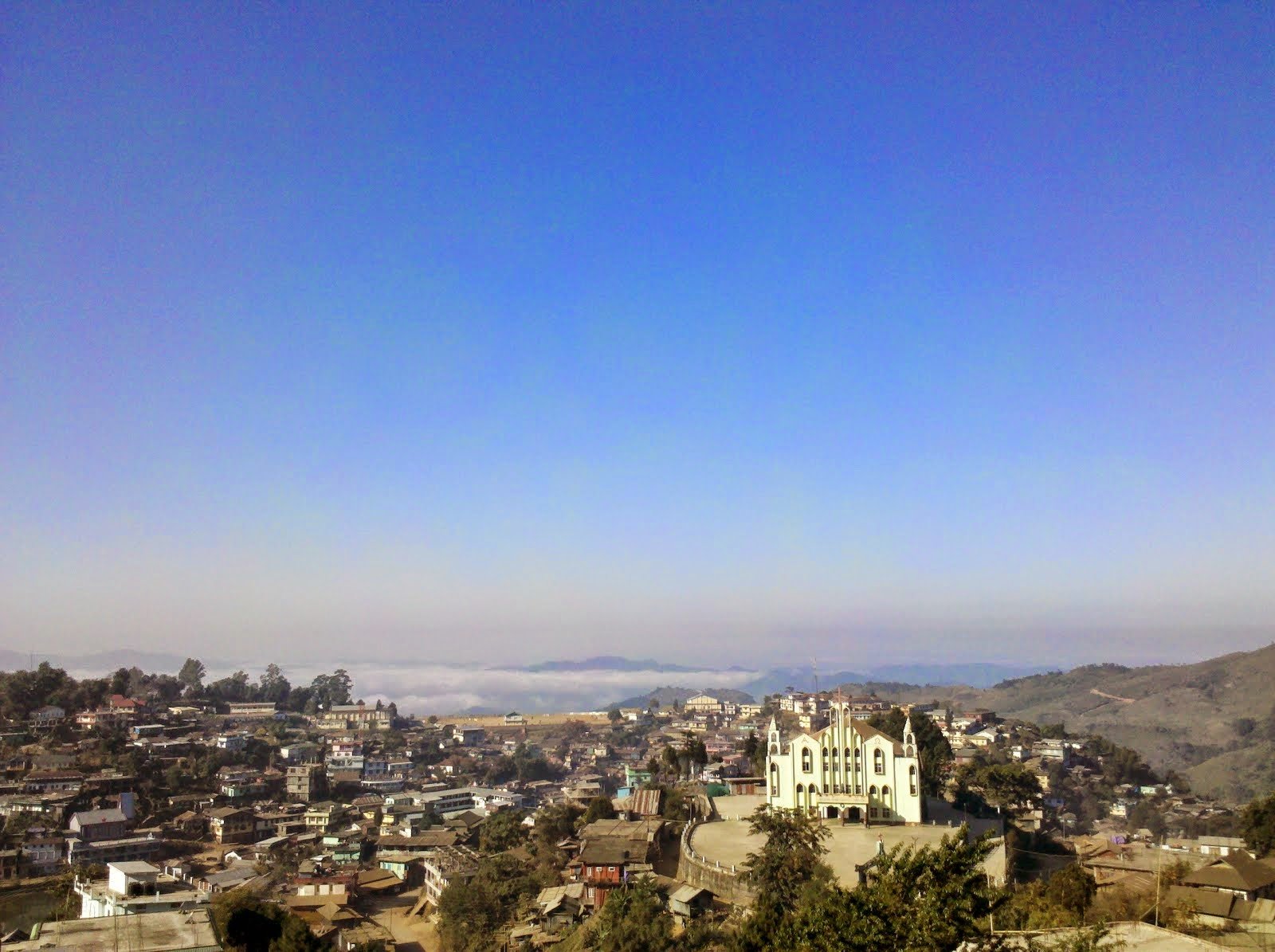
Tuensang is Nagaland at its most remote — the eastern district headquarters, home to the Chang, Sangtam, Yimkhiung and Khiamniungan tribes. Near Chungliyimti village stand the Longtrok, the six sacred stones of Naga origin legend. Changsangmongko is the ancestral village of the Chang tribe, with its carved morungs and log drums, and the Chang’s Naknyulem festival falls in the first week of July. Mount Saramati, at 3,841 metres the highest peak in Nagaland, rises in neighbouring Kiphire district, on the Myanmar border. Come only with time to spare and a local guide: roads are slow, stays basic. No licence-clear photograph of Tuensang could be verified, so this section has no photo rather than a substitute.
What Is the Best Time to Visit Nagaland?
October to March is the reliable window: clear skies, dry roads and comfortable days, with cold nights in the hills. December is the peak month, for the Hornbill Festival (1–10 December) — book months ahead. October and November are best for trekking, and the Amur falcons are at Doyang from mid-October to early November. March to May is a good second choice, with rhododendrons and the Moatsu and Aoling festivals. June to September is the monsoon: Dzukou Valley is at its greenest and the lilies bloom, but expect rain, leeches and slow roads.
How Many Days in Nagaland?
Count nights, not days. Three to four days suits a first trip: arrive in Dimapur, drive to Kohima, and cover the War Cemetery, Kisama and Khonoma, with Dzukou Valley as a two-day trek. Five to six days is the sweet spot, adding a slow day in Kohima and the Hornbill Festival in December. Eight to ten days adds Mokokchung and the Ao villages. Mon, Longwa and Tuensang are a separate, slower trip — add three to four days and travel with a local driver who knows the eastern roads. Keep a buffer day for hill roads.
How to Reach Nagaland
Dimapur is the gateway, with Nagaland’s only commercial airport and main railway station, and flights from Kolkata and Guwahati. From Dimapur, Kohima is about 74 km by road, roughly two and a half to three and a half hours into the hills. Guwahati has more flights but adds a long road journey. Within Nagaland, a car with a local driver is the easiest way to reach villages and trailheads; shared taxis run between the main towns. Before you travel, arrange your Inner Line Permit online — Indian citizens who are not indigenous inhabitants of Nagaland need one, and foreign nationals also need a Protected Area Permit. Confirm current permit rules on the official portal before you book.
Is Nagaland Safe for Tourists?
The main tourist circuit — Dimapur, Kohima, Kisama, Khonoma and Dzukou Valley — welcomes visitors every year and runs normally. Conditions in the far east and near the Myanmar border can change, so check your government’s current travel advisory before you book, travel with a local driver or guide outside the main towns, and follow local advice once there. In the villages, ask before photographing people and respect morungs and community spaces.
Watch & Feel the Place
Videos are by their respective creators.
Best Places to Visit in Nagaland FAQs
What is the best time to visit Nagaland?
October to March, with clear skies, dry roads and comfortable days. December is the peak month for the Hornbill Festival (1–10 December); October and November are best for trekking and the Amur falcons at Doyang; June and July bring the Dzukou lilies, with monsoon rain as the trade-off.
How many days are enough for Nagaland?
Three to four days covers Kohima, Kisama and Khonoma, with Dzukou Valley as a two-day trek from the same base. Five to six days is the sweet spot for a first trip, eight to ten days adds Mokokchung, and Mon, Longwa and Tuensang need three to four days more as a separate trip. Keep a buffer day for hill roads.
Is Nagaland safe for tourists?
The main tourist circuit — Dimapur, Kohima, Kisama, Khonoma and Dzukou Valley — welcomes visitors every year and runs normally. Conditions in the far east and near the Myanmar border can change, so check your government’s current travel advisory for your dates before booking, travel with a local driver or guide outside the main towns, and follow local advice while travelling.
How do I reach Nagaland?
Fly or take a train to Dimapur, Nagaland’s gateway, then drive about 74 km to Kohima — roughly two and a half to three and a half hours by road. Guwahati has more flights but adds a long road journey. Inside Nagaland, hire a car with a local driver, and arrange your Inner Line Permit online before you travel.
Do I need a permit to visit Nagaland?
Yes. Indian citizens who are not indigenous inhabitants of Nagaland need an Inner Line Permit, applied for online through the official Nagaland ILP portal before you travel. Foreign nationals also need a Protected Area Permit. Confirm current rules on the official portal before you book.
What is the famous food of Nagaland?
Naga cuisine centres on smoked pork with bamboo shoot, sticky rice and akhuni (fermented soya bean) chutney, with the king chilli for the brave. Our famous food of Nagaland guide covers the full table.
Seven places, one ridge capital and a valley of lilies: a cemetery with a tennis court, a village that gave up hunting to save a bird, and a house in two countries. Start in Kohima, walk Dzukou Valley, and let December choose the rest. Next, read our famous food of Nagaland guide, and our Hornbill Festival guide if you are travelling between 1 and 10 December.
Plan your Nagaland trip
Kohima’s War Cemetery, Dzukou Valley’s lilies, Khonoma’s green village and the Hornbill Festival at Kisama — five to six days covers the classic circuit.
Nagaland state guide →