
Varanasi · Chhath 2026 · News Corner
Varanasi Has a Double Day Today: Nag Nathaiya at Tulsi Ghat, and Chhath Begins

By Beauty of Bharat — India travel guide, every place, every flavour.
Guides covering all 36 States and UTs, researched from official sources and checked at publish time. Corrections welcome — see About Beauty of Bharat.
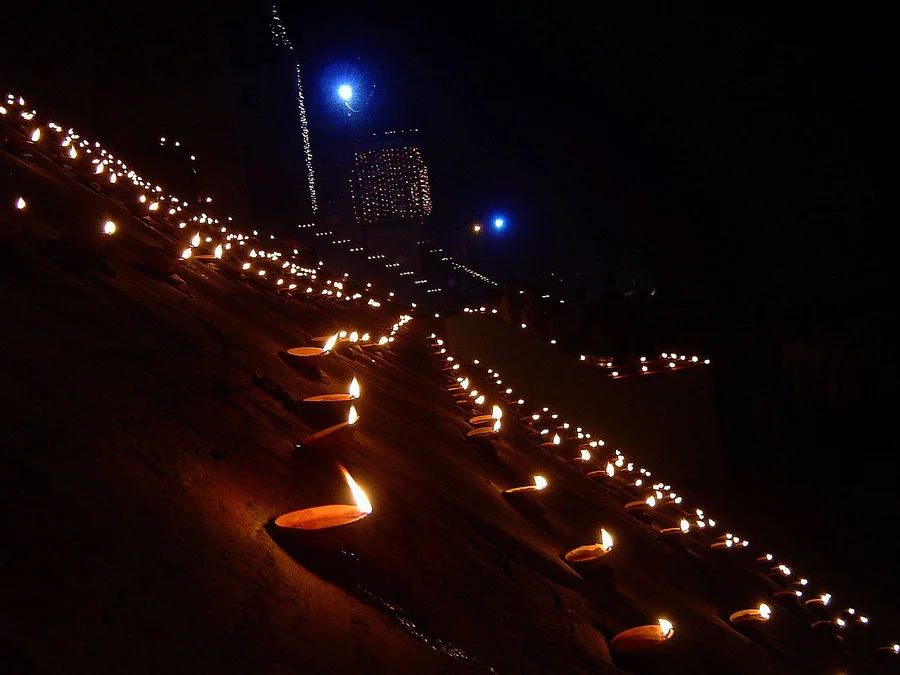
Two festivals share one day on the same riverfront. At Tulsi Ghat, a boy dressed as Krishna will climb a kadamba branch, leap into the Ganga and rise on the hoods of a serpent — and at ghats across the city, families will take the ritual bath that opens Chhath, four days of fasting and offerings to the sun. Friday 13 November 2026 is a double day in Varanasi: Nag Nathaiya and Nahay Khay, together, on the same ghats.
Today, Friday 13 November 2026, is both Nag Nathaiya — the Krishna leela at Tulsi Ghat — and Nahay Khay, day one of Chhath Puja, which runs until Monday 16 November. The leela falls on Kartik Shukla Chaturthi, a tithi that runs from 6:09 pm on Thursday 12 November to 8:42 pm today, according to Drik Panchang set to Varanasi. One honest caveat up front: no 2026 organiser programme or start time for the leela had been published when we checked on 8 November, so this post gives no invented time — only what is confirmed, and what past years suggest about when to arrive.
The double day, at a glance
The two festivals could hardly be more different in mood — one is theatre on the river, the other is a family fast kept at the water’s edge — yet they share the same steps, the same crowds and the same day. Here is the shape of the four days:
| Day | Date | What happens in Varanasi |
|---|---|---|
| Friday | 13 November | Nag Nathaiya at Tulsi Ghat; Chhath: Nahay Khay — ritual bath and first meal |
| Saturday | 14 November | Chhath: Kharna — day-long fast, broken after sunset with kheer and roti |
| Sunday | 15 November | Chhath: Sandhya Arghya — offering to the setting sun; sunset 5:10 pm |
| Monday | 16 November | Chhath: Usha Arghya — offering to the rising sun; sunrise about 6:16 am |
Nag Nathaiya: the boy, the serpent and the river
The story the leela tells is one of the best-known episodes in Krishna’s childhood. As tradition tells it, the young Krishna and his friends were playing by the river Yamuna when their ball fell into the water. The river was poisoned by Kaliya, a venomous serpent who had made his home there and whose presence had made the water dangerous for the people around. Krishna dived in, fought the serpent, and subdued him — then danced on Kaliya’s hoods, playing his flute, until the serpent surrendered. It is the victory of a child over a terror, and it has been retold in Varanasi for centuries.
The retelling is the festival. According to tradition, the poet-saint Goswami Tulsidas began Nag Nathaiya at Tulsi Ghat in the 16th century, and it has been performed there every year since, organised today by Akhada Goswami Tulsidas. A tall kadamba branch is planted at the edge of the river. A young boy dressed as Krishna climbs it and leaps into the Ganga, then resurfaces standing on an effigy of the seven-hooded Kaliya, flute in hand, as the serpent is paraded before the crowds on the steps and in boats. For the duration of the leela, the Ganga is treated as the Yamuna — the river of the original story, brought to Kashi for an afternoon. The Kashi Naresh, the titular king of Varanasi, traditionally watches from a royal boat.
What we do not know, and will not guess at, is the exact time. As of 8 November we had found no 2026 organiser programme, no start time and no district traffic notice for the leela. In past years the leap into the river has been in the late afternoon, so the practical advice is to arrive by early afternoon and not to rely on an exact minute. The date is certain; the hour belongs to the organisers.
Chhath begins: Nahay Khay and the four days
Chhath is the four-day festival of the sun, kept above all in Bihar, Jharkhand and eastern Uttar Pradesh, and wherever Bihari and Purvanchali families live. In Delhi this year, the city is preparing more than 1,400 ghats and trialling a Yamuna ferry; in Varanasi the festival needs no building, happening on the Ganga’s own ghats, where families have kept it for generations. Our full guide to the festival is the Chhath Puja 2026 guide.
Today is Nahay Khay, the first day: a ritual bath in the river, followed by a single sattvic meal. It is the quietest day of the four, and the one that sets the tone — the house is cleaned, the food is cooked simply, and the fast that follows is taken seriously. Tomorrow, Saturday 14 November, is Kharna: a day-long fast, broken after sunset with kheer and roti, after which the 36-hour nirjala fast — without food or water — begins. On Sunday 15 November comes Sandhya Arghya, the offering to the setting sun, at sunset, 5:10 pm in Varanasi. And on Monday 16 November, Usha Arghya, the offering to the rising sun at about 6:16 am, brings the festival to a close as the fast is broken.
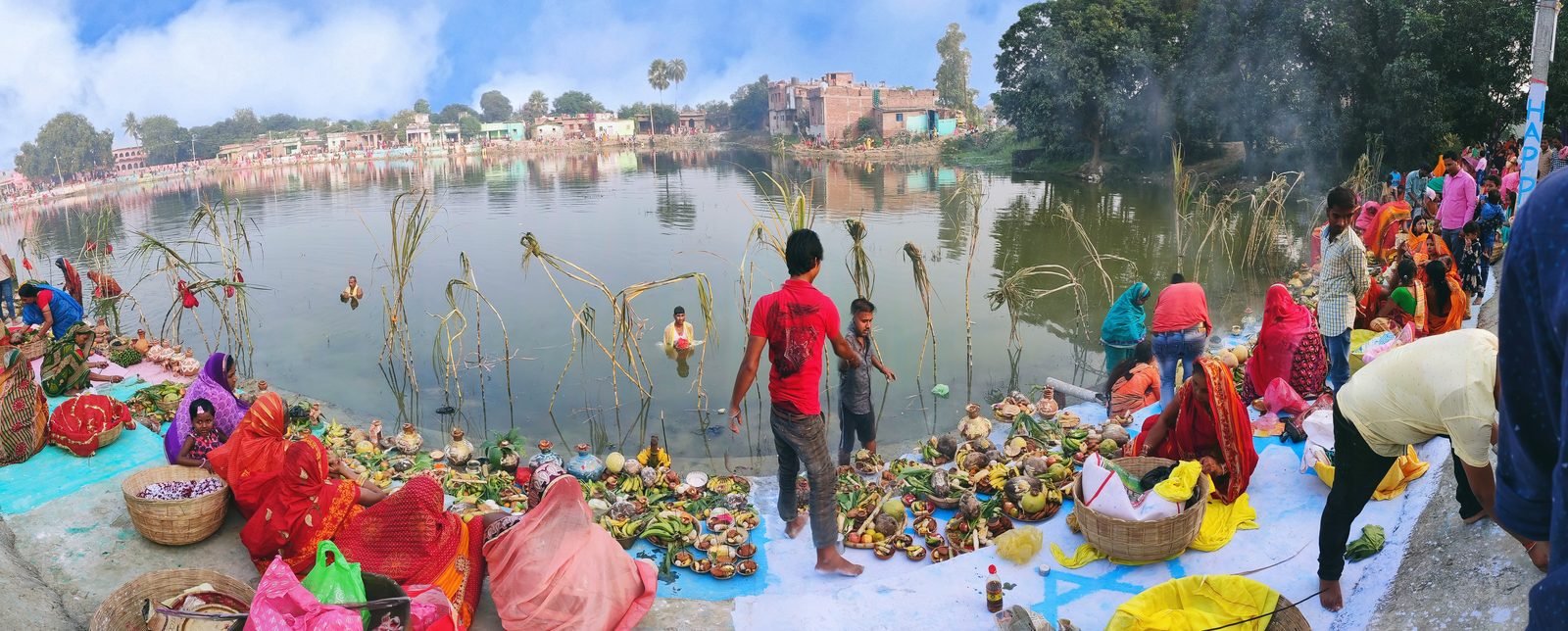
What to expect at the ghats today
Large gatherings are expected at Assi Ghat, Dashashwamedh Ghat and the other Ganga ghats, and with Nag Nathaiya and the first day of Chhath together, today will be busier than an ordinary Friday at the riverfront. Most ghats are reached on foot for the last stretch, so allow extra time, especially before dawn on Monday 16 November. Extra UPSRTC buses have been added for the 6–17 November Diwali and Chhath rush — check at the depot or on the UPSRTC site before travelling. No district traffic notice for Nag Nathaiya or Chhath had been found as of 8 November.
A word on how to watch. The ghats today are places of worship, not a show. Watch from a distance, leave the steps and the water’s edge to the vratis and their families, ask before taking photographs, and do not enter the river. That is the whole etiquette, and it is also the practical advice: the crowds at Tulsi Ghat for the leela and at Assi and Dashashwamedh for Chhath are dense, and the steps are wet. One dated reading for planning: the CPCB bulletin for 8 November put Varanasi at AQI 224, Poor, across all four of the city’s stations — check the day’s figure before long outdoor plans.
Schools are open today — and the holiday dates that matter
Are schools closed in Varanasi today? On the information available, no. No statewide school closure has been confirmed for Friday 13 November, and the published Uttar Pradesh holiday calendar does not list 13 November as a state holiday. The dates it does list are Sunday 15 November as Chhath Puja and Monday 16 November as Veerangana Uda Devi Martyrdom Day, a restricted holiday — neither of which makes today a holiday. Treat 13 November as a regular working day unless your school or the district administration publishes an order. There is also no IMD weather warning for East or West Uttar Pradesh on 13 November, according to the IMD’s 12 November bulletin, so there is no weather-related reason for a closure either.
What comes next
Chhath ends at sunrise on Monday 16 November, but Varanasi’s festival season does not stop there. Ganga Mahotsav is reported for 20 to 23 November, citing the tourism department, though no official programme had been seen when we checked — treat the dates as reported, not confirmed. Then comes Dev Deepawali on Tuesday 24 November, the evening of lamps on the ghats, with the deepdan muhurat from 5:08 to 7:47 pm. It starts this morning with a boy on a serpent and a bath in the river.
Frequently asked questions
What is happening in Varanasi today, 13 November 2026?
Two festivals fall on the same day. It is Nag Nathaiya, the Krishna leela at Tulsi Ghat, and Nahay Khay, the first day of the four-day Chhath Puja, which runs until Monday 16 November. Nag Nathaiya falls on Kartik Shukla Chaturthi, which runs from 6:09 pm on 12 November to 8:42 pm on 13 November.
What is Nag Nathaiya?
Nag Nathaiya is the annual re-enactment at Tulsi Ghat of the young Krishna subduing the serpent Kaliya. According to tradition, the poet-saint Goswami Tulsidas began it in the 16th century. A boy dressed as Krishna climbs a kadamba branch planted at the water’s edge, leaps into the Ganga, and rises standing on an effigy of the seven-hooded Kaliya, playing his flute. For the leela, the Ganga is treated as the Yamuna. The Kashi Naresh traditionally watches from a royal boat.
What time does Nag Nathaiya start at Tulsi Ghat?
No 2026 organiser programme or start time had been published when we checked on 8 November, so do not rely on a time circulating online. In past years the leap into the river has been in the late afternoon, so arrive by early afternoon. The tithi itself runs from 6:09 pm on Thursday 12 November to 8:42 pm on Friday 13 November.
What are the four days of Chhath Puja 2026?
Nahay Khay on Friday 13 November, a ritual bath followed by one sattvic meal. Kharna on Saturday 14 November, a day-long fast broken after sunset with kheer and roti, after which the 36-hour nirjala fast begins. Sandhya Arghya on Sunday 15 November, the offering to the setting sun at sunset, 5:10 pm in Varanasi. Usha Arghya on Monday 16 November, the offering to the rising sun at sunrise, about 6:16 am.
Are schools closed in Varanasi on Friday 13 November?
No statewide school closure has been confirmed for 13 November. The Uttar Pradesh holiday calendar lists 15 November as Chhath Puja and 16 November as Veerangana Uda Devi Martyrdom Day, a restricted holiday. Treat 13 November as a regular working day unless your school or the district administration publishes an order.
Where should visitors go, and what should they avoid doing?
Large gatherings are expected at Assi Ghat, Dashashwamedh Ghat, Tulsi Ghat and other Ganga ghats. Watch from a distance, leave the steps and the water’s edge to the vratis and their families, ask before taking photographs, and do not enter the river. Most ghats are reached on foot for the last stretch, so allow extra time, especially before dawn on 16 November.
Planning a Varanasi trip?
Start with our Varanasi destination guide and the Uttar Pradesh state guide, then the Chhath Puja 2026 guide and our Delhi angle on the same festival, Delhi’s 1,400+ Chhath ghats and Yamuna ferry. The week’s earlier festivals are covered in Govardhan Puja 2026 and Bhai Dooj 2026. And the News Corner for the day’s other stories.