
Delhi Weather · News Corner
Delhi Weather Is Trending for a Reason: ‘Very Poor’ Air, Foggy Mornings, and a Diwali-Week Warning for Travellers

By Beauty of Bharat — India travel guide, every place, every flavour.
Guides covering all 36 States and UTs, researched from official sources and checked at publish time. Corrections welcome — see About Beauty of Bharat.
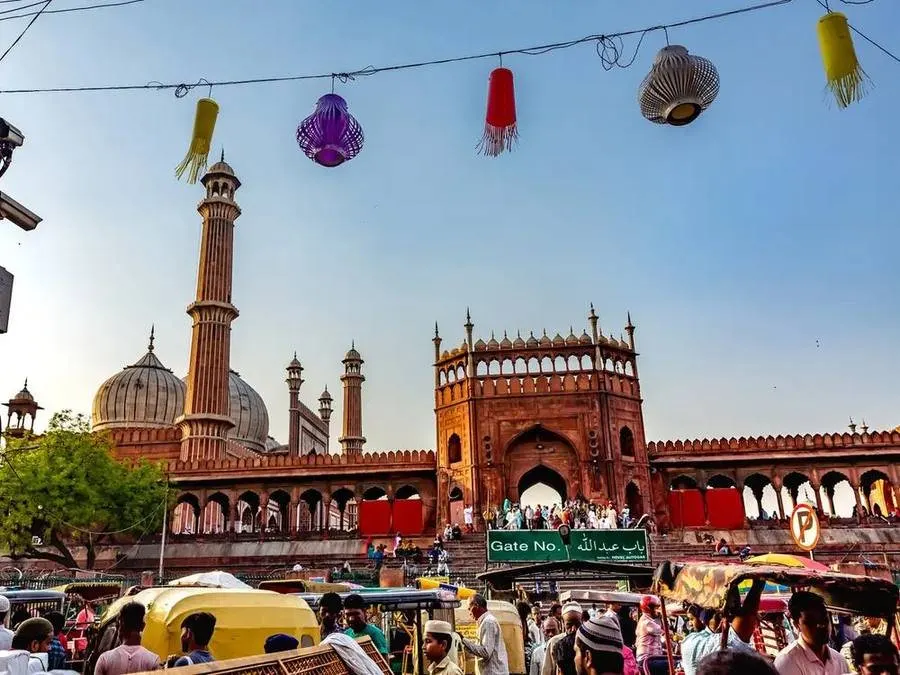
Delhi's air went from ‘moderate’ to its worst reading in 288 days in four days — and that, more than the temperature, is why ‘delhi weather’ is trending in India today. On 31 October Delhi's average Air Quality Index (AQI) was 117, in the ‘moderate’ band. By 1 November it was 261 (‘poor’), by 2 November 324 (‘very poor’), and by Wednesday 4 November it was 377 — the highest since 20 January, when it settled at 378. The Air Quality Early Warning System forecasts ‘very poor’ air again today, 5 November, and ‘severe’ air on 6–7 November. Diwali falls on Sunday 8 November. If you are travelling to Delhi this week, this is the post to read first — and to re-check, daily, because the forecasts themselves disagree about what happens next.
The short answer
Delhi today: mainly clear skies, morning mist or haze, a high of about 30°C and a low of about 19°C, and no rain warning until 10 November, according to IMD-based forecasts reported on 4 November. The problem is not rain or cold — it is the air. The Early Warning System puts 5 November in the ‘very poor’ band (AQI 301–400) and 6–7 November in the ‘severe’ band (401–500), with morning fog or haze forecast through 9 November. Plan Metro-first days, keep mornings flexible, and do not assume clear air.
How Delhi got here in four days
The reversal is striking because October had been unusually clean. The Japan Times, citing CPCB data, reported Delhi's AQI at 166 last month — the cleanest October in eight years — after unusually heavy rain washed pollutants away and favourable airflow helped disperse emissions. Then the pattern flipped. CAQM's order of 2 November records the sequence plainly: 117 (‘moderate’) on 31 October, 261 (‘poor’) on 1 November, 324 (‘very poor’) on 2 November, ‘owing to unfavourable meteorological conditions’.
Wednesday 4 November was worse again. The New Indian Express, citing CPCB, reported a city average of 377, with 22 monitoring stations recording ‘severe’ air. That made it Delhi’s worst reading in nearly 10 months — 288 days, since 20 January’s 378. Urban Acres, also citing CPCB, reported 350 by 4 pm on Tuesday 3 November, with 10 stations above 400. Different times, different days, and stations that run far above or below the average: check your own area’s station, not just the headline number.
Two drivers recur in the reports. First, weather: north-westerly winds until 6 November, low morning and evening wind speeds, and a ventilation index forecast below 6,000 sq m per second — the air is not moving enough to clear itself. Second, farm fires: the Decision Support System put stubble burning’s share of Delhi’s PM2.5 at about 15.3% on Tuesday, forecast to rise to about 22.2% on 5 November, according to Urban Acres. Fireworks during Diwali will add to the burden, not replace it.
What GRAP-II actually means for a visitor
CAQM invoked all Stage II actions across the entire NCR with immediate effect on 2 November, on top of Stage I measures imposed on 21 October when the AQI was 244. GRAP is not a lockdown and it does not close tourist sites. For a visitor the visible measures are: higher parking charges, staggered office timings, more Metro and CNG/electric bus services, intensified road sweeping and sprinkling, diesel-generator restrictions except for essential services, and a ban on coal and firewood, including in restaurant tandoors.
The transport boost helps visitors directly: Delhi Metro announced 20 additional weekday trips from 3 November, taking total additional trips to 40. The Metro avoids both the parking increase and the border checks below.
Driving into Delhi? Check the vehicle rule first
Separately, a winter vehicle-entry rule applies from 1 November 2026 to 31 January 2027: petrol and diesel vehicles registered outside Delhi that do not meet BS-VI standards are barred from entering the capital. BS-VI vehicles with a valid Pollution Under Control Certificate, and CNG and electric vehicles, are exempt, as are specified emergency vehicles. Delhi-registered vehicles are exempt from this entry rule, but even BS-VI vehicles entering the city must carry a valid PUC certificate.
Enforcement is real: the Daily Pioneer reported 7,279 vehicles checked on 1 November between midnight and 8 pm, with 714 turned back and 38 impounded, and long queues at borders on the second day. Driving in from Noida, Gurugram, Ghaziabad or Faridabad in a non-compliant vehicle? Leave the car and use the Metro, and allow extra border time even in a compliant vehicle.
Will it get better after Diwali? The forecasts disagree — read both
At the same time, ET Now reports meteorologists expecting some relief: wind speeds rising from under 5 kmph to around 10–20 kmph on 6–7 November, improving AQI by 20–30% in afternoon and evening hours. ET Now also warns of a sharp rise again on 9 November, the day after Diwali, as easterly winds set in from the night of 8 November and weaken.
None of these can all be the headline. The safe reading for a traveller is: expect poor air through Diwali, do not count on a post-Diwali clear-up, and re-check the CPCB and Early Warning System readings on the morning of 9 November before planning outdoor time. Morning haze is forecast through 9 November in any case, so early starts will feel hazier than afternoons even on a better day.
So what should you actually do in Delhi this week?
First, check twice daily — CPCB for your area’s station, and the Early Warning System forecast — rather than trusting one morning number. Second, travel Metro-first. Third, keep outdoor sightseeing — Red Fort, India Gate and the Old Delhi markets — for the clearer part of the day, with shorter spells outside and breaks indoors. If you have asthma or a heart or lung condition, or are travelling with young children or older relatives, treat ‘very poor’ and ‘severe’ forecasts as a reason to shorten outdoor plans, and take medical advice before travel if unsure.
If Diwali shopping is the reason for the trip, timing matters as much as place — evenings will be busier and hazier, and fireworks add to the load after dark; see our Diwali in Delhi markets and lights guide. If your trip runs on to Chhath (13–16 November), plan it separately — see our Delhi Chhath ghats news post and Chhath Puja 2026 guide — rather than assuming Diwali-week forecasts apply the following week.
The surprising detail, in the end, is not that Delhi's air is bad in November. It is how fast it turned: from the cleanest October in eight years to the worst day in 288 days in the space of a week, with a festival week still to come. That is why ‘delhi weather’ is trending — and why the useful answer to that search is not a temperature, but a plan.
Frequently asked questions
What is Delhi's weather and air quality on 5 November 2026?
Delhi is forecast mainly clear on 5 November, with morning mist, a high of about 30°C and a low of about 19°C, and no rain warning until 10 November, according to IMD-based forecasts reported on 4 November. Air quality is forecast in the ‘very poor’ category on 5 November by the Air Quality Early Warning System — check the CPCB reading on the morning you travel, because station readings differ across the city.
Is it safe to visit Delhi during Diwali week?
There is no ban on visiting Delhi, but the forecast is not a normal sightseeing week: ‘very poor’ air on 5 November, ‘severe’ forecast for 6–7 November, and a further deterioration warned for 9 November, the day after Diwali. People with asthma, heart or lung conditions, young children and older travellers should plan shorter outdoor spells, indoor alternatives, and a day-by-day check rather than a fixed itinerary.
What is GRAP-II, and does it affect tourists?
GRAP-II is Stage II of the Graded Response Action Plan, invoked by the Commission for Air Quality Management on 2 November 2026 when Delhi's average AQI reached 324. For visitors it mainly means higher parking charges to discourage private cars, staggered office timings, more Metro and CNG/electric bus services, tighter dust controls, and diesel-generator restrictions except for essential services.
Can I drive into Delhi from Noida, Gurugram or Ghaziabad?
Only in a compliant vehicle. From 1 November 2026 to 31 January 2027, petrol and diesel vehicles registered outside Delhi that do not meet BS-VI standards are barred from entering Delhi; BS-VI vehicles with a valid Pollution Under Control Certificate, and CNG and electric vehicles, are exempt. Delhi Traffic Police reported checking 7,279 vehicles on 1 November, turning back 714 and impounding 38 — so check your vehicle's status before you set out, and use the Metro if in doubt.
Will Delhi's air improve after Diwali on 8 November?
Forecasts disagree, which is itself the warning. The Air Quality Early Warning System points to ‘severe’ air on 6–7 November, while some meteorologists expect stronger winds on 6–7 November to improve readings by 20–30% in the afternoon and evening — and one analysis warns of a sharp rise again on 9 November as easterly winds weaken. Do not assume Diwali night clears the air; re-check on 9 November.
What should a Delhi traveller pack and plan differently this week?
Plan Metro-first travel, allow extra time at interstate borders, keep mornings flexible because of mist and haze, and build indoor options — museums, galleries and covered markets — into each day. If you are heading on to Chhath, note that Chhath Puja 2026 runs 13–16 November and Delhi is separately preparing more than 1,400 ghats; our Chhath news post and festival guide are linked below.
Planning a Delhi trip this week?
Start with our Delhi guide and Old Delhi guide, then check the CPCB reading and the Air Quality Early Warning System forecast on the morning you travel — and again on 9 November, the day after Diwali, before you assume the air has cleared.