
Diwali 2026 · Delhi
Delhi at Diwali: Old Delhi's Markets, Lights and the 2026 Cracker Rules

By Beauty of Bharat — India travel guide, every place, every flavour.
Guides covering all 36 States and UTs, researched from official sources and checked at publish time. Corrections welcome — see About Beauty of Bharat.
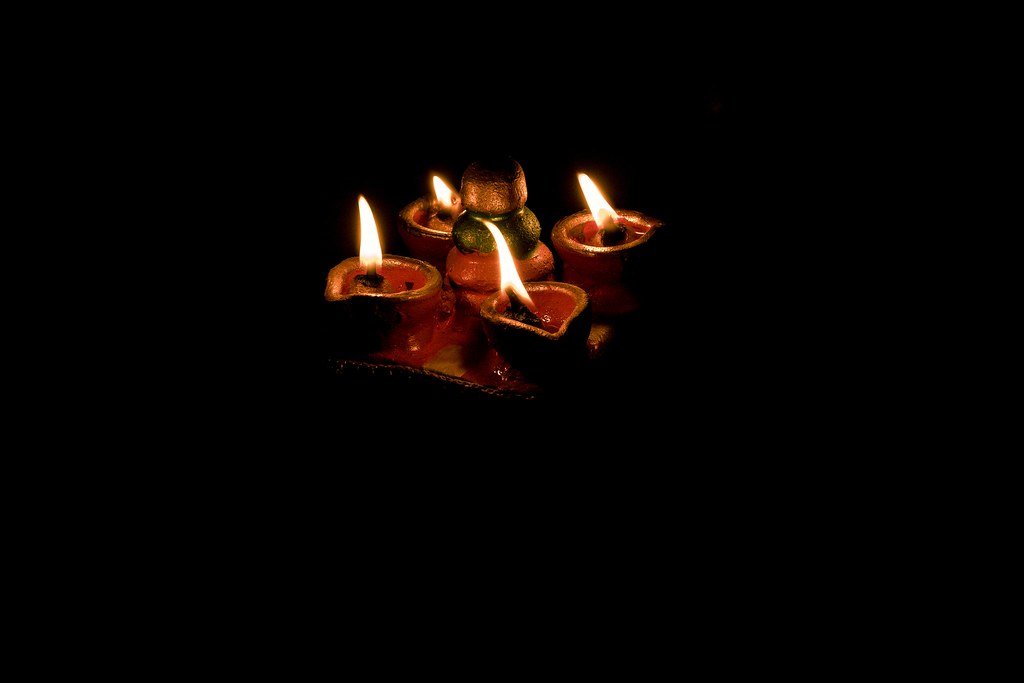
Chandni Chowk was named for moonlight — so what happens when the whole of Old Delhi tries to outshine the moon for one week a year? The answer is not a single display or a single night: it is lane after lane of lamps, silver, spice and sweets, building towards Diwali night on Sunday 8 November 2026, and it is a celebration whose noisiest part is now confined to a few carefully policed hours. This guide walks the markets first, explains the cracker position exactly as it stands for 2026, and leaves you with a light-led way to spend the night itself.
Chandni Chowk was named for moonlight — so what happens when the whole of Old Delhi tries to outshine the moon for one week a year? The answer is not a single display or a single night. It is lane after lane of lamps, silver, spice and sweets, building towards Diwali night on Sunday 8 November 2026 — a celebration whose noisiest part is now confined to a few carefully policed hours. This guide walks the markets first, states the cracker position exactly as it stands for 2026, and leaves you with a light-led way to spend the night itself.
Diwali in Delhi is easy to misunderstand from a distance. It is not a fireworks show with a market attached. In Old Delhi, the festival grows out of ordinary trade: the same wholesale lanes that sell electrical goods, wedding trimmings, silver and spices all year round simply turn their full stock towards one festival. That is why it feels less like an event and more like a city doing its normal work at festival pitch. The festival runs from Dhanteras on Friday 6 November to Bhai Dooj on Wednesday 11 November 2026, with Lakshmi Puja on Sunday 8 November. Shopping peaks before that night, and the 2026 cracker rules are narrower than many visitors expect.
Why Old Delhi glows differently at Diwali
Old Delhi is Shahjahanabad, the walled city founded by Shah Jahan in the seventeenth century, and Chandni Chowk is its great central avenue, running from the Red Fort towards Fatehpuri Masjid. Delhi Tourism traces the market to 1650 and to Shah Jahan's daughter Jahanara Begum, and explains the name from a central pool that once reflected the moon: Chandni Chowk, the Moonlight Square. Our own Old Delhi guide picks up the same thread, calling the avenue the axis of the walled city and describing a place entered on foot or by rickshaw.
That history matters at Diwali because the festival's light has somewhere real to land. These are working premises, not a dressed-up set. When their strings of lights, lanterns and lamps go up, they light a street designed for processions and crowds, and the glow is uneven in a good way: a blaze of electrical lights in one lane, the warm flicker of clay diyas in another, a jeweller's window glittering in a third. Few districts organise themselves so strictly by lane, and Diwali sharpens that division: one lane sells light itself, the next sells festive trimmings, the next sells the silver and dry fruits that become gifts.
A lane-by-lane walk through the Diwali markets
Start with light. Bhagirath Palace, just off Chandni Chowk, is the area's electrical-goods market, and at Diwali its shops are given over to LED strings, rice lights, curtain lights, decorative lamps, lanterns and the fittings that hold a household display together. This is wholesale as well as retail territory, so allow time to compare lengths and fittings, and to carry what you buy. From lights, turn to decoration: Kinari Bazaar is the lane for gota, lace, ribbons, decorative borders, torans and festive trimmings, while nearby Chawri Bazaar adds paper goods, diyas and lanterns, including traditional clay lamps alongside modern lighting.
Dariba Kalan is the lane to understand Dhanteras. Traditionally associated with silver jewellery, silver articles and precious stones, it is where many families look for the silver purchase that marks the first day of the festival, and its shops also carry small silver gifts — coins, idols and tableware — that travel well as presents. At the western end, near Fatehpuri Masjid, Khari Baoli changes the register entirely. Described in our Old Delhi guide as Asia's largest spice market, it piles up chillies, turmeric and dry fruits, and at Diwali it becomes the natural place for gift boxes of almonds, cashews, pistachios, walnuts and dried fruits, alongside puja essentials. Go before noon, as the site's own guide advises. Between the lanes, eat: jalebis at long-established shops, parathas in Paranthe Wali Gali, chaat, kebabs and sweets for the box to take home.
When to go, and how to move through the crowds
The single most useful timing decision is to shop before Diwali night, not on it. Dhanteras, Friday 6 November, is the natural peak shopping day, and the days leading up to it carry the fullest stalls and the liveliest atmosphere. Diwali itself is the night for lamps at home and lights in the streets, not the day to attempt a first, ambitious shopping list in the wholesale lanes. There is a Sunday wrinkle worth knowing in advance: several current guides note that many Old Delhi wholesale lanes, including Bhagirath Palace and Khari Baoli, are normally shut on Sundays — and Diwali 2026 falls on a Sunday — while other material notes that many shops open on Sundays during the peak festive season. The two statements do not reconcile into a single promise, so treat Sunday opening as something to check before you set out, and do the serious shopping on Friday or Saturday. A weekday or Saturday morning is calmer, as the lanes fill by afternoon in Diwali week.
Getting there is straightforward. Chandni Chowk station on the Yellow Line and Chawri Bazar station open directly into the quarter, and from there the honest way to travel is on foot, with cycle-rickshaws and e-rickshaws for the lanes. Cars barely fit Shahjahanabad at the quietest of times, and in Diwali week they fit it worse; our Old Delhi guide makes the same point. Wear comfortable shoes, keep bags small and close, agree rickshaw fares before setting off, and allow far more time than the map suggests. After sunset is when the lights repay the effort: even a short evening walk, from the Red Fort end towards Fatehpuri Masjid, gives a fair sense of the festival without demanding a full day in the crowds.
The 2026 cracker position, stated plainly
For 2026, Delhi-NCR does not have an open, unrestricted cracker season. What it has is a year-round ban with a short, tightly conditioned exception around Diwali, set by the Supreme Court. The position, as reported from the Supreme Court order dated 29 October 2026 and made available on 2 November 2026, is as follows. The sale of certified green firecrackers in Delhi-NCR was permitted from 4 to 6 November 2026. Their bursting was permitted only on 7 and 8 November 2026, and only between 6 am and 7 am and between 8 pm and 10 pm on each of those days — three hours per day. The complete ban resumes from 9 November 2026. That is the whole window: two days, two short slots per day, and then the ban again.
The conditions on what may be sold and used are equally specific. Only firecrackers certified as green by the Council of Scientific and Industrial Research–National Environmental Engineering Research Institute (CSIR-NEERI), with licences from the Petroleum and Explosives Safety Organisation (PESO), and listed on the CSIR-NEERI website, are covered. Firecrackers containing barium and products not approved as green are not permitted, and firecrackers joined in series — known as ladis or garlands — are prohibited. Boxes must carry a product-specific QR code, sales are restricted to locations designated by district authorities in consultation with the police, and there is to be no sale or purchase through online platforms. Bursting is prohibited within 300 metres of hospitals, health centres, old-age homes, educational institutions and notified silence zones, designated as no-cracker zones.
Enforcement rests on inspection and accountability rather than on a single fine figure. Police and district teams are to inspect designated sale locations, verify QR codes, confiscate illegal or conventional firecrackers, and initiate prosecutions against manufacturers and traders found in violation. Traders whose licences had been cancelled were restored only temporarily, for 4 to 6 November, and those licences are to be cancelled immediately on breach. Manufacturers and traders must also furnish monetary security, set by the authorities and forfeited on violation, and authorities must file compliance affidavits by 14 December 2026, with contempt action warned against non-compliant officials. No fixed penalty amount for an individual was verified from the reporting consulted, so none is stated here. Two cautions belong with that statement: on 3 November 2026 the Supreme Court itself raised concern about conventional and unauthorised firecrackers being sold openly despite the order, and the Commission for Air Quality Management had invoked Stage II of the Graded Response Action Plan across Delhi-NCR in the days before Diwali as air quality slipped into the very poor category. Check same-day air-quality readings and any fresh local directions before the night itself.
A light-led Diwali night in Old Delhi
None of that makes Diwali in Old Delhi a quiet festival; it makes it a festival whose noise is concentrated and whose light is everywhere. A rewarding way to spend Diwali night itself is to follow the light rather than chase the noise: an evening walk through the lit lanes, diyas at shopfronts and homes, the food lanes at their most festive, then a step back from the densest crowds to watch the city glow.
Check the day's air-quality reading and, if the air is poor, shorten the walk and keep the evening flexible rather than fixed to a single viewpoint. Keep to the permitted cracker hours and places if you are with hosts who burst crackers: the 2026 exception is defined by product, place and hour together, and all three have to match. If you are staying elsewhere in Delhi, the wider Delhi guide sets the Old Delhi walk alongside the Red Fort, India Gate and the rest of the capital, so a Diwali-night walk can sit inside a longer Delhi trip. Done that way, Old Delhi at Diwali offers something a fireworks display alone cannot: a working city, in its oldest streets, celebrating with the trades it has practised for centuries.
Watch Chandni Chowk at Diwali
Watch inside Chandni Chowk's hidden diya market in the Diwali rush:
Embedded for viewing from the creator's channel; check local market and cracker-rule updates before heading to Chandni Chowk.
When is Diwali 2026 in Delhi?
Diwali, the main Lakshmi Puja night, falls on Sunday 8 November 2026. The wider festival runs from Dhanteras on Friday 6 November to Bhai Dooj on Wednesday 11 November 2026, so the shopping peak falls in the days before the 8th.
Are firecrackers allowed in Delhi for Diwali 2026?
Only within a narrow exception. Under the Supreme Court order dated 29 October 2026, certified green firecrackers could be sold from 4 to 6 November and burst only on 7 and 8 November, 6–7 am and 8–10 pm each day. The full ban resumes 9 November 2026. Conventional and barium crackers, ladis and online sales are not covered, and bursting is banned within 300 metres of hospitals, health centres, old-age homes, schools and notified silence zones.
Where in Old Delhi should I go for Diwali lights, decoration and gifts?
For lights and electrical goods, Bhagirath Palace off Chandni Chowk; for trimmings, ribbons and torans, Kinari Bazaar; for silver, Dariba Kalan; for dry-fruit gift boxes and spices, Khari Baoli near Fatehpuri Masjid; and for diyas and lanterns, Chawri Bazaar.
Is Chandni Chowk open on Diwali day itself, Sunday 8 November 2026?
This could not be confirmed as a single rule. Several guides state that many Old Delhi wholesale lanes are normally shut on Sundays, while others note festive-season Sunday opening. Shop mainly on Friday 6 or Saturday 7 November, and check a shop's Sunday opening before setting out on the 8th.
How should I get around Old Delhi at Diwali?
Take the metro to Chandni Chowk (Yellow Line) or Chawri Bazar, then continue on foot or by rickshaw. Cars barely fit the old city's lanes and are a poor choice in Diwali week. Shop in the morning; save the evening for a shorter walk among the lights.
What is the simplest light-led plan for Diwali night?
Shop before the night, walk the lit lanes after sunset, eat in the food lanes, and step back from the densest crowds to enjoy the displays. Follow the permitted cracker hours and places if you are with hosts who burst crackers, and check same-day air quality.
If this leaves you wanting the wider picture, start with our Old Delhi destination guide — Shahjahanabad, its monuments and its food lanes in one place.