
Famous Food Series · Assam
What to Eat in Assam: The Ash-Cured Curry, Sour Fish and Rice Beer You Won't Find Elsewhere

By Beauty of Bharat — India travel guide, every place, every flavour.
Guides covering all 36 States and UTs, researched from official sources and checked at publish time. Corrections welcome — see About Beauty of Bharat.

Assam's most famous dish begins with ash — and its most storied drink is brewed, by tradition, only by women. That is the honest surprise at the heart of Assamese cooking, and it tells you almost everything about how this food works. In Assam, the signature opening course of a meal, khar, gets its distinctive alkaline character from water filtered through the ashes of sun-dried banana peel. And apong, the traditional rice beer of the Mising community, is fermented from cooked rice with a herbal starter cake and has long been brewed by the women of the household, passed down orally through generations. Neither is a gimmick. Both come from the same logic that runs through the whole cuisine: the hills favour fermentation and drying as preservation, the plains supply fresh greens, river fish and rice, and the cooking itself stays light on spice so that sour, bitter, alkaline and smoky flavours can speak for themselves. This guide walks through the twelve dishes and drinks that define the famous food of Assam — what they are, when they are eaten, and where they fit in a traditional meal.
In brief: an Assamese meal is built around rice — often the fragrant joha rice — and served, traditionally, in bell-metal utensils made by the Mariya community. It typically opens with khar, moves through greens, pitika mashes, dal and a fish or meat curry, and closes not with dessert but with tamul (betel nut) and paan. Fish from the Brahmaputra and its tributaries is the lifeline of the table, duck and pork anchor the winter feasts, and pitha rice cakes belong to festival days, above all Bihu.
What to eat in Assam at a glance
| Cuisine base | Rice, river fish, fresh greens, fermented and dried ingredients; very little heavy spice |
| Signature opening | Khar — the alkaline dish, traditionally first in a meal |
| Signature curry | Masor tenga — light, sour fish curry |
| Festival food | Pitha rice cakes, made especially for Bihu |
| Traditional drink | Apong — Mising rice beer, served as a welcome drink |
| Where to try it | Guwahati's Assamese kitchens first, then Jorhat, Sivasagar and Majuli for the deeper table |
Assam sits on the site's own food map alongside the rest of the series — compare it with the famous food of Kerala and the famous food of Bengal to see how differently India's east cooks its fish and rice — and set it beside the Assam state guide and the Kaziranga winter safari guide when you plan the trip itself.
1. Khar: the alkaline dish that opens the meal
If you try only one uniquely Assamese dish, make it khar. Khar is both a dish and a technique: water filtered through the ashes of dried banana peel gives an alkaline liquid, and that liquid is cooked with raw papaya, pulses, taro or meat. The flavour is earthy, mild and faintly smoky — unlike anything else in Indian cooking — and it is traditionally served at the start of a meal, where it is believed to cleanse the palate and aid digestion. Our own guide to the dish is at khar.
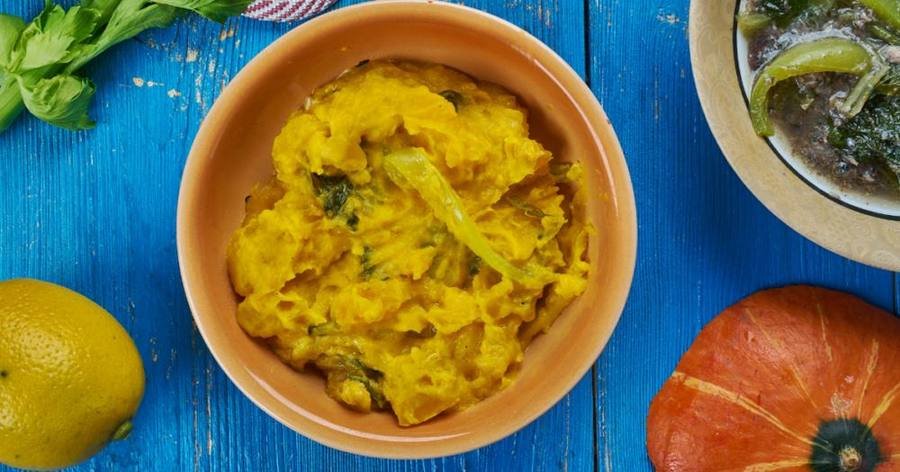
One point of table etiquette is worth knowing: traditionally, khar and tenga — the alkaline and the sour — are not eaten together in the same meal, though the rule has loosened in modern practice. Order khar first and you are eating the way an Assamese household has eaten for generations.
2. Masor tenga: the sour fish curry at the soul of the table
Masor tenga is the dish most Assamese people would name first. Tenga means sour, and this is a light, brothy fish curry soured with tomatoes, elephant apple (ou tenga), the fragrant kaji nemu lemon, or the dried mangosteen called thekera. Unlike a heavy, cream-based curry, it is refreshing and clean-tasting — built for Assam's humid climate and for summer tables in particular. The Brahmaputra's fish — rou, ilish and others — are the usual catch, fried in mustard oil or curried with bottle gourd or spinach. Read the dish guide at masor tenga.
3. Duck curry with ash gourd: the winter feast dish
Duck is one of the most loved meats in Assam, and duck curry with ash gourd is its classic winter preparation. The duck is slow-cooked with ash gourd and potatoes in mustard oil with ginger, garlic and green chillies until the meat is tender and the fat has enriched the gravy. It is a fixture of the Magh Bihu feast, when duck, mutton and pork all appear on the celebratory table, and it is the dish to ask for on a cold-weather visit. The full dish page is duck with ash gourd.

If you are in Assam in January, time your eating around Magh Bihu, the harvest festival also called Bhogali Bihu: the feasting the night before, uruka, is when duck curry earns its place.
4. Pitha: rice cakes for Bihu and celebration
Pitha is a whole class of rice preparations, generally made only on special occasions such as Bihu. They are made from soaked and ground glutinous rice (bora saul) and can be fried in oil, roasted over a slow fire, or baked and rolled on a hot plate. The best-known kinds are til pitha, a thin rolled crepe filled with roasted sesame and jaggery; narikol pitha, filled with coconut; sunga pitha, rice cooked inside young green bamboo over a slow fire; and ghila pitha, a small fried rice cake. See pitha for the dish guide.

Pitha are also breakfast and evening-tea food, eaten with tea rather than as a course of a meal. If a household offers you freshly made til pitha during Bihu, that is hospitality at its most traditional — the cakes take real work, and they are made for guests as much as for family.
5. Aloo pitika: comfort in a mash
Aloo pitika is Assam's answer to mashed potato, and it is far more than a side dish. Boiled potatoes are mashed with raw onion, chopped green chillies, fresh coriander and a pungent drizzle of raw mustard oil. It appears in the everyday thali alongside dal, greens and a curry, and it is the dish that best shows the cuisine's method: a few fresh ingredients, almost no spice blend, and flavour carried by mustard oil and herbs. Our dish page is aloo pitika.
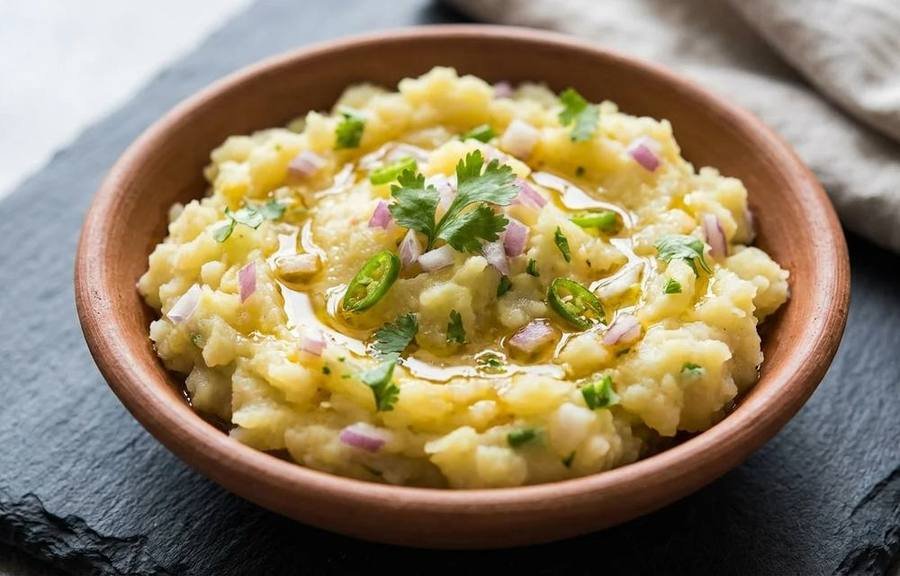
Pitika is a category, not a single recipe: the same mashing technique is applied to brinjal, fish and other vegetables, so if you like aloo pitika, ask what other pitikas the kitchen makes that day.
6. Bamboo shoot dishes: khorisa and pork
Bamboo shoot is one of the flavours that sets Assam apart from the rest of India: fermented bamboo shoot, khorisa, is cooked with fish or pork, and fresh shoots are cooked or lightly fried. The combination people mention most is pork with bamboo shoot, a tribal and rural table staple that is uncommon elsewhere in the country. The sour, earthy tang of fermented shoot against rich pork is exactly the fermented-versus-fresh balance the cuisine is built on.

A word of caution for first-timers: fermented bamboo shoot is an acquired, pungent flavour. Try it in a cooked curry first, where it mellows into the gravy, before seeking out the stronger preparations.
7. Smoked pork: the hills' answer to preservation
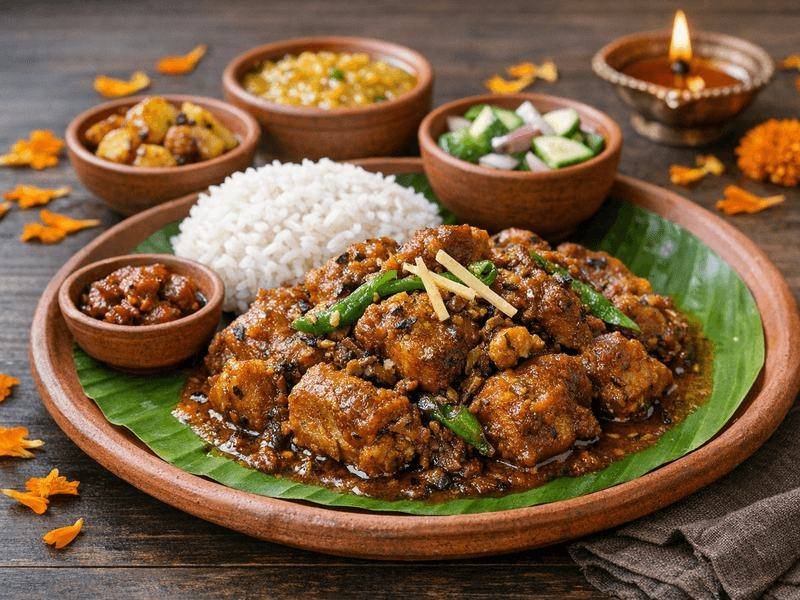
Smoked pork comes from the hill side of Assamese cooking, where drying and smoking are preservation first and flavour second. The meat is smoked, then cooked with greens such as lai xaak (mustard greens) or with bamboo shoot, giving a deep, smoky curry. It is a dish of the tribal communities and the winter months, and it pairs naturally with steamed rice and a sour chutney.
8. Ou khatta and the sour chutneys
Ou khatta is a sweet-and-sour chutney made from ou, the elephant apple: the fruit is boiled, lightly mashed, sautéed with mustard seeds in a little oil, and finished with jaggery. It sits on the thali as a bright counterpoint to rich meat or fish, and it shows how Assam uses sourness twice — once in the curry (tenga) and once in the accompaniment. Other chutneys in the same family use mango, Indian gooseberry, hog plum, tamarind or star fruit, and the signature pickles panitenga and kharoli are made from ground mustard seeds.
9. Xaak bhaji and the greens
No Assamese thali is complete without xaak — leafy greens, stir-fried with little spice and ginger, with different greens appearing across the seasons. Alongside come labra, a mixed vegetable curry, and bilahi chutney, a fresh tomato chutney. If the curries are the headlines of the meal, the greens are its daily rhythm, and they are what keep an Assamese thali feeling light even when it is generous.
10. Jolpan: the rice breakfast
Assam is a rice-eating state, and jolpan is its rice breakfast: flattened rice (chira) with curd and jaggery, and a range of other rice preparations served as a morning thali. It is the gentlest introduction to the cuisine — no chilli heat, no strong fermentation — and it shows why rice here is the centre of the food culture, not just a side.
11. Assam tea: saah, the indispensable cup
Tea — saah in Assamese — is an indispensable part of Assamese cuisine, served as black tea, milk tea, spiced tea or lemon tea (laal sa with lemon juice). It is the drink that frames the day: with jolpan in the morning, with pitha in the evening, and after a meal as a pause before tamul and paan. Our guide to the leaf itself is Assam tea.

Do not leave Assam without drinking tea where it is grown: the gardens around Jorhat and Dibrugarh are the classic tea country, and a garden visit turns the cup you have been drinking all trip into a place.
12. Apong: the Mising rice beer
Apong is the traditional rice beer of the Mising community of Assam, and it closes this list because it is the item most visitors know least about. It is made by fermenting cooked rice with a herbal starter cake called apop pitha (or e'pob), which is itself made from many herbs, barks, leaves and twigs — sources describe between 16 and 39 plant ingredients in the starter. There are two main kinds: nogin apong, a whitish, mildly sweet everyday rice beer, and poro (paro) apong, a darker, stronger drink made with ash from partially burnt paddy husk and straw, sometimes called sai mod or ash liquor.
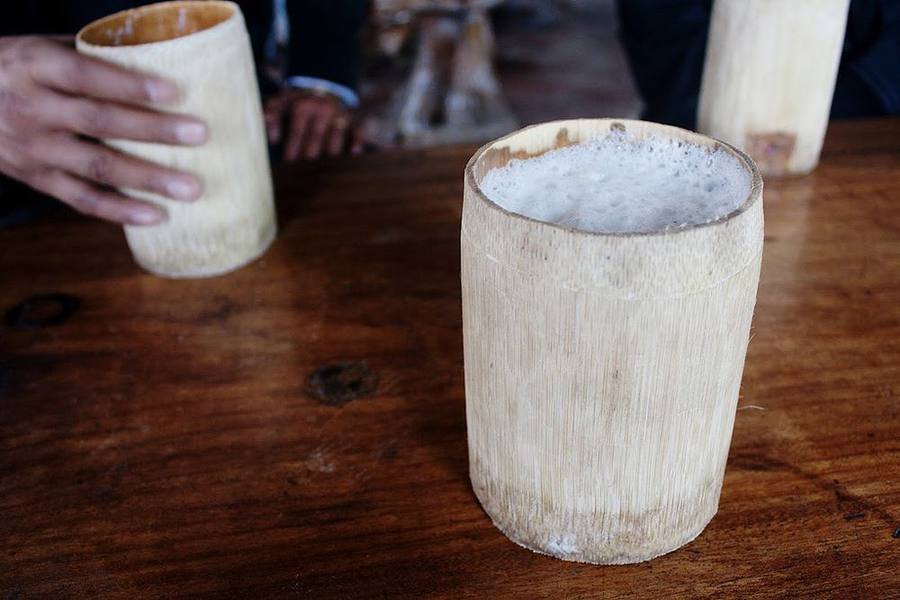
Apong is served as a welcome drink and plays an essential role in Mising social and customary life — at weddings, festivals such as Ali A:yé Lígang, and community gatherings, often alongside pork and purang apin. Brewing is traditionally the women's craft of the household, with the knowledge passed down orally. Two honest notes for travellers: apong is a community and household drink, not a bar product, encountered through hospitality and festivals rather than ordered off a menu; and it is alcoholic, so treat it as you would any traditional brew — a taste offered in welcome, not a challenge.
How to eat your way through Assam
Start in Guwahati, where Assamese kitchens serve the full thali to newcomers, then go deeper: Jorhat and Sivasagar for the Upper Assam table, Majuli island for a river-island food culture shaped by the Brahmaputra, and a Bihu visit — Bohag Bihu in spring or Magh Bihu in January — for pitha and the feast dishes at their best. The Bohag Bihu festival page sets the spring festival in context, and the Guwahati, Majuli and Kaziranga guides cover the places to pair with the eating.
- Order a traditional thali first: khar, greens, pitika, dal, a fish or meat curry, chutney and rice on one platter.
- Try khar before tenga in the same meal, the traditional order, and taste how different alkaline and sour can be.
- Save duck curry and smoked pork for the winter months, when they are at their best and most available.
- Time a visit for Bihu if you want pitha: the rice cakes are festival food, not everyday fare.
- Accept apong only as hospitality, in the community setting where it is offered, and never seek it out as a bar drink.
Watch & feel the place
Assamese cooking is best understood by watching it happen — duck slow-cooked in a village kitchen, and a full traditional thali laid out in Guwahati:
Videos are by their respective creators and are embedded for viewing; please check the creators' channels for the latest Assamese food content before travelling.
What to eat in Assam FAQs
What is the most famous food of Assam?
Masor tenga, the light sour fish curry, is the dish most often named first, followed by khar, the alkaline opening dish, and pitha, the festival rice cakes. Together they sum up the cuisine: sour, alkaline and rice-based, with very little heavy spice.
What is khar in Assamese food?
Khar is an alkaline dish made by filtering water through the ashes of sun-dried banana peel and cooking it with raw papaya, pulses, taro or meat. It is traditionally served first in an Assamese meal and is believed to aid digestion.
What is masor tenga made of?
Fish — often river fish such as rou — cooked in a light, brothy curry soured with tomatoes, elephant apple (ou tenga), kaji nemu lemon or dried mangosteen (thekera), usually with mustard oil and served with rice.
What is pitha, and when is it eaten?
Pitha are rice cakes made from soaked and ground glutinous rice, generally prepared only on special occasions such as Bihu. Varieties include til pitha (sesame and jaggery), narikol pitha (coconut) and sunga pitha (cooked in bamboo).
What is apong?
Apong is the traditional rice beer of the Mising community of Assam, fermented from cooked rice with a herbal starter cake. Nogin apong is the milder everyday kind; poro apong is darker and stronger, made with paddy-husk ash. It is served as a welcome drink at weddings, festivals and community gatherings, and brewing is traditionally women's household craft.
Where should I try Assamese food?
Start with a traditional thali in Guwahati, then eat deeper in Jorhat, Sivasagar and on Majuli island. Time a visit for Bohag Bihu in spring or Magh Bihu in January for pitha and the feast dishes, and pair the eating with the Kaziranga safari guide for the wider trip.
Assam's table rewards the traveller who eats in order: khar first, tenga after, greens and pitika in between, pitha at festival time, and tea throughout. If this food has whetted your appetite for the state itself, read the Kaziranga winter safari guide next — the rhino grasslands are the landscape this cuisine grew out of.
Plan your Assam trip
Start with the thali, then set the food beside Kaziranga, Majuli and the Brahmaputra.
Assam state guide →