
Food Atlas · Assam
Khar: The alkaline opener that begins an Assamese meal

By Beauty of Bharat — India travel guide, every place, every flavour.
Guides covering all 36 States and UTs, researched from official sources and checked at publish time. Corrections welcome — see About Beauty of Bharat.
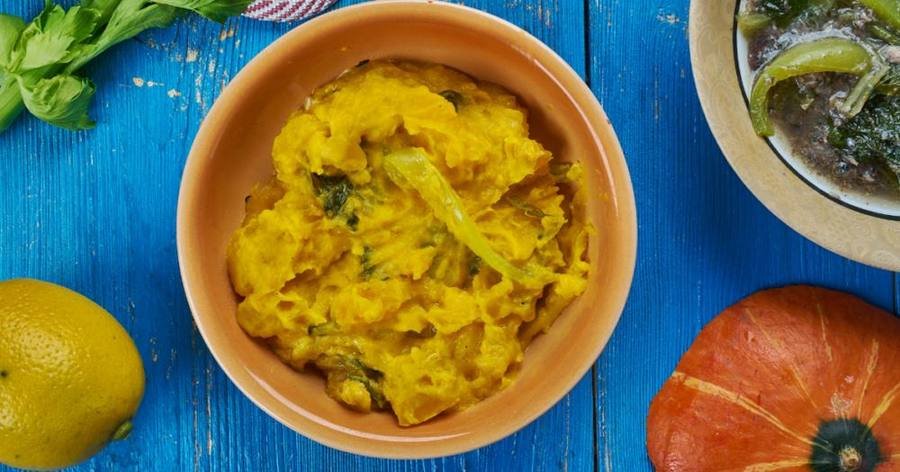
Some dishes explain a region faster than a map. In Assam, Khar is one of them. Khar is both an ingredient and a starter dish: an alkaline extract traditionally made from sun-dried banana peel ash, used to cook vegetables, pulses or fish heads.
A detail worth knowing before the first bite: a meal that begins with khar is said, in Assamese tradition, to end with tok (a sour dish). Keep that in mind as you read on, because Khar rewards eaters who notice how Assam seasons, serves and shares its food.
Khar at a Glance
| State / UT | Assam |
| Capital / base | Dispur |
| What it is | Khar is both an ingredient and a starter dish: an alkaline extract traditionally made from sun-dried banana peel ash, used to cook vegetables, pulses or fish heads |
| Main ingredients | khar (banana-peel ash extract), raw papaya or pulses or vegetables, mustard oil, garlic and salt |
| Taste | Mildly alkaline and savoury with a distinctive, faintly smoky-mineral note beneath the vegetables or pulses |
| Texture | A light, soupy preparation with soft-cooked vegetables or pulses, never thick or creamy |
| Usually eaten | Served first, in a small portion with rice, at the start of a traditional thali |
| Occasion | Traditional meals and festive Assamese thalis |
The Story on Assam’s Table
Khar traditionally opens a formal Assamese meal, and tradition holds that it prepares the palate and stomach for what follows. In a region historically short of salt, alkaline extracts from banana and other plant ashes were an important seasoning. The dish cooked in khar takes its name, making khar a technique as much as a recipe. That context is essential in Assam, where a plate can signal a harvest, a religious calendar, a market habit or the meeting of communities. Khar belongs in this atlas under Assam because this is the setting in which its ingredients, accompaniments and meaning come together.
The state guide places Khar alongside Masor tenga, Duck with ash gourd and Pitha. Start with the Assam travel and food guide if you are planning where this tasting fits into a route.
Taste, Texture and Ingredients
Expect mildly alkaline and savoury with a distinctive, faintly smoky-mineral note beneath the vegetables or pulses. Think a light, soupy preparation with soft-cooked vegetables or pulses, never thick or creamy.
The ingredient list is best read as a structure rather than a shopping list: khar (banana-peel ash extract), raw papaya or pulses or vegetables, mustard oil, garlic and salt.
How Khar Is Made
Ash from dried banana peel is steeped in water and strained to make the alkaline liquid. Vegetables or soaked pulses are simmered in this liquid with mustard oil and garlic until tender. The cooking rewards attention to sequence and balance rather than a long list of additions.
When Khar is made for a gathering, that timing also becomes social — food reaches the table as part of a shared rhythm, not as an isolated plate.
When and How It Is Eaten
Served first, in a small portion with rice, at the start of a traditional thali. Its natural moment is traditional meals and festive Assamese thalis.
Assam’s broader food culture helps explain the serving style. The state is known for wildlife, tea and river, and its calendar includes Rongali Bihu and Magh Bihu.
Where to Try It in Assam
Order a traditional Assamese thali in Guwahati or Sivasagar and look for khar as the first course. The most convincing first plate usually comes from paying attention to where local people already eat.
Khar pairs naturally with time in Guwahati and Kaziranga, and can sit just as comfortably beside a quieter excursion to Haflong or Mayong.
More Dishes of Assam
Continue through Assam’s other signature plates and drinks below — each has its own page, photograph and story.



Frequently Asked Questions
What is Khar?
Khar is both an ingredient and a starter dish: an alkaline extract traditionally made from sun-dried banana peel ash, used to cook vegetables, pulses or fish heads. Expect mildly alkaline and savoury with a distinctive, faintly smoky-mineral note beneath the vegetables or pulses.
What are the main ingredients in Khar?
The defining ingredients or components are khar (banana-peel ash extract), raw papaya or pulses or vegetables, mustard oil, garlic and salt. Ash from dried banana peel is steeped in water and strained to make the alkaline liquid. Vegetables or soaked pulses are simmered in this liquid with mustard oil and garlic until tender.
What does Khar taste like?
Expect mildly alkaline and savoury with a distinctive, faintly smoky-mineral note beneath the vegetables or pulses. Think a light, soupy preparation with soft-cooked vegetables or pulses, never thick or creamy. Serving pattern: Served first, in a small portion with rice, at the start of a traditional thali.
When is Khar eaten in Assam?
Traditional meals and festive Assamese thalis. Raw papaya khar is among the most common vegetable versions.
Where can I try Khar in Assam?
Order a traditional Assamese thali in Guwahati or Sivasagar and look for khar as the first course. Pair a first tasting with Masor tenga and Duck with ash gourd to see how Khar sits within the wider Assam table.
Every Place. Every Flavour.
Khar is one of 6 dishes and drinks profiled from Assam — and one of 213 regional dishes across all 36 states and union territories in this atlas.
Open the Assam guide Read the blog