
Food Atlas · Assam
Aloo pitika: Assam's mustard-oil mashed potato, sharp with raw onion

By Beauty of Bharat — India travel guide, every place, every flavour.
Guides covering all 36 States and UTs, researched from official sources and checked at publish time. Corrections welcome — see About Beauty of Bharat.
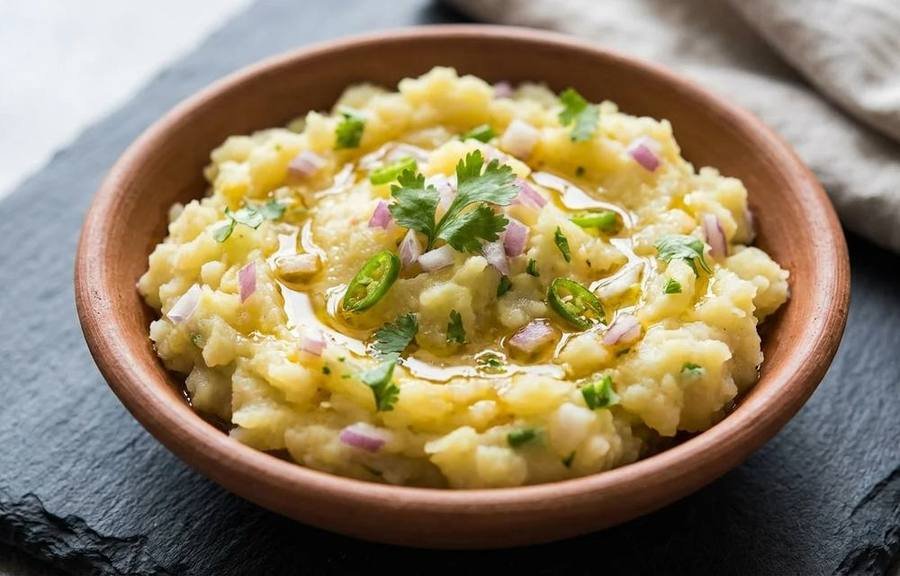
Aloo pitika is Assamese home cooking reduced to its essentials: boiled potatoes, mashed by hand while warm, mixed with finely chopped onion, chilli and coriander, salt — and a generous drizzle of raw mustard oil, added at the end. That last detail is the whole dish: the mustard oil is not a cooking medium here but a seasoning, and its pungency is the point. Earthy and mild from potato, pungent from raw mustard oil and onion, with a fresh chilli kick, it is served with rice and dal as part of a simple Assamese meal, often with a lemon wedge — the most everyday form of pitika, the mash that is a foundational Assamese home preparation.
Aloo pitika at a Glance
| State / UT | Assam |
| Capital / base | Dispur |
| What it is | Aloo pitika is a simple mash of boiled potatoes with raw onion, green chilli, coriander and raw mustard oil |
| Main ingredients | potatoes, raw mustard oil, onion, green chillies, fresh coriander and salt |
| Taste | Earthy and mild from potato, pungent from raw mustard oil and onion, with a fresh chilli kick |
| Texture | Soft and slightly chunky hand-mashed potato, moistened with oil |
| Usually eaten | Served with rice and dal as part of a simple Assamese meal, often with a lemon wedge |
| Occasion | Everyday home lunch |
The Story on Assam’s Table
Pitika — a mash — is a foundational Assamese home preparation, and aloo pitika is its most everyday form, appearing on lunch plates across the state. It shows the Assamese preference for few ingredients and raw mustard oil used as a seasoning, not just a cooking medium. Similar pitikas are made with egg, tomato or dal. That context is essential in Assam, where a plate can signal a harvest, a religious calendar, a market habit or the meeting of communities. Aloo pitika belongs in this atlas under Assam because this is the setting in which its ingredients, accompaniments and meaning come together.
The state guide places Aloo pitika alongside Khar, Masor tenga and Duck with ash gourd. Start with the Assam travel and food guide if you are planning where this tasting fits into a route.
One mash, many pitikas
Aloo pitika makes more sense once you know it is one member of a family. Pitika — a mash — is a foundational Assamese home preparation, and aloo pitika is its most everyday form, appearing on lunch plates across the state. Similar pitikas are made with egg, tomato or dal, which tells you what the form is for: a soft, seasoned mash that carries a meal, rather than a single fixed dish. The method stays the same in outline — potatoes are boiled until very soft, peeled and mashed by hand while warm, and finely chopped onion, chilli, coriander, salt and a generous drizzle of raw mustard oil are mixed through. It shows the Assamese preference for few ingredients and raw mustard oil used as a seasoning, not just a cooking medium. Find it on any traditional Assamese thali, from Guwahati restaurants to village home kitchens, served with rice and dal as part of a simple Assamese meal, often with a lemon wedge.
Taste, Texture and Ingredients
Expect earthy and mild from potato, pungent from raw mustard oil and onion, with a fresh chilli kick. Think soft and slightly chunky hand-mashed potato, moistened with oil.
The ingredient list is best read as a structure rather than a shopping list: potatoes, raw mustard oil, onion, green chillies, fresh coriander and salt.
How Aloo pitika Is Made
Potatoes are boiled until very soft, peeled and mashed by hand while warm. Finely chopped onion, chilli, coriander, salt and a generous drizzle of raw mustard oil are mixed through. The cooking rewards attention to sequence and balance rather than a long list of additions.
When Aloo pitika is made for a gathering, that timing also becomes social — food reaches the table as part of a shared rhythm, not as an isolated plate.
When and How It Is Eaten
Served with rice and dal as part of a simple Assamese meal, often with a lemon wedge. Its natural moment is everyday home lunch.
Assam’s broader food culture helps explain the serving style. The state is known for wildlife, tea and river, and its calendar includes Rongali Bihu and Magh Bihu.
Where to Try It in Assam
Find it on any traditional Assamese thali, from Guwahati restaurants to village home kitchens. A first tasting is best treated as fieldwork: watch how the dish is served, what surrounds it and when it appears.
Aloo pitika pairs naturally with time in Guwahati and Kaziranga, and can sit just as comfortably beside a quieter excursion to Haflong or Mayong.
More Dishes of Assam
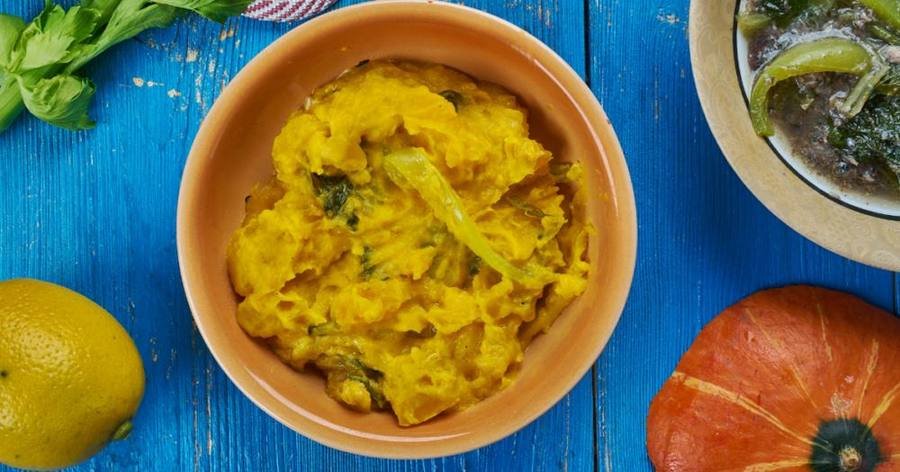
Continue through Assam’s other signature plates and drinks below — each has its own page, photograph and story.


Frequently Asked Questions
What is Aloo pitika?
Aloo pitika is a simple mash of boiled potatoes with raw onion, green chilli, coriander and raw mustard oil. Expect earthy and mild from potato, pungent from raw mustard oil and onion, with a fresh chilli kick.
What are the main ingredients in Aloo pitika?
The defining ingredients or components are potatoes, raw mustard oil, onion, green chillies, fresh coriander and salt. Potatoes are boiled until very soft, peeled and mashed by hand while warm. Finely chopped onion, chilli, coriander, salt and a generous drizzle of raw mustard oil are mixed through.
What does Aloo pitika taste like?
Expect earthy and mild from potato, pungent from raw mustard oil and onion, with a fresh chilli kick. Think soft and slightly chunky hand-mashed potato, moistened with oil. Serving pattern: Served with rice and dal as part of a simple Assamese meal, often with a lemon wedge.
When is Aloo pitika eaten in Assam?
Everyday home lunch. Aloo pitika is often the first accompaniment placed on a thali.
Where can I try Aloo pitika in Assam?
Find it on any traditional Assamese thali, from Guwahati restaurants to village home kitchens. Pair a first tasting with Khar and Masor tenga to see how Aloo pitika sits within the wider Assam table.
Every Place. Every Flavour.
Aloo pitika is one of 6 dishes and drinks profiled from Assam — and one of 213 regional dishes across all 36 states and union territories in this atlas.
Open the Assam guide Read the blog