
Himachal Pradesh · Transport Guide
How to Reach Spiti Valley: By Road, Rail and Air

By Beauty of Bharat — India travel guide, every place, every flavour.
Guides covering all 36 States and UTs, researched from official sources and checked at publish time. Corrections welcome — see About Beauty of Bharat.
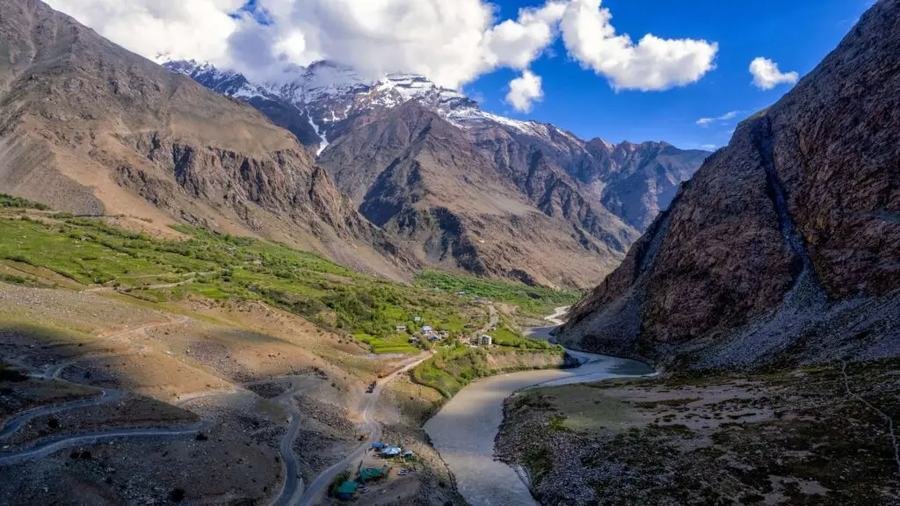
There is no airport in Spiti Valley. There is no railway station either. And one of the two roads that lead in disappears under snow for roughly half the year — the surprise that catches first-timers out. Spiti is reached by road and by road only: a slow climb through Kinnaur’s apple country, or a high, rough crossing over Kunzum Pass at nearly 4,600 metres, ending in Kaza, the valley’s main town, at about 3,650 metres. This guide covers every way in, with the distances as sources actually report them, the seasonal windows, the permits, and what to do once you reach Kaza.
| Best way from Delhi | Train or flight to Chandigarh, then road via Kinnaur. Allow two to three days. |
| Road distances to Kaza | Shimla ~412–420 km over two to three days; Manali ~200 km, eight to twelve hours in season |
| Nearest airport | Bhuntar (Kullu–Manali), ~245–250 km from Kaza; Chandigarh has the most flights |
| Nearest railway station | Kalka and Shimla (toy train) for the Kinnaur side; Chandigarh is the most convenient broad-gauge railhead |
| Season | Manali–Kunzum route typically ~June to mid-October; Shimla–Kinnaur route open most of the year |
| Permits | None for Indian nationals in Spiti proper; foreign nationals need a Protected Area Permit for border areas |
How to Reach Spiti Valley from Delhi
There is no direct train, flight or bus that drops you in Spiti — every route ends on the same two mountain roads, so the real choice is where you join them. Delhi to Kaza is roughly 700 to 750 km, and the drive takes about sixteen to twenty hours, so treat it as a two- to three-day journey. The usual plan is to reach the hills by the first evening — Shimla or Manali — sleep there, and take the mountain road the next day. The fastest combination is a train or flight to Chandigarh, a night in Shimla, and then the Kinnaur road to Kaza. Build in a buffer day — landslides and road works can add hours. For what awaits at the end of the road, see our Spiti Valley complete guide.
How to Reach Spiti Valley by Road
Road is the only way into Spiti, and there are exactly two roads in — the long, steady one from Shimla and the short, dramatic one from Manali. Most travellers enter by one and leave by the other.
The Shimla–Kinnaur Route: Open Most of the Year
The Shimla route follows the old Hindustan–Tibet highway (NH5, then NH505) through Kinnaur: Shimla → Narkanda → Rampur → Reckong Peo → Nako → Tabo → Kaza. It is about 412 to 420 km to Kaza, covered over two to three days — most people stop at Reckong Peo or Kalpa on the first night and at Tabo on the second. This is the main road, and in winter it is the only one: it stays open most of the year, though heavy snow or landslides can close it for days, so check the road status before you travel. Its great advantage is the gradual climb: you sleep at about 2,300 metres in Reckong Peo before reaching Kaza at about 3,650 metres, which gives your body time to adjust — the single best reason first-timers are advised to enter from this side. The Chitkul guide covers a rewarding detour on the way in.
The Manali–Kunzum Route: Shorter, Higher, Seasonal
The Manali route is the dramatic one: Manali → Atal Tunnel → Gramphu → Chhatru → Batal → Kunzum Pass → Losar → Kaza. It is only about 200 km, but the drive takes eight to twelve hours, crossing Kunzum Pass at roughly 4,550 to 4,590 metres — a climb from about 2,050 metres in Manali to nearly 4,600 metres in a single day. The Atal Tunnel, opened in October 2020, takes you under Rohtang Pass, so you no longer climb Rohtang at all. Beyond Gramphu the road turns rough: unpaved stretches, loose rock and unbridged water crossings, with no fuel and no phone signal around the pass. A high-clearance SUV is strongly recommended; a sedan will struggle on the Gramphu to Batal stretch. The route is seasonal: it typically opens around mid-June, once the Border Roads Organisation clears the snow, and closes by mid-October. Treat June to mid-October as the typical window, not a guarantee — confirm the pass status before you set out, and leave Manali by 5 or 6 in the morning so you cross Kunzum in daylight.
If you drive yourself, fill up before the passes: on the Manali side Manali is the last reliable pump, and on the Shimla side fill up at Reckong Peo or Pooh — Kaza itself has a petrol pump, but do not count on the stretches in between. Carry cash, drinking water and warm layers, and do not drive the mountain roads after dark. The classic advice is to enter via Shimla and exit via Manali: the gentle climb in, the high-pass drama out.
How to Reach Spiti Valley by Bus
The cheapest way into Spiti is the Himachal Road Transport Corporation (HRTC) bus. HRTC runs an early-morning bus from Reckong Peo to Kaza most of the year, and a seasonal service from Manali to Kaza while Kunzum Pass is open — the Manali bus usually leaves around 5 AM and takes ten to twelve hours. Shared taxis also run on both routes in season, covering Manali to Kaza in about nine to ten hours. Fares change from year to year — travel guides reported the Manali to Kaza HRTC bus at roughly ₹450 and shared taxis around ₹1,200 to ₹1,500 per person in 2024 — so confirm fares and times at the bus stand the evening before, and arrive early: there is usually only one bus a day on the mountain legs.
How to Reach Spiti Valley by Train
Spiti has no railway of its own, so the train can only ever be the first leg — but it is a good one. The nearest railway stations to Spiti Valley are Shimla, Kalka and Chandigarh on the Kinnaur side, and Joginder Nagar on the Manali side. Shimla is reached by the UNESCO-listed Kalka–Shimla toy train, about five to six hours from Kalka through more than a hundred tunnels. Kalka, about 115 km from Shimla, is the broad-gauge railhead, well connected to Delhi and Chandigarh; the Delhi to Kalka run takes about four to five hours. Chandigarh is the most convenient broad-gauge option overall, with the most trains from Delhi, Mumbai and other metros, and it is about four hours by road from Chandigarh to Shimla. Joginder Nagar, about 365 km from Kaza, has limited services, so most travellers use Kalka, Shimla or Chandigarh instead. From any railhead, continue by bus or taxi; book trains early in the May to June peak.
How to Reach Spiti Valley by Flight
The nearest airport to Spiti Valley is Bhuntar Airport (Kullu–Manali), about 245 to 250 km from Kaza. It is the closest by distance, but flights are limited and frequently cancelled in bad weather. From Bhuntar, the road to Kaza via Manali takes seven to nine hours in summer, when Kunzum Pass is open — in winter the Manali side is shut, so Bhuntar is no use at all. For most travellers the best-connected choice is Chandigarh Airport, about 530 km from Kaza, with frequent flights from Delhi, Mumbai, Bengaluru and other metros; from there it is two days by road through Shimla and Kinnaur. There is no airport anywhere in Spiti, and no scheduled flight lands closer than Bhuntar.
Do I Need a Permit for Spiti Valley?
Indian nationals need no permit to visit Spiti Valley itself — not for Kaza, not for the monasteries, not for the high villages. Foreign nationals are a different matter: they need a Protected Area Permit, sometimes called an Inner Line Permit, for areas near the Tibet border, including parts of the Kinnaur stretch and the border villages. The permit is obtained in person — it cannot be arranged online — from the district offices in Shimla, Reckong Peo or Kaza, and you will need passport copies and photographs. Check current rules before travelling. Separately, every vehicle entering Lahaul and Spiti needs a free registration on the state’s e-Aagman portal, eaagman.hp.gov.in. Carry your ID at all times in the valley: there are check posts on the border roads.
Getting Around Spiti Valley: Local Transport in Kaza
Once you reach Kaza, the valley’s main town and your natural base, getting around is a matter of local taxis, shared jeeps and the occasional HRTC bus. HRTC buses connect Kaza with Tabo, Reckong Peo and Manali (in season), but services between the smaller villages are infrequent, so most visitors hire a taxi or a shared jeep in Kaza for day trips — to Key Monastery, Kibber, Langza, Hikkim and Komic, and to Chandratal Lake when the road is open. Arrange the taxi a day ahead through your hotel, and agree the day price before you set out. There are no app-based cabs in Spiti, and phone signal is patchy outside Kaza, so do not rely on booking anything on the move.
Altitude and Acclimatisation: Kaza at 3,650 Metres
Spiti is high country, and altitude is the one risk every traveller should plan for. Kaza sits at about 3,650 metres, and many sights are higher still: Key Monastery is about 4,166 metres, Kibber village about 4,270 metres, and Kunzum Pass about 4,590 metres. Acute mountain sickness — headache, nausea, breathlessness, poor sleep — is common on the first day or two, and it is the reason the Shimla route is recommended for first-timers: the gradual climb over two to three days through Kinnaur lets your body adjust before you reach Kaza. Coming in from Manali and crossing Kunzum Pass in a single day is how many first-timers end up spending their first night feeling awful. Whatever route you take, spend your first day in Kaza resting: drink plenty of water, avoid alcohol and strenuous activity, and let yourself acclimatise before heading to the higher villages.
Best Time to Visit Spiti Valley
The best time to visit Spiti Valley is June to September, when both routes are open and the full circuit is possible — June and September are the sweet spots, with stable weather, clear skies and thinner crowds than the July and August peak. May to October is the wider window for the valley as a whole, and October brings the clearest post-monsoon light. July and August are the monsoon months, when the Kinnaur stretch is most prone to landslides. From November to April only the Shimla–Kinnaur road stays open, weather permitting, and winter brings extreme cold and limited stays. For most people, the honest answer is June to September for a first trip. See our Himachal winter guide for cold-season trips.
Watch & Feel the Place: Spiti Valley on Film
Videos are by their respective creators.
How to Reach Spiti Valley FAQs
What is the nearest airport to Spiti Valley?
Bhuntar Airport (Kullu–Manali) is the nearest airport to Spiti Valley, about 245 to 250 km from Kaza. Flights are limited and weather-dependent, so most travellers fly to Chandigarh, about 530 km from Kaza, and drive in through Shimla and Kinnaur. Spiti Valley has no airport of its own.
Which is the nearest railway station to Spiti Valley?
There is no direct train to Spiti Valley. The nearest railheads are Kalka and Shimla (reached by the UNESCO-listed Kalka–Shimla toy train) on the Kinnaur side, and Joginder Nagar on the Manali side. Chandigarh is the most convenient broad-gauge station. From any of them, continue to Kaza by bus or taxi.
Do I need a permit to visit Spiti Valley?
Indian nationals need no permit to visit Spiti Valley itself. Foreign nationals need a Protected Area Permit for areas near the Tibet border, obtained in person from the district offices in Shimla, Reckong Peo or Kaza — check current rules before you travel. Every vehicle entering Lahaul and Spiti needs a free registration on the e-Aagman portal, eaagman.hp.gov.in.
What is the best time to visit Spiti Valley?
June to September, when both the Shimla–Kinnaur and Manali–Kunzum routes are open and the full circuit is possible. June and September are the sweet spots, with stable weather and thinner crowds. The wider window is May to October; from November to April only the Shimla–Kinnaur road stays open, weather permitting.
Can I visit Spiti Valley in winter?
Yes, but only via the Shimla–Kinnaur road — the Manali route over Kunzum Pass is closed from around mid-October to June. Winter means temperatures down to minus 25 degrees Celsius and below, limited accommodation, and roads that can close for days in heavy snow. It is a trip for well-prepared travellers, not a first visit.
How to reach Spiti Valley from Delhi?
Spiti Valley is about 700 to 750 km from Delhi by road, and the journey takes two to three days. The usual plan is a train or flight to Chandigarh, a night in Shimla, and then the Shimla–Kinnaur road to Kaza — or, in summer, an overnight bus to Manali and the Kunzum Pass road. There is no direct flight, train or bus from Delhi to Kaza.
Spiti Valley has no airport and no railway station, and that is exactly the point: the road is the journey, and the valley rewards the travellers who take it slowly. Enter via Shimla and Kinnaur for the gentler climb and the year-round road, exit via Manali and Kunzum Pass for the high drama, and give yourself a rest day in Kaza at 3,650 metres before you chase the higher villages. Next, read our Spiti Valley complete guide — the places, the monasteries and the full itinerary for the circuit — and our best places to visit in Himachal Pradesh guide for the state beyond the valley. See also our how to reach Badrinath and how to reach Kedarnath guides.
Plan your Spiti Valley trip
Two roads in, one valley at 3,650 metres — pick your route, check the passes, and go while the season lasts.
Spiti Valley destination guide →