
Uttar Pradesh · State Guide
Best Places to Visit in Uttar Pradesh

By Beauty of Bharat — India travel guide, every place, every flavour.
Guides covering all 36 States and UTs, researched from official sources and checked at publish time. Corrections welcome — see About Beauty of Bharat.
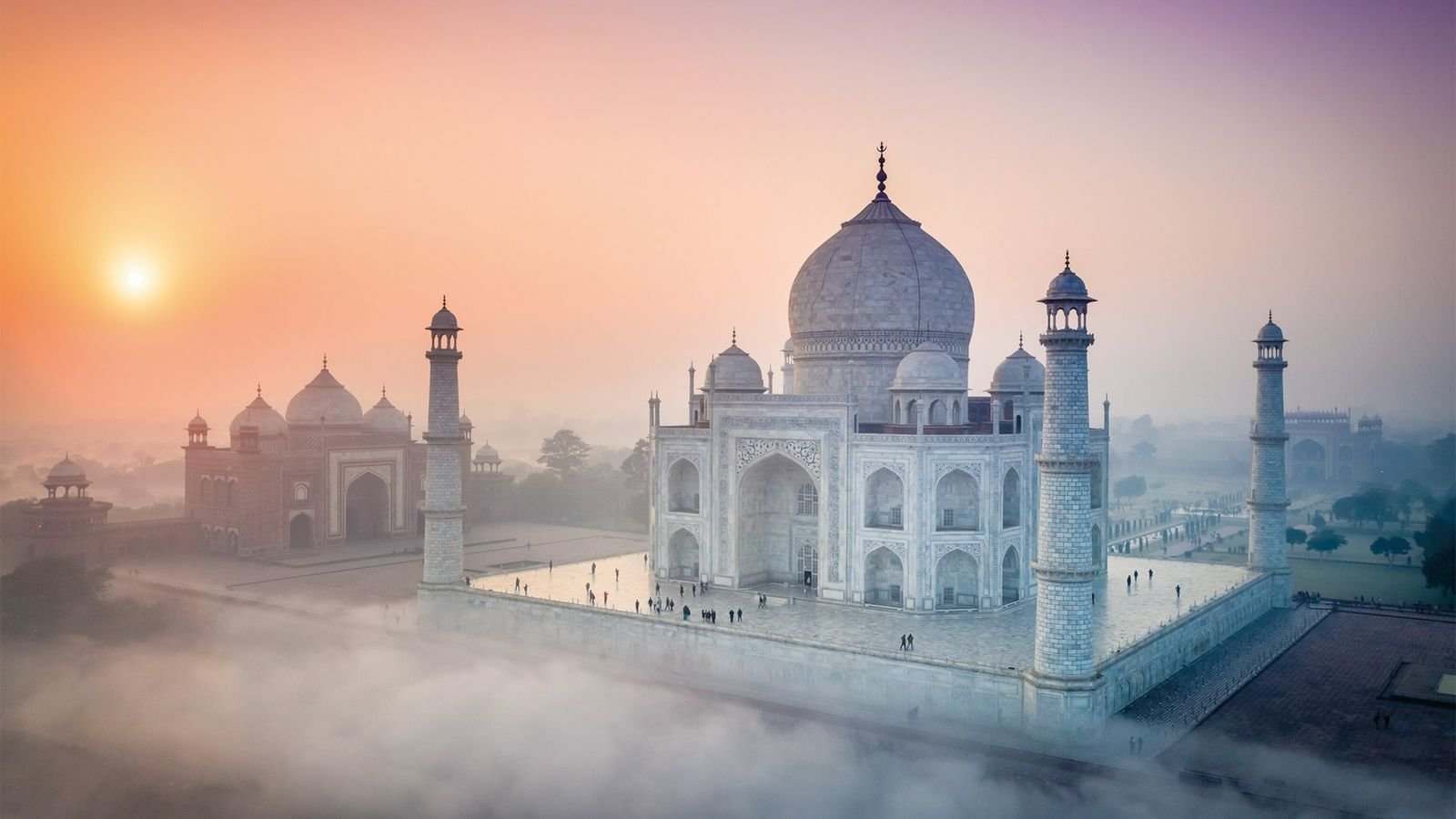
No other Indian state packs this much history into a single trip. Uttar Pradesh is where Rama was born in Ayodhya, Krishna was born in Mathura, and the Buddha gave his first sermon at Sarnath — and it is also home to the Taj Mahal, the most famous building on earth. The state reported 476.1 million visitors in the first nine months of 2024 alone, and the short answer to planning a trip is simple: start with Agra, Varanasi and Ayodhya, travel between October and March, and give the main circuit five to seven days. This guide covers the eleven places that matter most, in the order a first-timer should meet them.
The state splits naturally into two halves. The west is Mughal and Nawabi — Agra, Fatehpur Sikri, Mathura-Vrindavan and Lucknow — while the east is sacred river country: Varanasi, Sarnath, Ayodhya and Prayagraj. The Buddhist trail and the Bundelkhand forts sit beyond both. You cannot do it all in one trip, and you should not try; pick one half, do it properly, and let the other half be the reason to come back.
| Place | Why go | Time needed |
| Agra | Taj Mahal, Agra Fort, Fatehpur Sikri | 1–2 days |
| Varanasi | Ghats, Ganga Aarti, Kashi Vishwanath | 2–3 days |
| Ayodhya | Ram Mandir, Saryu ghats | 1 day |
| Lucknow | Bara Imambara, kebabs, chikankari | 1–2 days |
| Prayagraj | Triveni Sangam, Kumbh city | 1 day |
| Mathura & Vrindavan | Krishna’s Braj, temples, Holi | 1 day |
| Sarnath | Buddha’s first sermon | Half day |
| Kushinagar | Buddha’s Mahaparinirvana | Half day |
| Chitrakoot | Ramayana forests and falls | Half day–1 day |
| Jhansi | Rani Lakshmibai’s fort, 1857 | Half day |
Distances and timings are as reported at publish time; temple and monument timings change on festival days — check before you go.
Agra: the Taj Mahal and the Mughal Trilogy
Agra is the reason most travellers come to Uttar Pradesh, and the Taj Mahal is the reason most travellers come to India. Shah Jahan built the white marble mausoleum for his wife Mumtaz Mahal between 1632 and 1648, with the rest of the complex finished in 1653; UNESCO lists it as a World Heritage Site since 1983 and names Ustad Ahmad Lahori as its main architect. Go at sunrise, when the marble turns from blush to gold and the crowds are thinnest — the complex is closed on Fridays, and the ticket window runs from about half an hour before sunrise. Agra sits about 214 km from Delhi, an easy expressway drive or a fast train.
Do not leave after the Taj. Agra Fort, the red-sandstone seat of the Mughal emperors, stands a short drive away, and Fatehpur Sikri — the sandstone city Akbar founded in 1571 and abandoned within a generation — lies about 40 km out, with the great Buland Darwaza and the tomb of Salim Chishti. Together the three make Uttar Pradesh the only state with three UNESCO sites in one small triangle. Cross the Yamuna to Mehtab Bagh for the Taj at sunset, buy the city’s famous petha, and if you are here in February, the ten-day Taj Mahotsav fills Shilpgram with crafts, folk music and food from across India. See our Agra guide, our Taj Mahal guide and our Golden Triangle guide.
Varanasi: the Oldest Living City on the Ganga
Varanasi is older than history, or so it feels: more than 3,000 years old, one of the oldest living cities in the world, and still the place Hindus call Kashi, the city of Shiva. The day starts on the river — a sunrise boat ride past the 84 ghats, with priests at the water’s edge and temple spires catching the first light — and ends at Dashashwamedh Ghat, where the evening Ganga Aarti draws thousands to the steps. Between the two, walk the old-city lanes to the Kashi Vishwanath Temple, one of the twelve Jyotirlingas, and eat your way through the city’s chaat and lassi. Give Varanasi two to three days; one day only scratches the surface.
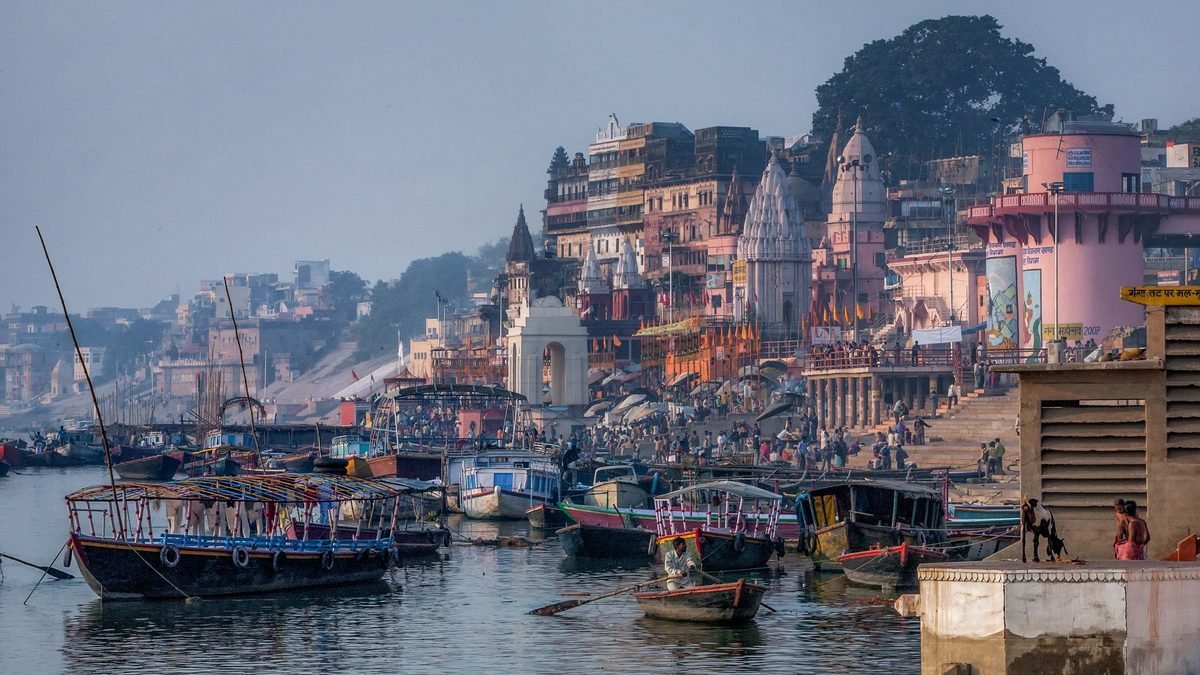
Time your visit if you can: Dev Deepawali, the festival of lights on the ghats, falls on 24 November 2026 — four days from now — when the riverfront glows with lamps and the boats sell out fast. Varanasi is also the base for Sarnath, ten kilometres away, covered below. See our Varanasi guide and our Dev Deepawali 2026 guide.
Ayodhya: the Ram Mandir and the Saryu Ghats
Ayodhya has changed more in two years than in the previous two centuries. The Shri Ram Janmabhoomi Mandir, consecrated in January 2024 at the birthplace of Lord Rama, now draws millions of devotees, and the city on the Sarayu — about 140 km from Lucknow, with its own airport and railway station — has rebuilt itself around the pilgrimage. By tradition, visit Hanuman Garhi first, then the Ram Mandir, then Kanak Bhawan; the evening Saryu aarti on the ghats is the quietest hour of the day. Phones, bags and leather items are not allowed inside the temple, and lockers are available at the entry — leave them behind and arrive early, because queues on festival days run long. See our Ayodhya guide and our Diwali in Ayodhya page.

Lucknow: Tehzeeb, Kebabs and the Bara Imambara
Lucknow is the other Uttar Pradesh — Nawabi, unhurried, and proud of its manners. The Bara Imambara, with its great hall and the Bhool Bhulaiya labyrinth above it, is the city’s signature monument, and the Rumi Darwaza, the Chota Imambara and the Residency — the scarred heart of the 1857 uprising — fill a slow day of walking. Hazratganj is the place to shop for chikankari embroidery, and the old city is the place to eat: galouti kebabs that melt on the tongue, biryani, and kulfi for afterwards. One to two days is right for the capital. See our Lucknow guide, our galouti kebab page and our what to eat in Uttar Pradesh guide.

Prayagraj: the Sangam and the Kumbh
Prayagraj, the old Allahabad, is a city defined by a meeting of rivers: the Triveni Sangam, where the Ganga and Yamuna meet the unseen Saraswati, is one of Hinduism’s holiest crossings, and a boat ride out to the confluence is the essential experience. The city hosted the Maha Kumbh in January and February 2025, the largest gathering of its kind, and the smaller Magh Mela returns every year in the same season. Outside mela time, one day covers the Sangam, the fort’s exterior and Anand Bhavan, the Nehru family home. See our Prayagraj guide.

Mathura and Vrindavan: Krishna’s Braj
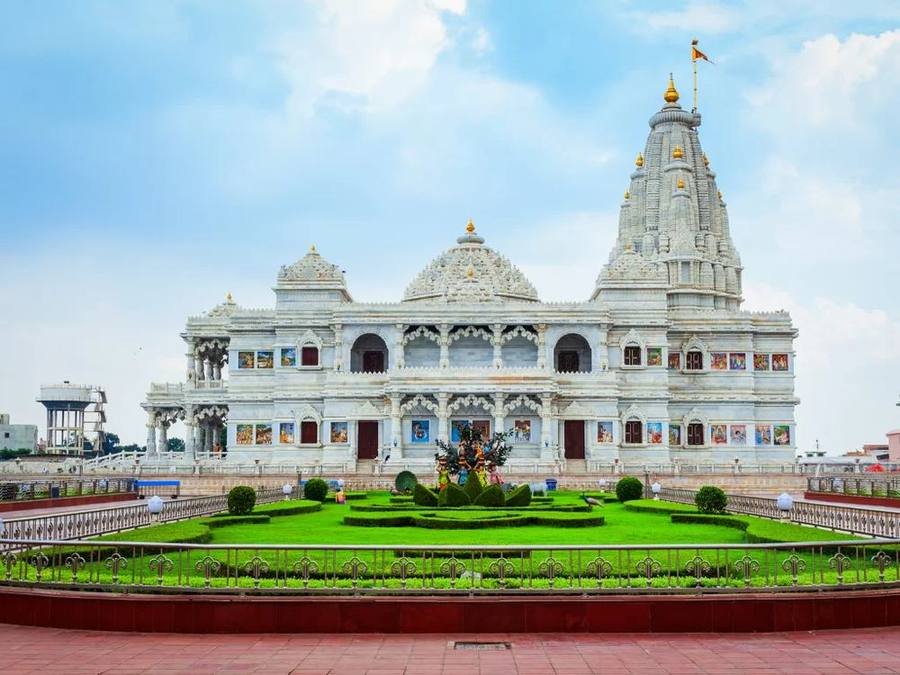
Mathura, about 56 km from Agra, is the birthplace of Lord Krishna and one of Hinduism’s seven holy cities; Vrindavan, ten kilometres on, is where he grew up, and the two are best done together in a day. Start at the Krishna Janmabhoomi temple in Mathura and Vishram Ghat on the Yamuna, then cross to Vrindavan for the Banke Bihari Temple, the ISKCON temple and the Prem Mandir, which glows after dark. The towns are at their wildest at Holi, when the Braj celebrations run for days — book well ahead if that is your plan. See our Mathura & Vrindavan guide and our Holi in Vrindavan & Mathura page.
Sarnath, Kushinagar and the Buddhist Trail
Here is the detail that makes Uttar Pradesh unlike any other state: it holds the founding places of three great faiths. Sarnath, ten kilometres from Varanasi, is where the Buddha gave his first sermon after his enlightenment, and the Dhamek Stupa still marks the spot; the archaeological museum holds the Lion Capital that became India’s national emblem. Kushinagar, further east, is where the Buddha attained Mahaparinirvana, his final passing — a quiet town of stupas and monasteries that draws pilgrims from across Asia. Do Sarnath as a half-day from Varanasi, and pair Kushinagar with a longer eastern loop. Rama in Ayodhya, Krishna in Mathura, the Buddha in Sarnath and Kushinagar: one state, three beginnings.

Chitrakoot and Jhansi: the Bundelkhand Side of UP
South of the plains, Bundelkhand is a different Uttar Pradesh — forested, rocky, and steeped in the Ramayana. Chitrakoot, on the Mandakini river, is where Rama spent eleven years of his exile; its ghats, the Kamadgiri hill circuit and the waterfalls nearby make a peaceful half-day to a day, and the town fills up on Amavasya. Jhansi, further west, is the fort city of Rani Lakshmibai, whose stand in 1857 made her a national heroine; the fort and the Rani Mahal tell that story in stone. Neither has the crowds of the big four, which is exactly the point. See our Uttar Pradesh state guide for the full picture.

Best Places to Visit in Uttar Pradesh with Family
Families ask this more than any other version of the question, and the answer is the same shortlist in a gentler order: Agra first, because the Taj Mahal lands with every age; Lucknow second, for its food, its parks and its easy pace; then Varanasi and Mathura-Vrindavan, taken slowly, with the boat ride and the evening aarti as the day’s anchors. Ayodhya works well with children too, but keep the darshan queue in mind and arrive early. Skip the summer entirely with young children — the plains cross 40°C from April to June — and travel between October and March instead.
Best Places to Visit in Uttar Pradesh in Winter
Winter is the season this guide is written for: October to March, with the best of it from November to February. Days are cool and clear, the Taj photographs at its best, and the festival calendar is at its fullest — Dev Deepawali on the Varanasi ghats in late November, the Taj Mahotsav in Agra in February, and the Magh Mela at Prayagraj in January and February. The one winter catch is fog: December and January mornings in the north can be thick enough to delay trains and hide the Taj at dawn, so build slack into the first day and keep the sunrise visit for a clear morning. See our Uttar Pradesh in January and best places to visit in India in November guides.
How Many Days Are Enough for Uttar Pradesh?
Three to four days covers the Agra and Braj end — the Taj, Fatehpur Sikri, Mathura and Vrindavan, with Delhi as the gateway. Five to seven days is the honest answer for the main circuit: Agra, then Lucknow and Ayodhya, then Varanasi with Sarnath, finishing at Prayagraj or flying out of Varanasi. Seven to ten days adds the Buddhist trail to Kushinagar and the Bundelkhand forts, and that is the trip to take if you have the time. Whatever the length, do not try to cover the whole state at a dash — the distances are real, the queues at the big temples are real, and slow mornings beat checked boxes.
Watch & Feel the Place: Uttar Pradesh on Film
Videos are by their respective creators.
Best Places to Visit in Uttar Pradesh FAQs
What is the best time to visit Uttar Pradesh?
October to March, with November to February the best of it. Days are cool and clear, ideal for the Taj Mahal, the ghats and the temple towns, while summers cross 40°C and the monsoon brings humidity. December and January mornings can be foggy, so keep the sunrise Taj visit for a clear day.
How many days are enough to visit Uttar Pradesh?
Five to seven days covers the main circuit — Agra, Lucknow, Ayodhya, Varanasi with Sarnath, and Prayagraj. Three to four days is enough for Agra and Mathura-Vrindavan alone, and seven to ten days adds Kushinagar and the Bundelkhand forts.
Which is the best place to visit in Uttar Pradesh?
The Taj Mahal at Agra is the single most-visited place, and the right first stop. For a spiritual trip, Varanasi and Ayodhya matter more; for food and culture, Lucknow; for the Buddha’s story, Sarnath and Kushinagar. Most first-timers should start with Agra and Varanasi.
What is Uttar Pradesh famous for?
The Taj Mahal, the ghats of Varanasi, the Ram Mandir at Ayodhya, and the Kumbh at Prayagraj — plus the food, from Lucknow’s galouti kebabs to Agra’s petha, and crafts like chikankari embroidery and Banarasi silk. It is the state where Rama, Krishna and the Buddha all left their mark.
What are the best places to visit in Uttar Pradesh with family?
Agra, Lucknow, Varanasi and Mathura-Vrindavan, in that order — the Taj Mahal, the Bara Imambara, the sunrise boat ride and the evening Ganga Aarti, and the temples of Braj. Travel between October and March, arrive early at the big temples to beat the queues, and skip the summer heat with young children.
Uttar Pradesh does not ask you to choose between history and faith, because here they are the same trip: a marble tomb built for love, a river city older than recorded time, a temple town reborn, and the ground where the Buddha first spoke. Start with Agra and Varanasi, and let the rest of the state pull you back. Next, read our best places to visit in India, our Uttar Pradesh state guide and our Uttar Pradesh in January.
Plan your Uttar Pradesh trip
The Taj Mahal, the ghats of Varanasi, the Ram Mandir at Ayodhya — one state, three beginnings, and a lifetime of mornings on the river.
Uttar Pradesh state guide →