
Uttar Pradesh · January Guide
Uttar Pradesh in January: Magh Mela, Varanasi & the Taj Mahal in Winter
By Beauty of Bharat — India travel guide, every place, every flavour.
Guides covering all 36 States and UTs, researched from official sources and checked at publish time. Corrections welcome — see About Beauty of Bharat.
There is a sweet in Varanasi that only exists on cold winter mornings. Malaiyo — milk foam set overnight by the winter dew — is sold at dawn from street carts, and by the time the sun is properly up, it is gone. That is January in Uttar Pradesh in miniature: a month that only happens when it is cold. Uttar Pradesh in January is the state's best travelling month: cool, dry days of about 22–24°C, the Magh Mela at Prayagraj's Sangam, misty Varanasi ghats, the Taj in soft winter light — and fog that can hide the Taj at sunrise and delay your train.
This guide covers the January circuit: Prayagraj for the Magh Mela, two days in Varanasi, Agra for the Taj, a day each in Ayodhya and Lucknow, and Mathura–Vrindavan. For the year-round picture, see our Uttar Pradesh state guide and the best places to visit in India; for the month across the whole country, see India in January.
Uttar Pradesh in January at a glance
| Best month to visit | January — coldest month, coolest and driest for sightseeing |
| Prayagraj in January | Magh Mela 2027: 14 January–6 March; January snan days 14–15 and 22 January |
| Varanasi in January | Days about 23°C, nights about 9°C; fog on about 18 days |
| Agra in January | Days about 22°C, nights about 7°C; about 5 foggy days; Taj closed on Fridays |
| Don't miss | Magh Mela snan, Ganga Aarti, malaiyo at dawn |
| Start here | Delhi or Lucknow — see the Uttar Pradesh state guide |
When is the best time to visit Uttar Pradesh?
October to March is the season, and November to February the most comfortable stretch — but January has the strongest claim of any single month. It is the coldest month, with days of about 8–23°C across the state and nights that can dip towards 5°C, which makes walking the ghats, temple towns and monuments comfortable as in no other month. It is also the month the Magh Mela opens, Varanasi's winter-only malaiyo appears, and the Taj gets its softest light. The trade-off is fog: IMD averages count about 18 fog days in Varanasi in January and about 5 in Agra, and fog delays trains and flights across the Gangetic plain — so build a spare morning into any plan that depends on a sunrise, and book early, because January is peak season. February brings Mahashivratri and the Taj Mahotsav — but January is when the state is at its most itself.
Best Places to Visit in Uttar Pradesh in January
Six places carry a January trip: the west — Agra and Mathura–Vrindavan, reached from Delhi — and the east — Lucknow, Ayodhya, Prayagraj and Varanasi, linked by overnight trains. Lucknow is the hinge.
1. Prayagraj — the Magh Mela at the Sangam
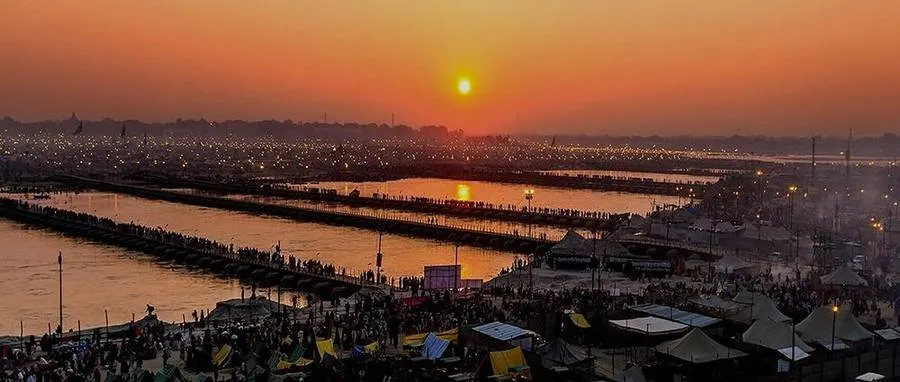
January belongs to Prayagraj. Every year in the month of Magh, the Magh Mela gathers at the Triveni Sangam — the Ganga, the Yamuna and the mythical Saraswati — and the 2027 mela runs 52 days, from 14 January to 6 March, with six principal bathing days: Makar Sankranti on 14–15 January, Paush Purnima on 22 January, Mauni Amavasya on 6 February, Basant Panchami on 11 February, Maghi Purnima on 20 February and Mahashivratri on 6 March. The month-long Kalpvas runs from Paush Purnima on 22 January to Maghi Purnima on 20 February. January holds the first two bathing days, so a January visit catches the mela as it opens, while Mauni Amavasya, the largest gathering, falls in February: come in January for the mela at a human scale, or time a February trip for the biggest day. Note that 2027 is not a Kumbh year — the Magh Mela is the annual gathering, a fraction of a Kumbh's scale. One caution before you book anything non-refundable: some calendars list Makar Sankranti on 15 January rather than 14 January, and the mela administration confirms the final dates closer to the event. See the Prayagraj guide.
2. Varanasi — mist, ghats and the winter-only sweet
Varanasi in January is the coldest, clearest version of the city: IMD averages put January days at about 23°C and nights at about 9°C, with fog on about 18 days. Mornings on the river are misty — the ghats appear slowly through the haze, and the first boat rides can start late — but by mid-morning the sky clears for walking the old city. Start at dawn with a sunrise boat ride, then the Kashi Vishwanath Temple, and return to Dashashwamedh Ghat at dusk for the Ganga Aarti, performed every evening for about 45 minutes. Assi Ghat hosts the morning Subah-e-Banaras, and the lanes around Godowlia are at their best in the cool season. Then find the malaiyo: the winter-only sweet, sold from carts in the cold months and gone by late morning — the one taste January owns outright. Dev Deepawali, the night of a million lamps, is a November festival — January visitors miss that spectacle but get the ghats at their most atmospheric instead. See the Varanasi guide and our Dev Deepawali guide for the November dates.
Sarnath — a half-day from Varanasi
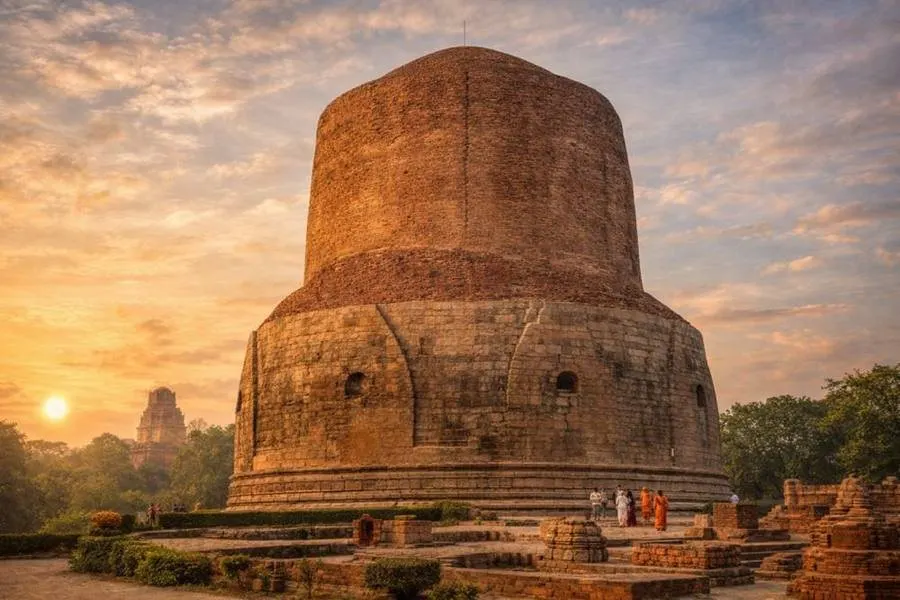
Ten kilometres from Varanasi, Sarnath is where the Buddha delivered his first sermon; January's cool, clear weather suits its open ruins. The Dhamekha Stupa anchors the archaeological park — a quiet half-day that balances the intensity of the ghats.
3. Agra — the Taj Mahal in winter fog
The Taj Mahal in January is a gamble worth taking — if you leave a spare morning for it. Built by Shah Jahan between 1631 and 1648 for his wife Mumtaz Mahal, and inscribed by UNESCO in 1983, the Taj is at its most beautiful in January's soft light — cool air, comfortable queues, none of summer's heat. IMD averages put Agra's January days at about 22°C and nights at about 7°C, with about five foggy days in the month — enough to veil the dome at sunrise and delay trains, though the fog usually lifts by mid-morning. Arrive at opening for the pink-gold marble, keep the next morning free in case the fog wins, and remember the Taj is closed on Fridays. Agra Fort, 2.5 kilometres away on the same bank, is the essential second stop, and Mehtab Bagh across the river gives the classic sunset view. The Taj Mahotsav, Agra's ten-day crafts festival, falls in mid-February — not January — so January visitors get the monument without the festival crowds. See the Agra guide.
4. Ayodhya — the Ram Mandir in the cool season
Ayodhya has changed enormously since the Ram Mandir opened in January 2024, and January — the anniversary month — is one of its busiest times. The temple town on the Saryu is now a major pilgrimage destination drawing very high visitor numbers. Expect airport-level security, long queues at peak times and no phones in the inner sanctum; it works best as a day trip from Lucknow, or a stop between Lucknow and Varanasi. Beyond the Mandir: Hanuman Garhi, Kanak Bhawan, and the Saryu Aarti at dusk. The Deepotsav — the festival of lamps on Diwali eve — is an autumn event, not a January one, so January's Ayodhya is devotional rather than spectacular: darshan, river and old-town lanes in cool weather. See the Ayodhya guide and our Deepotsav guide.

5. Lucknow — Nawabi winter
Lucknow is the hinge of a January trip — the natural stop between the western circuit and the eastern one, and a destination in its own right. The state capital on the Gomti is best explored in the cool season: the Bara Imambara, an 18th-century marvel whose great vaulted hall was built entirely without supporting beams, with the dizzying Bhool Bhulaiya labyrinth inside; the 60-foot Rumi Darwaza; and the Chota Imambara nearby. Hazratganj is the evening walk, and kebabs, chaat and kulfi are the reason to stay for dinner. See the Lucknow guide.

6. Mathura & Vrindavan — Braj in January
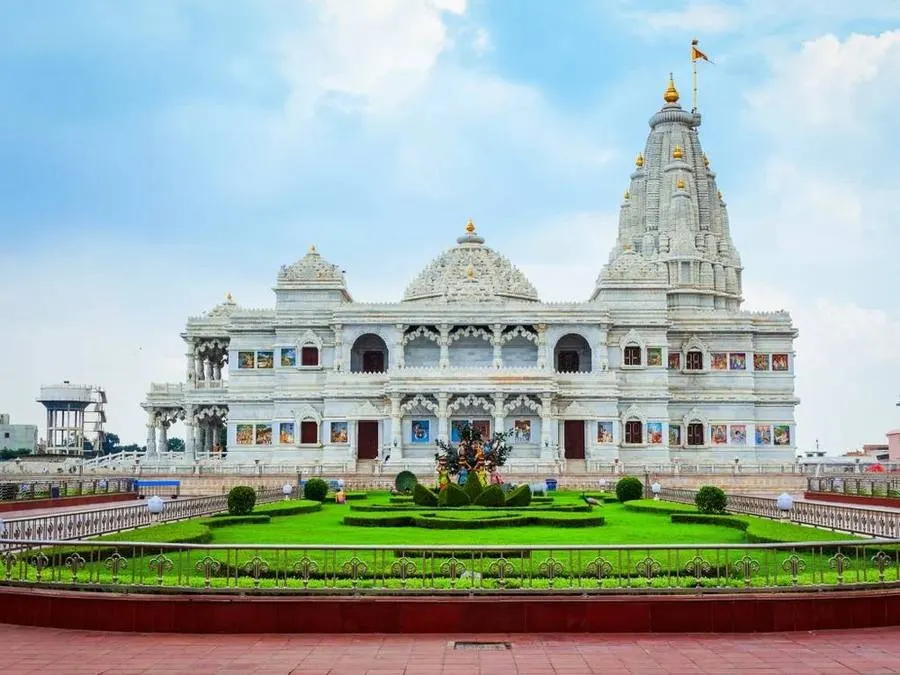
Mathura and Vrindavan, the twin towns of Braj about 55 kilometres from Agra, are where Krishna was born and grew up — January shows their quiet, devotional side. Vrindavan alone has several thousand temples; the January essentials are the Banke Bihari Temple, the glowing Prem Mandir in white Italian marble with its evening light shows, and the Yamuna Aarti at dusk. In Mathura, the Krishna Janmabhoomi temple marks the birthplace. Holi falls in March, so January visitors get the temples and ghats without the crowds, and the cool weather makes the temple-hopping easy. Pair Braj with Agra: two nights for both towns. See the Mathura–Vrindavan guide.
A suggested 7-day January route
Days 1–2 — Varanasi: sunrise boat ride, Kashi Vishwanath, Ganga Aarti, and a half-day at Sarnath.
Day 3 — Prayagraj: the Sangam and the Magh Mela — time it to 14–15 or 22 January for a snan day.
Day 4 — Ayodhya: Ram Mandir darshan, Hanuman Garhi, Saryu Aarti.
Day 5 — Lucknow: Bara Imambara, Rumi Darwaza, Hazratganj and kebabs for dinner.
Days 6–7 — Mathura–Vrindavan and Agra: Braj's temples on day six, then the Taj on a non-Friday morning — spare morning in hand in case the fog wins — and Agra Fort.
Short on time? Three days covers Agra, Mathura and Vrindavan from Delhi; four covers Lucknow, Ayodhya, Prayagraj and Varanasi — fog buffer included before you book the return train.
What to eat in Uttar Pradesh in January
January is a good eating month, and the cold is the point: start in Varanasi with malaiyo at dawn — the winter-only foam sweet that vanishes by late morning — then eat west. Lucknow is the food capital: kebabs, chaat and kulfi in the old city, best on cool evenings. Our famous food of Uttar Pradesh guide covers the full list, dish by dish.
Uttar Pradesh in January travel tips
Pack a warm layer for the mornings — dawn on the river or at the Taj can feel close to 5°C, even when the afternoon reaches 23°C. Build a fog buffer into every plan: morning fog delays trains and flights, so keep a spare morning for the Taj and never book a tight connection after a dawn start. Book ghat-side hotels early: January is peak season. Remember the Taj is closed on Fridays, and check Magh Mela dates with the mela administration before booking anything non-refundable — some calendars list Makar Sankranti on 15 January, not 14. Travel mid-week where you can: queues at the Ram Mandir, Kashi Vishwanath and Banke Bihari are roughly halved on weekdays. Carry ID for monument entry, and cash for small towns.
Watch & feel the place
Varanasi in winter, on film:
Videos by their respective creators.
Uttar Pradesh in January FAQs
When is Magh Mela 2027 in Prayagraj?
Magh Mela 2027 runs for 52 days, from 14 January to 6 March 2027, at the Triveni Sangam in Prayagraj. The January bathing days are Makar Sankranti on 14-15 January and Paush Purnima on 22 January, when the month-long Kalpvas begins. The largest gathering, Mauni Amavasya, falls on 6 February.
Is there fog in Agra in winter?
Yes, sometimes. IMD averages count about five foggy days in Agra in January, and the fog can veil the Taj Mahal at sunrise and delay trains and flights. It usually lifts by mid-morning, so leave a spare morning if a clear sunrise view of the Taj matters to you.
What month has the best weather in Varanasi?
January is generally considered one of the most pleasant months, with cool mornings, clear skies by mid-morning and comfortable daytime temperatures of about 23°C. Nights drop to about 9°C, and fog can delay the first boat rides, so pack a warm layer for dawn on the river.
What is the best time to visit Varanasi and Ayodhya?
October to March. January sits in the middle of that window: cold, foggy mornings and pleasant days, with the Magh Mela at nearby Prayagraj as the month's big event. April to June is very hot, and in the monsoon the rivers run high and boat rides can stop.
When is the best time to visit Uttar Pradesh?
October to March, and November to February is the most comfortable stretch. January is the coldest month, with days of about 8-23°C across the state, but it is also the month of the Magh Mela, the winter-only malaiyo sweet in Varanasi, and the Taj Mahal in its softest light.
Uttar Pradesh in January answers its own question: one state, six journeys, all at their best in the same cold month. Start east with the Magh Mela, end west with the Taj — more month guides live on the blog. Planning the wider month? Read our India in January guide next, or the state-by-state guide to the best places to visit in India.
Plan your Uttar Pradesh trip
Magh Mela at Prayagraj, misty Varanasi ghats, the Taj Mahal in winter fog.
Uttar Pradesh state guide →