
Punjab · State Guide
Best Places to Visit in Punjab: Amritsar, Patiala, Anandpur Sahib & More

By Beauty of Bharat — India travel guide, every place, every flavour.
Guides covering all 36 States and UTs, researched from official sources and checked at publish time. Corrections welcome — see About Beauty of Bharat.

Every single day, in one kitchen in Amritsar, volunteers cook and serve a free hot meal to tens of thousands of people — rich and poor, Sikh and stranger, sitting side by side on the floor. Nobody pays, nobody books, nobody is turned away. That kitchen, the Guru Ka Langar beside the Golden Temple, is the largest free kitchen on Earth, and it is the honest key to Punjab: this is a state that feeds you before it shows you anything. The short answer: give Amritsar two full days, then add two or three more for Anandpur Sahib, Patiala and Kapurthala, with Ropar and Malerkotla as quieter stops on the way. Four to five days covers the classic loop. Come between October and March, when the days are clear and cool — Guru Nanak Jayanti, the biggest day at the Golden Temple, fell on 24 November 2026, just before this guide was published.
The Best Places in Punjab at a Glance
| Place | Why go | Best time |
| Amritsar | Golden Temple, langar, Jallianwala Bagh, Wagah ceremony | October–March; two full days |
| Anandpur Sahib | Birthplace of the Khalsa, Takht Sri Keshgarh Sahib, Virasat-e-Khalsa | October–March; Hola Mohalla at Holi |
| Patiala | Qila Mubarak, Sheesh Mahal, Moti Bagh, royal bazaars | October–March; February heritage festival |
| Kapurthala | Jagatjit Palace, Moorish Mosque — Punjab’s little Paris | October–March; one heritage day |
| Ludhiana | Rural Life Museum, war museum, Lodhi Fort, dhabas | October–March; February for Kila Raipur |
| Bathinda | Qila Mubarak, one of India’s oldest forts; Takht Sri Damdama Sahib | October–March; half a day |
| Ropar | Sutlej wetland, birds, Harappan archaeology | October–March; winter birds |
| Malerkotla | Nawabi old town, shrines, a living lesson in harmony | October–March; half a day |
Timings and hours are as reported at publish time; confirm ceremony times, museum hours and festival dates before you book.
Amritsar: the Golden Temple, Jallianwala Bagh and the Wagah Border
Amritsar begins and ends at Sri Harmandir Sahib — the Golden Temple. Guru Ram Das founded the city around the pool of nectar, the amrit sarovar, in the 16th century; today the gilded sanctum stands in the water’s centre, open on four sides to all humanity. Come at dawn for the palki ceremony, when the Guru Granth Sahib is carried to the sanctum, at noon to sit in the langar, and again at night, when the gold doubles itself in the water. Cover your head, wash your feet at the entrance, and keep an hour free to volunteer in the kitchen — the most memorable hour in Punjab. See our Amritsar guide and our weekend trips from Amritsar.
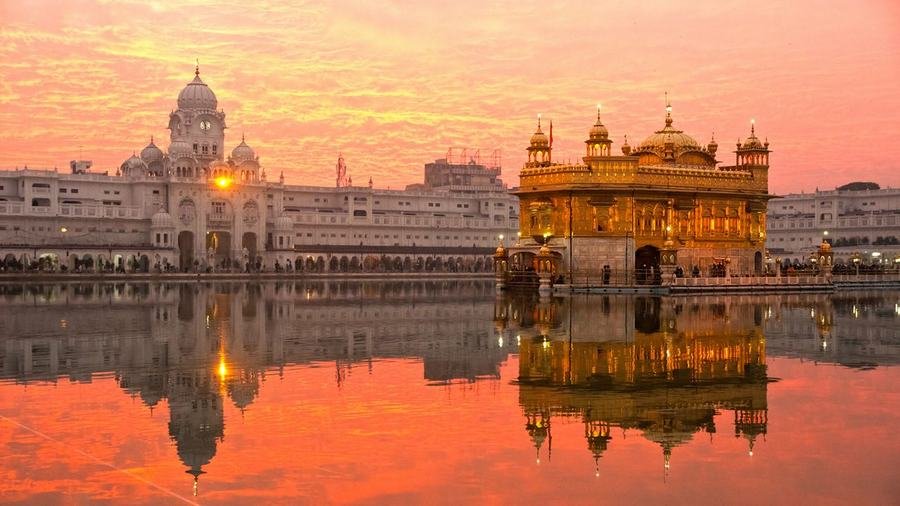
A few steps from the temple, Jallianwala Bagh keeps the bullet marks and the silence of 13 April 1919, when British troops fired on an unarmed gathering; the Partition Museum in the old Town Hall tells the other wound, through the personal stories of 1947. In the late afternoon, drive about 28–30 km west to Attari for the border ceremony, where the Border Security Force and the Pakistan Rangers lower their flags in a choreographed display of high kicks. The start time shifts with the seasons, roughly 4:30–5:30 pm in the winter months — confirm the week you go — and arrive by about 3 pm, because queues are long and seating is first come. Between the sights, eat: Amritsari kulcha at the old-city dhabas, lassi, jalebis, and the fish and tandoori of a hundred years of masters. Our Amritsari kulcha and Amritsar markets guides cover the food and the bazaars.
Anandpur Sahib: Where the Khalsa Was Born
On Vaisakhi day in 1699, on the hill at Anandpur, Guru Gobind Singh called for heads — and five volunteers stepped forward to become the Panj Pyare, the first Khalsa. That act shaped everything Sikhism became, and Takht Sri Keshgarh Sahib — one of the five Takhts — marks the very ground. The white gurudwaras climb the town’s ridges: Keshgarh Sahib with its relics of the Guru’s weapons, and Sis Ganj, where the ninth Guru’s head was cremated. At Hola Mohalla, Anandpur’s festival of martial arts at Holi, the Nihang warriors thunder in on horseback in a storm of blue and orange, performing gatka as nowhere else on Earth. See our Anandpur Sahib guide.
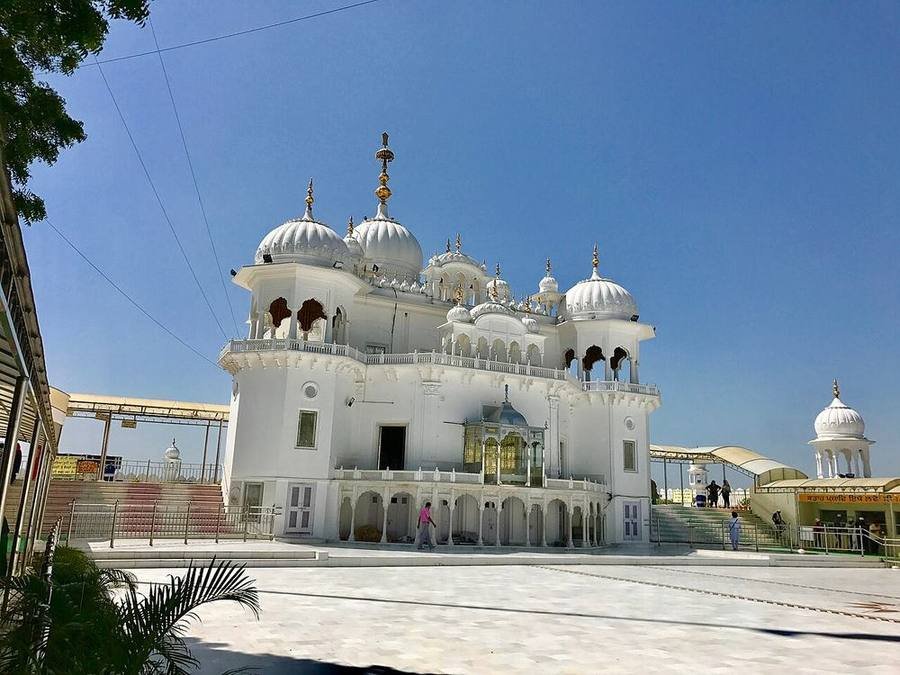
Beside the Takht stands Virasat-e-Khalsa, the museum of Sikh history designed by Moshe Safdie, its stainless-steel roofs gathering the sky above the ravine. Its galleries carry you from Guru Nanak through the Gurus to Vaisakhi 1699, a few steps from where it happened. Hours vary by season — usually open from around 10 am to 4:30 pm and closed on Mondays — so check before you go. Anandpur is about two hours by road from Chandigarh, with its own railway station on the Nangal line.
Patiala: the Royal City of Palaces and the Patiala Peg
The Maharajas of Patiala were among India’s grandest — cricketers, patrons, builders — and their capital keeps the evidence. The Qila Mubarak, a fort-palace rising in the old city’s heart, holds a durbar hall of chandeliers and a museum of arms and royal eccentricity; the Moti Bagh Palace sprawls in gardens across town; and Baradari Gardens offer the city’s green drawing room. Add Sheesh Mahal’s mirror work and the crowds at Kali Mata Temple, and Patiala is Punjab’s most complete royal day out from Chandigarh. See our Patiala guide.
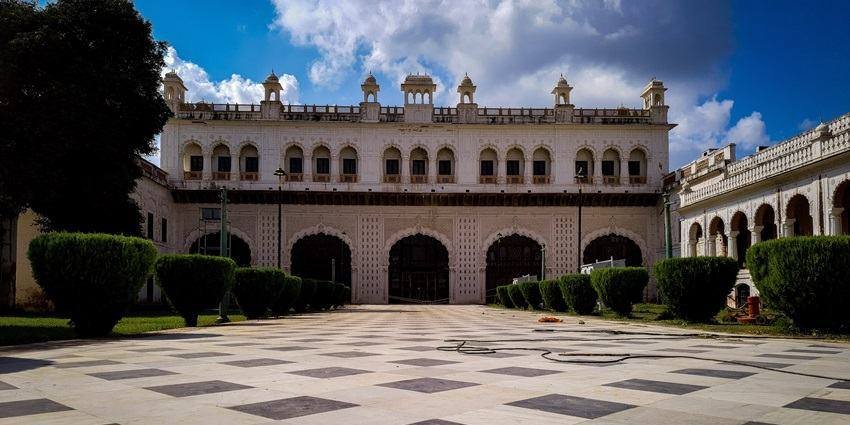
Patiala’s gifts to vocabulary alone earn the visit: the “Patiala peg”, a measure of legendary generosity, the Patiala pagri’s flat style, and the embroidered jutti shoes still made in its bazaars. Come for the palaces, stay for the shopping — juttis, phulkari embroidery and parathas with lassi — and time it for the Patiala Heritage Festival, usually in February, when the palaces fill with music and craft.
Kapurthala: Punjab’s Little Paris
Kapurthala sits in the Doaba, the fertile land between the Beas and Sutlej rivers, and for centuries it was the seat of a princely state whose rulers built with an eye turned firmly towards Europe. The result is a small Indian city with a startling skyline: the Jagatjit Palace, modelled on French royal architecture and now a Sainik School, a grand Moorish Mosque and colonnaded public buildings arranged around gardens. You can walk from a palace fit for Versailles to a working Punjabi bazaar in minutes, eat well, and photograph facades without a crowd in frame. See our Kapurthala guide.

Kapurthala stays offbeat because Punjab’s visitors cluster in Amritsar and Chandigarh, leaving this architectural curiosity to students, locals and the occasional heritage traveller. Make it the heritage pause between Amritsar’s intensity and Chandigarh’s modernism, and Punjab suddenly shows three completely different centuries in a single, unhurried journey.
Ludhiana: the Working Heart of Punjab
Ludhiana runs Punjab’s economy: the bicycle and hosiery capital whose factories clothe much of India, and the home of the Punjab Agricultural University that powered the Green Revolution. Travellers rarely stop — which makes it a satisfying discovery. The Punjab Rural Life Museum at the university is a treasure: a recreated village of old Punjab with carved doors, phulkari and brass. The Maharaja Ranjit Singh War Museum tells the Sikh military story, and Lodhi Fort, a roughly 500-year-old ruin by the Sutlej’s old course, is little visited. See our Ludhiana guide.

Use Ludhiana as the authentic, untouristed Punjab, with the dhabas and sweet shops to prove it. If your dates allow, the Kila Raipur Rural Olympics, usually in February nearby, is one of India’s folk spectacles — bullock-cart races, kabaddi and strongmen in a village fairground.
Bathinda: the City of Lakes and One of India’s Oldest Forts
Bathinda, in the cotton belt of southern Punjab, is the city of lakes — and it holds Qila Mubarak, often described as one of the oldest surviving forts in India, a massive brick stronghold above the Malwa plains. Beside it stands Takht Sri Damdama Sahib, one of the five Takhts, where Guru Gobind Singh rested, and the town’s lakes and rose garden fill a slow afternoon. Bathinda is a half-day stop on the Patiala–Malwa road rather than a base, and it pairs naturally with Malerkotla. No licence-clear photograph of Bathinda could be verified, so this section has no photo rather than a substitute.
Ropar: Birds, the Sutlej and India’s First Harappan Dig
Ropar — Rupnagar — spreads along the Sutlej in north-eastern Punjab, where the plains begin to rise towards the Shivalik foothills. The river here widens into a calm, marsh-fringed stretch of water backed by low hills: a Ramsar wetland where resident birds fish year-round and winter visitors join them from October. Rupnagar is also an ancient place — the first Harappan site excavated in independent India, with a cultural sequence the town’s archaeological museum displays. Come for birds and archaeology in one unhurried morning, then on to Anandpur Sahib. See our Ropar Wetland guide and our weekend trips from Chandigarh.

Malerkotla: the Town a Guru Blessed
Malerkotla lies in the Malwa region of southern Punjab, a compact old town that was once the capital of a small princely state ruled by Nawabs. Its streets still carry that past: gateways and havelis, mosques and shrines, a palace complex, and bazaars where metalwork and embroidery fill lanes that have changed slowly. What sets Malerkotla apart is the story Punjabis tell about it. Local tradition holds that when the younger sons of Guru Gobind Singh were martyred, the Nawab of Malerkotla protested — and in return the town received the Guru’s blessing and protection. Whatever visitors make of legend, the lived result is real: Malerkotla is celebrated across Punjab for communal harmony. See our Malerkotla guide.
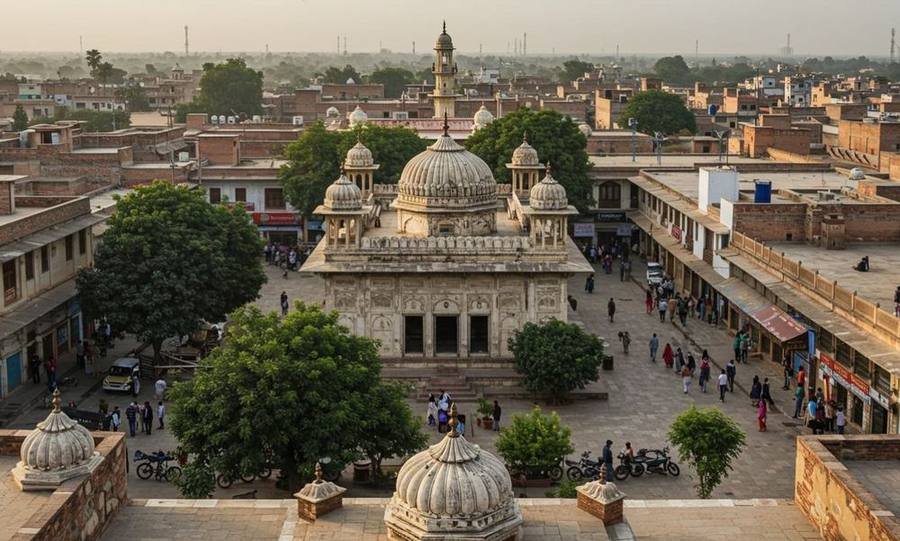
Come to walk the old quarters, talk to shopkeepers and absorb a gentler, story-rich side of the state’s history. A half-day to a full day of wandering is enough, reached most easily from Ludhiana by rail or from Chandigarh by road.
What Is the Best Time to Visit Punjab?
October to March is the reliable window: clear skies, dry roads and comfortable days, with cold, sometimes foggy mornings in December and January. November adds Guru Nanak Jayanti at the Golden Temple — the 2026 celebration fell on 24 November, just before this guide was published — and January brings Lohri bonfires, February or March brings Hola Mohalla at Anandpur Sahib, and April brings Baisakhi. Avoid May and June, when the plains regularly cross 40°C, and expect humid monsoon weather from July to September.
How Many Days Do You Need in Punjab?
Count nights, not days. Two days suits Amritsar alone: the Golden Temple at different hours, Jallianwala Bagh, the Partition Museum, the old bazaars and the Attari border ceremony. Four to five days is the sweet spot for a first trip, adding Anandpur Sahib and either Patiala or Kapurthala, with Ropar or Malerkotla as a half-day stop. A full week adds Ludhiana, Bathinda and the wetlands. Keep a buffer morning for winter fog, which can delay trains and flights in December and January.
How to Reach Punjab
Fly into Amritsar’s Sri Guru Ram Dass Jee International Airport or Chandigarh’s Shaheed Bhagat Singh International Airport in Mohali — Amritsar for the west, Chandigarh for Anandpur Sahib, Rupnagar and Patiala. By rail, the fast Shatabdi and Vande Bharat trains from Delhi reach Amritsar in around six hours and Chandigarh in about three. The main railway junctions are Amritsar, Ludhiana, Jalandhar City, Bathinda and Pathankot. Within Punjab, distances are short and roads are good, so a hired car with a driver is the easiest way to link towns.
Watch & Feel the Place
Videos are by their respective creators.
Best Places to Visit in Punjab FAQs
What is the best time to visit Punjab?
October to March, with clear skies, dry roads and comfortable days. November adds Guru Nanak Jayanti at the Golden Temple; January brings Lohri, February or March brings Hola Mohalla at Anandpur Sahib, and April brings Baisakhi. Avoid May and June, when the plains regularly cross 40°C.
How many days do you need in Punjab?
Two days covers Amritsar alone — the Golden Temple, Jallianwala Bagh, the Partition Museum and the Wagah border ceremony. Four to five days is the sweet spot for a first trip, adding Anandpur Sahib and Patiala or Kapurthala; a full week adds Ludhiana, Bathinda and the wetlands.
How many days do you need in Amritsar?
Two days is enough for the Golden Temple at different hours, Jallianwala Bagh, the Partition Museum, the old bazaars and the Attari border ceremony. Stay near the walled city so you can walk to the temple at dawn and again after dark.
What time is the Wagah border ceremony?
Every evening before sunset, at the Attari–Wagah crossing about 28–30 km west of Amritsar. The start time shifts with the seasons, roughly 4:30–5:30 pm in the winter months, so confirm the week you go. Arrive by about 3 pm for security queues and first-come seating; entry to the general stands is free.
How do I reach Anandpur Sahib?
Anandpur Sahib has its own railway station on the Nangal line, and it is about two hours by road from Chandigarh, the nearest airport. Most visitors come as a day trip from Chandigarh or combine it with Ropar Wetland, about 40 km away.
What is the famous food of Punjab?
Amritsari kulcha with chole, sarson da saag with makki di roti, butter chicken, lassi and jalebi lead the table. Our famous food of Punjab guide covers the full spread, and our what to eat in Punjab guide covers where to try each dish.
Eight places, one kitchen that never turns anyone away: a golden temple that doubles itself in the water, a hill where the Khalsa was born, a palace fit for Versailles, and a small town a Guru blessed. Start in Amritsar and give the langar an hour of your hands. Next, read our famous food of Punjab guide — because in this state, the table is half the trip.
Plan your Punjab trip
Amritsar’s Golden Temple, Anandpur Sahib’s Khalsa heritage, Patiala’s palaces and Kapurthala’s French facades — four to five days covers the classic loop.
Punjab state guide →