
Offbeat Place · North India
Ropar Wetland: Where the Sutlej Meets Deep History

By Beauty of Bharat — India travel guide, every place, every flavour.
Guides covering all 36 States and UTs, researched from official sources and checked at publish time. Corrections welcome — see About Beauty of Bharat.

Ropar Wetland spreads along the Sutlej river near Rupnagar in northeastern Punjab, where the plains begin to rise towards the Shivalik foothills. The river here widens into a calm, marsh-fringed stretch of water backed by low hills, a very different Punjab from the flat farmland further south. River islands, reed beds and damp grassland shelter resident birds year-round and welcome winter visitors, while the surrounding countryside carries some of the deepest history in the region.
The offbeat pleasure of Ropar is this double character. Rupnagar is an ancient place — excavations here have traced occupation back to early historic and still older times, and the town museum displays what the riverbanks gave up. Yet few travellers stop between Chandigarh and the hills, so the wetland stays quiet: a heron fishing undisturbed, a village path along the bank, evening light on slow water. Come for birds and archaeology in one unhurried morning, with Anandpur Sahib's Sikh heritage an easy onward journey. Visit in the cool of morning for the birds, leave the museum for the warmer afternoon, and Ropar becomes a model small Punjab detour — unhurried, educational and quietly beautiful, the kind of stop that travellers later remember more warmly than bigger, louder sights.
Ropar Wetland at a Glance
| State | Punjab |
| Region | North India |
| Known for | A river wetland on the Sutlej below the Shivalik foothills in Punjab, known for nature and archaeology… |
| Gateway | Chandigarh airport & railway station |
| Best time to visit | October to March suits Ropar best, with cool weather, clearer foothill views and wintering birds joining the… |
| Time needed | a relaxed day, or overnight en route to the hills |
| State capital | Chandigarh |
| More offbeat in Punjab | 3 more places in this guide |
Why Ropar Wetland Stays Off the Beaten Path
A river wetland on the Sutlej below the Shivalik foothills in Punjab, known for nature and archaeology: wintering and resident waterbirds on the reservoir-like stretch, and an ancient past explored through excavations and the museum in Rupnagar town. It helps that Ropar Wetland asks a little more of the traveller — a slower road, a plainer stay, a plan made around seasons rather than weekends — and repays the effort with room to breathe.
Presented honestly as lesser-known, never as an “undiscovered secret”: Ropar Wetland is known and loved locally, and facilities are plainer than in Amritsar. Go for the place itself — the slower mornings, the unhurried conversations, the sense of Punjab without a crowd in front of it — and it will not disappoint.
Things to Do in Ropar Wetland
The highlights below are the reasons to make the detour. None of them need a packed schedule — Ropar Wetland rewards travellers who pick two or three and linger over them.
Birdwatch the river margins
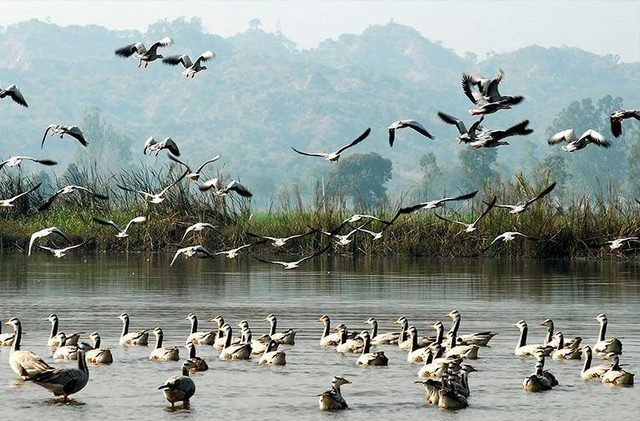
Scan the reed beds, islands and shallow edges for resident and wintering waterbirds, with the Shivalik foothills giving the scene an unusually green backdrop.
Visit the archaeological museum in Rupnagar
See finds from the excavations around Ropar that connect this quiet river town to some of the earliest chapters of settlement in the region.
Walk the Sutlej banks at evening
Follow local paths along the river as light softens, watching fishermen, grazing animals and birds settling along the marshy edges for the night.
Explore Rupnagar town
Wander the old town's bazaars and shrines for a feel of everyday Punjab, far from the tourist circuits of Amritsar and Chandigarh.
Continue to Anandpur Sahib
Use Ropar as a gentle base for the great Sikh heritage town nearby, pairing river nature with one of Punjab's most significant sacred cities.
Best Time to Visit Ropar Wetland
October to March suits Ropar best, with cool weather, clearer foothill views and wintering birds joining the resident species on the river. Mornings and evenings are the rewarding hours; the monsoon swells the Sutlej and summer afternoons can be fiercely hot.
Across Punjab the wider season runs like this: October–March for comfortable sightseeing; Baisakhi season adds cultural interest. Time Ropar Wetland inside that window and you get the place at its best — and, this being the offbeat list, usually without the peak-season pressure of the headline stops.
How to Reach Ropar Wetland
Ropar, or Rupnagar, is an easy road journey from Chandigarh into the Shivalik foothills, and the town has its own railway station on regional routes. Most travellers drive from Chandigarh or combine the wetland with Anandpur Sahib on the same circuit.
Most travellers fold Ropar Wetland into a wider Punjab trip rather than coming only for it — paired with Amritsar or the state guide's headline stops, it becomes the quiet chapter of the journey.
Ropar Wetland — Transport at a Glance
| Nearest airport | Chandigarh Airport (IXC) is the regional air gateway |
| Nearest railway station | Ropar (Rupnagar) town has its own railway station on regional routes |
| By road | An easy road journey from Chandigarh into the Shivalik foothills; most travellers drive from Chandigarh or combine the wetland with Anandpur Sahib on the same circuit |
| Getting around | The lake shore and wetland trails are walked; boats and the museum side round out a half-day |
More Offbeat Places in Punjab
Ropar Wetland is one of 4 offbeat corners in the Punjab state guide — pair it with a sibling below for a slower, deeper trip.
Harike Wetland
Known for: birding. It helps that Harike Wetland asks a little more of the traveller — a slower road, a plainer stay, a plan made around seasons rather than weekends — and repays the effort with room to breathe.
Kapurthala

Known for: Indo-European heritage architecture. Nothing about Kapurthala is staged for visitors. Come outside the short peak window and you may share its best hours with almost no one — that, more than any single sight, is the luxury here.
Malerkotla

Known for: historic cultural landscape. Nothing about Malerkotla is staged for visitors. Come outside the short peak window and you may share its best hours with almost no one — that, more than any single sight, is the luxury here.
While You Are in Punjab
Start from the full Punjab travel guide for the complete picture. Headline destinations to pair with this trip: Amritsar · Chandigarh region · Anandpur Sahib. And eat the state properly while you are there — Amritsari kulcha · Sarson da saag & makki di roti lead the table in the Food Atlas.
Frequently Asked Questions
What is Ropar Wetland known for?
A river wetland on the Sutlej below the Shivalik foothills in Punjab, known for nature and archaeology: wintering and resident waterbirds on the reservoir-like stretch, and an ancient past explored through excavations and the museum in Rupnagar town. It sits in this atlas on Punjab's offbeat list — the state's quieter, lesser-visited side.
What is the best time to visit Ropar Wetland?
October to March suits Ropar best, with cool weather, clearer foothill views and wintering birds joining the resident species on the river. Mornings and evenings are the rewarding hours; the monsoon swells the Sutlej and summer afternoons can be fiercely hot. For Punjab as a whole, October–March for comfortable sightseeing; Baisakhi season adds cultural interest.
How do I reach Ropar Wetland?
Ropar, or Rupnagar, is an easy road journey from Chandigarh into the Shivalik foothills, and the town has its own railway station on regional routes. Most travellers drive from Chandigarh or combine the wetland with Anandpur Sahib on the same circuit. The usual gateway is Chandigarh airport & railway station.
How many days do I need for Ropar Wetland?
Plan on a relaxed day, or overnight en route to the hills. Most travellers pair Ropar Wetland with Harike Wetland and Kapurthala or the headline stops in the Punjab state guide rather than rushing it as a whistle-stop.
How does Ropar combine nature and archaeology in one visit?
The wetland protects a living river ecosystem of birds and marshland, while Rupnagar town beside it is an excavated ancient settlement with a museum of local finds. A morning can move from herons on the Sutlej to artefacts thousands of years old.
Every Place. Every Flavour.
Ropar Wetland is one of 154 offbeat places in this atlas — alongside 36 states and union territories, 188 destinations and 213 regional dishes, each with its own full guide page.
Explore all 36 states Read the blog