
Assam · Northeast India State Guide
Best Places to Visit in Assam: Rhinos, River Islands & Tea Gardens

By Beauty of Bharat — India travel guide, every place, every flavour.
Guides covering all 36 States and UTs, researched from official sources and checked at publish time. Corrections welcome — see About Beauty of Bharat.

Assam is the only Indian state with three UNESCO World Heritage Sites — Kaziranga and Manas, both listed in 1985, and the Charaideo Moidams, the burial mounds of the Ahom kings, which joined the list only in July 2024. That is the surprise most travellers miss: this one state holds two of the world's great wildlife sanctuaries and one of its newest heritage listings, plus the world's largest river island and the tea gardens that fill India's cups. The best places to visit in Assam are Kaziranga National Park, Majuli island, Kamakhya Temple in Guwahati, Sivasagar, Manas National Park, Pobitora, Haflong, Dibru-Saikhowa and the tea estates of Jorhat and Dibrugarh — and the best time to see them is October to April, when the parks are open and the river is calm. See our Assam state guide.
What are the top 10 places to visit in Assam?
| Top 10 places | Kaziranga, Majuli, Kamakhya Temple, Sivasagar, Manas, Pobitora, Haflong, Dibru-Saikhowa, Jorhat tea gardens, Guwahati riverfront |
| Most famous place | Kaziranga National Park — two-thirds of the world's one-horned rhinos |
| Best time to visit | October to April; November to April for Kaziranga safaris |
| UNESCO sites | Kaziranga (1985), Manas (1985), Charaideo Moidams (2024) |
| How many days | 3–4 days for Guwahati + Kaziranga; 6–7 days for the full circuit |
| Permit needed? | No — no Inner Line Permit for Indians, no Protected Area Permit for foreigners |
1. Kaziranga National Park — the rhino kingdom
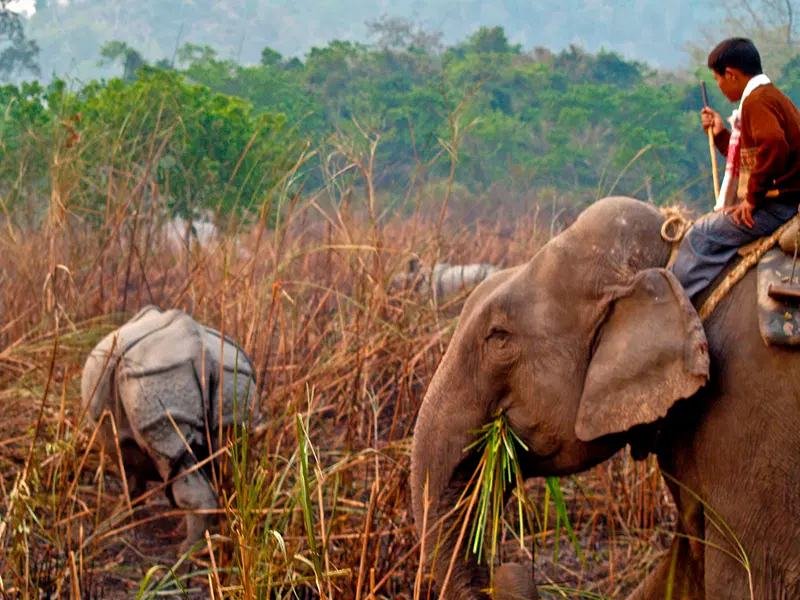
Kaziranga is the reason most people come to Assam, and it earns the journey. Spread over roughly 430 square kilometres of floodplain grassland along the Brahmaputra, this UNESCO World Heritage Site since 1985 holds around 2,400 one-horned rhinoceroses — about two-thirds of the entire global population. The park was set aside as a reserve forest in 1905, when the rhino had been hunted down to a few dozen, and became a national park in 1974; the recovery since is one of India's great conservation stories. Alongside the rhinos live Bengal tigers, Asian elephants, wild water buffalo and eastern swamp deer — the park's "Big Five". Safaris run in four ranges: Kohora (Central) and Bagori (Western) are the most productive for first-timers, while Agaratoli (Eastern) and Burapahar suit birders. The park is open roughly November to April and closes in the monsoon, when the Brahmaputra floods the grasslands. Read our Kaziranga winter safari guide and the Kaziranga guide.
2. Majuli — the river island that is slowly disappearing

Majuli is often called the world's largest river island, and it is also one of its most fragile: the Brahmaputra has been eating away at its banks for decades, so the island you visit today is smaller than the one your grandparents could have walked. What remains is extraordinary — a slow, green world of Vaishnavite satras (monasteries) where monks still make the painted masks of Assamese theatre, Mising villages on stilts, and wide sandbanks that glow at sunset. Ferries cross from Nimati Ghat near Jorhat. Go between October and March, and if you can, time it for the Raas festival in November, when the island comes alive. Read our Majuli river island guide and the Majuli guide.
3. Kamakhya Temple & Guwahati — the gateway
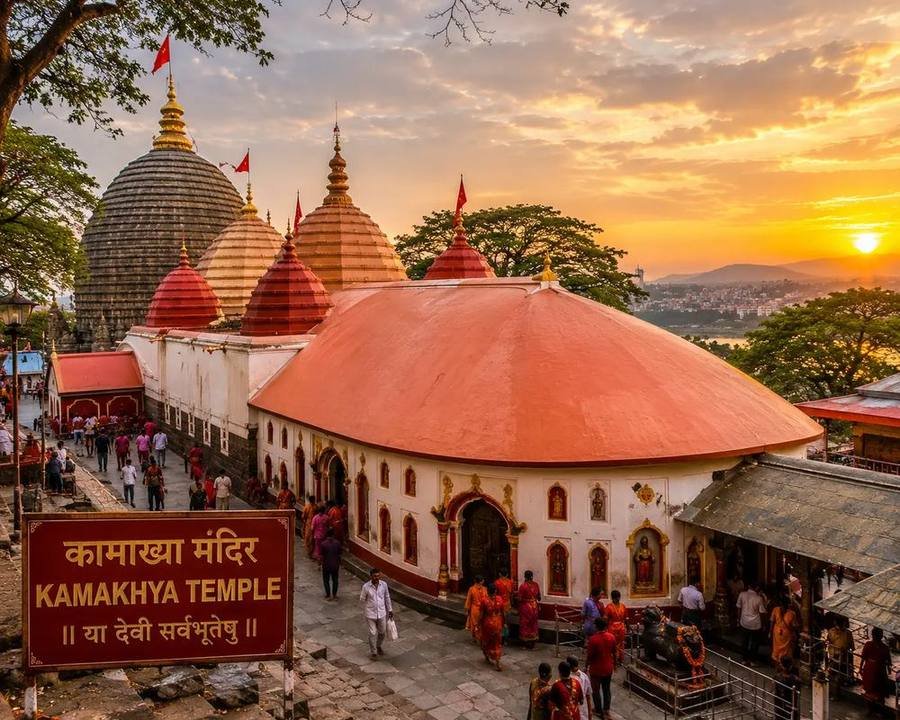
Almost every Assam trip starts in Guwahati, the state's largest city and the entry point to the whole Northeast. Its centrepiece is the Kamakhya Temple on Nilachal Hill, one of India's most important Shakti temples, where the Ambubachi Mela draws enormous crowds in late June — the temple closes to visitors during the festival itself, so plan around it. The city also gives you the Brahmaputra itself: sunset cruises, the Umananda island temple mid-river, the Assam State Museum and the Srimanta Sankardeva Kalakshetra cultural complex. Give Guwahati a full day before heading east; the airport sits about 22 kilometres from the city. See the Guwahati guide.
4. Sivasagar & Charaideo — six centuries of Ahom kings

Sivasagar was the capital of the Ahom kingdom, a dynasty that ruled Assam for nearly 600 years, and it is still the best place to feel that history — temple tanks, palaces and monuments scattered around the old capital. Nearby, at Charaideo, stand the Moidams, the mound-burial vaults of Ahom kings and queens, often called the Pyramids of Assam; they were inscribed as a UNESCO World Heritage Site in July 2024, Assam's third UNESCO listing. Pair Sivasagar with Majuli and Jorhat on the Upper Assam leg of your trip. See the Sivasagar guide.
5. Manas National Park — the wild Bhutan border
Manas sits at the Himalayan foothills on the Bhutan border, contiguous with Bhutan's Royal Manas National Park, and it is the most beautiful of Assam's parks — forested hills, grassland and river, with golden langurs, pygmy hogs and wild water buffalo among its residents. Like Kaziranga it became a UNESCO World Heritage Site in 1985, and it is also a Tiger Reserve, an Elephant Reserve and a Biosphere Reserve. Its rhinos were wiped out by poaching in the 1990s and have been brought back through reintroduction, and the park was taken off UNESCO's danger list in 2011 after years of recovery work. Visit November to April; it is quieter than Kaziranga and rewards travellers who give it two days.
6. Pobitora — rhinos an hour from Guwahati
Pobitora is the shortcut: a small wildlife sanctuary a short drive east of Guwahati, where the grasslands are compact enough that a morning jeep safari very often ends with rhinos at close range. It is the easiest wildlife stop in Assam — no long drive, no multi-day plan — and a good first taste of the one-horned rhino if Kaziranga is not on your route. Go in the winter months, when the grass is low and sightings are best.
7. Haflong — Assam's only hill station

Haflong is the one place in Assam that feels like a hill station — because it is the only one. Set in the Dima Hasao hills, it offers a lake, pine-covered ridges, tribal villages and a cooler climate that regulars call the Scotland of Assam. It is the stop for travellers who want a slow day between the parks: walk the lake, watch migratory birds in winter, and eat with Dimasa families. October to February is the sweet spot.
8. Dibru-Saikhowa — the river wilderness
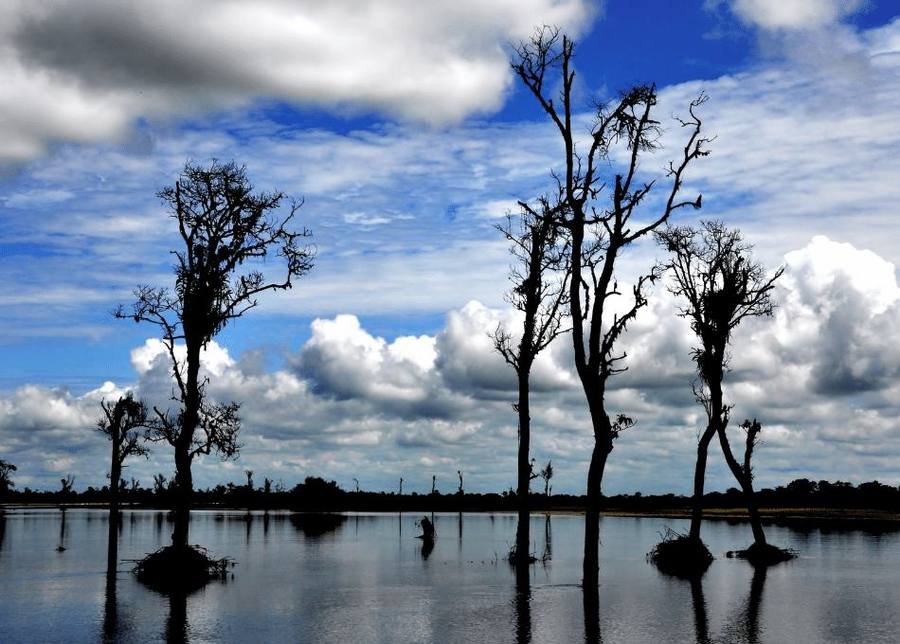
Dibru-Saikhowa is Assam's wildest corner: a national park on the floodplains where the Brahmaputra meets the Lohit, reached by boat from Tinsukia or Dibrugarh. There are no jeep tracks here in the usual sense — the park is explored on the water, through riverine forest and grassland that floods and remakes itself every monsoon. It is a birder's park above all, and one of the least-visited national parks in the Northeast, which is exactly its charm.
9. The tea gardens of Jorhat & Dibrugarh

No list of the best places to visit in Assam is complete without its tea. Jorhat is the tea capital, home to the Tocklai tea research station and heritage bungalows on working estates, while Dibrugarh anchors the gardens further east. Stay in a colonial-era tea bungalow, walk the rows at first light, and watch the pluckers work — the gardens are at their greenest from March to September, though the parks are closed then, so most travellers pair tea with the winter safari season instead. See the Jorhat guide and our famous food of Assam.
What is the best time to visit Assam?
October to April is the window for almost everything: the parks are open, the weather is dry and mild, and the Brahmaputra is calm enough for ferries and cruises. November to February is the coolest stretch — misty mornings on the river, migratory birds in the wetlands — while March and April bring warmer days and Rongali Bihu, the Assamese New Year, in mid-April. June to September is the monsoon: the landscape turns intensely green, but Kaziranga and Manas close, floods can cut off Majuli, and travel gets unpredictable. If Bihu is your reason to come, plan for mid-April (Rongali Bihu) or January (Bhogali Bihu, the harvest festival); our Bohag Bihu guide has the details.
How to plan your Assam trip
Assam is the easiest Northeastern state to plan, because everything sits along one line: the Brahmaputra valley, joined by the national highway from Guwahati to Dibrugarh. A first trip of 3–4 days covers Guwahati and Kaziranga; 6–7 days adds Majuli, Sivasagar and the tea gardens, and Haflong or Manas if you have a week. Fly into Guwahati, take the train or a car east, and cross to Majuli by ferry from Nimati Ghat near Jorhat. No permits are needed — no Inner Line Permit for Indian travellers, no Protected Area Permit for foreign visitors — and safari timings, entry fees and range openings change each season, so check before you go. For the wider picture, see our best places to visit in India and the state-by-state guide, and for the table, what to eat in Assam.
Watch & Feel the Place: Assam on Film
Videos are by their respective creators.
Best Places to Visit in Assam FAQs
What are the top 10 places to visit in Assam?
Kaziranga National Park, Majuli island, Kamakhya Temple in Guwahati, Sivasagar, Manas National Park, Pobitora, Haflong, Dibru-Saikhowa, the tea gardens around Jorhat and Dibrugarh, and Guwahati's Brahmaputra riverfront.
What is the best time to visit Assam?
October to April is the best window overall, and November to April for Kaziranga's safaris. Avoid June to September, when the monsoon closes the parks and floods can cut off Majuli.
What is Assam famous for?
Assam is famous for its tea, its one-horned rhinoceroses, the Kamakhya Temple, the Bihu festivals and the Brahmaputra river — and for holding three UNESCO World Heritage Sites: Kaziranga, Manas and the Charaideo Moidams.
How many days are enough for Assam?
Three to four days cover Guwahati and Kaziranga. Six to seven days let you add Majuli, Sivasagar and the tea gardens, with Haflong or Manas if you have a full week.
Do I need a permit to visit Assam?
No. Assam needs no Inner Line Permit for Indian travellers and no Protected Area Permit for foreign visitors; hotels register foreign guests on arrival.
When is Bihu celebrated in Assam?
Rongali Bihu, the Assamese New Year, falls in mid-April, and Bhogali Bihu, the harvest festival, in January. Mid-April is the liveliest time to visit for culture.
Assam rewards the traveller who follows the river: rhinos at dawn in Kaziranga, monks painting masks on a shrinking island, kings buried under grassy mounds, and tea as far as the eye can see. Start with Kaziranga and Guwahati, then let the Brahmaputra carry you east. Next, read our state-by-state guide to India — and if the Northeast has caught you, Meghalaya's living root bridges are the natural next stop.
Plan your Assam trip
Rhinos, river islands, temples and tea — one valley, three UNESCO sites.
Assam state guide →