
Assam · Offbeat Spotlight
Majuli, Assam: The Disappearing River Island — Complete Guide

By Beauty of Bharat — India travel guide, every place, every flavour.
Guides covering all 36 States and UTs, researched from official sources and checked at publish time. Corrections welcome — see About Beauty of Bharat.

The island you visit today is smaller than the one your parents could have visited — and the Brahmaputra is still taking land from it every year. Majuli, in Assam, is listed by Guinness World Records as the world's largest river island, and it has lost roughly a third of its area in the last 30 to 40 years to flooding and erosion. This Majuli Assam guide covers the island's 500-year-old satras, its mask-makers, its Mising villages, and how to get there before the river redraws the map again.
In brief: take a ferry from Nimati Ghat near Jorhat to Kamalabari, give the island two unhurried days, and spend them between the satras — the Vaishnavite monasteries founded by the saint Srimanta Sankaradeva — the mask-makers of Samaguri, and the stilt-house villages of the Mising people. October to March is the best time to go.
Majuli at a glance
| What it is | A river island in the Brahmaputra, Assam — listed by Guinness World Records as the world's largest river island, at around 880 sq km |
| Why it matters | The heartland of Assamese neo-Vaishnavite culture: 22 surviving satras, Sattriya dance, mask-making and Mising village life |
| UNESCO status | On UNESCO's Tentative List since March 2004 as the "River Island of Majuli" cultural landscape; not yet a World Heritage Site |
| How to reach | Ferry from Nimati Ghat, about 14 km north of Jorhat, to Kamalabari on Majuli; the crossing takes about an hour to an hour and a half |
| Best time to visit | October to March; November for the Raas Mahotsav festival |
| How long | Two days on the island, plus a night in Jorhat either side |
Why Majuli is shrinking — and why that is the story
Majuli sits in the middle of the Brahmaputra, bounded by the Subansiri river to the north and the Brahmaputra to the south, with the Kherkatia Xuti channel to the northeast. It is a young, soft, alluvial island — and the river that made it is unmaking it. The great Assam earthquake of 1950 raised the river bed, and erosion on the island's southern side has risen since, taking villages, farmland and satras with it.
How much land has gone depends on whose figures you read. Guinness World Records puts the island at around 880 sq km and says it has lost roughly a third of its area in the last 30 to 40 years. The Majuli district portal puts the present area at 483 sq km and says it was 1,250 sq km before 1950; the Assam tourism department's own page says 421 sq km. The numbers disagree, but every source agrees on the direction: the island is getting smaller, and its roughly 200,000 residents live with that fact every monsoon. That is the payoff to the opening line — Majuli is a place visibly disappearing, which is why its people are campaigning for UNESCO World Heritage status. It has been on UNESCO's Tentative List since 2 March 2004, and the Assam government is still working on the nomination.
The satras: 500 years of living monasteries
Majuli is the cultural heart of Assam because of its satras — Vaishnavite monasteries founded in the tradition of the 15th- and 16th-century saint-reformer Srimanta Sankaradeva, who spread the neo-Vaishnavite movement across the Brahmaputra valley. The satras are not ruins or museums. They are working communities where celibate monks, the bhakats, live, chant, and keep alive the arts Sankaradeva began: Sattriya dance, borgeet devotional songs, and bhaona theatre.
There were once around 65 satras on Majuli; about 22 survive today, according to the Assam Tourism Development Corporation, several of them relocated inland as the river ate their original sites. The ones to visit are Auniati, Kamalabari, Dakhinpat, Garamur and Samaguri. Auniati is known for its collection of ancient Assamese artefacts, utensils and jewellery; Kamalabari is a centre of culture, art and classical studies; Dakhinpat is the prime venue for the Raas festival. Each satra is built around a central prayer hall, the kirtan ghar, where daily naam-prasanga chanting takes place. Sattriya, the dance-drama born in these monasteries, was recognised by the Sangeet Natak Akademi in 2000 as India's eighth classical dance form. Visit in the morning, when the chanting is under way, dress modestly, and ask before photographing inside a prayer hall — these are living places of worship first and sights second.
The masks of Majuli
The single most extraordinary thing on Majuli is made at Samaguri Satra: the masks of Mukha Bhaona, also called Mukha Shilpa. Artisans build them from bamboo, clay and cloth into huge, vivid faces of mythological figures — Ravana, Hanuman and the gods and demons of the epics — worn in bhaona performances. You can watch the mask-makers at work, and smaller masks are available to buy. Samaguri is the island's best-known centre for the craft, and the work is done by hand, in the satra, by families who have kept the tradition alive for generations. If you see one thing on Majuli, see a mask being made — it is the art form that most directly connects the island's religion, theatre and craft.
Mising villages, pottery and everyday island life
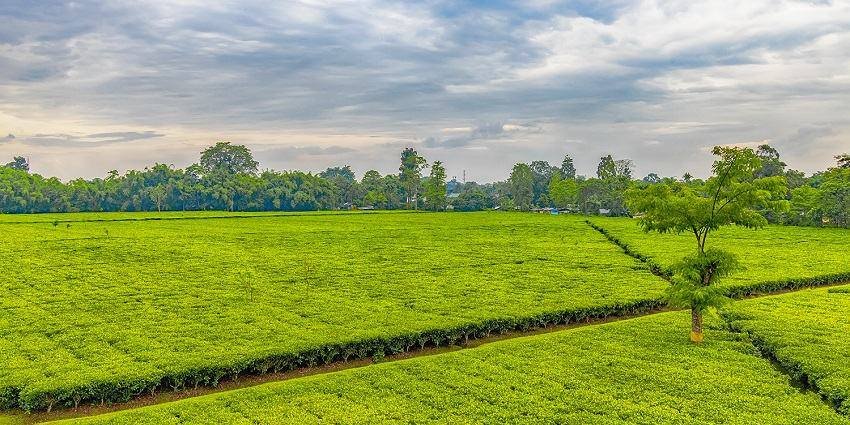
Much of Majuli's population belongs to the Mising (also spelled Mishing) tribe, who live in villages of stilt houses raised above the flood line — a practical answer to a river that rises every monsoon. Walking or cycling through a Mising village is the quiet half of a Majuli trip: paddy fields, bamboo groves, handloom weaving, and a pace of life set by the river rather than by any timetable.
At Salmora, on the southeastern side of the island, the Kumar potters shape clay pots on hand-turned wheels — another craft that has survived because the island's isolation protected it. Between the satras, the villages and the wetlands, Majuli is also a winter birding spot, with migratory birds visiting its beels (wetlands). The island's main settlements, Kamalabari and Garamur, are a couple of kilometres apart on the same road, and the best way to move between them is by bicycle, hired locally, through the paddy fields.
How to reach Majuli
There is still no bridge to Majuli — a two-lane road bridge from Nimati Ghat to Kamalabari has been under construction since 2021, with work resuming in early 2026 — so the ferry is the way in, and it is half the experience. The usual route is: reach Jorhat, the tea town of Assam and the island's gateway, then travel about 14 km north to Nimati Ghat and board a ferry to Kamalabari on Majuli. The crossing takes about an hour to an hour and a half, and government ferries run through the day. Timings shift with water levels and the season, and ferries are frequently cancelled during the monsoon floods from June to September, so confirm the day's crossings locally — with your stay, or at the ghat — rather than relying on any printed timetable. Ferries can carry vehicles, but capacity is limited, so most visitors cross as foot passengers and hire a bicycle or a rickshaw on the island. See our Jorhat guide for the gateway town.
Best time to visit Majuli
October to March is the window: the monsoon floods are over, the weather is cool and dry, and the wetlands fill with migratory birds. November is the best month of all. The Raas Mahotsav, Majuli's great festival, is held in November over four days from Raas Purnima, when the satras stage all-night performances of Krishna's life with masked dance, music and song — Dakhinpat is the prime venue. Book stays well ahead for Raas week; the island's guesthouses and homestays are few and fill fast. Avoid June to September, when flooding can cancel ferries and much of the island is under water.
What to eat on Majuli
Eat what the island eats. The Assamese thali — rice, dal, seasonal vegetables and masor tenga, the tangy fish curry — is the staple, and the Mising villages have their own food traditions, including rice beer and dishes cooked with local greens. Assam tea, grown in the gardens around Jorhat, is the drink of the island. The full rundown of the state's food is in our famous food of Assam guide.

A suggested 2-day Majuli plan
Day 1 — The satras. Morning ferry from Nimati Ghat, then Kamalabari Satra and Auniati Satra in the morning, when the chanting is under way. Afternoon at Samaguri Satra to watch the mask-makers, then Dakhinpat Satra before sunset.
Day 2 — The villages. Cycle to a Mising stilt-house village in the morning, stop at Salmora to see the potters at work, and spend the late afternoon by the wetlands watching birds as the light drops over the Brahmaputra. Take the last ferry back to Jorhat, or stay a second night and leave the next morning.
Majuli travel tips
Confirm the ferry on the day. Timings change with the river; check with your stay or at Nimati Ghat before you set out, and never plan a tight onward connection on the same day you leave the island.
Carry cash. There are few ATMs on the island and card payments are rare; small notes for ferries, bicycles and masks.
Respect the satras. They are monasteries, not attractions — remove shoes, keep your voice down in the prayer halls, and ask before taking photographs of monks or ceremonies.
Pack light and practical. Comfortable walking shoes, sun protection, mosquito repellent and a light rain jacket even in the dry season; the island's roads are rough in places and the sun on the river is strong.
Watch & feel the place
See the river, the satras and the mask-makers before you go:
Videos are by their respective creators and are embedded for viewing; please check the creators' channels for the latest Majuli content before travelling.
Majuli, Assam FAQs
Is Majuli really the world's largest river island?
Guinness World Records lists Majuli as the world's largest river island, at around 880 sq km — though the title is disputed, with Encyclopaedia Britannica citing Bananal Island in Brazil as larger, and Assam government figures putting Majuli's present area lower, at around 420–480 sq km. What is not disputed is that it is the world's largest inhabited river island and that it is shrinking fast.
Why is Majuli shrinking?
Annual flooding and bank erosion by the Brahmaputra. The 1950 Assam earthquake raised the river bed and worsened erosion on the island's southern side. Guinness World Records says Majuli has lost roughly a third of its area in the last 30 to 40 years, and the district portal records a fall from 1,250 sq km before 1950 to 483 sq km today.
How do you reach Majuli?
By ferry only. Take a ferry from Nimati Ghat, about 14 km north of Jorhat in Assam, to Kamalabari on Majuli. The crossing takes about an hour to an hour and a half. There is no bridge yet — one has been under construction since 2021. Confirm the day's ferry timings locally, as they shift with water levels.
What are the satras of Majuli?
Vaishnavite monasteries founded in the tradition of the 15th- and 16th-century saint Srimanta Sankaradeva. Around 65 once existed on the island; about 22 survive, including Auniati, Kamalabari, Dakhinpat, Garamur and Samaguri. They are living communities of monks who preserve Sattriya dance, devotional music and bhaona theatre.
What is the best time to visit Majuli?
October to March, when the weather is cool and dry and the monsoon floods are over. November is the best month, for the Raas Mahotsav festival, when the satras stage all-night masked performances of Krishna's life.
How many days do you need for Majuli?
Two days on the island is right: one for the satras and mask-making at Samaguri, one for the Mising villages, Salmora pottery and the wetlands. Add a night in Jorhat on either side, since the ferry is the only way on and off.
The river will keep redrawing Majuli — that is the one certainty about the island. Go while the satras, the masks and the stilt-house villages are still there to see. If this guide has you planning an Assam trip, read our Kaziranga winter safari guide next — the one-horned rhino park pairs naturally with Majuli.
Plan your Majuli trip
Ferry in from Jorhat, two slow days among the satras and villages, and home with a mask in your bag.
Assam state guide →