
Jaipur · Hotels & Stays
Best Hotels in Jaipur: Where to Stay, From Palaces to Budget Stays

By Beauty of Bharat — India travel guide, every place, every flavour.
Guides covering all 36 States and UTs, researched from official sources and checked at publish time. Corrections welcome — see About Beauty of Bharat.
You can sleep in the garden house built for a king’s wet nurse. Rambagh Palace began in 1835 as a modest garden house for the wet nurse of Prince Ram Singh II, and it is still Jaipur’s most famous address — a palace hotel run by the Taj since 1972. Jaipur’s best hotels are pieces of its history, from a garden palace of 1729 to a backpacker hostel that helped bring hostel travel to India. The short answer: book Rambagh Palace for the grandest palace stay, Samode Haveli or Alsisar Haveli for a haveli in the old city, Arya Niwas for honest budget value, and Zostel Jaipur if you are travelling light. The eight stays below are verified on the hotels’ own sites. For the wider trip, see our Jaipur guide.
The 8 Best Hotels in Jaipur at a Glance
| Hotel | Where | What it is | Best for |
| Rambagh Palace | Bhawani Singh Road | 1835 garden house turned palace | The grandest palace stay |
| Rajmahal Palace | C-Scheme | 1729 garden palace | Quiet luxury in the city centre |
| Samode Haveli | Old city | 200-year-old noble haveli | A haveli stay by the bazaars |
| Alsisar Haveli | Sansar Chandra Road | 1892 noble townhouse | Heritage calm near the Pink City |
| Diggi Palace | C-Scheme | 1860 palace, hotel since 1991 | Gardens and literary history |
| Pearl Palace Heritage | Ajmer Road | Modern heritage-style boutique | Handcrafted rooms, romantic stay |
| Arya Niwas | Sansar Chandra Road | Century-old haveli, hotel since 1983 | Budget value for families |
| Zostel Jaipur | Jaipur | Backpacker hostel since 2013 | Solo travellers, tight budgets |
The 8 Best Hotels in Jaipur
1. Rambagh Palace, Bhawani Singh Road
Rambagh is the palace stay most travellers picture when they imagine Jaipur, and it is the one to book first if the budget allows. The first building on the site was a garden house built in 1835 for the wet nurse of Prince Ram Singh II; in 1887 it became a royal hunting lodge, and in the early twentieth century it was enlarged into a full palace to the designs of Sir Samuel Swinton Jacob, architect of the Albert Hall Museum. Maharaja Sawai Man Singh II made it his principal residence, and in 1957 opened it to paying guests — one of India’s first palace hotels. The Taj group took over its management on 2 May 1972 and has run it since. Today it stands in 47 acres of Mughal gardens on Bhawani Singh Road, peacocks on the lawns and the Suvarna Mahal restaurant in the old dining hall. Come for the arrival alone: the drive through the gates, past the gardens, is the closest most visitors get to feeling like a guest of the Maharaja.
2. Rajmahal Palace, C-Scheme
Rajmahal is the quieter palace — a garden palace in the middle of C-Scheme, behind high walls and old rain trees. Its story begins in 1729, when Sawai Jai Singh II, the founder of Jaipur, laid out a walled pleasure garden here for a senior lady of the household, giving it the name Maji-ka-Bagh. In 1821 it became the official residence of the British Resident of Rajputana, and in 1958 Maharaja Sawai Man Singh II reclaimed it as his private residence. Its guest list, in the hotel’s own history, includes Queen Elizabeth II, Jackie Kennedy and Lord Mountbatten. Restored by interior designer Adil Ahmad and converted into a hotel in 1980, it now holds just 14 rooms and suites, layered with Art Deco lines and bold hand-blocked prints. It suits a slow stay: afternoon tea in the gardens. Pair it with our Jaipur guide and the Jaipur–Jodhpur–Udaipur itinerary.
3. Samode Haveli, the old city
Samode Haveli is the haveli stay to pick if you want to sleep inside the old city’s history rather than look at it from a garden. Built more than 200 years ago by Rawal Sheo Singh, a noble of the Jaipur court — some histories date its construction to around 1799 — the haveli stands a short walk from the City Palace and the bazaars, hidden down a lane that gives no warning of the courtyards inside. The Samode family served as prime ministers of the Jaipur court, and still lives on the top floors. The Rawals opened it to guests as a heritage hotel in 1988. Inside are frescoed walls, mirror work, an elephant ramp at the entrance and a garden pool, with around 50 rooms and suites. Book it for the location: step out and you are in the bazaars. Our best shopping markets in Jaipur guide covers where to go from the door.
4. Alsisar Haveli, Sansar Chandra Road
Alsisar Haveli is the calmest of the old-city stays — a walled world of courtyards, lawns and a pool, five minutes’ walk from the Pink City. It was built in 1892 by Thakur Ganpat Singh, who served as the Jaipur court’s Minister of Forests and Shikar Khana, as his townhouse in the city; in its earliest days it was known as Alsisar ka Dera. The Sheesh Mahal was the women’s quarters and the Darbar Hall the men’s section; both survive, the Darbar Hall now the restaurant. In 1994 the family converted part of the haveli into a heritage hotel, and it still runs it, with 45 rooms furnished with antique furniture and Rajasthani paintings. It suits a first-timer who wants history without leaving the centre: the bazaars and Hawa Mahal are on foot.
5. Diggi Palace, C-Scheme
Diggi Palace is the stay for readers. Built in 1860 by Thakur Saheb Pratap Singh Ji Diggi, it spreads over some 18 acres of gardens in C-Scheme, and part of it was converted into a heritage hotel in 1991 by Thakur Ram Pratap Singh Diggi. The family still owns and runs it. For years it was the home of the Jaipur Literature Festival, hosting it from 2006 to 2020, before the festival moved to a larger venue — and the literary air has never quite left the place. Around 70 rooms sit among fresco-painted doorways, durbar halls and lawns where peacocks roam. Come in January, when the festival fills the city — or in the quiet weeks after.
6. Pearl Palace Heritage, Ajmer Road
This one is different, and it is worth saying so plainly: Pearl Palace Heritage is not a historic building. It is a modern, family-run boutique hotel dressed in heritage style — 20 rooms, each themed on a different Indian art or region, with hand-carved passageways that took a family of artisans over a year to carve, and a third floor that recreates the feel of the Ajanta Caves. Nothing here pretends to be 200 years old, and the craftsmanship is real. In the winter of 2014, part of The Best Exotic Marigold Hotel 2 was filmed here. It sits on Ajmer Road in Gopalbari, a quiet residential lane; its sister hotel, the original Hotel Pearl Palace, is the budget sibling of the pair, and the two share a rooftop restaurant. Pick it for handcrafted rooms rather than royal history.
7. Arya Niwas, Sansar Chandra Road
Arya Niwas is the best-value hotel on this list, and the one most Jaipur regulars recommend to friends. It began in 1983, when a retired engineer and his family converted a rundown haveli — once the home of a feudal lord of the old Jaipur State — into a hotel with 20 rooms, designed by the family themselves. Parts of the main building are about a century old. Four decades on it has grown to 128 rooms, is still family-managed and is a government-approved hotel, with a vegetarian cafeteria and an evening garden. It stands on Sansar Chandra Road behind Amber Tower, about 350 metres from Chandpole gate and 400 metres from MI Road — close enough to walk to the bazaars, far enough to sleep. Book it for a family trip: the family rooms, the home-style food and the garden are what guests write about most. Our what to eat in Rajasthan guide covers the food once you are here.
8. Zostel Jaipur
Zostel Jaipur is the cheapest bed on this list, and the best choice if you are travelling solo and want company. Zostel launched in 2013, and Jaipur was among its very first hostels — the chain that brought the backpacker hostel to India started here. The format is the classic hostel one: air-conditioned dormitory beds with lockers, private rooms for those who want them, a common room, a community kitchen and Wi-Fi, with travellers from everywhere swapping routes over chai. It suits a solo traveller or a pair on a tight budget, and a first night in the city before deciding where to go next. Families should pick Arya Niwas instead — dorms are shared, and the common room stays lively late.
What is the best area to stay in Jaipur?
First-timers should stay in or near the walled Pink City — around Hawa Mahal, the City Palace and the bazaars — so the sights are on foot. Samode Haveli sits in the old city itself; Arya Niwas and Alsisar Haveli are just outside its gates. C-Scheme, the leafy quarter south of the old city, is the calm alternative: Rajmahal Palace and Diggi Palace sit behind high walls there. For an early train or bus, Sansar Chandra Road and Sindhi Camp sit near the station and bus stand. The airport is in Sanganer, south of the city, so an airport hotel suits a late arrival or early flight rather than a sightseeing base. Keep a taxi app ready wherever you stay — the forts sit on hills outside the centre, and no hotel puts all of them on foot. Staying longer? Our best weekend trips from Jaipur cover the escapes beyond the city, and our state-by-state guide shows how Jaipur fits a first trip around the country.
What is the best time to visit Jaipur?
October to March is the season every Jaipur guide agrees on, and Rajasthan Tourism calls winter the best season for the state, with days roughly between 10°C and 30°C. November to February is the coolest stretch, made for fort climbs and bazaar walks; January brings the Jaipur Literature Festival, which fills the city’s hotels, so book months ahead. March warms up and brings the Gangaur procession; April to June is very hot, and July to September brings the monsoon and the Teej festival. Summer and monsoon stays are the cheapest and quietest, but plan sightseeing for the early morning and evening. Our Rajasthan in December and Rajasthan in January guides cover the two best months in detail.

Best hotels in Jaipur for families
For a family trip, start with Arya Niwas: family rooms, a vegetarian restaurant and a garden for the evenings. Rambagh Palace suits a family that wants space — 47 acres of gardens — and Alsisar Haveli’s pool and courtyards give children room to roam. The heritage havelis have stairs, courtyards and uneven floors, so ask for a ground-floor room if anyone in the party struggles with steps. Skip the hostel dorms for a family stay; a family is better served by a hotel. Whatever you book, confirm what is included before you pay — meal plans vary by hotel and booking channel — and check the hotel’s own site first.
A note on palace hotels and photographs
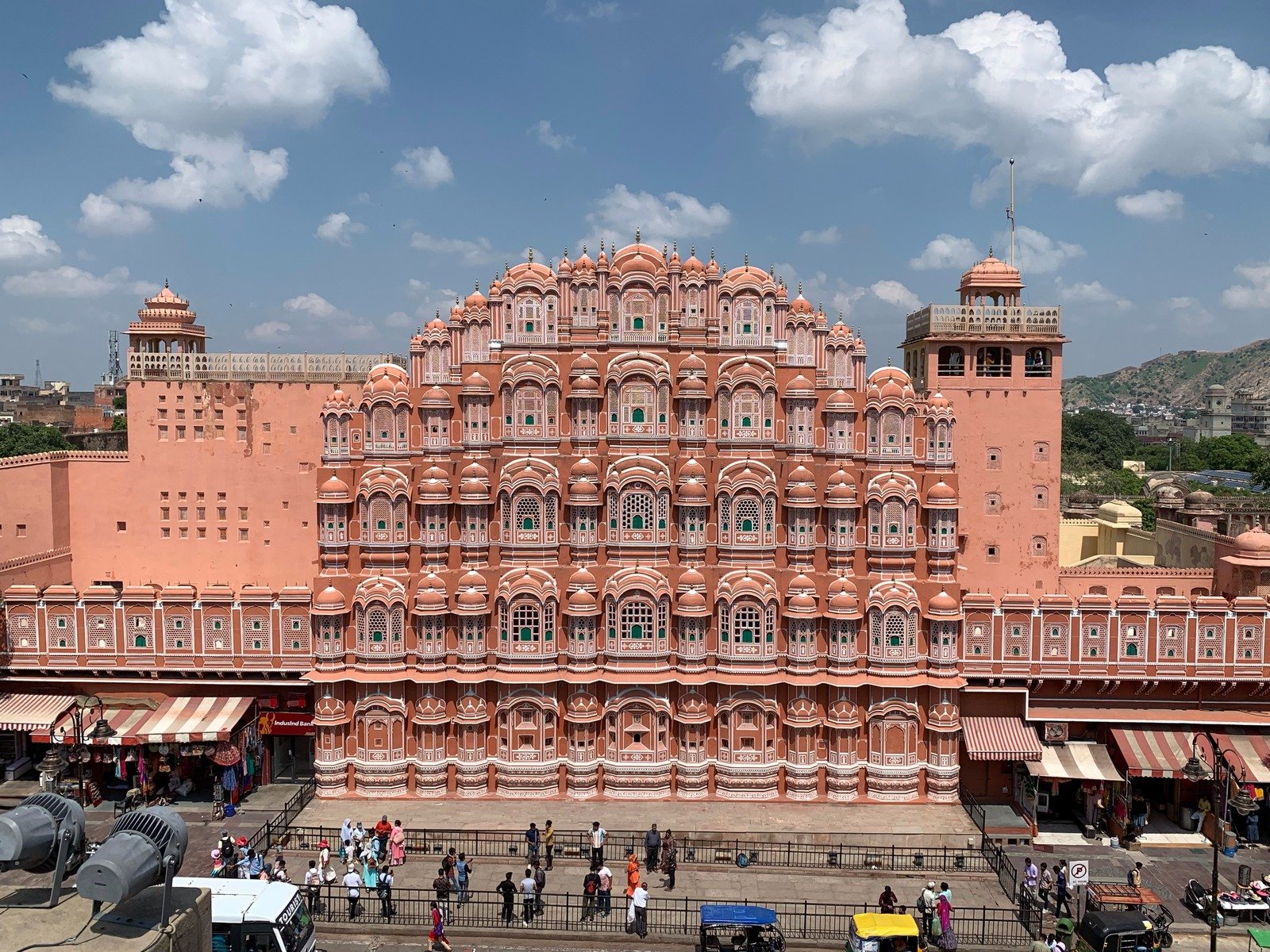
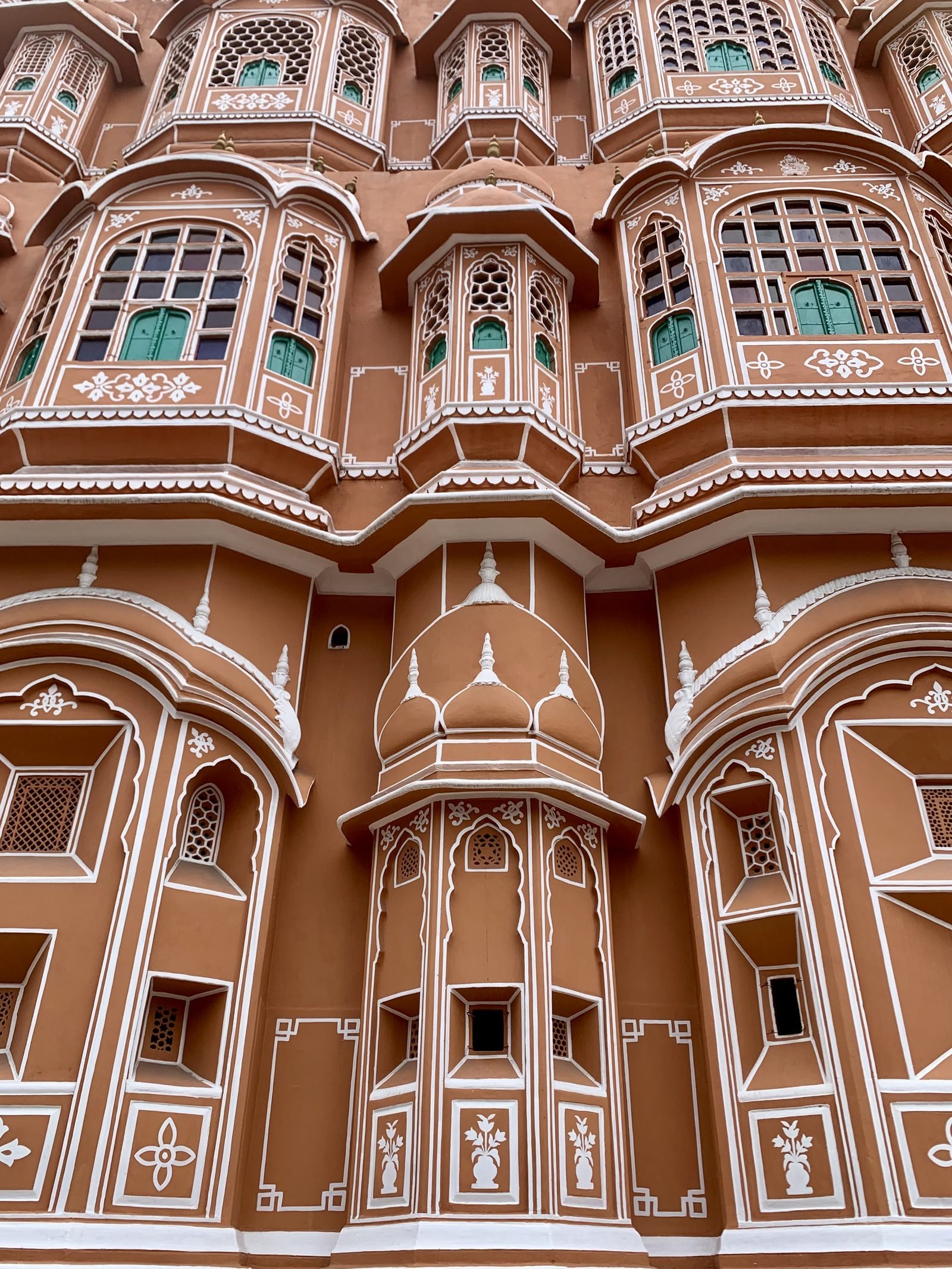
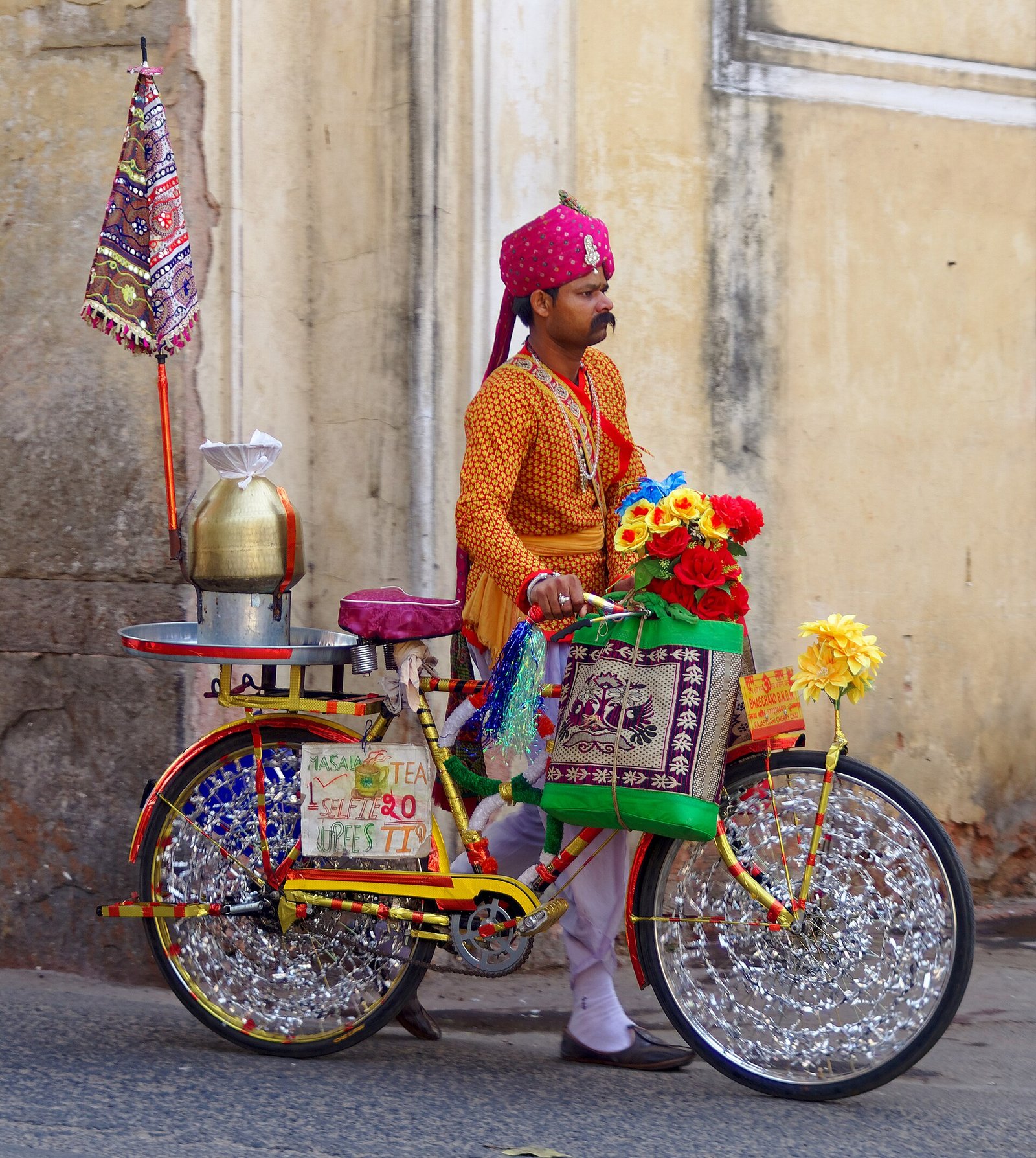
Not every hotel with “heritage” in its name is historic. Pearl Palace Heritage is a modern boutique in heritage dress — beautiful, and honestly heritage-style rather than historic. The other seven stays are the other kind: buildings with a documented past, still owned or run by the families that built them. One detail to get right: Rambagh Palace opened as a hotel in 1957 under the Maharaja, and the Taj group took over in 1972 — some travel pages credit the Taj with the 1957 opening, which is not how the Taj’s own history tells it. And a word on photographs: the pictures here show the places — Hawa Mahal, the old city’s streets and Nahargarh Fort at Diwali — not the hotels’ rooms, because no verified photograph of the hotels themselves was available. For heritage stays only, see our best heritage hotels in Rajasthan guide.
Watch & Feel the Place
Videos are by their respective creators.
Best Hotels in Jaipur FAQs
Which is the best hotel in Jaipur for family?
Arya Niwas is the best all-round choice for a family: family rooms, a vegetarian restaurant, a garden and a central spot on Sansar Chandra Road. For a special occasion, Rambagh Palace gives a family space in 47 acres of gardens, and Alsisar Haveli adds a pool and courtyards. Avoid hostel dorms for a family stay.
What is the best area to stay in Jaipur for tourists?
Stay in or near the walled Pink City for a first trip, so Hawa Mahal, the City Palace and the bazaars are on foot — Samode Haveli is inside the old city, and Arya Niwas and Alsisar Haveli sit just outside its gates. C-Scheme is the quieter alternative.
Which is the most luxurious hotel in Jaipur?
Rambagh Palace, the Taj palace hotel on Bhawani Singh Road, is the city’s grandest stay — a palace of 1835 in 47 acres of gardens. Rajmahal Palace in C-Scheme is the quieter luxury choice, with just 14 rooms and suites in a garden palace of 1729.
Where can I stay near Hawa Mahal?
Samode Haveli is the closest of these eight stays, a short walk from the City Palace and the bazaars in the old city. Arya Niwas, about 350 metres from Chandpole gate, and Alsisar Haveli, five minutes’ walk from the walled city, are the next nearest.
What is the best budget hotel in Jaipur?
Arya Niwas is the best budget hotel on this list — a family-run stay in a century-old haveli on Sansar Chandra Road, with family rooms and home-style vegetarian food. For the cheapest beds of all, Zostel Jaipur offers dormitory beds and private rooms for solo travellers.
When is the best time to visit Jaipur?
October to March, and November to February above all: cool, dry days for forts, palaces and bazaars. January brings the Jaipur Literature Festival, so book months ahead.
Eight stays, one Pink City — from a garden house of 1835 to a hostel born in 2013. Pick the palace for the occasion, a haveli for the old city, or Arya Niwas and Zostel for the budget — and book before the winter weekends go. Next, read our best places to visit in Rajasthan guide — and our best places to visit in India guide if Jaipur is your first stop — plus our famous food of Rajasthan guide before dinner.
Plan your Jaipur trip
Pink City bazaars, hilltop forts and palaces you can sleep in — start with the destination guide and build your route from there.
Jaipur destination guide →