
India Food Guide · Rajasthan
What to Eat in Rajasthan: 12 Iconic Dishes to Try

By Beauty of Bharat — India travel guide, every place, every flavour.
Guides covering all 36 States and UTs, researched from official sources and checked at publish time. Corrections welcome — see About Beauty of Bharat.
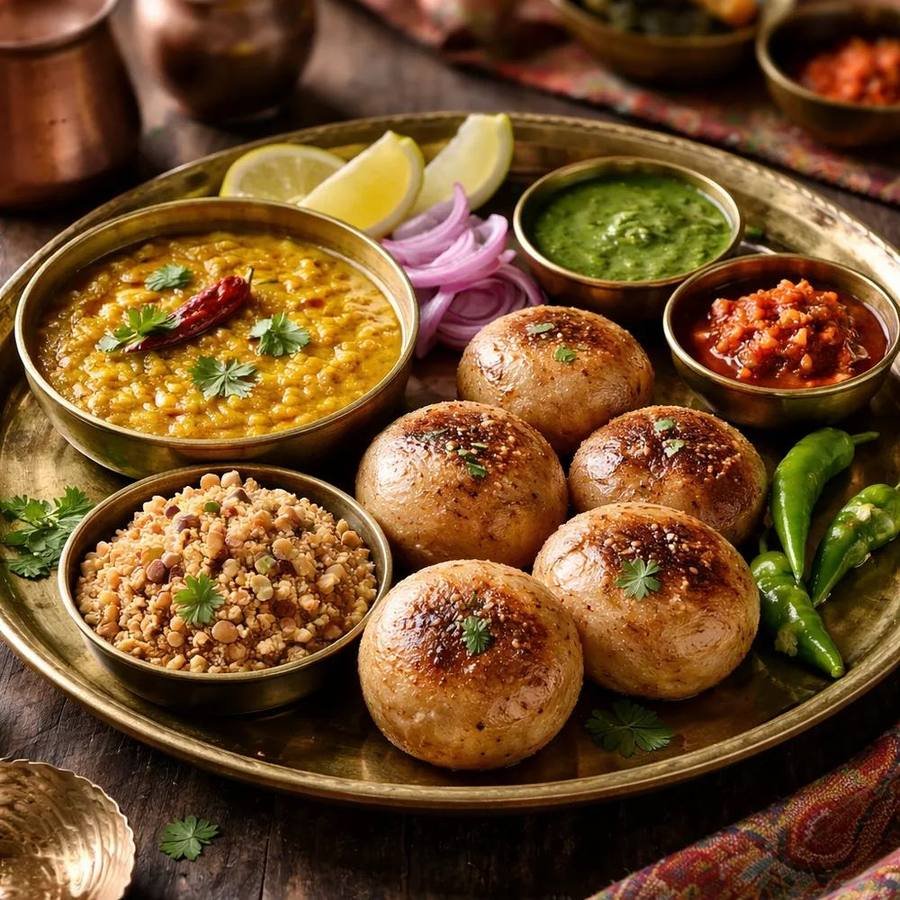
What is Rajasthan famous for food-wise? Three things: dal baati churma, laal maas, and the desert ingenuity behind everything else. Rajasthani cuisine was shaped by the Thar Desert — scarce water, scarce vegetables, long hot summers. Out of that scarcity came remarkable invention: sun-dried ker-sangri, gram-flour gatte in place of vegetables, ghee and bajra (pearl millet) as the backbone, and royal Rajput slow-cooked meats like laal maas and safed maas. Here are the 12 dishes that define the state's table.
Photos are the actual dishes from our food atlas; sections without a verified photo are text-only. Prices are rough late-2026 ranges.
Why Rajasthani food tastes like the desert
The desert is the reason Rajasthani food tastes like nothing else in India. With little water and few fresh vegetables for much of the year, cooks built a pantry of the durable: wheat and bajra, lentils, gram flour, dried berries and beans, and above all ghee — which keeps without refrigeration and arrives at the table generously.
Two traditions run side by side: Marwari and Jain vegetarian kitchens produced India's most inventive meatless cooking — gatte, ker sangri, panchmel dal — while Rajput royal kitchens made the fiery laal maas and the courtly mild safed maas. Eat both sides and you will understand the state.
12 famous dishes of Rajasthan
1. Dal Baati Churma
The flagship, and the dish pictured above. Hard wheat baatis are baked, cracked open and drowned in ghee, then eaten with panchmel dal (a five-lentil mix) and sweet churma of crushed baati, ghee and jaggery. Where to eat it best: dhabas on the Jaipur–Jodhpur highway serve some of the finest, and old-city thali restaurants make it the centrepiece; Chokhi Dhani on Jaipur's outskirts offers the full folk-dance-and-feast version. What to pay: roughly ₹250–450 for a dal baati thali at a local joint; ₹800–1,200 at heritage resorts. See our full dal baati churma dish page.
2. Laal Maas
The legendary red mutton curry of the Rajput royal kitchens: tender mutton slow-cooked in Mathania red chillies, garlic and mustard oil until the gravy turns deep, glossy red. Unapologetically hot in its traditional form — order bajra roti to soak up the gravy. Where to eat it best: Jodhpur's old-city non-vegetarian kitchens and heritage-hotel restaurants in Jaipur and Jodhpur. What to pay: roughly ₹350–600 a portion.
3. Gatte ki Sabzi
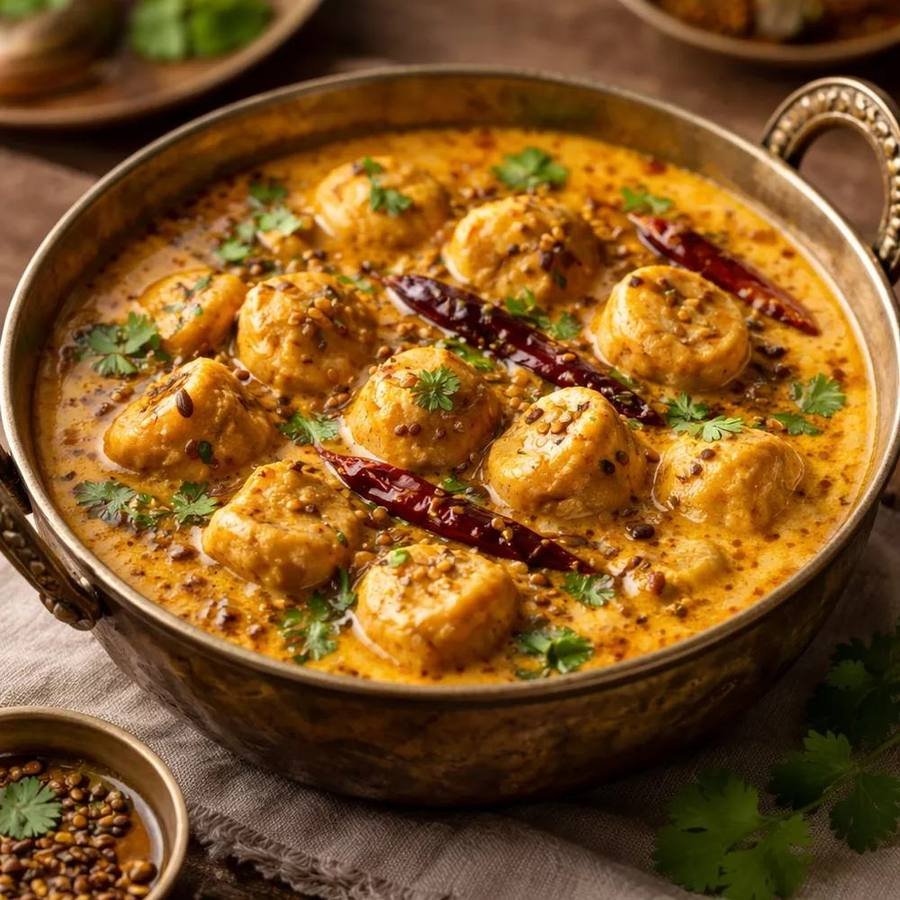
Desert ingenuity in a bowl: when fresh vegetables were unavailable, Rajasthani cooks made "vegetables" from gram flour. Soft besan dumplings are boiled, sliced and simmered in a tangy curd-and-spice gravy. — the backbone of the Marwari vegetarian thali. Where to eat it best: any home-style thali restaurant across the state. What to pay: roughly ₹180–300 a plate. More on our gatte ki sabzi dish page.
4. Ker Sangri
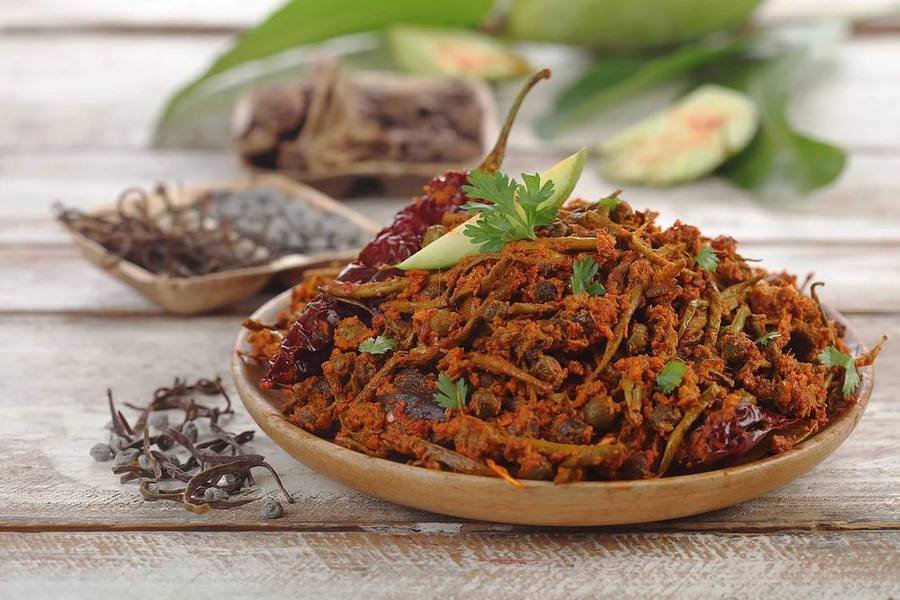
The true taste of the Thar. Ker (a wild desert berry) and sangri (desert beans) are sun-dried, stored for months, then rehydrated and cooked with oil and spices into a tangy, deeply savoury dish. Where to eat it best: the Jodhpur–Jaisalmer side of the desert, where it is a household staple. What to pay: roughly ₹150–250 as part of a thali. More on our ker sangri dish page.
5. Bajre ki Khichdi

Pearl millet (bajra) is the desert's grain, and this humble khichdi of bajra and moong dal is its most comforting form. served steaming with ghee melting in and jaggery (gur) on the side — this is Rajasthan's winter staple. Where to eat it best: village dhabas from October to February, when bajra is freshest. What to pay: roughly ₹120–200 a plate.
6. Ghevar
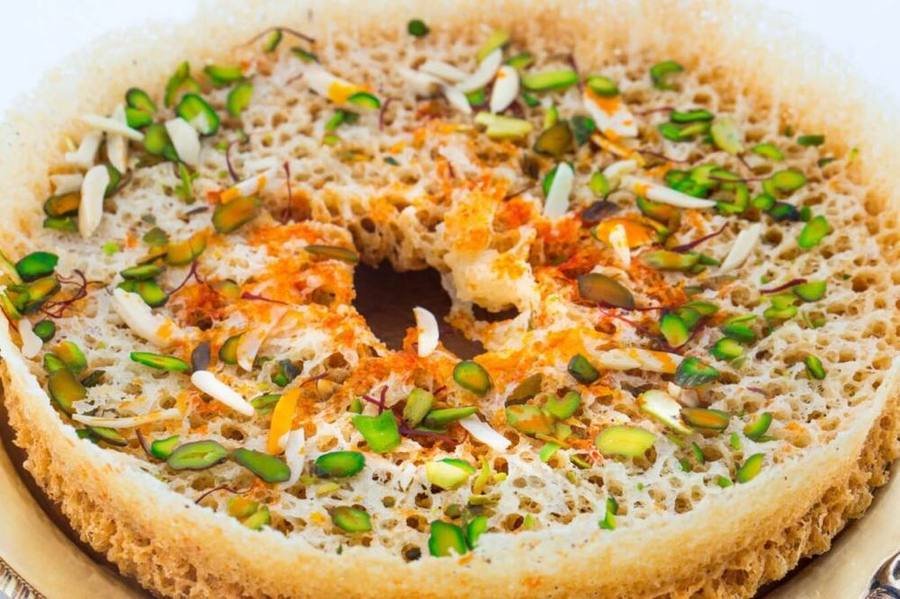
Rajasthan's most dramatic sweet: a flour-and-ghee batter poured into hot ghee so it sets into a crisp honeycomb disc, soaked in sugar syrup and topped with malai or rabri. It is the sweet of Teej and Raksha Bandhan season (Shravan, roughly July–August), Where to eat it best: the old-city mithai lanes around Johari Bazaar and Tripolia in Jaipur. What to pay: roughly ₹350–700 per kg by topping. More on our ghevar dish page.
7. Mirchi Vada

Jodhpur's beloved street snack: large green chillies stuffed with spiced potato, dipped in besan batter and deep-fried until crisp. fiery and best eaten standing at the stall. For more street-side icons, see our best street food in India guide. Where to eat it best: stalls around Jodhpur's Clock Tower and Sardar Market, frying through the day. What to pay: roughly ₹20–35 a piece. More on our mirchi vada dish page.
8. Pyaaz Kachori
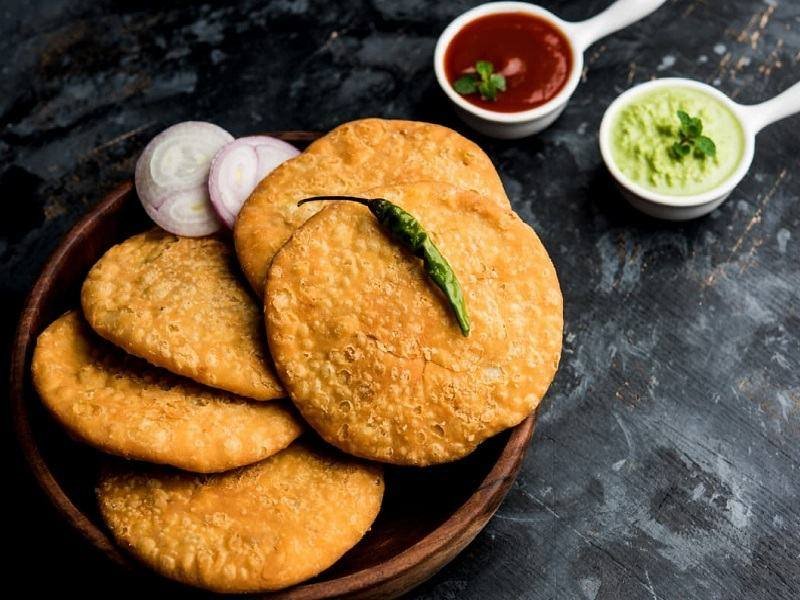
The breakfast of Jaipur and Jodhpur: a flaky, crisp pastry shell stuffed with a spicy onion filling, served hot with tamarind or green chutney — fresh from the kadhai, with jalebi on the side if you are doing it properly. Where to eat it best: morning kachori shops in the old cities; follow the breakfast crowd. What to pay: roughly ₹20–40 a piece. More on our pyaaz kachori dish page.
9. Mohan Thaal
The royal fudge of Rajasthan: roasted gram flour cooked slowly in ghee with sugar and cardamom until it sets into a dense, crumbly bar studded with almonds and pistachios. Rich enough that a single small square is a full dessert — the sweet of Marwari weddings and festivals. Where to eat it best: traditional mithai shops in Jaipur and Jodhpur, especially around Diwali. What to pay: roughly ₹400–700 per kg.
10. Mawa Kachori
Jodhpur's dessert kachori: a crisp fried shell filled with sweetened mawa (reduced milk solids), nuts and cardamom, served warm. A sweet kachori sounds improbable until the first bite — the contrast of shattering shell and soft, milky filling is the whole point. Eat it within minutes of frying. Where to eat it best: Jodhpur's sweet shops, where it is a local institution. What to pay: roughly ₹30–60 a piece.
11. Safed Maas
The gentle sibling of laal maas: mutton simmered in a white gravy of curd, cashew, cream and mild spices — courtly, aromatic and barely hot, proof that Rajput royal cooking was not all fire. Order it with tandoori roti or steamed rice. Where to eat it best: heritage and palace-hotel restaurants in Jaipur and Udaipur. What to pay: roughly ₹400–700 a portion.
12. Rajasthani Thali
If you have one meal in Rajasthan, make it this: dal baati, gatte ki sabzi, ker sangri, bajra roti, kadhi, churma, papad, pickles and chaas — the whole cuisine on one platter, and the fastest education in what the state eats. Where to eat it best: thali-specialist restaurants in Jaipur and Jodhpur. What to pay: roughly ₹300–600 at a local thali house; ₹900–1,800 at heritage hotels.
Where to eat in Jaipur, Jodhpur and Udaipur
Jaipur: the old-city lanes around Johari Bazaar and Tripolia are the hunting ground for pyaaz kachori mornings and ghevar in season. For the full Rajasthani evening — thali, folk dance, puppet shows — Chokhi Dhani, the well-known ethnic village resort on the city's outskirts, is the classic first-timer's choice.
Jodhpur: head for the Clock Tower and Sardar Market area — mirchi vada stalls and mawa kachori sweet shops are all close by. This is also ker sangri country; order it wherever you see it.
Udaipur: the old city around Bada Bazaar and the lakeside restaurant rows do excellent thalis with a view of the lake.
And do not overlook the highway dhabas between these cities: some of the best dal baati in Rajasthan is served at plastic chairs under a tin roof, with unlimited ghee.
Sweet endings worth saving room for
Beyond ghevar, save room for mohan thaal's dense ghee fudge, a warm mawa kachori in Jodhpur, and churma — the sweet crumble that completes dal baati. Visit in the monsoon season and the mithai shops overflow with ghevar; in winter, hot jalebi with rabri takes over the mornings. For the wider Indian table, see our best food in India guide.
Practical tips: spice, veg-friendliness, eating well
- Spice scale: gatte, ker sangri and khichdi are moderate; laal maas is genuinely hot.
- Vegetarians eat like royalty here — the standard thali is superb. Non-veg is concentrated in old-city kitchens and heritage hotels.
- Ghee is everywhere — if you avoid dairy, say "bina ghee" clearly when ordering.
- Best eating season is October to March — fresh bajra, the wedding-sweet season, and comfortable thali weather.
- Carry cash for street stalls — the best kachori and mirchi vada spots are cash-first.
Watch: Feel Rajasthan's Food Before You Go
Two short films to feel the cuisine before you go: a Rajasthani thali feast in Jaipur — dal baati, gatte ki sabzi, sweets — and an authentic Jodhpuri laal maas being made. Press play and start travelling.
Frequently Asked Questions
What is the most famous food of Rajasthan?
Dal baati churma — baked wheat baatis with panchmel dal and sweet churma, all drenched in ghee. Laal maas (fiery red mutton curry) is the most famous non-vegetarian dish.
Is Rajasthani food spicy?
Everyday vegetarian dishes like gatte, ker sangri and khichdi are moderate and often mild. The heat lives in the royal non-vegetarian dishes — laal maas, made with Mathania red chillies, is genuinely hot.
Is laal maas very hot?
Traditionally, yes — its red colour and heat come from Mathania chillies, garlic and mustard oil. For the Rajput mutton flavour without the fire, order safed maas: a mild curd-and-cashew white gravy.
Where is the best place to try dal baati in Rajasthan?
Jaipur and Jodhpur are the safest bets — highway dhabas between them serve some of the best, and old-city thali restaurants serve it as the centrepiece.
Is Rajasthani food good for vegetarians?
Yes — Marwari and Jain traditions made gatte, ker sangri, dal baati churma, khichdi and the sweets all vegetarian, and most restaurants serve a full vegetarian thali as standard.
What is ghevar?
Ghevar is a disc-shaped sweet: ghee-and-flour batter poured into hot ghee so it sets into a honeycomb, then soaked in sugar syrup. It belongs to the Teej and Raksha Bandhan season (Shravan, roughly July–August), topped with malai or rabri.
Twelve dishes, one desert, one cuisine that turned scarcity into celebration. For forts, lakes and where to stay, see our Rajasthan state guide — and browse more food stories on the blog.
Explore Rajasthan's Full Guide
Forts, desert camps, lakes and the complete food atlas.
Open the full Rajasthan guide →