
Amritsar · 3-Day Itinerary
Amritsar in 3 Days: The Complete Itinerary

By Beauty of Bharat — India travel guide, every place, every flavour.
Guides covering all 36 States and UTs, researched from official sources and checked at publish time. Corrections welcome — see About Beauty of Bharat.
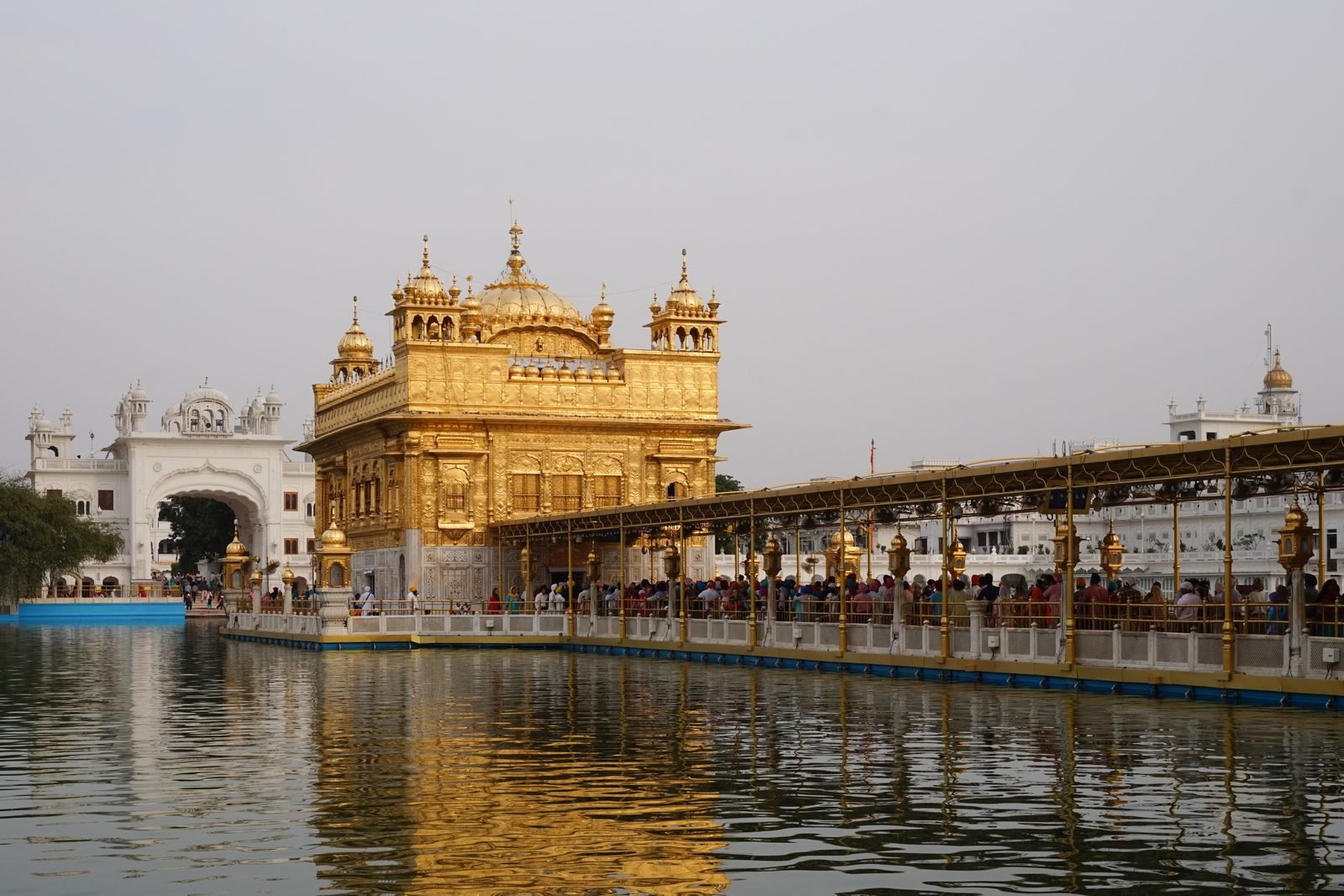
Every day, the Golden Temple serves more free meals than most Indian towns have residents — somewhere between 50,000 and 100,000 of them, cooked by volunteers and eaten sitting cross-legged on the floor, rich and poor side by side. That single fact tells you what Amritsar is: a city built around giving, where the holiest shrine of Sikhism, a massacre memorial, a Partition museum and the loudest border ceremony on earth sit within a few kilometres of each other. Three days is exactly enough to take it all in. Day 1 belongs to the Golden Temple, its langar and the old city. Day 2 belongs to history and the border. Day 3 is Kapurthala, or a slow morning back at the temple. See our Amritsar guide and our best places to visit in India guide.
Amritsar in 3 Days at a Glance
| Day | Where you go | Not to miss |
| Day 1 — The temple and the old city | Golden Temple, langar, Jallianwala Bagh, Heritage Street | Dawn at the sarovar, lunch in the langar, the temple lit up at night |
| Day 2 — History and the border | Partition Museum, Wagah Border ceremony, food walk | The museum’s 14 galleries, the Beating Retreat at sunset, Amritsari kulcha |
| Day 3 — Day trip | Kapurthala: Jagatjit Palace, Moorish Mosque, Shalimar Gardens | The palace and the mosque in one small town |
Timings, fares and entry fees as reported at publish time; confirm them locally before you travel — all costs below are rough estimates.
How Many Days Are Enough for Amritsar?
Three days is the honest answer for a first trip. One day gives you the Golden Temple and a kulcha — a postcard. Two days adds Jallianwala Bagh and the Wagah ceremony, but forces a choice between the Partition Museum and a proper food walk. Three days is where the trip stops feeling rushed: the temple twice, at dawn and at night, both museums, the border, the food, and a day trip out of the city. A fourth day adds a second day trip — see our weekend trips from Amritsar guide — but three is the sweet spot.
Day 1 in Amritsar: Golden Temple, Jallianwala Bagh and the Old City
Morning — the Golden Temple. Start before sunrise, when the city is still quiet and the temple is at its best. The pool on this site was completed by Guru Ram Das, the fourth Sikh Guru, in 1577, and the town that grew around it took its name from the pool: Amritsar, the pool of nectar. Guru Arjan, the fifth Guru, raised the Harmandir Sahib in the middle of the water and installed the Adi Granth there in 1604. The shrine was destroyed and rebuilt more than once in the 1700s; the building you see today took its present shape under Maharaja Ranjit Singh, who had it rebuilt in marble and copper in 1809 and overlaid the sanctum with gold leaf in 1830. Cover your head, remove your shoes and wash your feet at the entrance before joining the queue across the causeway. Entry is free for everyone, of every faith, and the temple is open almost around the clock.
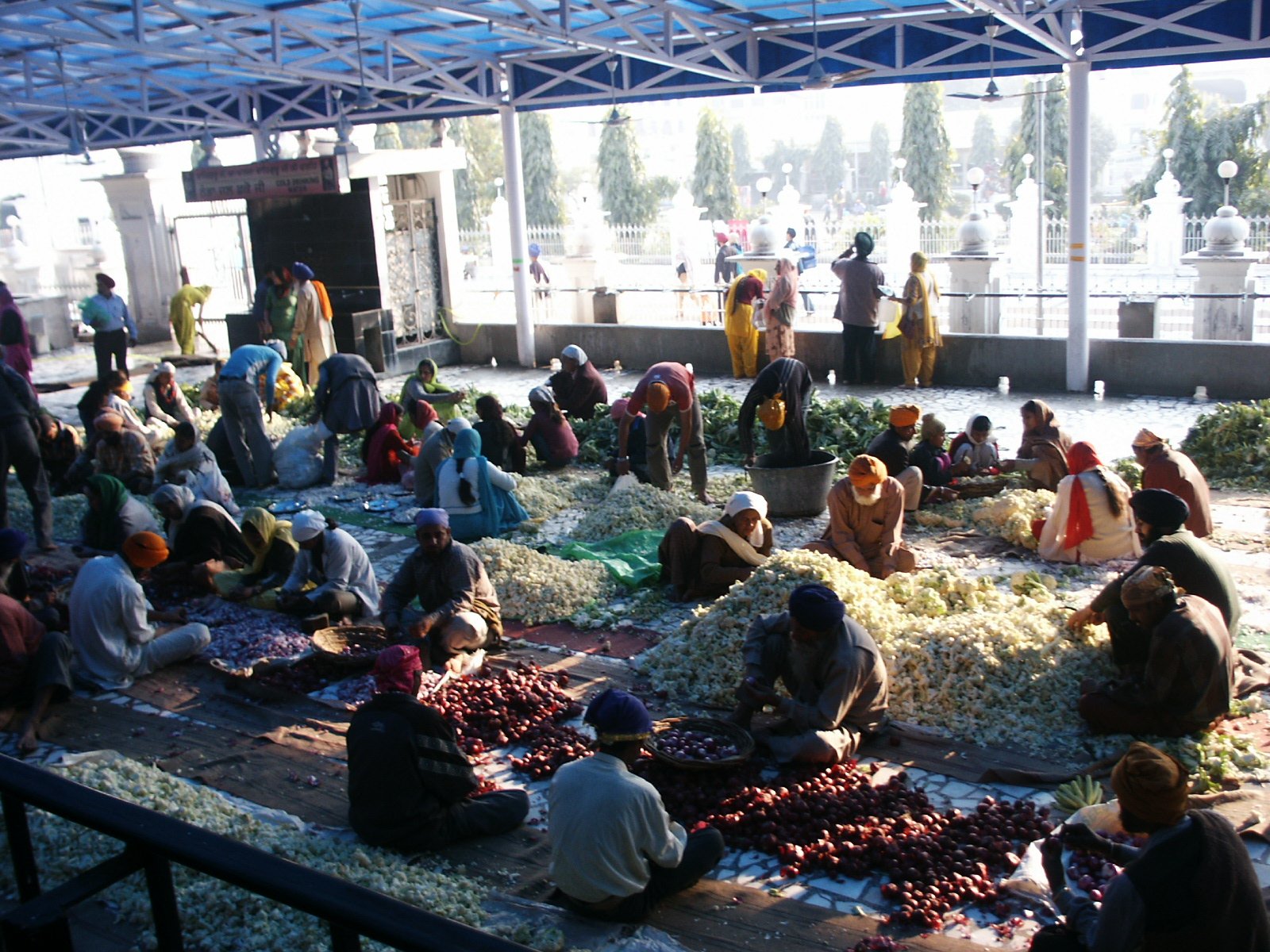
Midday — the langar. Do not leave the temple without eating in the langar, the free community kitchen that is the largest of its kind in the world. Its story goes back to Guru Ram Das in 1577, and the tradition of the free meal itself to Guru Nanak. On an ordinary day 50,000 to 100,000 people eat here; on festivals the number can cross a lakh. The meal is simple — dal, sabzi, roti and kheer — served in two dining halls that seat about 5,000 people at a time, and the whole operation runs on volunteers and donations. Sit on the floor, eat what is served, and hand your plate back for washing when you are done. Our best places to visit in Punjab guide puts the temple in the wider state route.
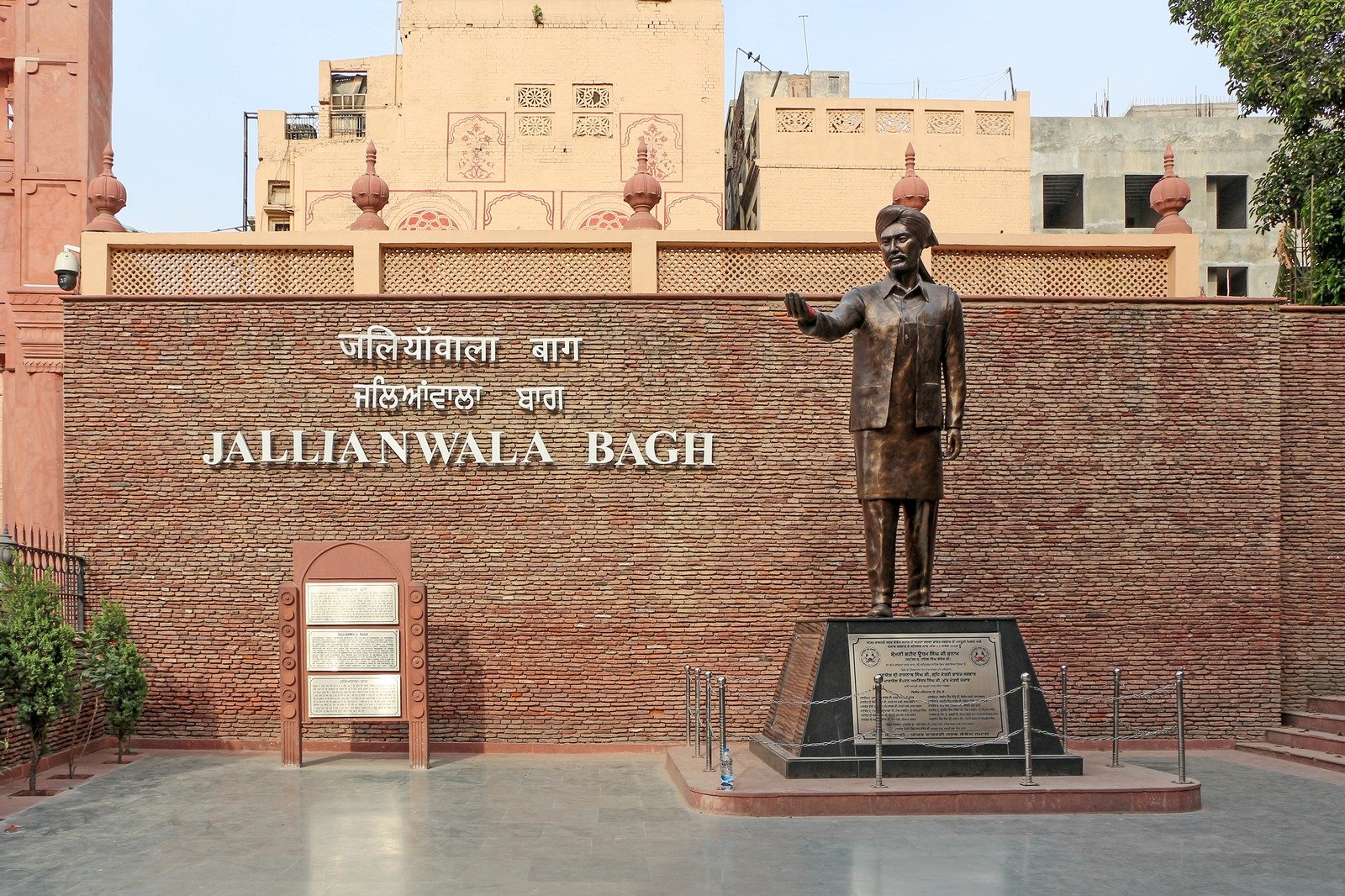
Afternoon — Jallianwala Bagh. A five-minute walk from the temple, through the old city lanes, stands the walled garden where, on Baisakhi day, 13 April 1919, British troops under Brigadier-General Dyer opened fire on a peaceful gathering. About 1,650 rounds were fired in roughly ten minutes; the official toll was 379 dead, though historians put the true figure closer to 1,000. The bullet marks are still visible on the walls, and the Martyrs’ Well — into which people jumped to escape the firing, and from which 120 bodies were recovered — stands at the centre of the memorial. The garden is free to enter and open daily; allow 45 minutes to an hour.
Evening — Heritage Street and the temple at night. Walk back towards the temple along Heritage Street, the pedestrian stretch from the Town Hall to the temple gates, lined with shops selling phulkari dupattas, Punjabi juttis and Amritsari papad and warian. Eat early and simply — a kulcha, a lassi — and then return to the temple for the night view, when the gilded sanctum is lit and reflected in the sarovar. The crowds thin after 9 pm, and the day ends where it began.
Day 2 in Amritsar: Wagah Border, the Partition Museum and a Food Walk
Morning — the Partition Museum. Start Day 2 at the Town Hall on Heritage Street, home to the Partition Museum — the world’s first museum dedicated to the 1947 Partition, opened on 25 August 2017. Fourteen chronological galleries move from pre-Partition Punjab through the drawing of the Radcliffe Line to the refugee camps and resettlement, built almost entirely from donated objects and more than a hundred recorded interviews with survivors. The museum is open Tuesday to Sunday, 10 am to 6 pm, and closed on Mondays — so if Day 2 falls on a Monday, swap it with the Day 3 morning. Entry is about ₹10 for Indian visitors and ₹250 for foreign visitors, a rough estimate.
What Time Does the Wagah Border Ceremony Start?
Here is the honest answer: it changes. The Beating Retreat is timed to end at sunset, so the Border Security Force moves the slot several times a year. Incredible India lists about 4:15 pm in winter and 5:15 pm in summer, but the BSF shifted the time repeatedly through 2026 — from 16 October 2026 it ran 5:00 to 5:30 pm, with a further move to around 4:30 to 5:00 pm expected as winter set in. Treat any printed time as provisional and confirm the day’s start with your hotel or driver the day before you go. What does not change: the ceremony runs every evening at the Attari–Wagah Joint Check Post, about 28–30 km west of the city, lasts 30 to 45 minutes, and entry to the stands is free. Arrive by 3 pm for a seat, and leave bags and power banks behind.
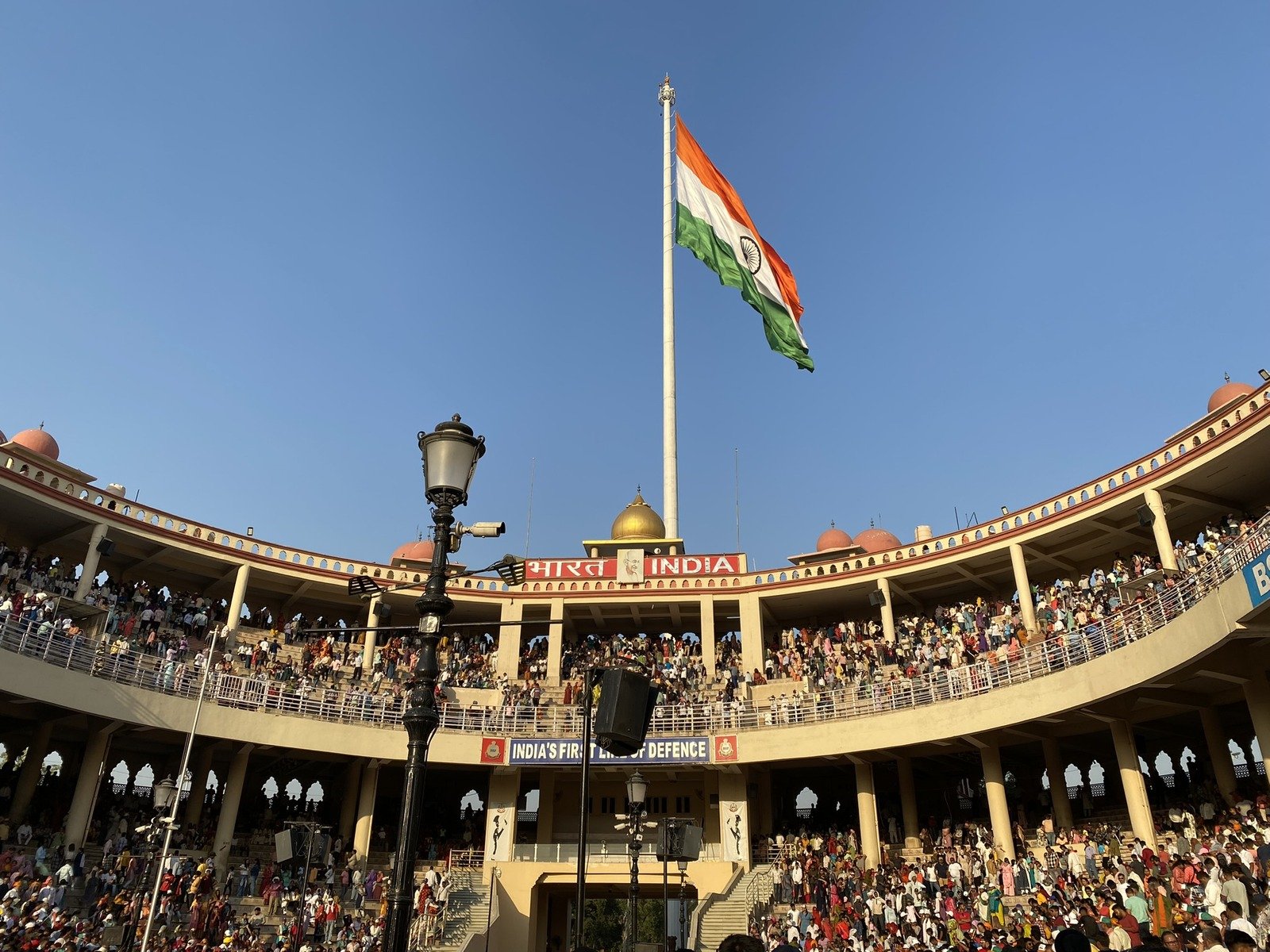
Afternoon — the Wagah Border ceremony. Leave the city by about 1:30 pm for the 40– to 45-minute drive to Attari; a return cab costs roughly ₹1,000–1,500, a rough estimate — agree the fare before you set off, and confirm whether the driver waits through the ceremony. The warm-up starts well before the drill itself, with patriotic songs and the crowd on its feet, and the parade that follows — the BSF and the Pakistan Rangers mirroring each other’s high kicks and stomps before both flags come down at sunset — is part military drill, part stadium atmosphere.
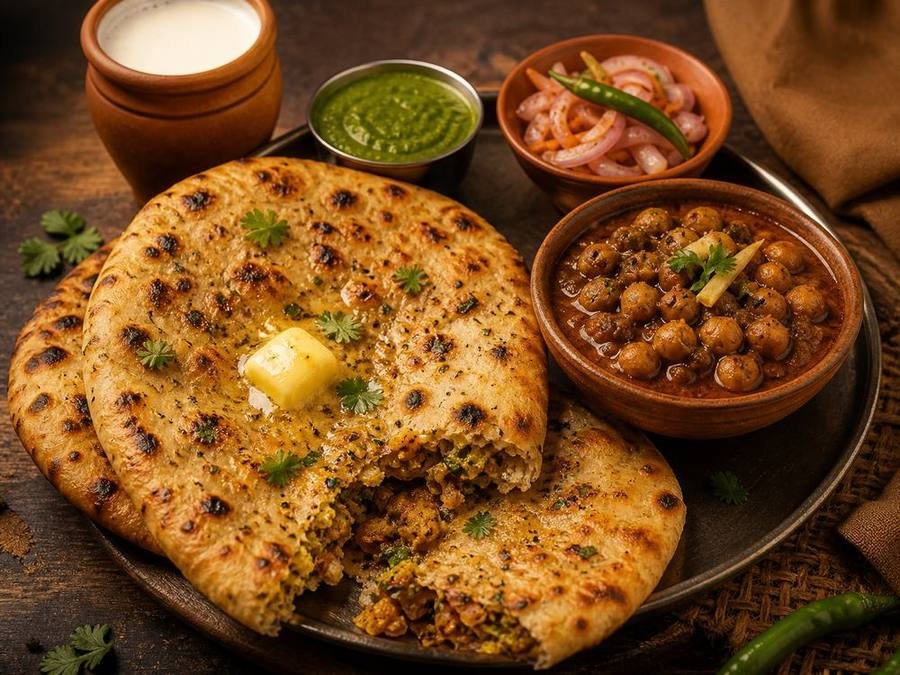
Evening — the food walk. Amritsar’s food is a pilgrimage in its own right, and the evening is when to do it. Start with Amritsari kulcha — the crisp, butter-laden stuffed bread with chole, the city’s signature plate — then a glass of sweet lassi, and finish with jalebi or pinni from the old city sweet shops. The lanes around the temple and Hall Bazaar are where the best-known stalls sit.
Day 3 in Amritsar: Kapurthala — the Paris of Punjab
On the third day, leave the city behind. Kapurthala, about 70–80 km south-east of Amritsar and roughly an hour and a half to two hours by road, is the former princely capital that earned the nicknames “City of Palaces” and the “Paris of Punjab” — and it looks like nowhere else in the state. Maharaja Jagatjit Singh filled the town with French, Indo-Saracenic and Moorish buildings in the late 19th and early 20th centuries. Start at the Jagatjit Palace, built in 1908 and modelled on Versailles and Fontainebleau: it now houses a Sainik School, so the interior is generally not open, but the exterior and gardens are the sight. A short walk away stands the Moorish Mosque, built between 1927 and 1930 and modelled on the Grand Mosque of Marrakesh; it is an active mosque, so visit outside prayer times and dress modestly. Finish with Shalimar Gardens and the Panch Mandir, and be back in Amritsar by late afternoon.

Or stay in the city. If a second long drive does not appeal, Day 3 works just as well inside Amritsar. Go back to the Golden Temple in the morning light, when the parikrama is quieter than at dawn; visit the Durgiana Temple, the Hindu temple built in the Golden Temple’s style, and Gobindgarh Fort, the 18th-century fort that is now a cultural hub with museums and evening shows. Then spend the afternoon shopping — phulkari, juttis, papad and warian to take home.
Where to Stay in Amritsar for 3 Days
Stay in one area and let your feet and the odd auto-rickshaw do the work. The streets around the Golden Temple and Heritage Street are the most convenient base for first-timers: the temple is a walk away at any hour, the old city food lanes are on your doorstep, and Jallianwala Bagh and the Partition Museum are minutes away. The trade-off is noise and crowds. The area near the railway station and the airport road is quieter and easier for early departures and the Wagah and Kapurthala drives, with the temple a short auto ride away. Stay near the temple if this is your first visit; stay near the station if you are driving out on Day 3 and want an early start.
What Does a 3-Day Amritsar Trip Cost?
All figures below are rough estimates, per person per day, excluding stay. The good news is that Amritsar’s three great sights — the temple, Jallianwala Bagh and the Wagah ceremony — are all free, so the budget goes mostly on food and transport.
| Style | Food & transport | Entries & extras | Daily total |
| Budget | Street food & autos, about ₹500–800 | Partition Museum ₹10; the rest free | About ₹1,000–2,000 |
| Comfortable | Cafés, cabs & the Wagah/Kapurthala drives, about ₹1,200–1,800 | Museums, fort shows & shopping, about ₹400–800 | About ₹2,500–4,000 |
Stay is the big variable: it can cost less than a day’s food or more than the whole trip, depending on season and area.
What Is the Best Time to Visit Amritsar?
October to March, when the days are dry and cool enough to walk the old city all day — the season this itinerary is written for, and the reason November and December are the city’s busiest months. Baisakhi in April and Guru Nanak Jayanti in November are the temple’s great festivals — see our Guru Nanak Jayanti in Amritsar guide and our Bandi Chhor Divas guide. April to June is brutally hot, with daytime temperatures routinely in the mid-40s°C; July to September is the monsoon. December and January bring fog, so keep the first morning loose and check conditions before planning long hours outdoors.
Getting to Amritsar and Getting Around
Amritsar has its own international airport, Sri Guru Ram Das Jee International Airport, roughly 11 km from the city centre; the railway station is a major junction, and the Shatabdi from New Delhi takes roughly six hours. Inside the city, the old city around the temple is best on foot — the lanes are narrow and the distances short. Cycle rickshaws cover the short hops, auto-rickshaws and app cabs cover the rest, and the Wagah and Kapurthala trips are cab days — agree the fare before you set off.
Watch & Feel the Place
Videos are by their respective creators.
Amritsar in 3 Days FAQs
How many days are enough for Amritsar?
Three days is enough for a first visit: the Golden Temple, its langar and Jallianwala Bagh on Day 1, the Partition Museum, the Wagah Border ceremony and a food walk on Day 2, and a Kapurthala day trip — or a slow city day — on Day 3.
What time does the Wagah Border ceremony start?
It changes with the sunset and the season, so there is no single time to print. Incredible India lists about 4:15 pm in winter and 5:15 pm in summer; the Border Security Force moved the slot several times in 2026, and from 16 October 2026 it ran 5:00 to 5:30 pm.
What is the best time to visit Amritsar?
October to March: dry, relatively cool and clear-skied, with November and December the busiest months. Baisakhi in April and Guru Nanak Jayanti in November are the great festival days. April to June is very hot, July to September is the monsoon.
Is Amritsar worth visiting?
Yes — it is one of the few Indian cities where a single trip covers faith, history and food at the highest level: the Golden Temple and the world’s largest free kitchen, the Jallianwala Bagh memorial and the Partition Museum, the Wagah Border ceremony, and a food culture built around Amritsari kulcha and lassi.
What are the best things to do in Amritsar in 3 days?
The Golden Temple at dawn and at night, lunch in the langar, Jallianwala Bagh, the Partition Museum, the Wagah Border ceremony, an evening food walk around Heritage Street and Hall Bazaar, and a day trip to Kapurthala — the Jagatjit Palace and the Moorish Mosque.
How much does an Amritsar trip cost?
Excluding stay, a budget traveller spends roughly ₹1,000–2,000 a day on food, autos and the odd entry, and a comfortable traveller roughly ₹2,500–4,000 a day including the Wagah and Kapurthala cabs. The temple, Jallianwala Bagh and the Wagah ceremony are all free.
Three days, one golden temple, one border and one free kitchen that feeds a town a day: Amritsar rewards the traveller who gives each of its layers its own day. Start at the sarovar at dawn, end at the border at dusk, and let the langar, the food and the 400-year-old pool set the pace. Plan the rest of the country with our state-by-state guide.
Plan your Amritsar trip
The Golden Temple at dawn, the langar at midday, the Wagah ceremony at sunset and Kapurthala on Day 3 — three days covers Amritsar’s best, and October to March is the season to do it.
Amritsar travel guide →