
International Travellers · First-Time Visitors, Worldwide
First Time in India: Everything a First-Timer Needs to Know (and Nothing to Fear)
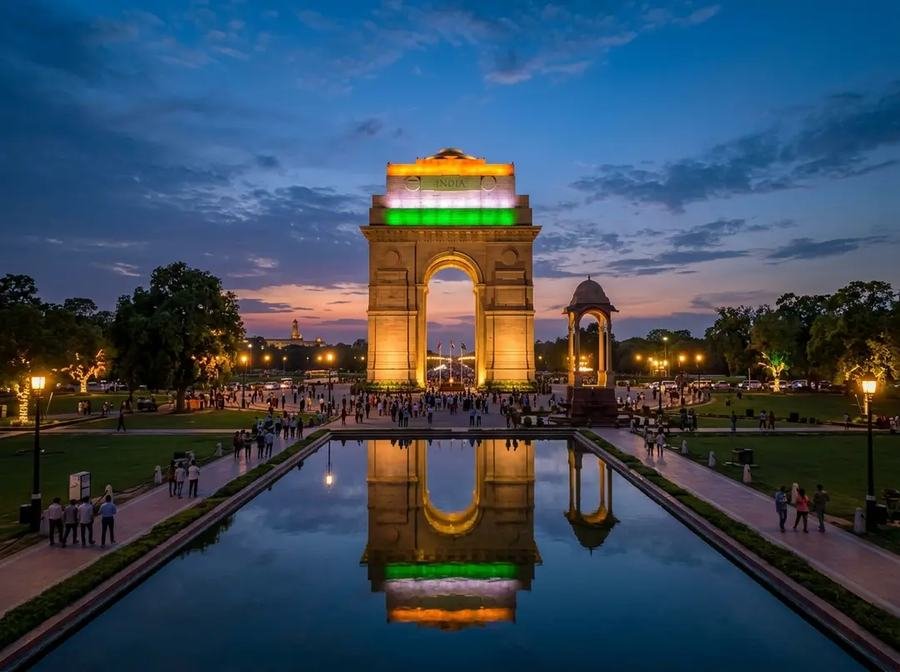
Almost everyone who travels to India for the first time feels the same two things in the first hour: overwhelmed, and then completely hooked. The colour, noise, warmth and sheer density of life are real — and so is how quickly it stops feeling foreign. By day three, first-timers are crossing streets like locals, bargaining with a grin and planning their second trip. This guide exists to shorten that adjustment to about a day. It covers the visa most visitors use, a universal pre-trip checklist, a minute-by-minute arrival walkthrough, the handful of scams worth knowing (and the calm way to sidestep each), how to eat and drink safely and joyfully, and a classic first route you can copy outright. Wherever in the world you're flying in from, start here.
India at a Glance for First-Time Visitors
| Capital | New Delhi. Most first trips start in Delhi, Mumbai, Bengaluru or Chennai — all major international gateways. |
| Currency | Indian Rupee (₹). Cards are widely accepted in cities; cash is essential for markets, small eateries and rural travel. |
| Languages | India has 22 official languages; Hindi is the most widely spoken and English is used across tourism, hotels and transport — you will manage fine. |
| Emergency number | 112 — police, fire and ambulance, anywhere in India. |
| Best months | October to March for most of the country. The Himalaya flips the logic: go May to September. Kerala's monsoon (June–September) is lush and dramatic. |
| Time zone | One time zone for the whole country — Indian Standard Time (IST), UTC+5:30, no daylight saving, ever. |
| Power & driving | 230V, plug types C, D and M. Traffic drives on the left; almost nobody recommends self-driving on a first trip — hire cars with drivers instead. |
1. The Visa, in Plain Language
Unless you're a citizen of a neighbouring country with a special arrangement, you will need a visa arranged before you travel — there is no general visa-on-arrival for tourists. The good news: citizens of most countries are eligible for India's e-Visa, applied for entirely online and delivered by email. The tourist versions run 30 days (double entry) and 1 or 5 years (multiple entry, with a cap on each stay). The process is: check your passport's nationality in the eligibility list on the official portal, apply online, receive an approval email (the "ETA"), print it, and have the visa stamped into your passport when you arrive.
Three rules protect every first-timer. One: the only official application site is indianvisaonline.gov.in — imitation sites with near-identical names charge large mark-ups, so check the address bar. Two: apply at least 4 days before departure; two to four weeks ahead removes all stress. Three: your passport needs six months' validity from arrival and two blank pages. Fees vary by nationality and visa type, so confirm the current amount on the portal itself. If your nationality isn't e-Visa eligible, you'll apply for a regular visa through the Indian embassy or its authorised application centre in your country — allow several extra weeks. Travellers of Indian origin should look at the OCI card, which removes the visa step permanently.
2. Before You Travel: The Universal Checklist
The single most important decision
Choose one region. India is not a country you "do" — it's closer to a continent, with 36 states and territories, and the classic first-timer error is stitching six of them into ten days and spending the trip in transit. One region done slowly (say, Delhi–Agra–Rajasthan, or Kerala, or the Himalaya foothills) will give you a better trip and, reliably, a second trip later to cover the rest. Book your first two nights' hotel before you fly — an address you can show at immigration and a driver or pickup arranged for arrival night removes 90% of arrival stress.
Health, insurance & money
Take travel insurance with strong medical cover; it's not optional in any sensible plan. No vaccinations are mandatory for most arrivals (a yellow fever certificate is required only if you're coming from a country where yellow fever is endemic), but a travel clinic will typically suggest routine vaccines plus hepatitis A and typhoid — go six weeks before departure. For money, plan on cards plus cash: Visa and Mastercard work across cities and hotels, ATMs are everywhere, and small notes are gold for tuk-tuks, tips and markets. Traveller's cheques belong to history — leave them there.
Phone, apps & packing
Decide your connectivity before you land: roaming from home, an international eSIM, or a local SIM bought at the arrival airport with your passport (the cheapest and most useful option for most). Install WhatsApp — in India it is how hotels, drivers, guides and half of daily life communicate — plus Uber/Ola for city rides, Google Maps (download offline areas), and IRCTC if you'll take trains. Pack light, breathable clothes with a modest set (covered shoulders and knees) for temples and mosques, layers for air-conditioning and northern winter mornings, a universal adapter for India's C/D/M sockets, any prescription medicines in hand luggage, and one small luxury of normality — your own tea bags, headphones or book — for the moments you need a pause. Learn two words before you land: namaste (hello, with palms together) and dhanyavaad (thank you). They will open more doors than any app.
3. After You Land: The Arrival Walkthrough
Immigration to exit, step by step
You land, you follow the signs. Immigration first: foreign-passport and e-Visa lanes — hand over passport and printed ETA, have your photo and fingerprints taken, and (for e-Visa travellers) receive the visa stamp; check the dates before you walk on. Baggage next, then customs: the green channel if you have nothing to declare. Then the arrivals hall, where your remaining jobs are three: a SIM card if you want one (counters inside the terminal), a little cash (airport forex or an ATM — change small amounts here, rates are better in the city), and your ride.
The ride — and the golden rule of arrivals
Every major Indian airport offers the same safe menu: prepaid taxi counters (fixed fare paid inside, slip handed to the driver), app cabs (Uber/Ola pickup zones), hotel-arranged pickups, and in Delhi a superb airport metro. The golden rule that neutralises nearly every arrival scam: the official counter is always inside the terminal, and no legitimate offer needs you to follow a stranger outside. If someone announces that your hotel is closed, full, burnt down or has moved, smile, say "no thank you," and continue to your prepaid taxi — your hotel will be exactly where you booked it. That one script, delivered kindly, handles 95% of arrival friction.
Your first 24 hours
Sleep. Drink water — bottled with an intact seal, or filtered water where your hotel provides it; avoid tap water and ice from doubtful sources in the first days. Eat one gentle, cooked meal (rice, dal, curd — the traveller's holy trinity). See exactly one sight, slowly. If the city feels like a lot, know that this is the universal day-one experience and it passes: the same streets that overwhelm at hour two feel navigable and friendly by day three, because India is, underneath the intensity, a deeply hospitable country that takes visible pleasure in visitors enjoying themselves.
4. Travelling Well: Scams, Food, Bargaining, Dress, Trains
The short list of scams, and the calm exits
Beyond the airport classics, the recurring ones are gentle: a "helpful" stranger steering you to a specific gem shop or travel desk (a commission is involved — browse if you like, buy only at your own pace); a taxi or tuk-tuk driver proposing a "very good" extra stop (agree the fare and route before you move, or use app cabs and the meter); and inflated first prices in markets (bargaining is expected — see below). None of these are dangerous; all of them dissolve with a smile, a "no thank you," and walking toward the official, metered or app-based option. Trust the pattern: anything you sought out is fine; anything that sought you out deserves one question.
Eating & drinking: the joyful strategy
Do not let caution steal India's greatest pleasure. The working rules are simple: eat where it's busy and cooked fresh in front of you — a crowded street stall with high turnover is safer than an empty restaurant; favour cooked food over raw salads and cut fruit in the early days; drink sealed bottled water or refills from your hotel's filter; and let your spice tolerance build over days, not hours. Within a week, most first-timers are eating like locals and reporting — correctly — that it was the best food of their lives. Our food atlas maps 213 dishes state by state for exactly this adventure.
Bargaining, dress codes & daily etiquette
In markets and with unmetered transport, bargaining is normal and good-humoured: offer around half to two-thirds of the first price, meet in the middle, and keep it light — walking away with a smile often produces the real price. Fixed-price shops, malls and app services don't bargain. For temples and mosques, cover shoulders and knees (a scarf or shawl solves most situations), remove shoes where asked, and ask before photographing people or ceremonies — a gesture and a smile usually earn a yes. Right hands are for eating, giving and receiving. These small courtesies are noticed, and repaid.
Trains: India's moving theatre
Take at least one proper train journey. Book AC classes (AC 2-Tier or AC 3-Tier are the comfortable sweet spot; Chair Car for day trips) as early as you can — popular routes sell out weeks ahead — on IRCTC, arriving at the station with time to spare and your platform confirmed on the boards or the NTES app. Order the pantry-car thali, watch the country unspool, and talk to your fellow passengers: an Indian train compartment is the friendliest sociology seminar on Earth.
5. Your First Route: The Golden Triangle + One Add-On
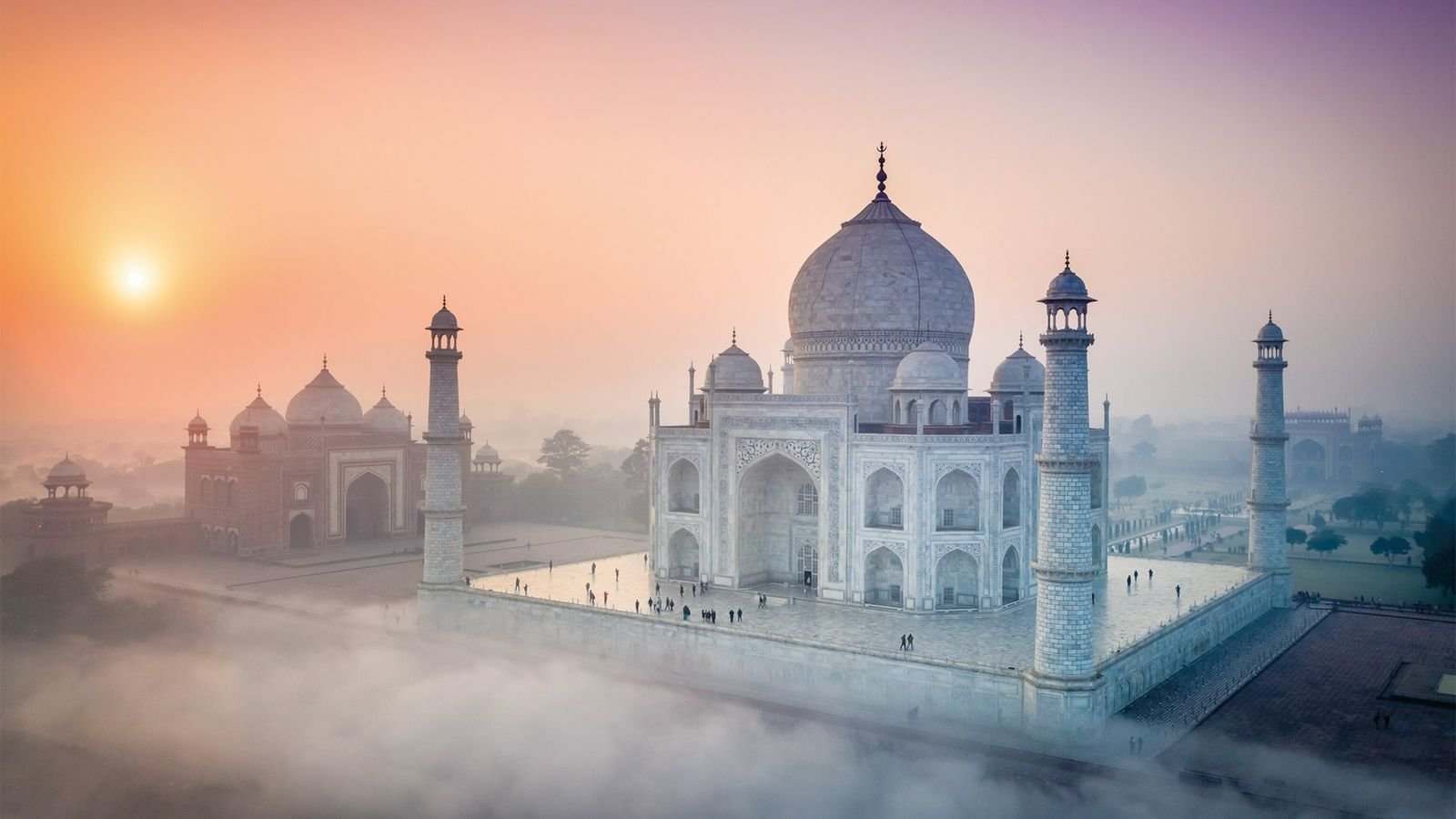
Copy this with confidence — it has been refined by millions of first trips. Days 1–2, Delhi: India Gate and Humayun's Tomb for the grand narrative, Old Delhi's lanes and street food for the living city — take it gently while you find your feet. Days 3–4, Agra: the Taj Mahal at sunrise, Agra Fort in the afternoon light — details in the full Agra guide. Days 5–6, Jaipur: Amer Fort at opening, Hawa Mahal, the bazaars — the Jaipur guide sequences it all.
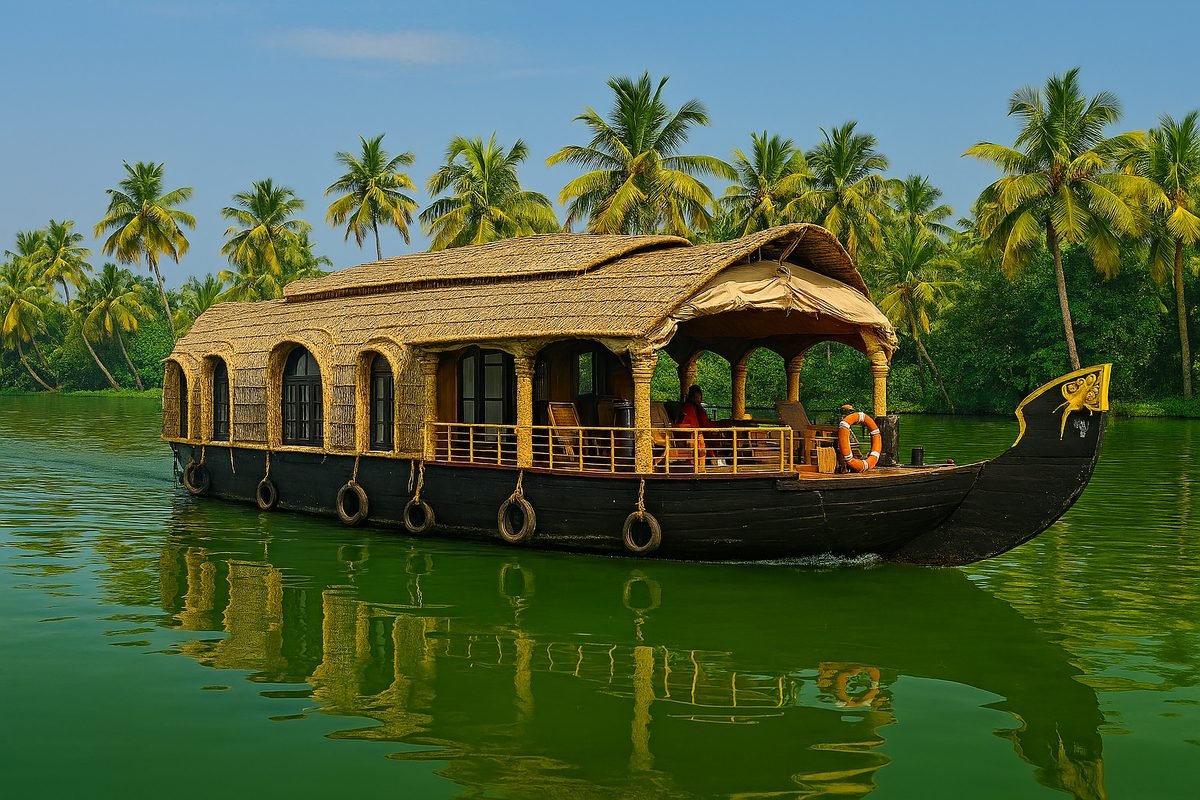
Then choose one add-on by temperament. For calm — Kerala (add 4–5 days): fly south for a houseboat night in Alappuzha and tea hills in Munnar; the backwaters guide explains houseboats without the sales pitch. For colour — deeper Rajasthan (add 3–4 days): Udaipur's lakes and palaces are the gentlest possible finale. For mountain air — the foothills (add 3–4 days, season permitting): Rishikesh on the Ganges for yoga mornings and river evenings — our Rishikesh guide covers it. Whatever you choose, end the trip the way you began it: slowly.
Coming from a specific region? We also publish arrival guides for the USA, Australia & New Zealand and the Middle East — and the ranked shortlist in Best Places to Visit in India plus our blog will keep you planning happily for weeks.
Frequently Asked Questions
Is India safe for first-time visitors?
Millions of foreign visitors travel India independently every year without incident, and most describe the people as the highlight. Use ordinary city awareness: arrange airport pickups through official counters or apps, keep valuables sensible, avoid isolated areas late at night, and buy transport and tours from identifiable providers. The emergency number anywhere in India is 112.
Will India be overwhelming?
On day one, a little — everyone feels it, including Indians arriving in a new Indian city. The intensity fades remarkably fast: by day two or three, the traffic logic, the bargaining rhythm and the warmth underneath it all start to make sense. Slow first days, one region only, and pre-booked first nights are the whole secret.
Do I need to join a tour, or can I travel India independently?
Independent travel is entirely doable: English is widely used in tourism, trains and domestic flights are bookable online, and app-based taxis work in every city. Many first-timers mix the two — independent overall, with a local guide hired for a day in Delhi, Agra or Jaipur, which is excellent value and deepens everything you see.
How much should I budget per day in India?
Rough guidance only — it varies hugely by city and season. Budget travellers manage on about ₹1,500–2,500 a day with trains, guesthouses and local food; a comfortable mid-range trip with good hotels and a domestic flight or two runs roughly ₹5,000–9,000 a day; premium travel starts around ₹12,000–15,000 a day. India rewards every budget level generously.
Do people speak English in India?
In the places a first-timer goes, yes — English is used by airlines, railways, hotels, restaurants and guides across the country, and most signage is bilingual. Outside the tourist circuit it thins out, but translation apps, gestures and India's famous willingness to help bridge any gap.
What is the one thing first-timers always get wrong?
Trying to see too much. India is continent-sized; the travellers who love it most pick one region, travel slowly, and accept the invitation to return. A close second: arriving at the airport without a plan for the first night — book the first two nights and your arrival transfer in advance, and day one takes care of itself.
Every Place. Every Flavour.
This guide is just the beginning. Beauty of Bharat covers all 36 states and union territories — 550+ destinations, offbeat places and regional dishes, each with its own full guide.
Explore all 36 states on beautyofbharat.com