
India Travel Guide · Mountain Railways
Toy Trains of India: Darjeeling, Nilgiri, Kalka–Shimla & the Mountain Railways
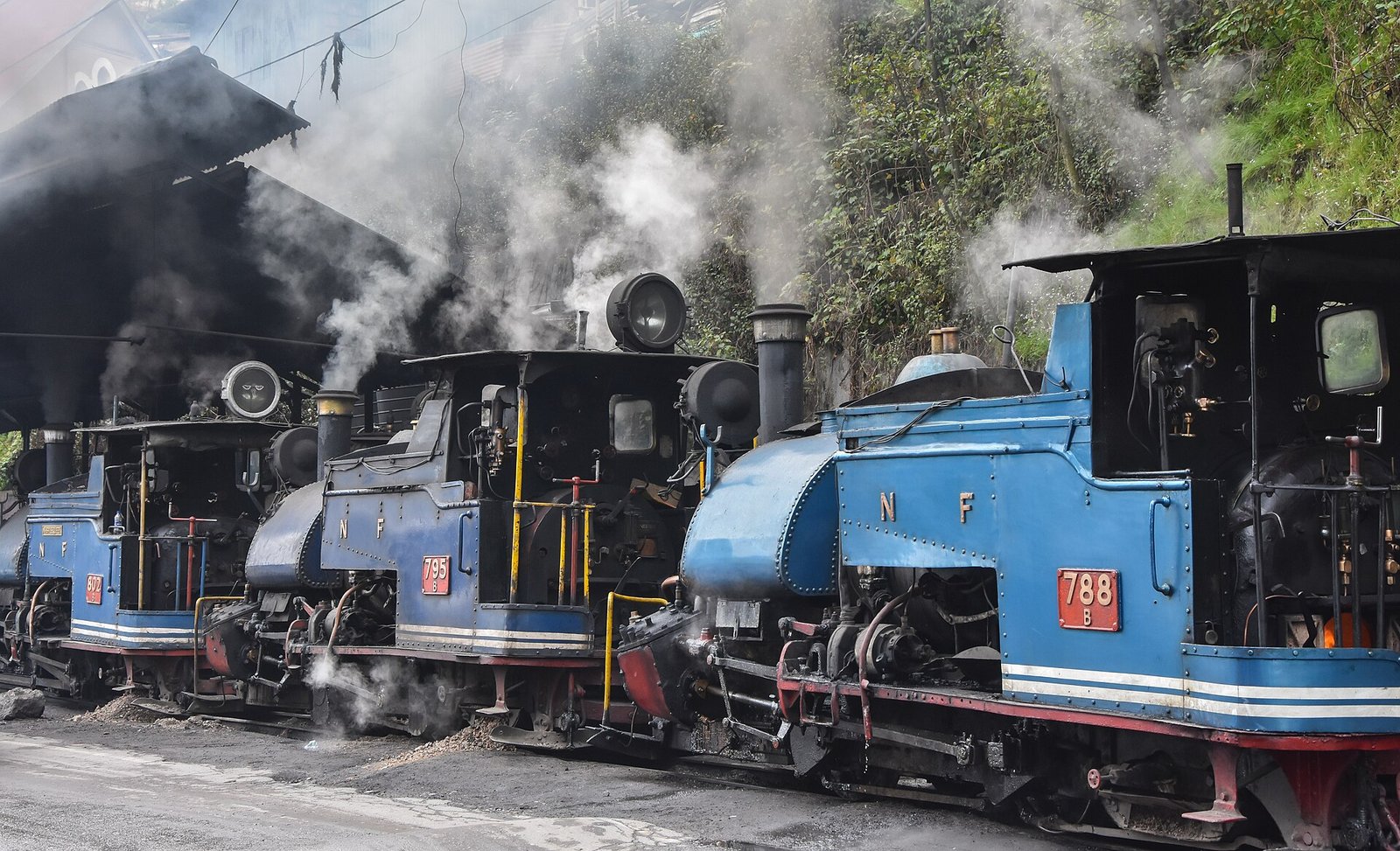
Here is a train so small that in Darjeeling it shares the road with cars and tea stalls, so slow that you could step off and walk beside it on the steepest stretches — and yet it climbs nearly 2,000 metres into the Himalaya, loops back over itself at Batasia, and has been running since 1881. That is the strange magic of India's toy trains: railways the British built because no full-size line could ever climb to their hill stations, and which still run today as working trains, not museum pieces.
Three of them — Darjeeling, Nilgiri and Kalka–Shimla — are together a UNESCO World Heritage Site, the Mountain Railways of India. Two more, Matheran and Kangra Valley, are on UNESCO's tentative list. This guide covers all five: history, routes and key stops, what each ride is like, IRCTC booking, fares, and the tips that decide whether you get a window seat or a waitlist.
The five toy trains of India at a glance
| Railway | Route | Length & time | UNESCO status |
|---|---|---|---|
| Darjeeling Himalayan Railway | New Jalpaiguri – Darjeeling, West Bengal | 88 km · 7–8 hours (full line); joy ride ~2 hours | World Heritage, 1999 |
| Nilgiri Mountain Railway | Mettupalayam – Ooty, Tamil Nadu | 46 km · ~4 hours 45 minutes | World Heritage, 2005 |
| Kalka–Shimla Railway | Kalka – Shimla, Himachal Pradesh | 96 km · 5–6 hours | World Heritage, 2008 |
| Matheran Hill Railway | Neral – Matheran, Maharashtra | 21 km · ~2 hours 40 minutes | Tentative list |
| Kangra Valley Railway | Pathankot – Joginder Nagar, Himachal Pradesh | 164 km · ~10 hours | Tentative list |
Why India has toy trains at all
In the 19th century, the British administration escaped the summer heat to hill stations — Darjeeling, Ooty, Shimla, Matheran — but the only way up was by horse, palanquin or bullock cart. A standard broad-gauge railway could not climb gradients that steep, so engineers built narrow-gauge lines instead: tracks just 2 feet (610 mm) wide on the Darjeeling line, 2 feet 6 inches (762 mm) on Kalka–Shimla, and metre gauge (1,000 mm) on the Nilgiri line. Narrow track means tighter curves, smaller engines and lighter coaches — hence the nickname "toy train".
The engineering is the point. The Darjeeling line climbs from the plains at Siliguri to Darjeeling at about 2,040 metres using loops and zig-zags — places where the track reverses direction to gain height, including the famous Batasia Loop, a full spiral. The Nilgiri line is the only rack railway in India: on its steepest stretch, between Kallar and Coonoor, a toothed central rail grips the locomotive so it can climb gradients as steep as 1 in 12. The Kalka–Shimla line threads 102 tunnels and 864 bridges through the Shivalik foothills in just 96 km. These are not replicas. They are the original lines, still operated by Indian Railways, carrying schoolchildren and commuters as well as tourists.
1. Darjeeling Himalayan Railway — the original toy train
Route: New Jalpaiguri (NJP) to Darjeeling (DJ), West Bengal · Opened: 1881 · Length: 88 km · UNESCO: World Heritage since 1999, the first railway in Asia on the list.
The Darjeeling Himalayan Railway, or DHR, is the one most people picture when they hear "toy train": a small blue steam locomotive, whistle blowing, puffing along the roadside past tea gardens and bazaars. It was the first hill passenger railway in India. The full run from New Jalpaiguri, near Siliguri, climbs to Darjeeling in 7–8 hours — a slow, beautiful day — but most visitors ride the short joy ride instead.
The Darjeeling–Ghum joy ride
The joy ride is the ride to book. It runs from Darjeeling station up to Ghum and back, about 14 km round trip in roughly two hours, with a stop at the Batasia Loop — a spiral of track with a war memorial and a sweeping view of Kanchenjunga on a clear day — and time at the railway museum at Ghum. Ghum station, at 2,258 metres, is the highest railway station in India. Joy rides run several times a day in steam and diesel versions: steam is the vintage B-class coal locomotive, noisy, smoky and wonderful; diesel is quieter and cheaper. Take a morning departure for the clearest views.
Darjeeling toy train fare
Fares change, and the railway adjusts joy-ride prices by season, so treat these as the latest reported figures and check IRCTC for your date. In June 2026 the railway quoted about ₹1,310 for a steam joy ride and about ₹800 for a diesel one; other 2026 guides list steam at ₹1,500–₹1,600 and diesel at ₹800–₹1,000, with festive-season steam specials higher still. (For comparison, Lonely Planet's May 2025 figures were ₹1,400 for steam and ₹1,500 for a Vistadome coach — the range has moved since, which is why the live IRCTC fare is the one that counts.) The full New Jalpaiguri–Darjeeling through train costs roughly ₹1,300–₹1,600 one way.
How to book the Darjeeling toy train
Book on IRCTC (irctc.co.in or the IRCTC Rail Connect app), the same system as any Indian train. The station codes matter: Darjeeling is DJ, Ghum is GHUM, Kurseong is KGN and New Jalpaiguri is NJP. For the joy ride, enter Darjeeling (DJ) as both the starting and finishing station — the joy-ride services then appear; some listings show the destination as "Darjeeling Joy Ride" (DJRZ). Steam and diesel joy rides are listed as separate trains, so check the name and fare before you pay. Bookings generally open 60 days ahead. For the Puja weeks in October, the May–June school holidays and Christmas, book the moment the window opens — steam joy rides can sell out within days. Outside peak season, a week or two ahead is usually enough. You can also buy tickets at the reservation counter at Darjeeling station, which opens early in the morning.
2. Nilgiri Mountain Railway — the Ooty toy train
Route: Mettupalayam (MTP) to Udhagamandalam / Ooty (UAM), Tamil Nadu, via Coonoor · Opened: 1908 · Length: 46 km · UNESCO: World Heritage since 2005.
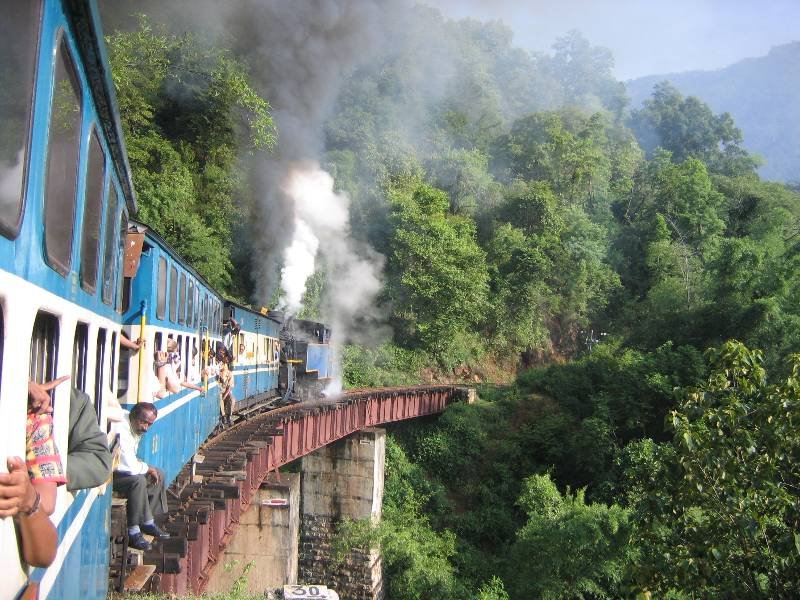
The Nilgiri Mountain Railway — the Ooty toy train — is the only rack railway in India, and the steepest scheduled railway in the country. From Mettupalayam, near Coimbatore in the plains, the blue-and-cream train climbs through tea estates and forest to Coonoor, then on to Ooty at 2,203 metres. The full journey is about 4 hours 45 minutes for 46 km: on the rack section the train crawls at walking pace, and that is exactly the charm.
Which Ooty toy train ride to take
There are two sensible ways to ride it. The full run from Mettupalayam to Ooty is the complete experience: train 56136 leaves Mettupalayam at about 7:10 in the morning and reaches Ooty at about 11:55. The shorter and most popular option is the Ooty–Coonoor stretch, about 14 km in 50–70 minutes — the prettiest section, through tea gardens, past the Ketti Valley viewpoint, tunnels and bridges — and easy to fit into a day in Ooty. Several trains a day run between Ooty and Coonoor, the first leaving Ooty at about 9:26 in the morning.
Ooty toy train ticket price
There are two classes: First Class (FC) and Second Class (2S). First Class has bigger windows and very few seats — a single carriage of 8–16 seats per train — and sells out weeks ahead in peak season. Reported fares vary by train and date: for Ooty–Coonoor, recent reports put Second Class at about ₹150 and First Class at about ₹350; for the full Mettupalayam–Ooty run, from around ₹295 (Second Class) to around ₹600 and higher (First Class), with some listings showing up to about ₹965 and ₹1,470. The exact fare on your date is the one IRCTC shows when you book.
How to book the Ooty toy train
Book on IRCTC. The station names trip people up: search for Udagamandalam (UAM) — typing "Ooty" returns nothing. Mettupalayam is MTP and Coonoor is ONR. Bookings open about 60 days ahead, and First Class and window seats can sell out within hours in peak season (April–June, Christmas–New Year and long weekends), so book the moment your date opens. Off-season weekday travel can sometimes be booked a week or two out. You can also buy tickets at the reservation counters at Mettupalayam, Coonoor and Ooty stations, subject to availability. Carry the e-ticket and the photo ID used for the booking — staff check both.
3. Kalka–Shimla Railway — 102 tunnels to the summer capital
Route: Kalka (KLK) to Shimla (SML), Himachal Pradesh · Opened: 1903 · Length: 96 km · UNESCO: World Heritage since 2008.
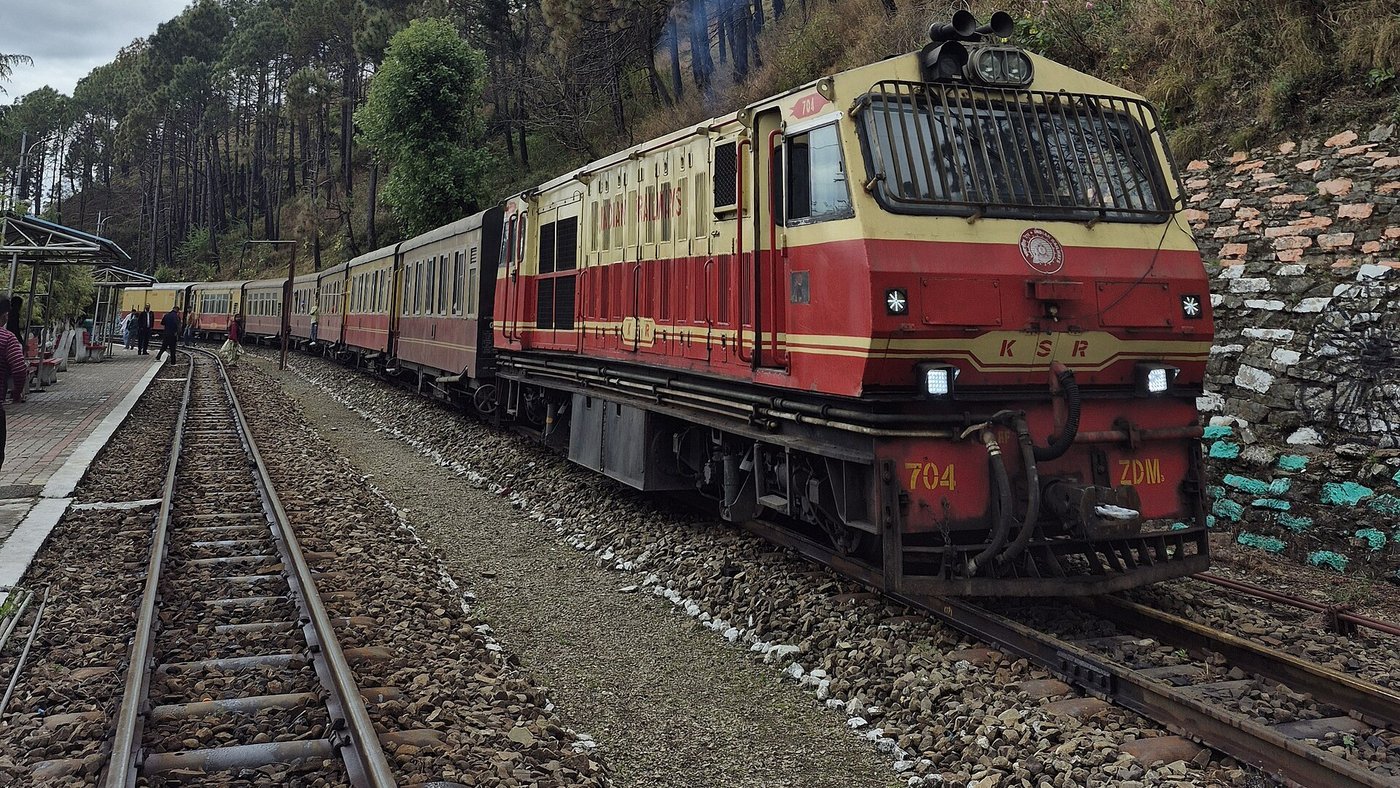
The Kalka–Shimla Railway is the longest of the three UNESCO lines and the most popular with Indian holidaymakers. Built to connect the summer capital of British India with the main railway network at Kalka, it climbs from 656 metres to 2,076 metres through 102 tunnels and 864 bridges — the most tunnel-dense narrow-gauge line in the world on a scheduled passenger service. The journey takes 5–6 hours, with 5–6 departures a day each way, so it fits easily into a Shimla trip: arrive in Kalka by train from Delhi or Chandigarh in the morning and ride up in the afternoon. Key stops include Barog, with its long tunnel and station restaurant, Solan, and Summer Hill, just below Shimla.
Kalka–Shimla toy train fare and classes
This line has the widest choice of trains and classes of any toy train. Reported one-way fares (check IRCTC for your date): Second Class from about ₹65; the Rail Motor Car about ₹320; the Himalayan Queen about ₹470; the Shivalik Deluxe Express about ₹510 (First Class, with meals); and Vistadome coaches with glass roofs from about ₹630 up to about ₹1,000 for the air-conditioned Vistadome. An unreserved passenger service also runs, stopping at every station, from about ₹50 for the full journey. The Shivalik Deluxe is the fastest and most comfortable service and sells out first.
How to book the Kalka–Shimla toy train
Book on IRCTC: Kalka is KLK, Shimla is SML. Book at least a month ahead for the Shivalik Deluxe and Vistadome coaches in the April–June peak and around Christmas; Second Class seats on the ordinary expresses are easier. One caution: services were suspended in September 2025 after landslides and later restored, so in July and August, check the running status the day before you travel.
4. Matheran Hill Railway — the car-free hill station
Route: Neral (NRL) to Matheran (MAE), Maharashtra · Opened: 1907 · Length: 21 km · UNESCO: tentative list.
Matheran is the smallest of the toy trains and the easiest to reach from Mumbai — Neral is on the Mumbai–Pune line, about 90 minutes from Mumbai by local train. The line climbs 21 km through the Western Ghats in about 2 hours 40 minutes to a hill station where no cars are allowed at all: you arrive by toy train, or you walk.
Matheran toy train timings and fare
Two pairs of trains a day run the full Neral–Matheran line in season: from Neral at about 8:50 and 10:25 in the morning, returning from Matheran at about 2:45 and 4:00 in the afternoon (trains 52103/52105 up, 52104/52106 down). A shorter shuttle also runs between Aman Lodge, near the Dasturi car park, and Matheran — about 3 km in 15 minutes, every 45–60 minutes through the day. Reported fares for the full run: Second Class about ₹75, First Class about ₹300, Vistadome about ₹300–₹320, and a luxury saloon coach for about ₹1,500.
How to book the Matheran toy train
This is the one toy train where online booking is unreliable. The full service is listed on IRCTC (Neral NRL to Matheran MAE), but reports conflict on whether seats can actually be booked online, and several recent guides say tickets are sold only at the station counters at Neral and Aman Lodge — the Neral counter typically opens about 45 minutes before departure. Arrive early, carry cash, and do not count on a same-day online ticket.
5. Kangra Valley Railway — India's longest toy train
Route: Pathankot (PTK) to Joginder Nagar (JDNX), Himachal Pradesh · Opened: 1929 · Length: 164 km · UNESCO: tentative list.
The Kangra Valley Railway is the least known of the five and the longest toy-train route in India: 164 km from Pathankot in Punjab to Joginder Nagar in the hills, taking about 10 hours, through the Kangra valley's tea gardens and villages with the snow-capped Dhauladhar range as a backdrop. It climbs from 383 metres at Pathankot to 1,290 metres at Ahju before descending to Joginder Nagar. It is a working lifeline rather than a tourist train — most passengers are locals, and the fare for the whole journey is about ₹40–₹70, against roughly ₹400 by bus.
Kangra toy train status and timings
Check the status before you go: this line has a fragile recent history. Monsoon damage to the Chakki railway bridge in August 2022 suspended services for nearly four years; the line reopened in June 2026 after a ₹70-crore reconstruction, was suspended again for about two months in the 2026 monsoon, and 4 of its 7 train pairs were restored on 11 October 2026. Morning departures leave Pathankot at about 5:00 and 7:00, reaching Baijnath Paprola in 6–7 hours, with a connecting service on to Joginder Nagar; delays of 30–60 minutes are normal. The best section for a visitor is Kangra to Palampur — about 2 hours through the tea gardens, with the Dhauladhars in view.
How to book the Kangra toy train
There is no online booking for this line: tickets are unreserved, sold only at station counters or through the UTS app, and there is no seat reservation — you sit where you find a seat. Check the live running status on the NTES app or by calling railway enquiry on 139 on the morning you travel, because this line can stop at short notice after rain.
How to book toy train tickets on IRCTC
Four of the five lines are booked through IRCTC, the same system as every other Indian train. The process is the same each time; what changes is the station code and how far ahead you need to book.
- Create an IRCTC account at irctc.co.in or in the IRCTC Rail Connect app, with a mobile number and email. International visitors can register with a foreign mobile number and email, though verification sometimes takes longer.
- Search by station code, not by place name. "Ooty" returns nothing — you need Udagamandalam (UAM). The codes are in the table below.
- Pick the train, the class and the date, enter each passenger's name, age and ID details, and pay online. Your e-ticket arrives by email and in the app.
- Carry the e-ticket and the same photo ID you booked with. Staff check both before boarding.
| Railway | From | To | Book ahead |
|---|---|---|---|
| Darjeeling joy ride | DJ (Darjeeling) | DJ / DJRZ (Darjeeling Joy Ride) | As soon as the window opens in peak season |
| Darjeeling full line | NJP (New Jalpaiguri) | DJ (Darjeeling) | 60 days |
| Nilgiri | MTP (Mettupalayam) | UAM (Udagamandalam) | 60 days; First Class sells out fast |
| Nilgiri short ride | UAM (Udagamandalam) | ONR (Coonoor) | 60 days |
| Kalka–Shimla | KLK (Kalka) | SML (Shimla) | A month or more for Shivalik/Vistadome |
| Matheran | NRL (Neral) | MAE (Matheran) | Counter tickets; arrive early |
| Kangra Valley | PTK (Pathankot) | JDNX (Joginder Nagar) | No booking — counter/UTS only |
Bookings for most Indian trains open 60 days before the journey. A few toy-train services open on shorter windows, so if your date is not yet showing, check again closer to travel rather than assuming the train is full.
The Foreign Tourist quota — what it does and does not do
Indian Railways holds a Foreign Tourist (FT) quota on many long-distance trains: foreign passport holders (including NRIs) can book up to 365 days ahead — against 60 days for everyone else — at 1.5 times the base fare, plus a service charge of ₹200 + GST per ticket and a one-time international registration fee of ₹100 + GST. You register on IRCTC with a non-Indian mobile number, choose "Foreign Tourist Ticket Booking" under Services, and enter a passport number for every passenger. The quota is genuinely useful for the mainline trains that get you to the toy trains — the overnight train to Kalka, the train to New Jalpaiguri, the train to Mettupalayam. The toy trains themselves are small reserved services in First Class and Second Sitting, and the FT quota is not reliably available on them; book those in the general quota as soon as it opens. If a train shows a waitlist, check again a few days later — cancellations free seats — or try a different departure time, or diesel instead of steam on the Darjeeling joy ride.
Classes, fares and what you get
Toy trains keep it simple: usually two or three classes, and the difference is the seat, the window and the view — not speed, because every coach travels at the same unhurried pace.
| Class | What it is | Typical fare (one way) |
|---|---|---|
| Second Class (2S) | Basic reserved seat; the cheapest way up the mountain | ₹65–₹300 depending on the line |
| First Class (FC) | Roomier seats, bigger windows, very few seats per train | ₹300–₹600 and up; sells out first |
| Vistadome (EV) | Glass roof and wide windows for the view; on Darjeeling, Kalka–Shimla and Matheran | ₹300–₹1,600 depending on line and service |
| Shivalik Deluxe (Kalka–Shimla) | First Class with meals included; fastest service on the line | About ₹510 |
| Unreserved (Kangra) | General class, no seat reservation, counter tickets only | About ₹40–₹70 end to end |
Children under 5 travel free on Indian Railways, and child fares apply from 5 to 12. All fares above are indicative, reported in 2026 — the fare IRCTC shows when you book is the one that counts.
Best time to ride the toy trains
| Railway | Best months | Avoid / watch out for |
|---|---|---|
| Darjeeling | October–December, March–May | Monsoon (June–September): landslides suspend the line |
| Nilgiri | October–June; April–June is peak | Monsoon (July–September): landslides can disrupt services |
| Kalka–Shimla | March–June, October–December; snow in January–February | Monsoon (July–September): landslides; fog in deep winter |
| Matheran | October–June | Monsoon (June–October): full line suspended |
| Kangra Valley | October–June | Monsoon: suspensions at short notice after rain |
October to December is the sweet spot for most of them: clear skies after the monsoon, cool air, and the mountains visible. March to May is the other good window, and the busiest — school holidays fill every seat. Winter has its own reward on the Kalka–Shimla line, where snow in the pine forests is the reason many people ride, but fog can hide the views entirely on the Darjeeling and Nilgiri lines in December and January. Take a morning train: the cloud usually builds by afternoon in the hills.
What the ride is like — and tips that actually help
Set your expectations by the speed, not the scenery. A toy train averages 15–25 km/h, stops at tiny stations you have never heard of, and is regularly overtaken by the road. That is the experience: the point is the window, not the destination. The coaches are small and luggage space is minimal, so travel with a day bag and leave big suitcases at your hotel. There is no pantry car on most services — carry water and snacks, though vendors board at the bigger stations and the Shivalik Deluxe includes meals.
- Pick your side. On the Darjeeling line, sit on the valley side climbing out of town, and keep your camera ready for the Batasia Loop. On the Nilgiri line, the right-hand side going up from Mettupalayam faces the valley. On Kalka–Shimla, either side is good — the line curves so much that the view keeps switching sides.
- Book the morning train. Clearest views, least cloud, and if the service is delayed you still have the day in hand.
- Expect delays. Landslips, track work and locomotive shortages delay toy trains often, and a 30–60 minute delay is normal on Kangra. Never book a flight or a connecting train tight against a toy-train arrival.
- Dress for the altitude. It can be 10–15°C cooler at the top than at the bottom — a light jacket in summer, a warm layer in winter.
- Keep your ticket and ID together. Staff check both, and on the Darjeeling joy ride your ticket is only valid for that one departure — miss it and you buy again.
- Do not lean out. The trains pass inches from rock faces, tunnels and platforms, and on the Darjeeling line the track runs along a public road. Keep arms and cameras inside.
- Carry cash for the counter-only lines. Matheran and Kangra sell tickets at station counters, and card machines are not guaranteed. Children love these trains — the size, the whistle, the slow speed — but hold small children close at open doors and windows.
Which toy train should you ride?
First time, and only one ride: the Darjeeling–Ghum steam joy ride — two hours, a steam engine, the Batasia Loop and the highest station in India. Best scenery per hour: the Ooty–Coonoor stretch of the Nilgiri line, in the morning light over the tea gardens. Best full-day journey: Kalka–Shimla, with the most trains and classes and a town worth arriving in. Easiest from a big city: Matheran from Mumbai. Most offbeat: Kangra Valley — ten slow hours through tea country with almost no other tourists.
Frequently asked questions about toy trains in India
How do I book a toy train in India?
On IRCTC — irctc.co.in or the IRCTC Rail Connect app. Create an account, search by station code (Darjeeling DJ, Udagamandalam/Ooty UAM, Kalka KLK, Shimla SML), pick the train and class, and pay online. Bookings open about 60 days ahead. Matheran and Kangra are the exceptions: their tickets are sold at station counters, not reliably online.
How much does the Darjeeling toy train cost?
The Darjeeling–Ghum joy ride costs about ₹1,310–₹1,600 for steam and about ₹800–₹1,000 for diesel, based on fares reported in 2026 — the price varies by season, so the fare IRCTC shows for your date is the one that counts. The full New Jalpaiguri–Darjeeling train costs roughly ₹1,300–₹1,600 one way.
How much is the Ooty toy train ticket?
For the popular Ooty–Coonoor stretch, recent reports put Second Class at about ₹150 and First Class at about ₹350. For the full Mettupalayam–Ooty run, fares are reported from around ₹295 (Second Class) to around ₹600 and higher (First Class). Check the exact fare on IRCTC when you book.
What is the Kalka–Shimla toy train fare?
One-way fares range from about ₹65 in Second Class to about ₹1,000 for the air-conditioned Vistadome coach. In between: the Rail Motor Car about ₹320, the Himalayan Queen about ₹470 and the Shivalik Deluxe Express about ₹510. An unreserved passenger service runs the full journey from about ₹50.
Which is the best toy train in India?
The Darjeeling–Ghum steam joy ride is the most iconic single ride (two hours, steam engine, Batasia Loop). The Ooty–Coonoor stretch has the best scenery per hour. Kalka–Shimla is the best full-day journey, with the most trains and classes. Matheran is the easiest from Mumbai, and Kangra Valley is the most offbeat — 164 km through tea country with almost no other tourists.
What is the best time to ride the toy trains in India?
October to December is the sweet spot for most lines — clear skies after the monsoon and cool air. March to May is the other good window, and the busiest. Avoid the monsoon (roughly June to September): landslides regularly suspend services, and the Matheran line closes entirely from June to October.
How long does the Darjeeling toy train take?
The joy ride from Darjeeling to Ghum and back takes about two hours. The full line from New Jalpaiguri to Darjeeling takes 7–8 hours for 88 km, and it is often suspended in the monsoon, so most visitors take the joy ride instead.
Can foreigners book toy train tickets on IRCTC?
Yes. International visitors can register on IRCTC with a foreign mobile number and email, and pay with an international card, though verification sometimes takes longer. The Foreign Tourist quota — bookable up to 365 days ahead at 1.5 times the base fare — is for long-distance trains; the toy trains themselves are booked in the general quota.
Does the Matheran toy train run in the monsoon?
No. The full Neral–Matheran line is suspended every monsoon, roughly June to October, because of landslide risk. It resumed on 6 November 2025 after the 2025 monsoon closure. The short Aman Lodge–Matheran shuttle usually keeps running through the monsoon.
Is the Kangra toy train running now?
Yes, partly. The line reopened in June 2026 after a nearly four-year closure caused by monsoon damage to the Chakki bridge, was suspended again for about two months in the 2026 monsoon, and 4 of its 7 train pairs were restored on 11 October 2026. Check the live status on the NTES app or by calling railway enquiry on 139 on the morning you travel.
Which toy trains in India are UNESCO World Heritage Sites?
Three, listed together as the Mountain Railways of India: the Darjeeling Himalayan Railway (inscribed 1999), the Nilgiri Mountain Railway (2005) and the Kalka–Shimla Railway (2008). The Matheran Hill Railway and the Kangra Valley Railway are on UNESCO's tentative list.
What is the longest toy train route in India?
The Kangra Valley Railway, from Pathankot in Punjab to Joginder Nagar in Himachal Pradesh — 164 km in about 10 hours, through the Kangra valley's tea gardens with the Dhauladhar range as a backdrop. The full journey costs about ₹40–₹70, and tickets are unreserved, sold at station counters only.
Sources: UNESCO and Wikipedia's Mountain Railways of India summary (inscription years, lengths, gauges); IRCTC booking guidance and station codes; 2026 fare and timetable reports for all five lines, cross-checked against NDTV and Financial Express reporting on the Kalka–Shimla and Kangra restorations. Fares and timings change — the IRCTC fare and the NTES running status on your travel date are the final word.
Plan the rest of your India trip
Toy trains are slow on purpose — pair one with a proper plan. Our train booking guide covers IRCTC, classes and the Foreign Tourist quota in full, and the best-time guide tells you when each region is at its best.