
Food Atlas · Rajasthan
Bajra roti: Pearl-millet warmth for desert winters

By Beauty of Bharat — India travel guide, every place, every flavour.
Guides covering all 36 States and UTs, researched from official sources and checked at publish time. Corrections welcome — see About Beauty of Bharat.
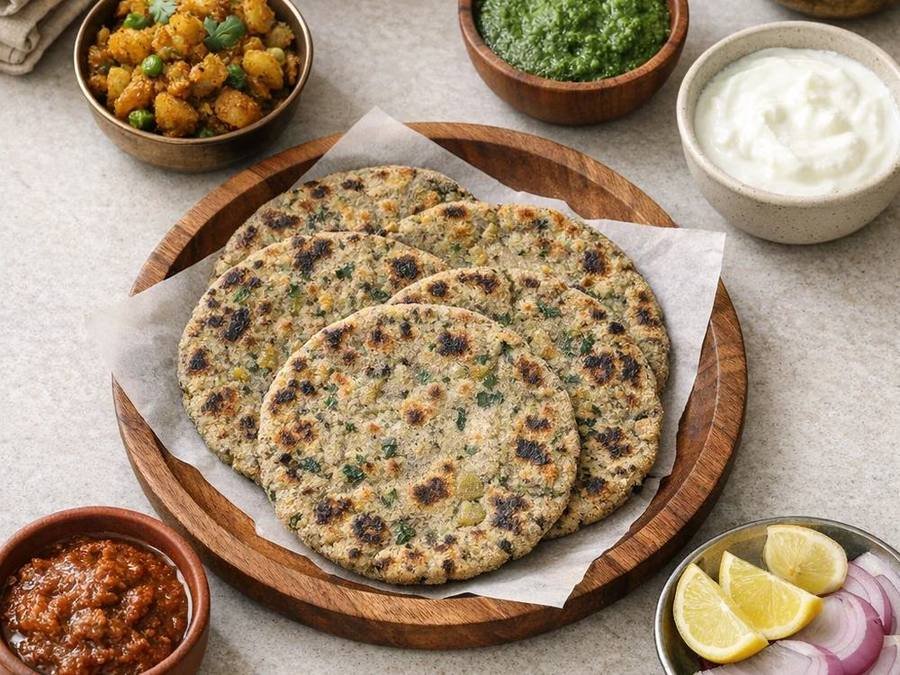
In Rajasthan, Bajra roti is not just a menu entry; it is a clue to how the state cooks, celebrates and feeds people. A thick, hand-patted flatbread made from bajra (pearl millet) flour, a staple grain of arid Rajasthan.
A detail worth knowing before the first bite: bajra flour has no gluten, so the dough must be made fresh and handled gently. Keep that in mind as you read on, because Bajra roti rewards eaters who notice how Rajasthan seasons, serves and shares its food.
Bajra roti at a Glance
| State / UT | Rajasthan |
| Capital / base | Jaipur |
| What it is | A thick, hand-patted flatbread made from bajra (pearl millet) flour, a staple grain of arid Rajasthan |
| Main ingredients | bajra (pearl millet) flour, warm water, salt, ghee or white butter to serve and sometimes a little wheat flour as binder in home versions |
| Taste | Earthy, nutty and faintly sweet, with a toasted grain flavour stronger than wheat roti |
| Texture | Dense, coarse and slightly crumbly, with a crisp surface when puffed over flame |
| Usually eaten | Served hot with ghee, lehsun chutney, dal, kadhi or a seasonal vegetable, sometimes crumbled into the curry |
| Occasion | An everyday winter staple in rural Rajasthani homes |
The Story on Rajasthan’s Table
Bajra thrives where wheat struggles, so it became a foundation grain across Rajasthan's dry districts. The roti is winter food in local understanding, valued for warmth and staying power during farm work. It anchors simple meals with dal, kadhi or ker sangri rather than standing alone. That context is essential in Rajasthan, where a plate can signal a harvest, a religious calendar, a market habit or the meeting of communities. Bajra roti belongs in this atlas under Rajasthan because this is the setting in which its ingredients, accompaniments and meaning come together.
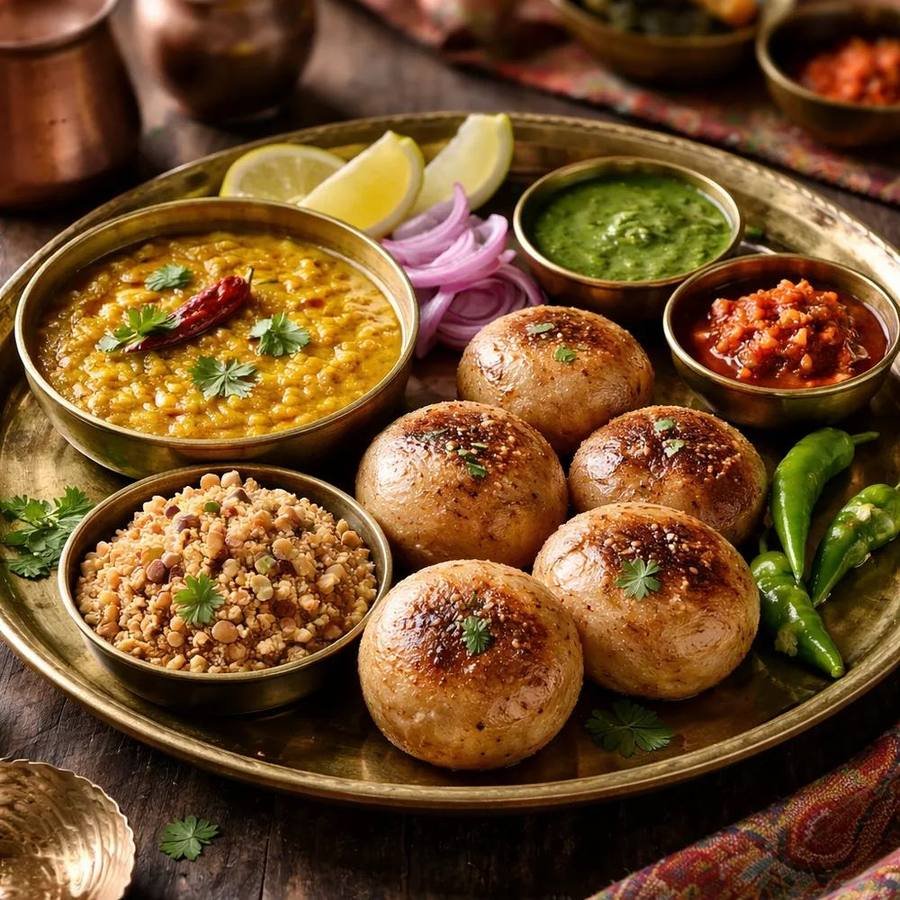
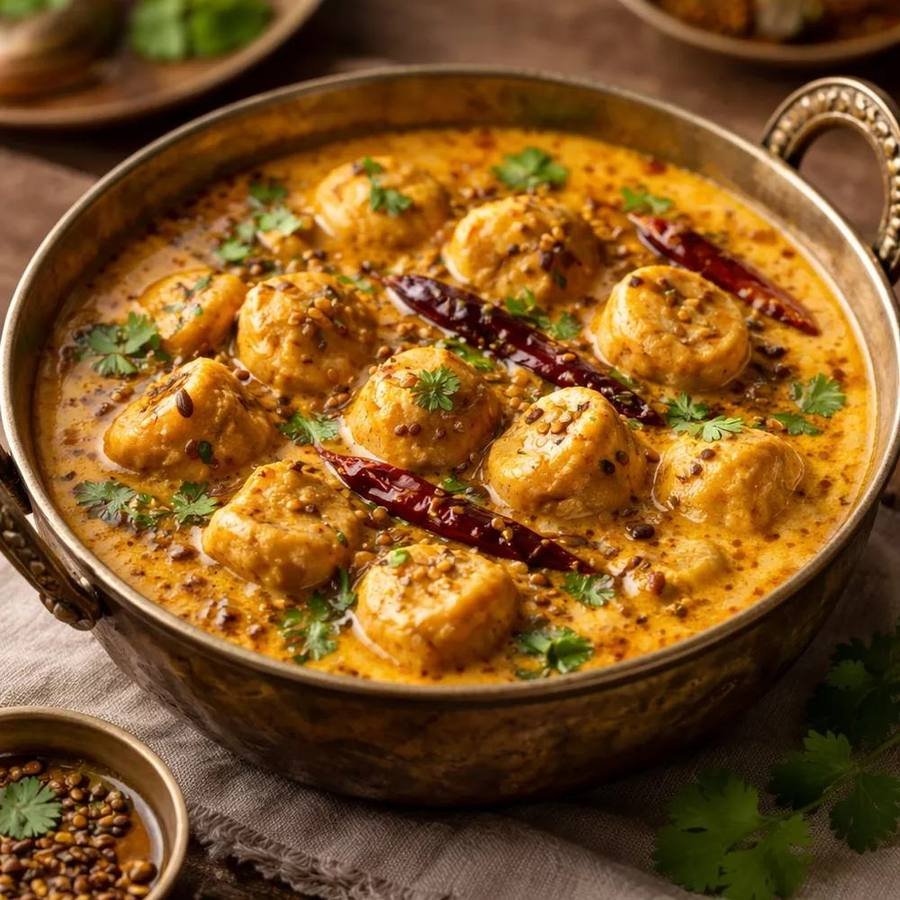
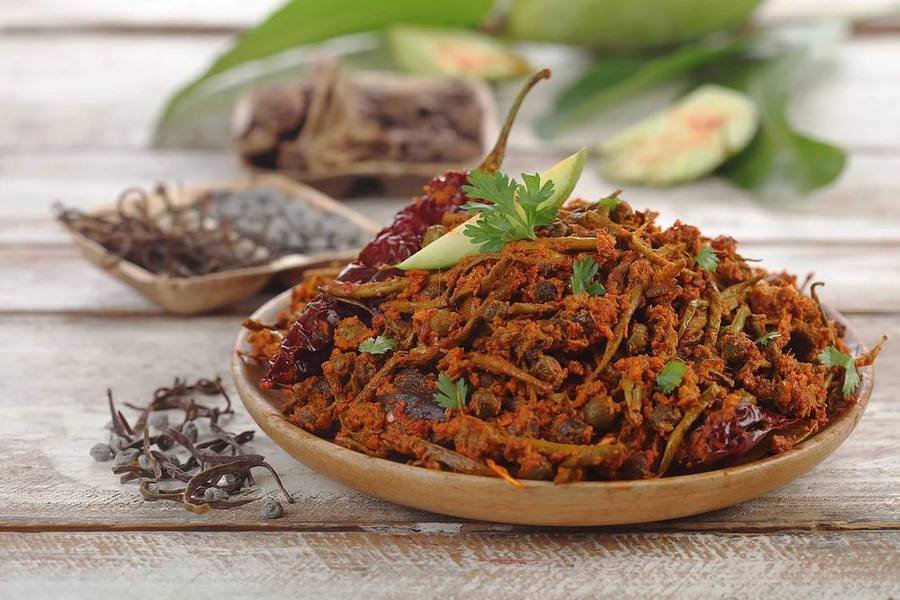
The state guide places Bajra roti alongside Dal bati churma, Gatte ki sabzi and Ker sangri. Start with the Rajasthan travel and food guide if you are planning where this tasting fits into a route.
Taste, Texture and Ingredients
Expect earthy, nutty and faintly sweet, with a toasted grain flavour stronger than wheat roti. Think dense, coarse and slightly crumbly, with a crisp surface when puffed over flame.
The ingredient list is best read as a structure rather than a shopping list: bajra (pearl millet) flour, warm water, salt, ghee or white butter to serve and sometimes a little wheat flour as binder in home versions.
How Bajra roti Is Made
Flour is kneaded with warm water into a soft dough and patted between the palms into a round, since it tears if rolled thin. It is cooked on a tawa and often finished directly over flame or coals. The cooking rewards attention to sequence and balance rather than a long list of additions.
When Bajra roti is made for a gathering, that timing also becomes social — food reaches the table as part of a shared rhythm, not as an isolated plate.
When and How It Is Eaten
Served hot with ghee, lehsun chutney, dal, kadhi or a seasonal vegetable, sometimes crumbled into the curry. Its natural moment is an everyday winter staple in rural Rajasthani homes.
Rajasthan’s broader food culture helps explain the serving style. The state is known for forts, palaces and desert, and its calendar includes Pushkar Camel Fair and Gangaur.
Where to Try It in Rajasthan
Seek it in village-style thalis and winter menus in western Rajasthan, eaten immediately while hot. For a traveller, setting matters almost as much as seasoning.
Bajra roti pairs naturally with time in Jaipur and Udaipur, and can sit just as comfortably beside a quieter excursion to Bundi or Kumbhalgarh.
More Dishes of Rajasthan
Continue through Rajasthan’s other signature plates and drinks below — each has its own page, photograph and story.

Frequently Asked Questions
What is Bajra roti?
A thick, hand-patted flatbread made from bajra (pearl millet) flour, a staple grain of arid Rajasthan. Expect earthy, nutty and faintly sweet, with a toasted grain flavour stronger than wheat roti.
What are the main ingredients in Bajra roti?
The defining ingredients or components are bajra (pearl millet) flour, warm water, salt, ghee or white butter to serve and sometimes a little wheat flour as binder in home versions. Flour is kneaded with warm water into a soft dough and patted between the palms into a round, since it tears if rolled thin. It is cooked on a tawa and often finished directly over flame or coals.
What does Bajra roti taste like?
Expect earthy, nutty and faintly sweet, with a toasted grain flavour stronger than wheat roti. Think dense, coarse and slightly crumbly, with a crisp surface when puffed over flame. Serving pattern: Served hot with ghee, lehsun chutney, dal, kadhi or a seasonal vegetable, sometimes crumbled into the curry.
When is Bajra roti eaten in Rajasthan?
An everyday winter staple in rural Rajasthani homes. Crumbled bajra roti mixed with curd or dal is a common rustic way of eating it.
Where can I try Bajra roti in Rajasthan?
Seek it in village-style thalis and winter menus in western Rajasthan, eaten immediately while hot. Pair a first tasting with Dal bati churma and Gatte ki sabzi to see how Bajra roti sits within the wider Rajasthan table.
Every Place. Every Flavour.
Bajra roti is one of 7 dishes and drinks profiled from Rajasthan — and one of 213 regional dishes across all 36 states and union territories in this atlas.
Open the Rajasthan guide Read the blog