Meghalaya · Festival Guide
Wangala Festival 2026: Meghalaya’s Festival of a Hundred Drums — Complete Guide

By Beauty of Bharat — India travel guide, every place, every flavour.
Guides covering all 36 States and UTs, researched from official sources and checked at publish time. Corrections welcome — see About Beauty of Bharat.
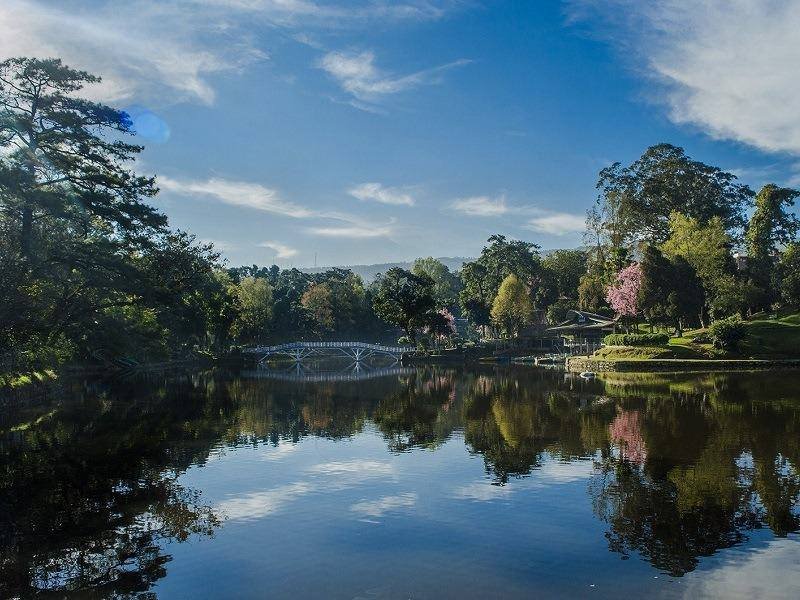
For fifty years, Wangala has been known as the Festival of a Hundred Drums — a hundred long dama drums struck in unison by the Garo people of Meghalaya. In 2026, for its golden jubilee, the hundred becomes a thousand. Wangala Festival 2026 runs from 11 to 14 November 2026 at Wangala A'dam, Garo Heritage Village, Chibragre, near Tura in the West Garo Hills of Meghalaya. It is the Garo harvest festival: a four-day thanksgiving to Misi Saljong, the Sun god of fertility, for the year's rice harvest — and this year, with 1,000 drummers, it will be the biggest Wangala ever held. See our Meghalaya guide and best places to visit in North East India.
Wangala Festival 2026 at a glance
| Dates | 11–14 November 2026 (four days) |
| Venue | Wangala A'dam, Garo Heritage Village, Chibragre, near Tura, West Garo Hills |
| What it is | Post-harvest thanksgiving of the Garo people to Misi Saljong, the Sun god |
| Why 2026 is special | Golden Jubilee — the 50th edition, with 1,000 drummers instead of the usual 100 |
| Nearest city | Tura; nearest airport Guwahati, about 220 km away |
| Don't miss | The Thousand Drums performance, the Rugala ceremony, the dance competition |
When is Wangala Festival 2026?
Wangala Festival 2026 is held from 11 to 14 November 2026 — four days, Tuesday to Friday. The dates were confirmed by the Hundred Drums Wangala Festival Committee in early November 2026 and reported by Meghalaya's press on 9 November. The Chief Minister of Meghalaya attends the inaugural programme on 11 November, and the Union Minister for Tourism and Culture is chief guest on the concluding day, 14 November. Troupes began arriving on 7 November, with a 10-km Wangala-thon beforehand.
Two things are worth knowing. First, the organised Hundred Drums festival is a November event, but village Wangala is different: in Garo villages across Meghalaya, Assam and Nagaland, the harvest thanksgiving is celebrated on dates each village chooses, spread between September and December. The big public gathering at Chibragre is the one to travel for. Second, the venue has changed. The first Hundred Drums festival, in December 1976, was held at Asanang, about 18 km from Tura — and older guides still name Asanang as the venue. The 2026 golden jubilee, like the 2025 edition, is at Chibragre, also near Tura. If you book transport or a stay, use Chibragre, not Asanang.
Where is Wangala Festival celebrated?
The festival is celebrated in the Garo Hills of Meghalaya. The 2026 venue is Wangala A'dam, Garo Heritage Village, Chibragre, in the West Garo Hills district, near Tura — the largest town in the Garo Hills and the district headquarters. The ground has been expanded for the golden jubilee, with an exhibition area of more than 300 stalls selling local products, traditional ornaments, attire and souvenirs.
Tura itself is a small, friendly town in the foothills of the Tura range, and it is the base for almost every visitor. Most visitors stay in Tura and drive out to Chibragre for the festival days. Beyond the main ground, Wangala is also celebrated in Garo villages across the Garo Hills, in parts of Assam, and by Garo communities in Bangladesh's Mymensingh and Netrokona regions, where it is known as Nabanna.
What is Wangala Festival?
Wangala is the harvest festival of the Garo people, also called the A'chik, one of the major indigenous communities of Meghalaya. It marks the end of the agricultural year: when the autumn rice harvest is safely gathered, the community gives thanks to Misi Saljong, the Sun god, regarded as the supreme giver who blesses the land with fertility and abundance, and seeks blessings for the next crop. The festival is also known as the Festival of a Hundred Drums, because its signature is the dama — a long, tapered drum hollowed from a tree trunk and bound with buffalo hide — played in unison by lines of drummers while women dance in formation to the beat, in traditional dress, with feathered headgear and bead ornaments. The ritual heart is the Rugala ceremony, the thanksgiving offering to Misi Saljong, followed by the Ruga dance.
The organised festival began in 1976, when community elders — worried that modernisation, migration and religious change were letting the old ways fade — formed the Hundred Drums Wangala Festival Committee. The first celebration was a modest 10-drum gathering at Chandmari Field in Tura; later that year the then Chief Minister, Captain W. A. Sangma, encouraged its expansion to 100 drums at Asanang, on 6 and 7 December 1976. Ten troupes of ten drummers each formed the iconic hundred, and the festival has run every year since, growing into Meghalaya's best-known cultural showcase. The 2026 edition is its 50th — and the dream of scaling the hundred drums to a thousand, first spoken of by the late P. A. Sangma, is being realised at last.
Why 2026 is special: 1,000 drums for the golden jubilee
The 50th edition is not a normal year. The committee has planned a Thousand Drums performance: 1,000 drummers, around 1,000 women dancers and 500 other artistes playing traditional instruments, all performing together at Wangala A'dam. About 1,700 drummers applied, and only 1,000 could be accommodated. A Guinness World Records team has been invited to witness the performance, and the closing day will include a special record attempt.
Cultural troupes from Assam, Tripura and Nagaland are joining performers from 12 A'chik sub-tribes. The schedule includes the Ruga dance, the Rugala ceremony, a dance competition involving 10 contingents, indigenous games, prize distribution and the exhibition of local products. Entry fees and ticket arrangements for 2026 had not been confirmed in the days before the festival, so check locally on arrival rather than assuming a price.
How to reach Tura for Wangala Festival 2026
Tura has no airport and no railway station, so every visitor arrives by road. The nearest airport is Lokpriya Gopinath Bordoloi International Airport, Guwahati, about 220 km from Tura, a drive of roughly five to six hours. Guwahati is well connected by air to Delhi, Kolkata, Mumbai and Bengaluru, and it is also the nearest railway station. From Guwahati, take a private taxi or a shared Sumo (SUV taxi) to Tura; buses also run, usually via the ISBT. The other gateway is Shillong, about 320 km away.
Plan the road time honestly: five to six hours from Guwahati is normal, longer in festival traffic, and the last stretch into the Garo Hills is winding. If your flight lands late, stay the night in Guwahati and drive to Tura the next morning. Book your stay in Tura well ahead — the town is small, rooms fill fast, and the golden jubilee is expected to draw a large crowd. Carry cash and pack a light jacket: November evenings in the Garo Hills are cool. For the wider state, see our Shillong guide and state-by-state guide to India.
Wangala Festival 2026 travel tips
Arrive a day early. The troupes arrive from 7 November and rehearsals run from 10 November, so the ground is already alive the day before the opening — and arriving early gives you a buffer for the road.
Stay for at least two days. One day shows you the drums; two days cover the ceremony, the dance competition and the stalls. The closing day carries the record attempt and the biggest crowds.
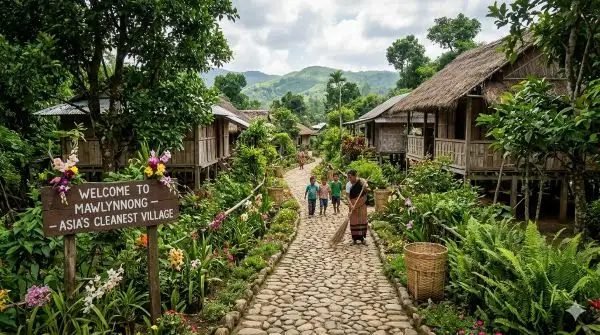
Combine it with the Khasi Hills. Most visitors pair the Garo Hills with Shillong and the sights around it — Cherrapunji (Sohra), Mawlynnong and Dawki. Our Mawlynnong guide covers Asia's cleanest village.
Respect the ritual. The Rugala ceremony is a religious thanksgiving. Keep a respectful distance, follow the organisers' instructions, and do not step into the performance ground. Dress modestly and carry water and sun protection.
Watch & Feel the Place: Wangala on Film
Videos are by their respective creators.
Wangala Festival FAQs
When is Wangala Festival 2026?
Wangala Festival 2026 runs from 11 to 14 November 2026 at Wangala A'dam, Garo Heritage Village, Chibragre, near Tura in Meghalaya's West Garo Hills.
Where is Wangala Festival celebrated?
The main public celebration is at Wangala A'dam, Garo Heritage Village, Chibragre, near Tura in the West Garo Hills of Meghalaya. Village Wangala is also celebrated on dates each village chooses across the Garo Hills.
What is Wangala Festival?
Wangala is the post-harvest thanksgiving festival of the Garo people of Meghalaya. It honours Misi Saljong, the Sun god of fertility, for a bountiful rice harvest and seeks blessings for the next crop.
Why is Wangala called the Festival of 100 Drums?
Because its signature performance is a hundred long dama drums played in unison, while women dance in formation to the beat. The organised festival began with 100 drums at Asanang in 1976; the 2026 golden jubilee scales it to 1,000.
How do I reach Tura for the Wangala Festival?
Fly or take a train to Guwahati, Assam — the nearest airport and railway station, about 220 km from Tura — then drive five to six hours by taxi, shared Sumo or bus. Tura has no airport or railway station of its own.
Is there an entry fee for Wangala Festival 2026?
No entry fee or ticket arrangement for the 2026 edition had been confirmed in the days before the festival. Check with the festival committee or local organisers on arrival.
A hundred drums in unison is already a sound you feel in your chest; a thousand of them, played for a harvest and a god of the Sun, is the kind of thing you remember for life. The golden jubilee happens once — plan the road from Guwahati, book Tura early, and stand in the crowd at Chibragre while the drums roll. Next, read our Ziro Valley guide and our Hornbill Festival guide — December's great gathering in Nagaland, just weeks after Wangala.
Plan your Meghalaya trip
Tura and the Garo Hills, Shillong, Cherrapunji, Mawlynnong and Dawki.
Meghalaya state guide →