Uttarakhand · Winter Trek Guide
Kedarkantha Trek: The Complete Guide — Best Time, Route, Difficulty & Cost

By Beauty of Bharat — India travel guide, every place, every flavour.
Guides covering all 36 States and UTs, researched from official sources and checked at publish time. Corrections welcome — see About Beauty of Bharat.
Most Himalayan treks shut down when winter arrives. Kedarkantha does the opposite — December to March is when this trail is at its best, with the pine forest under snow, a frozen lake for a campsite, and a 12,500 ft summit waiting at sunrise. That is the surprise at the heart of one of India’s most popular winter treks: a genuine Himalayan summit, reached in five days from a road-connected village, with no technical climbing at all. The Kedarkantha trek starts at Sankri in Uttarkashi district, Uttarakhand, climbs about 20 km through Govind Pashu Vihar National Park to a 3,810 m (12,500 ft) summit, and is graded easy to moderate — one of the best first Himalayan treks, provided you respect the cold and the pre-dawn summit day. The best time is mid-December to February for deep snow, and operator packages from Sankri typically run about ₹4,500 to ₹10,000 per person plus GST, with transport and gear often extra — confirm the inclusions before you book. See our Uttarakhand state guide.
Kedarkantha trek at a glance
| Summit | 3,810 m (12,500 ft) — Kedarkantha peak, Govind Pashu Vihar National Park |
| Start & end | Sankri village, Uttarkashi district (1,950 m / 6,400 ft) |
| Distance | About 20 km on foot |
| Duration | 5 days from Dehradun is most common (4–6 days, three days of real walking) |
| Difficulty | Easy to moderate; steep pre-dawn summit push on snow |
| Best time | Mid-December to February for deep snow; February–March for settled snow and clear skies |
| Cost | About ₹4,500–₹10,000+ per person (Sankri-to-Sankri packages, + GST); about ₹8,000–₹11,700 all-in from Delhi |
| Permit | Forest entry permit required — usually arranged by your operator |
What is the best time for the Kedarkantha trek?
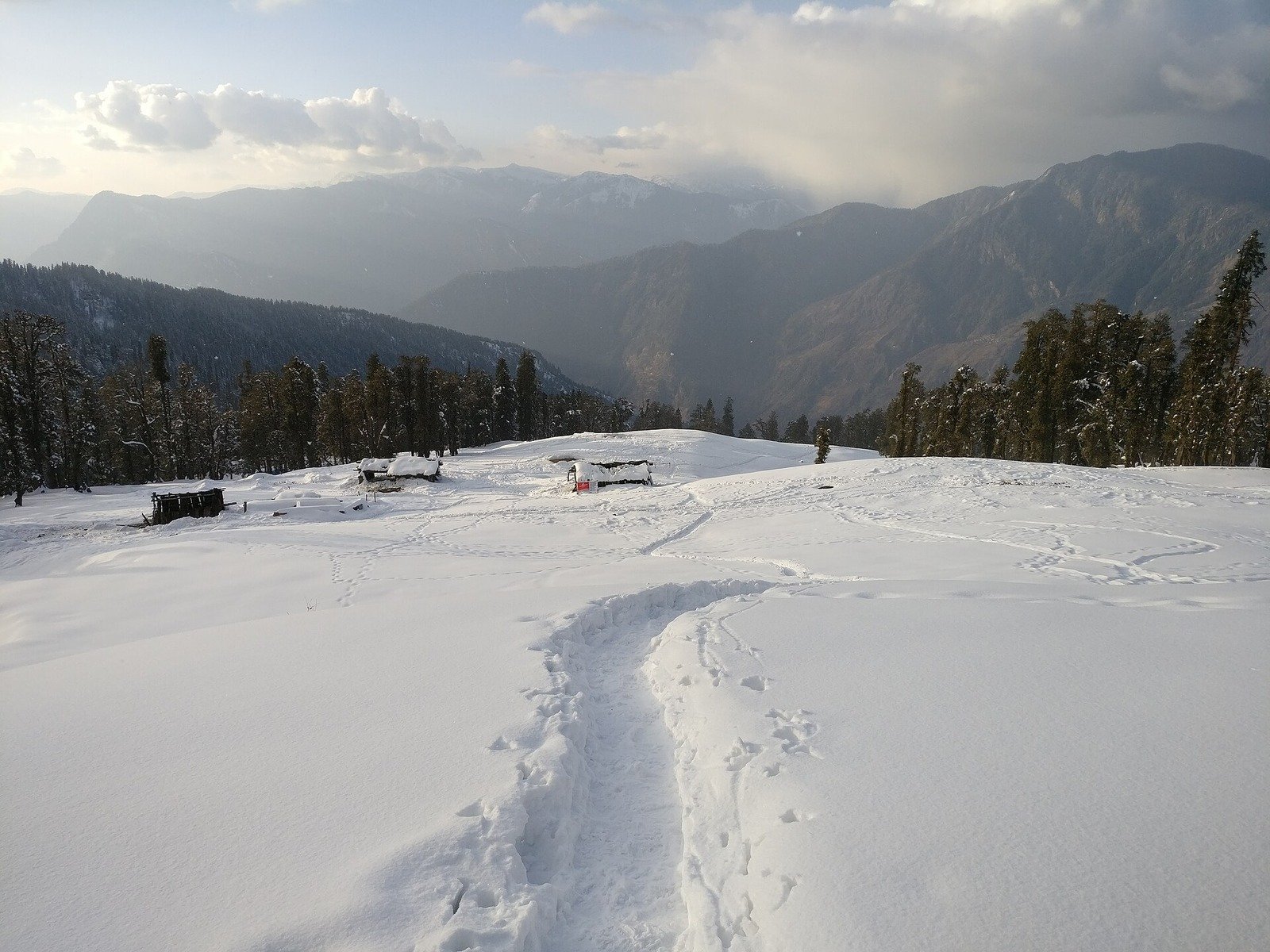
It depends what you want from the mountain. For the classic snow trek — white trails, a frozen lake and a snow-covered summit — mid-December to February is the window, and January brings the heaviest snowfall, typically 2 to 3 feet of snow on the upper trail. Snow usually sets in around mid-December, stays on the upper trail until about mid-March, and lingers in patches into April. February and March are the sweet spot for many trekkers: the snow has settled and consolidated, so it is easier underfoot than fresh powder, and the skies are clearer for the summit sunrise. October and November bring clear skies and dry trails with no snow at all, and early April adds the first rhododendron colour at lower elevations while the upper trail stays snowy.
One honest caveat: snow does not arrive on a fixed date. Two of the last three winters started dry across Uttarakhand, and in the 2025–26 season proper snowfall on Kedarkantha only arrived in the third week of January. If snow is the whole point of your trek, late December to February gives you the best odds in most years, and late January to February has been the safer bet in dry winters. Avoid July and August, when monsoon rain makes the trail slippery and most operators do not run batches. For the wider winter picture, see our best winter places in India for snow and best places to visit in India in winter.
The Kedarkantha trek route: Sankri to the summit
The classic route runs Sankri → Juda ka Talab → Kedarkantha Base Camp → summit → Sankri, with some operators descending via Hargaon instead of retracing their steps. The whole trail lies inside the Govind Pashu Vihar National Park and Wildlife Sanctuary, and the walking days are deliberately short — four kilometres or so at a time — which is a large part of why the trek suits first-timers.
| Day | Route | Distance & time | Altitude |
|---|---|---|---|
| Day 1 | Dehradun → Sankri by road | About 200 km, 8–9 hours | Sankri 1,950 m |
| Day 2 | Sankri → Juda ka Talab | 4 km, 4–5 hours through pine and oak forest | 2,773 m |
| Day 3 | Juda ka Talab → Kedarkantha Base Camp | 3–4 km, 2–3 hours across open meadows | 3,429 m |
| Day 4 | Base Camp → summit → Juda ka Talab | About 8–9 km, 8–9 hours; summit start around 2–3 AM | Summit 3,810 m |
| Day 5 | Juda ka Talab → Sankri, then drive to Dehradun | 4 km, 3–4 hours downhill | Back to 1,950 m |
Juda ka Talab: the frozen lake camp
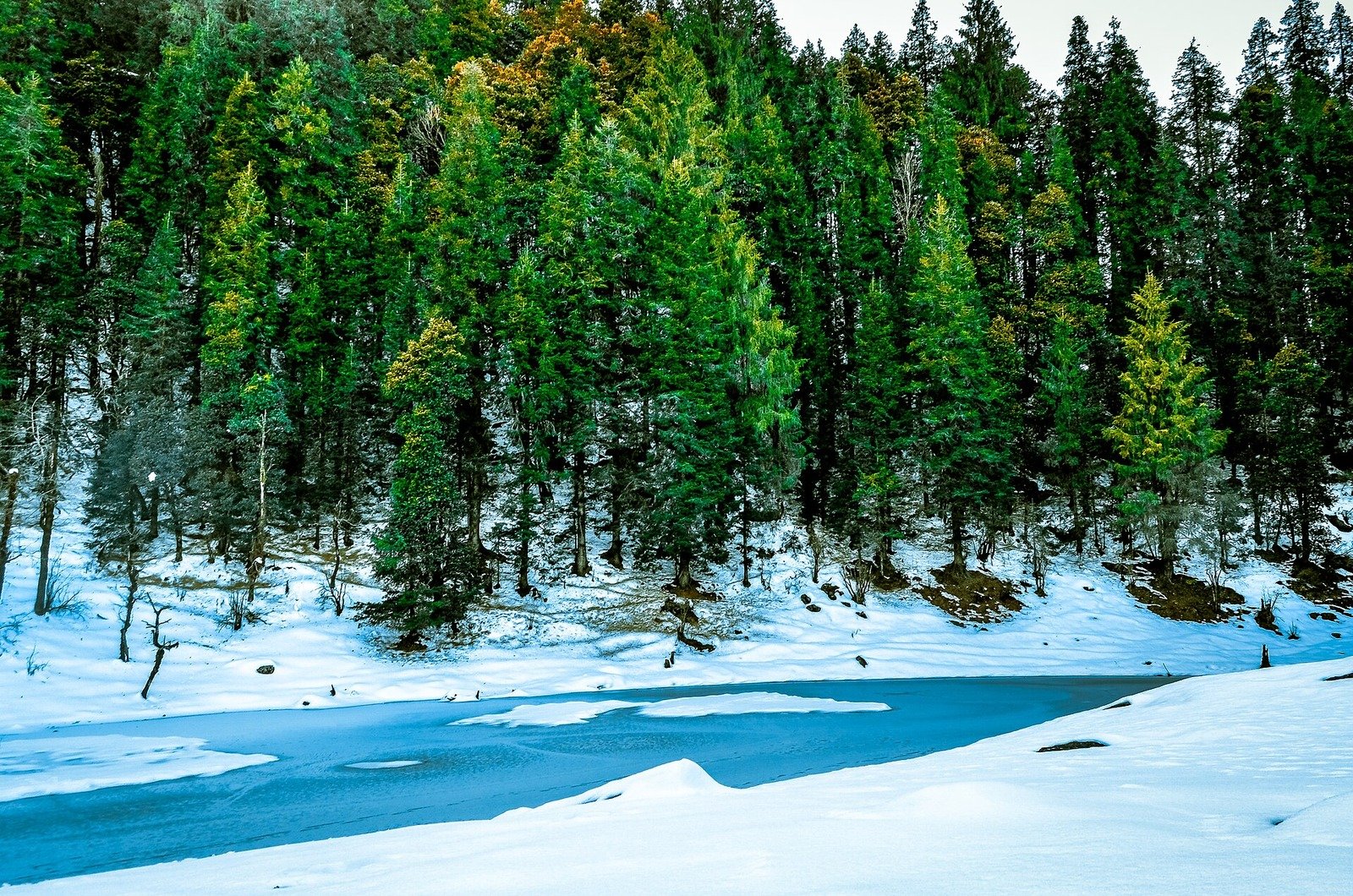
Day 2 ends at the trek’s most loved campsite: a small high-altitude lake ringed by pine forest, which freezes solid in winter. Local legend says the lake formed where drops of water fell from Lord Shiva’s hair, and it is the camp trekkers remember most — tents pitched beside a sheet of ice, with the first real snow underfoot. Day 3 climbs out of the forest into open meadows to base camp at 3,429 m, where the cold becomes serious and the summit ridge finally comes into view.
Summit day: the 2 AM start
Summit day begins around 2–3 AM, by headlamp, on snow. The first stretch is gentle, then the final slope steepens sharply — in deep winter it can be knee-deep in snow and is climbed with microspikes. The reward, on a clear morning, is a 360-degree panorama — Swargarohini, Bandarpunch and Black Peak, with the Gangotri and Yamunotri ranges beyond — lit by the sunrise you climbed through the dark to see. You descend the same day, all the way back to Juda ka Talab — about 9 km and 8–9 hours in total, which is why summit day is the longest and hardest of the trek.
Two things worth knowing before you go: routes vary slightly between operators (Indiahikes, for example, runs a variant from Kotgaon via Kujhai and Doka), and the route itself was reshaped by a 2018 Uttarakhand High Court order that banned overnight stays in the state’s alpine meadows and capped visitors — the Juda ka Talab, base camp and Hargaon line every operator now sells is the compliant route. If you like this kind of high trail, also read our Kedarnath trek guide, Hampta Pass trek and Triund trek.
How difficult is the Kedarkantha trek?
Kedarkantha is graded easy to moderate, and the official Govind Wildlife Sanctuary website grades the Sankri to Kedarkantha route as Easy — which is why it is so often called India’s beginner winter summit. The case for “easy” is real: the daily distances are short, the altitude gain is spread over three days of walking, the trail is well marked, there is no exposure, no scrambling and no rope, and you are never more than a day’s walk from Sankri, so the exit is simple.
But beginner-friendly does not mean effortless. Three things make it harder than it looks: the cold (nights at base camp can drop to −15°C in January), the snow (which slows every step and makes the trail slippery), and summit day itself (a pre-dawn start, a steep final slope, and a long descent on tired legs). At 12,500 ft the risk of altitude sickness is low compared with higher treks, but it is not zero — the gradual itinerary is there to help your body adjust, so do not rush it. In deep snow or bad weather it stops being a beginner trek — microspikes and gaiters matter, and your trek leader’s call on summit day is final.
Is Kedarkantha trek good for beginners?
Yes — it is one of the most recommended first Himalayan treks, and thousands of first-timers complete it every winter. No previous trekking experience is needed. What you do need is basic fitness: be comfortable walking 6 to 8 km without feeling exhausted, and prepare for 4–6 weeks before the trek with regular walking, jogging or stair climbing. Children as young as 8 and trekkers into their sixties complete it — but check your operator’s age policy, as it varies.
How much does the Kedarkantha trek cost?
There is no single Kedarkantha price — operator packages for the 2026–27 season vary widely, so treat the figures below as the range we verified this week and confirm the current price and inclusions before you book.
| Expense | Typical range (per person) | Notes |
|---|---|---|
| Trek package, Sankri to Sankri | About ₹4,500–₹10,000 + GST | Usually covers tents, sleeping bags, meals on trek days, permits and a trek leader; microspikes and gaiters often included in winter |
| Trek package, Dehradun to Dehradun | About ₹6,000–₹10,000 + GST | Adds the long road transfer to Sankri and back |
| Dehradun ↔ Sankri shared cab | About ₹1,000 each way | Paid directly to the driver; shared cabs leave Dehradun early morning |
| Gear rental in Sankri | About ₹500–₹1,500 | Only if you do not own the gear; some operators lend it free with a refundable deposit |
| Full trip from Delhi | About ₹8,000–₹11,700 | Package + Delhi–Dehradun travel + transfers + food on travel days; about ₹19,000 if you fly |
Ask exactly what is included before you pay — meals, tents, sleeping bags, the forest permit, the transfer, gear rental and insurance most often turn out to be extra. Prices also rise in the Christmas to New Year week, the busiest stretch of the season. If you are trekking independently rather than with an operator, budget separately for the forest permit and for food and stay in Sankri.
Do you need a permit for the Kedarkantha trek?
Yes. The trail lies inside a protected area, so a forest entry permit is mandatory. If you trek with an operator, the permit is normally included in the trek fee and arranged for you. If you go independently, confirm the current permit process and fees with the forest office at the Sankri check post or the DFO at Purola before you start — permit rules and fees change, and we could not verify a single current fee from an official source at the time of writing. Foreign nationals should also check: some operators charge them extra for permits. The 2018 court order also caps daily visitors, so in peak season the permit is effectively your place in a limited daily quota — book ahead rather than turning up in Sankri hoping for a slot.
What to pack for Kedarkantha in winter
Pack for −15°C nights, not for the daytime sun. The essentials are layered clothing (a warm base layer, fleece and a down or insulated jacket), waterproof trekking shoes with good grip, microspikes and gaiters for the snow (often provided by the operator in winter — ask), a headlamp with spare batteries for the 2 AM summit start, warm gloves and a balaclava, sunscreen and lip balm (the snow glare is fierce), a 20–30 litre day pack, and a water bottle that will not freeze solid overnight — an insulated sleeve helps. Your main bag usually travels by porter or mule, so you walk with the day pack only.
How to reach Sankri
Sankri is about 200 km from Dehradun, an 8–9 hour drive through Mussoorie, Purola and Mori, following the Tons river to Netwar and on to the village. Dehradun is the nearest railhead and airport (Jolly Grant), and most trekkers arrive the day before the trek starts. Shared cabs leave Dehradun railway station early in the morning (around 6:30 AM) and cost about ₹1,000 per person each way; private taxis cost more but leave on your schedule. There is no road beyond Sankri — from the village, everything is on foot. From Delhi, take an overnight train or bus to Dehradun and connect to Sankri the next morning. Our Chopta guide covers another Uttarakhand mountain escape if you have extra days in the state.
Watch & Feel the Place: Kedarkantha on Film
Videos are by their respective creators.
Kedarkantha Trek FAQs
What is the best time for the Kedarkantha trek?
Mid-December to February is the best time for the classic snow trek, with January bringing the heaviest snowfall. February and March offer settled snow and clearer skies, while October and November give dry trails and clear views without snow. Avoid July and August, when monsoon rain makes the trail slippery.
How difficult is the Kedarkantha trek?
Kedarkantha is graded easy to moderate, and the official Govind Wildlife Sanctuary website grades the Sankri to Kedarkantha route as Easy. The daily distances are short, there is no technical climbing, and the hardest part is summit day — a steep, pre-dawn climb on snow followed by a long descent.
Is Kedarkantha trek good for beginners?
Yes — it is one of the most recommended first Himalayan treks, thanks to short walking days, a gradual altitude gain and a well-marked trail. No previous trekking experience is needed, but you should be reasonably fit, comfortable walking several hours a day, and prepared for sub-zero nights.
How much does the Kedarkantha trek cost?
Published 2026–27 operator packages we checked ranged from about ₹4,500 per person (Sankri to Sankri) to about ₹10,000 plus GST (Dehradun to Dehradun), with transport, gear rental and insurance often extra. A full trip from Delhi typically works out to about ₹8,000–₹11,700 per person. Confirm the inclusions and the current price before you book.
Is Kedarkantha trek open in December?
Yes. December is the start of the snow season on Kedarkantha — snow usually sets in around mid-December, Juda ka Talab starts to freeze, and the trail stays open through April, when most other Himalayan treks are shut for winter. Early December can still be mostly dry, so late December is the safer bet for snow.
How long is the Kedarkantha trek?
The trek covers about 20 km on foot, usually over 5 days from Dehradun (4–6 days depending on the operator), with three real days of walking: Sankri to Juda ka Talab, on to Kedarkantha Base Camp, then the summit day and the walk back down to Sankri.
Kedarkantha is the rare Himalayan trek that asks so little and gives so much: five days, twenty kilometres, a frozen lake for a campsite and a sunrise summit at 12,500 ft — all in the middle of winter, when the rest of the Himalaya is closed. Go for the snow, stay for the silence of the pine forest, and come down with a summit you will measure every future trek against. Next, read our best winter places in India for snow — and if the mountains have caught you, the Valley of Flowers trek is the summer counterpart to this winter classic.
Plan your Kedarkantha trek
A 12,500 ft winter summit from Sankri — snow, a frozen lake and a sunrise worth the 2 AM start.
Uttarakhand state guide →