
Jharkhand · Waterfall Guide
Hundru Falls, Jharkhand: Complete Guide

By Beauty of Bharat — India travel guide, every place, every flavour.
Guides covering all 36 States and UTs, researched from official sources and checked at publish time. Corrections welcome — see About Beauty of Bharat.
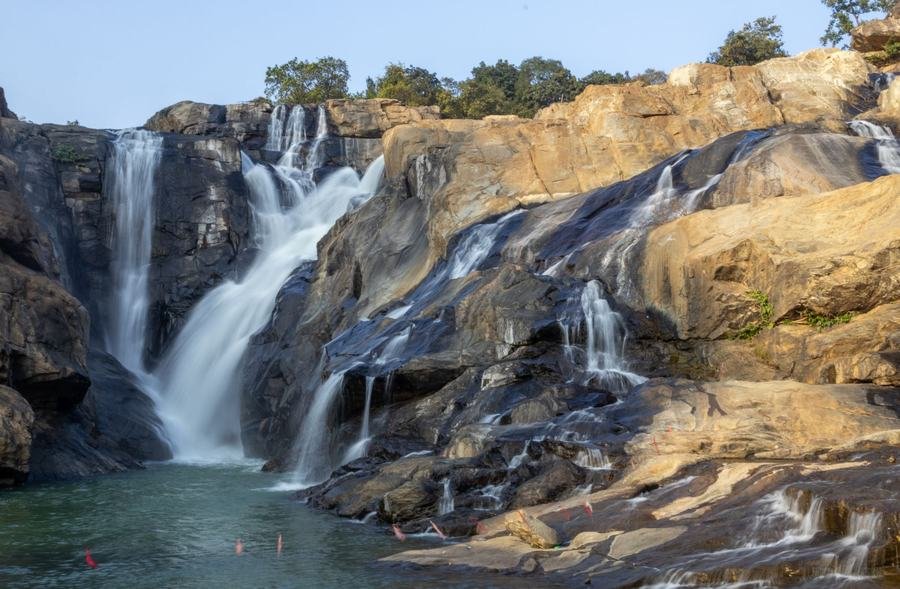
A river falls 98 metres — about as far as a 30-storey building is tall — and most of India has never heard of it. That is the first surprise of Hundru Falls. The second is how easy it is to reach: the Subarnarekha makes its great plunge just 45 kilometres from Ranchi, the capital of Jharkhand, off the Ranchi–Purulia Road, and at the bottom of the drop there is a natural pool where visitors bathe in the dry season. This guide answers the questions people actually ask — where it is, how to reach it from Ranchi, how many steps the descent takes, and the best time to go — and then builds the waterfall circuit around it, from Jonha and Dassam to Patratu Valley and Netarhat.
Hundru is the tallest waterfall in the Ranchi circuit and the 34th highest waterfall in India, and Jharkhand Tourism describes it as one of the highest falls in the state. Yet it stays a day trip rather than a destination in its own right: drive out in the morning, watch a river disappear over a cliff, climb down to the pool at its base, and be back in Ranchi for dinner. Come between October and March, when the flow is strong and the weather is kind, and give the falls three to four hours including the drive.
| Fact | Hundru Falls |
| Height | 98 metres (322 feet) |
| River | Subarnarekha |
| Distance from Ranchi | 45 km, off the Ranchi–Purulia Road |
| Best time to visit | October to March; fullest in October and November |
| Time needed | 3 to 4 hours including the drive from Ranchi |
| Nearest airport | Birsa Munda Airport, Ranchi |
| Nearest railway station | Ranchi Junction |
Distances and timings are as reported at publish time; check the route before you leave, and treat the falls with respect in the monsoon.
Where Is Hundru Falls Located?
Hundru Falls stands on the course of the Subarnarekha River in Ranchi district, Jharkhand, where the river reaches the edge of the Ranchi plateau and falls 98 metres into a rocky gorge below. Jharkhand Tourism gives the distance as 45 kilometres from Ranchi, off the Ranchi–Purulia Road, and that single sentence explains both the geography and the trip: this is a plateau-edge fall, not a mountain fall, and the drama comes from the suddenness of it — a broad river arriving at a cliff and dropping out of sight.
Geologists call Hundru a knickpoint, a sharp break in a river’s gradient caused by rejuvenation. You do not need the geology to feel it: stand at the viewpoint and the river simply ends, falling in a wide arc into the gorge while the mist rises back up the rock face. The Subarnarekha itself is one of eastern India’s great rivers — its name means “streak of gold” — rising on the Ranchi plateau and flowing through Jharkhand, West Bengal and Odisha to the Bay of Bengal. See our Hundru Falls offbeat page and our Ranchi guide for the base city.
The setting matters as much as the drop. The falls sit in forested plateau country, with sal forest and rocky hillocks around the gorge. In the rainy season the falls take on what Jharkhand Tourism’s own account calls a formidable form, the river swollen and loud; in the dry season the same place turns into a picnic spot, with the pool at the base serving as a bathing place. That seasonal double life is the key to planning a visit.
How to Reach Hundru Falls from Ranchi
The short answer is that it is a straightforward drive of about an hour and a half from Ranchi. The traditional way is the Ranchi–Purulia Road, 45 kilometres out of the city, and there is a shorter route via Ormanjhi and Sikidiri of about 39 kilometres that local drivers know well. Either way the road runs through plateau countryside — fields, sal forest and small villages. A private cab or a hired car for the day is the easiest option, because shared transport to the falls is limited, and a car also lets you pair Hundru with Jonha or Dassam on the same day.
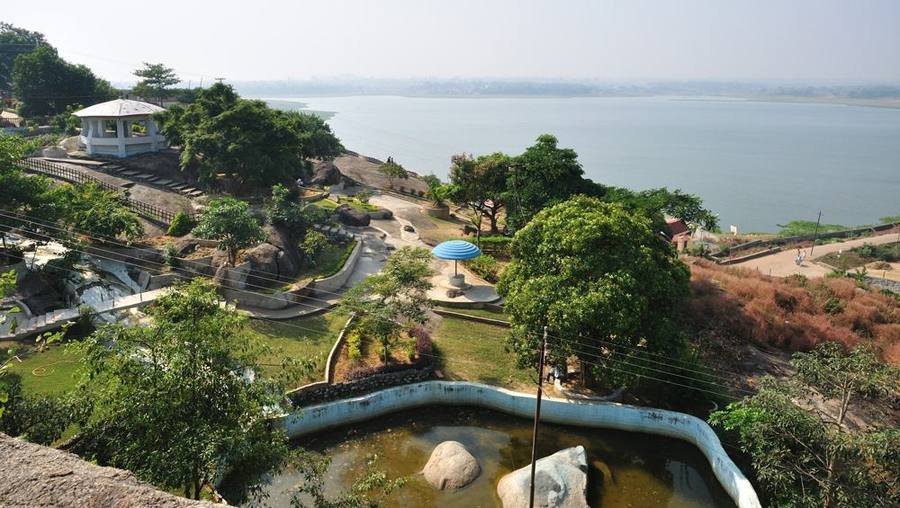
By train, Ranchi Junction is the nearest major station, well connected to Kolkata, Delhi and Patna; from there, hire a cab or take a local bus towards the falls and finish by taxi. By air, Birsa Munda Airport in Ranchi is the nearest airport, about the same distance from the falls as the city itself. Base yourself in Ranchi — around Main Road, Lalpur or Gosaintola — and set off in the morning so you reach the viewpoint with the light in front of you.
Two practical notes. First, the roads out to the falls are best driven in daylight — plan to be back before dark. Second, carry water and wear shoes with grip: the descent to the base is long, the rock is slippery when wet, and there is little shade on the steps at midday. A small entry charge is collected at the site; the amount is nominal and varies, so carry a little cash rather than counting on card payment.
How Many Steps to Reach Hundru Falls?
This is the question every visitor asks before the climb, and it is the one with the least tidy answer: most counts put the descent at around 700 stone steps, with some putting it a little higher. The steps wind down through the forest from the viewpoint to the base of the falls, with places to stop and look back at the drop, and most visitors take 15 to 30 minutes for the descent depending on pace. Allow the same again, or a little more, for the climb back.
What waits at the bottom is worth the effort. The river lands in a rocky gorge and spreads into a natural pool at the base, and in the dry months, roughly October to February, the pool is a bathing place — the water moderate, the rocks warm, the roar of the falls overhead. But the pool is a fair-weather friend. In the monsoon and just after it, when the Subarnarekha is in full flow, the current is strong, the rocks are slick, and swimming is dangerous and not permitted — admire the falls from the viewpoint and stay out of the water. The same caution applies at Dassam, where swimming is prohibited outright.
Go prepared and the descent is a pleasure rather than a trial. Start early, before the sun is high on the steps; carry a litre of water per person, because food options at the falls are limited to small stalls; wear shoes, not sandals, for the uneven stone; and keep children close on the lower steps, where the spray makes the rock slippery even on a dry day. Older visitors and anyone with knee trouble should treat the viewpoint as the destination — the view from the top, where the whole 98-metre drop is visible in one frame, is the photograph that matters, and it costs no steps at all.
What Is the Best Time to Visit Hundru Falls?
October to March is the best time to visit Hundru Falls, and within that window the months matter. October and November are the sweet spot: the monsoon has just ended, so the river is still carrying its full post-rain volume, while the weather has turned cool and clear. December to February is the season for the base pool, when the flow has steadied and bathing is at its safest — this is the picnic season, and weekends draw families from across Ranchi. March is the shoulder: still pleasant, but the flow is visibly thinning.
The monsoon itself, July to September, is the season of the spectacle and the season of caution in equal measure. The falls are at their fullest and loudest, the gorge is green, and the photographs are dramatic — but the paths are slippery, the spray soaks the viewpoints, and the pool is out of bounds. If you go in the rains, go for the view from the top and wear shoes with real grip. Summer, March to June, is the season to skip if the waterfall itself is the point: the heat rises towards 40°C and the river runs low.
Hundru Falls to Jonha Falls Distance — and the Ranchi Waterfall Circuit
People searching for Hundru Falls almost always ask about Jonha Falls next, and for good reason: the two are the twin heads of Ranchi’s waterfall circuit, and both sit on the same side of the city. Jonha Falls lies about 40 kilometres from Ranchi, on the Ranchi–Purulia Road, and Hundru about 45 kilometres on the same corridor, so the pair fits comfortably into one long day from the city, with Dassam Falls a short drive on from Jonha. Ranchi is often called the city of waterfalls, and this ring of falls — Hundru, Dassam and Jonha, all within about 35 to 45 kilometres — is why the name sticks.
Jonha, also called Gautamdhara, is the quieter of the two and the more storied. The Raru River drops about 43 metres into a deep valley, and a Buddhist temple stands at the top: local tradition holds that Gautam Buddha bathed and meditated here, which is where the name Gautamdhara comes from. The descent is a long flight of concrete steps, and the reward is a plunge pool in a forested gorge, far less visited than Hundru’s. Jonha station is just 1.5 kilometres from the falls, so it is the one fall in the circuit you can also reach by train.
Dassam Falls, about 40 kilometres from Ranchi on the Ranchi–Jamshedpur highway near Taimara village, is the third member of the trio. Here the Kanchi River, a tributary of the Subarnarekha, falls 44 metres over a wide rock face and splits into ten separate streams on the way down, so the falls read as a broad curtain of water rather than a single plunge. It is a classic family picnic spot, but the pool is deep and the current strong: swimming is prohibited at Dassam, and the falls are best enjoyed from the rocks and decks. Pair Dassam with Jonha, and keep Hundru for its own morning, when the light is best.

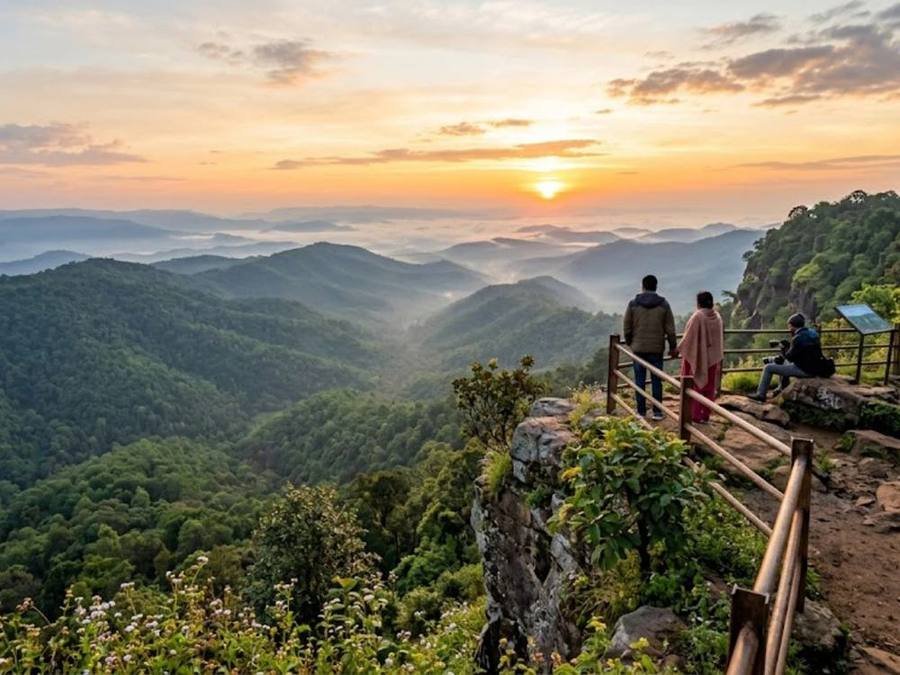
If you have a second day, spend it on the road rather than at another waterfall. Patratu Valley, about 40 kilometres from Ranchi, is a winding hairpin drive down to Patratu Lake, and it is the drive itself that people come for — the switchbacks, the valley views, the dam and the lake at the bottom, best in the late afternoon light. See our Patratu Valley page before you go. And if you have a third day, Netarhat is the overnight trip: 156 kilometres west of Ranchi, a hill station at 1,128 metres known as the Queen of Chotanagpur, famous for its sunrise and sunset points. See our Netarhat guide. Two days cover the falls and Patratu; three days add Netarhat. Our best places to visit in Jharkhand guide sets out the full circuit, and our famous food of Jharkhand guide covers what to eat back in Ranchi.
Watch & Feel the Place: Hundru Falls on Film
Videos are by their respective creators.
Hundru Falls FAQs
What is the best time to visit Hundru Falls?
October to March, with October and November the best of it: the monsoon has just ended, so the river is still at full post-rain volume, and the weather is cool and clear. December to February is the best season for the base pool, when the flow is steady and bathing is at its safest. Avoid the monsoon months for the descent, and skip the summer, when the flow runs low and the heat rises towards 40°C.
How far is Hundru Falls from Ranchi?
About 45 kilometres from Ranchi, off the Ranchi–Purulia Road, roughly an hour and a half by car. A shorter route via Ormanjhi and Sikidiri covers about 39 kilometres. The nearest airport is Birsa Munda Airport in Ranchi, and the nearest major railway station is Ranchi Junction.
How many steps are there to Hundru Falls?
Most counts put the descent at around 700 stone steps from the viewpoint to the base pool, and the walk down takes most visitors 15 to 30 minutes depending on pace. Allow the same again, or a little more, for the climb back, and wear shoes with grip: the stone is slippery when wet, even on a dry day, from the spray.
On which river is Hundru Falls?
On the Subarnarekha River, whose name means “streak of gold.” The river rises on the Ranchi plateau, drops 98 metres at Hundru, and flows on through Jharkhand, West Bengal and Odisha to the Bay of Bengal. The falls are a knickpoint — a sharp break in the river’s gradient — at the edge of the plateau.
Can you swim at Hundru Falls?
Yes, in the dry season: the natural pool at the base is a bathing place roughly from October to February, when the flow is moderate. Never swim during the monsoon or just after it, when the current is strong and swimming is not permitted. Follow the signs and local advice on the day, and keep children close on the lower steps, where the spray makes the rock slippery.
Is Hundru Falls the highest waterfall in Jharkhand?
No. The highest waterfall in Jharkhand is Lodh Falls in Latehar district, at 143 metres. Hundru, at 98 metres, is the tallest waterfall in the Ranchi circuit and the 34th highest waterfall in India, and one of the highest falls in the state — which is why it heads every list of places to visit around Ranchi.
Hundru Falls is the waterfall that makes Ranchi’s nickname true: a river drops 98 metres off the edge of a plateau, an hour and a half from a state capital, and at the bottom there is a pool you can bathe in and a climb that earns the view. Go between October and March, start early, take the steps slowly, and pair it with Jonha and Dassam while you are out there. Next, read our best places to visit in Jharkhand, our Jharkhand state guide and our Netarhat guide.
Plan your Hundru Falls trip
The Subarnarekha drops 98 metres off the Ranchi plateau — and Jonha, Dassam, Patratu Valley and Netarhat are all within reach of the same base.
Jharkhand state guide →