
Manipur · Food and Culture
Famous Food of Manipur: 12 Dishes, From Paknam to Chak-Hao Kheer

By Beauty of Bharat — India travel guide, every place, every flavour.
Guides covering all 36 States and UTs, researched from official sources and checked at publish time. Corrections welcome — see About Beauty of Bharat.

Manipur’s most-searched dish is the one most visitors have never heard of. Paknam — a savoury cake of gram flour, vegetables and herbs, pressed flat, wrapped in turmeric leaves and steamed — is the dish readers ask us about more than any other from the state. But paknam is only the doorway: the most famous food of Manipur is eromba, the fiery mash of boiled vegetables and fermented fish that anchors the Meitei table, and behind it sit ten more dishes, from the raw crunch of singju to the violet depths of chak-hao kheer. This guide covers all twelve: what each dish is, where it comes from, and what to order first.
| Most searched dish | Paknam — steamed savoury cake of gram flour and vegetables, wrapped in leaves |
| Most famous dish | Eromba — boiled vegetables mashed with ngari (fermented fish) and chillies |
| Flavour anchors | Ngari (fermented fish), hawaijar (fermented soybean), soibum (fermented bamboo shoot), maroi chives, king chilli |
| Staple | Steamed rice, with a vegetable stew, a fish curry and a spicy side |
| Best place to start | Ima Keithel food lanes, Imphal — singju stalls, kabok and bora fritters |
| Vegetarian options | Ooti, sana thongba, many singju and eromba variations, temple feast food |
What Is the Most Famous Food of Manipur?
Ask the guidebooks and the answer is eromba. Ask the search box and the answer is paknam — the steamed cake in leaves readers search for most. Both answers are right, and the difference between them tells you how Manipur eats. Eromba is the dish every Meitei household makes: boiled vegetables mashed with ngari, the fermented fish that is the base of the cuisine, and chillies, into a fiery, smoky paste eaten with rice. Paknam is the dish people go looking for once they have heard about it: portable, leaf-wrapped, and unlike anything else on an Indian table. Start with paknam if you want the surprise; start with eromba if you want the state.
The 12 Famous Dishes of Manipur
Twelve dishes, one table: the Meitei valley gives the rice-and-fish classics, the hills the fermented bamboo shoot and the stink-bean eromba, and the temple feasts the vegetarian register. Where we have a verified photograph of the actual dish, you will see it; the rest are described without a substitute picture.
1. Paknam — the steamed cake in leaves that leads the list
Paknam leads this guide for a simple reason: it is the Manipuri dish people search for most. Gram flour is beaten into a thick batter with seasonal vegetables, herbs, chillies and sometimes fish or bamboo shoot, then pressed flat, wrapped in banana or turmeric leaves and steamed until set. The name breaks down neatly — pak means flat, nam means press — and the result is a soft, fragrant cake that travels well, turning up as an evening snack, a lunchbox item and a festival side. Versions vary by household — fish, paneer and vegetable paknam, and even a sweet version of roasted rice flour, jaggery and coconut in some homes. Some writers call it the “Manipuri pizza”, but the comparison is wrong — paknam is steamed, not baked, and the leaf is the flavour. Read our full Paknam guide.
2. Eromba — the fiery mash that defines the state

Eromba is the defining Meitei dish, and the most famous food of Manipur. Boiled vegetables — potato, yam, colocasia, greens, bamboo shoot — are mashed with ngari, the sun-dried fermented fish at the base of the cuisine, and chillies, then finished with maroi (chives) and coriander. The name comes from eeru taana lonba, “mixing and stirring watery”, and the texture is the point: a soft, fiery mash eaten with steamed rice. Every household makes its own version; the best-known is yongchak eromba, made with stink beans (tree beans) for a sharper edge. It is also made without fish. Read our full Eromba guide.
3. Chamthong (Kangshoi) — the healthy vegetable stew
Chamthong is the gentle counterweight to eromba, and the healthy vegetable stew every Manipur guide lists first. Seasonal vegetables — spinach, potato, beans, gourds — are boiled with sliced onion, garlic, ginger, maroi and salt, then topped with a little ngari, into a light, soupy stew served with rice. It is also called kangshoi, and the two names describe the same dish, which is why it appears once in this list rather than twice. Where eromba shouts, chamthong soothes — the everyday stew that makes a plate of rice a meal. Read our full Chamthong guide, also listed in our atlas as Kangshoi.
4. Singju — the raw salad with a crunch

Singju is Manipur’s beloved raw salad, and the crunchiest thing on this list. Cabbage, banana flower, lotus stem, tree beans and seasonal vegetables are shredded fine and tossed with chillies, herbs and a dressing of roasted chickpea flour — the thoiding-besan version — or with ngari, the fermented-fish version. It is served as a snack or a side, and it is the first thing to order at Ima Keithel, where the singju stalls are part of the market. The salad spread from the Meitei table across the state’s communities and into neighbouring states — raw, herbal, chilli-hot, and built around whatever the season gives. Read our full Singju guide.
5. Nga Thongba — the fish curry from the lake

If eromba is Manipur’s mash, nga thongba is its curry. Freshwater fish — often from Loktak Lake, the great lake of the valley — is simmered in a light, turmeric-forward gravy with tomato, ginger and local herbs, without heavy oil or cream. Nga means fish, thongba means curry, and the dish is as plain as its name: the fish does the work. A second style, nga atoiba thongba, fries the fish first for a firmer texture and a deeper edge, finished with a squeeze of heiribob, the sharp native citrus. Order it wherever the fish is local — near Loktak, it usually is.
6. Chak-hao Kheer — the purple black-rice dessert
The list’s dessert is also its most striking colour. Chak-hao is Manipur’s native black rice, GI-tagged as chak-hao amubi, and slow-cooked in milk with sugar and dry fruits it turns a deep violet and goes nutty and fragrant. Chak-hao kheer is the sweet of festivals and special occasions — the famous sweet of Manipur. Sweet dishes are rare in Manipuri cooking, which makes this one easy to remember. Read our full guide to Manipur’s black-rice desserts.
7. Sana Thongba — the festive paneer curry
Sana thongba is the festive curry of the Meitei table, made from sana — fresh cottage cheese, the local paneer — simmered in a light milk gravy with French beans and vegetables. Sana means the milk base, thongba means curry, and the dish sits on the gentler side of the cuisine: mild, creamy, and served at special occasions alongside the black-rice pudding. It is also proof that Manipuri food has a vegetarian register beyond salads — a proper curry, made for feasts, with no fish in it at all.
8. Aloo Kangmet — mashed potatoes and fried chilli
Aloo kangmet is the simplest dish in this list, and one of the most eaten. Boiled potatoes are mashed and mixed with fried red chillies — nothing more elaborate than that — and served as a side with rice. It shows how Manipuri cooking thinks: a plain staple, lifted by chilli and the cook’s hand, not by spice blends or oil. Ask for it as a side whenever you order a thali; it is usually already on the plate.
9. Morok Metpa — the fiery chilli chutney
Morok metpa is the condiment that sits beside almost every Manipuri meal. Roasted or boiled chillies are pounded coarse with ngari into a fiery paste — morok is chilli, metpa is a mash — and eaten in small amounts with rice, eromba and singju. It is the table’s heat control: the curries stay gentle, and each eater decides how hot the meal gets. Some households make it without ngari, but the classic is the fish version — salty, smoky and unapologetically hot.
10. Soibum — the fermented bamboo shoot
Soibum is fermented bamboo shoot, and it is less a dish than the ingredient that makes half the dishes on this list possible. Fresh bamboo shoots are fermented until tangy, then cooked with fish, chillies and vegetables as soibum eromba, the bamboo-shoot curry of the Meitei table, or folded into other mashes and stews. With ngari and hawaijar, the fermented soybean, it is one of the three ferments that define Manipuri flavour — sour, savoury, and born of keeping food through the monsoon. Ask for soibum eromba if you want the ferment at its most direct.
11. Ooti — the vegetarian pea curry of the temple feasts
Ooti is the quiet vegetarian classic of the Meitei table, and the dish temple feasts are built around. Dried yellow peas are cooked with bamboo shoot, chives and chilli until soft and slightly mashed — baking soda gives it its distinctive alkaline note — into a gentle, dal-like curry. A second style, ooti asangba, uses green taro leaves and vegetables. Served at religious feasts and family gatherings, it is the dish to order for vegetarian food in Manipur that is not a salad: a proper, warming main, made for ceremony as much as for dinner.
12. Bora — the market fritter you will eat first
The list closes with the snack you will actually eat first. Bora are fritters of assorted seasonal vegetables, fried crisp and sold hot at Ima Keithel and at street stalls across Imphal — the market snack of the state, eaten with tea or tucked into a thali. The same fritters go into bora thongba, a curry of fried pieces in gravy — a reminder that Manipuri cooking, for all its boiling and steaming, fries too, and that the fried things are the snacks, not the mains.
What Is the Traditional Food of Manipur?
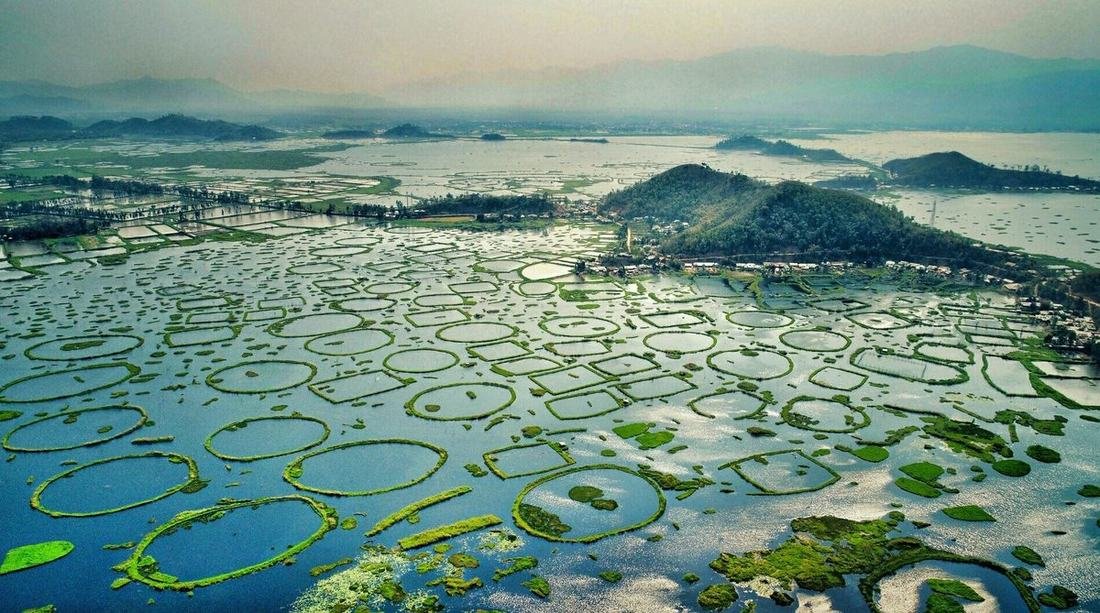
Traditional food in Manipur is the food of the Meitei people of the valley and the tribal communities of the hills, who share a way of cooking more than a menu. Rice is the staple in both; fish from Loktak Lake and the rivers is the favoured protein; and the flavour comes from a small set of anchors — ngari, hawaijar, soibum, maroi chives and king chillies. What the cooking does not use is almost as distinctive: powdered masalas are practically absent, oil is used sparingly, and most dishes are boiled, steamed or smoked rather than fried. Its fullest expression is the traditional thali, sometimes called chakluk: rice, a vegetable stew, a fish curry, eromba, singju and a sweet, so the gentle, the fiery and the sour all sit on one plate.
Where to Eat in Imphal

Imphal is where most travellers meet Manipur’s food, and the answer to where to eat there starts at Ima Keithel — the mothers’ market at Khwairamband Bazar, where the food lanes serve singju, kabok and bora fritters from stalls run by women. Thali restaurants across the city serve the full spread on one plate — eromba, kangshoi, singju and nga thongba — and the fish is freshest near Loktak. If your visit falls in late November, time it for the Sangai Festival, 21–30 November 2026 in Imphal, organised by the Department of Tourism, Government of Manipur, with food stalls among the dance, sport and craft — see our Sangai Festival 2026 guide. For the wider trip, see our Manipur state guide, Imphal guide and Loktak Lake guide.
Watch & Feel the Place: Manipur’s Food on Film
Videos are by their respective creators.
Famous Food of Manipur FAQs
What is the most famous food of Manipur?
Eromba is considered the most famous food of Manipur — boiled vegetables mashed with fermented fish (ngari) and chillies. Paknam, the steamed savoury cake wrapped in leaves, is the dish readers search for most, and singju and chamthong run close behind.
What is Paknam?
Paknam is a traditional Manipuri steamed savoury cake made from gram flour batter with vegetables, herbs and sometimes fish or bamboo shoot, wrapped in banana or turmeric leaves and steamed. Its name comes from pak, meaning flat, and nam, meaning press. It is also spelled paaknam.
What is the traditional food of Manipur?
The traditional food of Manipur is the cooking of the Meitei people and the state’s tribal communities: steamed rice as the staple, fish from Loktak Lake and the rivers, and flavour from ngari (fermented fish), hawaijar (fermented soybean) and soibum (fermented bamboo shoot), with maroi chives and king chillies. Dishes are mostly boiled or steamed, with very little oil.
What food is Manipur famous for?
Manipur is famous for eromba, paknam, singju, chamthong (kangshoi), nga thongba fish curry and chak-hao kheer, the black-rice dessert. The cuisine is known for its fermented flavours — ngari, hawaijar and soibum — and for using almost no oil.
What is the famous sweet of Manipur?
Chak-hao kheer is the famous sweet of Manipur: GI-tagged chak-hao black rice slow-cooked in milk with sugar and dry fruits until it turns a deep violet. It is the dessert served at festivals and special occasions.
What is the staple food of Manipur?
Rice is the staple food of Manipur. A typical meal is steamed rice with a vegetable stew such as chamthong or kangshoi, a fish curry such as nga thongba, a spicy side such as eromba or morok metpa, and singju salad.
Twelve dishes in, one pattern holds: Manipur’s food impresses with honesty, not spice or richness — rice from the valley, fish from the lake, fermentation from keeping food through the monsoon, and chilli in almost everything. Start with paknam, work up the courage for eromba, and finish with chak-hao kheer. Next, read our famous food of Assam guide and our famous food of Meghalaya guide, and the full food atlas of India.
Plan your Manipur trip
Twelve dishes, one lake, one table — Manipur’s food is the fastest way into the valley.
Manipur state guide →