
Food Atlas · Manipur
Black rice desserts: Purple sweets made from aromatic chak-hao rice

By Beauty of Bharat — India travel guide, every place, every flavour.
Guides covering all 36 States and UTs, researched from official sources and checked at publish time. Corrections welcome — see About Beauty of Bharat.
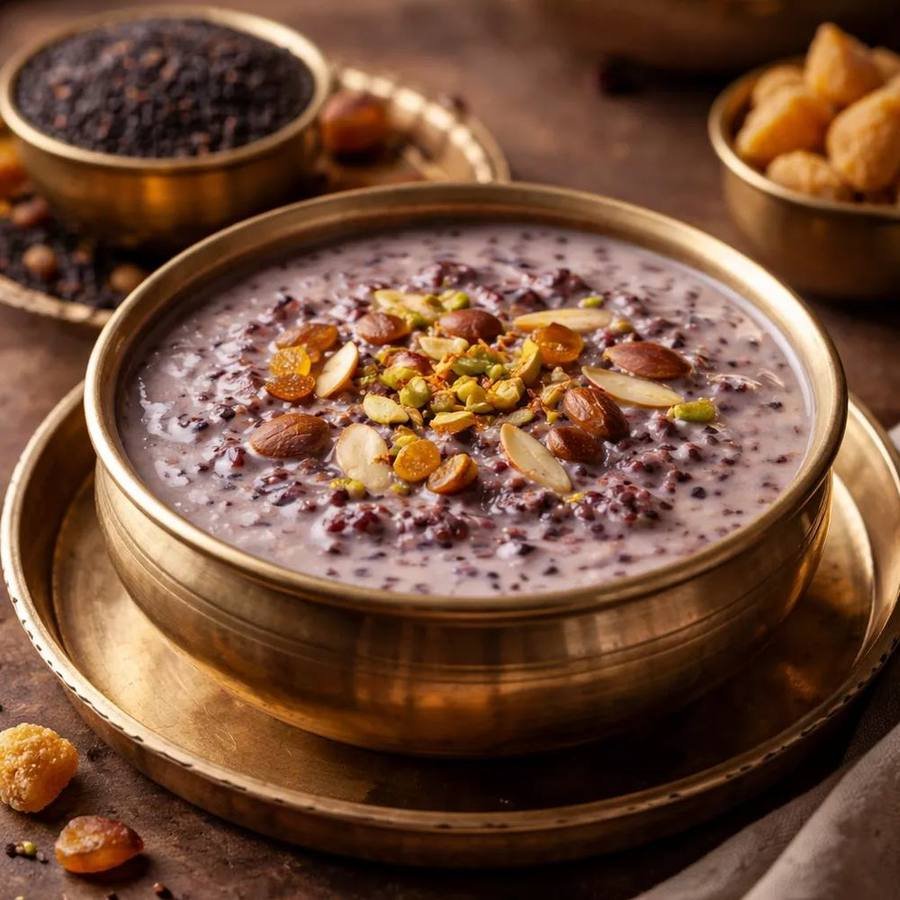
To understand the table in Manipur, begin with Black rice desserts: a dish whose flavour carries the state's ingredients and habits in miniature. A family of desserts made from chak-hao, Manipur's fragrant black rice — most famously a slow-cooked sweet pudding, as well as cakes and snacks.
A detail worth knowing before the first bite: chak-hao turns dishes a natural deep purple — no colouring is added. Keep that in mind as you read on, because Black rice desserts rewards eaters who notice how Manipur seasons, serves and shares its food.
Black rice desserts at a Glance
| State / UT | Manipur |
| Capital / base | Imphal |
| What it is | A family of desserts made from chak-hao, Manipur's fragrant black rice — most famously a slow-cooked sweet pudding, as well as cakes and snacks |
| Main ingredients | chak-hao black rice, milk or water, sugar or jaggery, cardamom, coconut in some preparations and bay leaves in traditional pudding |
| Taste | Naturally nutty and aromatic, mildly sweet, with the rice's own floral fragrance carrying the dish more than added flavouring |
| Texture | The pudding is soft, creamy and spoonable, the grains swollen and tender, turning deep purple as they cook |
| Usually eaten | The pudding is served warm or chilled as a dessert or festive sweet, in small portions because it is rich and filling |
| Occasion | Festive and ceremonial sweet, also served to honoured guests |
The Story on Manipur’s Table
Chak-hao is a prized aromatic black rice of Manipur with a long place in the valley's food culture, traditionally associated with ceremonial and festive use. Its pudding is the best-known preparation, and the rice is now recognised with a Geographical Indication tag. That context is essential in Manipur, where a plate can signal a harvest, a religious calendar, a market habit or the meeting of communities. Black rice desserts belongs in this atlas under Manipur because this is the setting in which its ingredients, accompaniments and meaning come together.
The state guide places Black rice desserts alongside Eromba, Singju and Chamthong. Start with the Manipur travel and food guide if you are planning where this tasting fits into a route.
Taste, Texture and Ingredients
Expect naturally nutty and aromatic, mildly sweet, with the rice's own floral fragrance carrying the dish more than added flavouring. Think the pudding is soft, creamy and spoonable, the grains swollen and tender, turning deep purple as they cook.
The ingredient list is best read as a structure rather than a shopping list: chak-hao black rice, milk or water, sugar or jaggery, cardamom, coconut in some preparations and bay leaves in traditional pudding.
How Black rice desserts Is Made
For the pudding, soaked black rice is simmered slowly in milk or water with sweetening and aromatics until soft and creamy-purple. Other desserts bake or steam the rice or its flour into cakes and snacks. Technique matters here: the same core ingredients can taste flat or vivid depending on how they are handled.
When Black rice desserts is made for a gathering, that timing also becomes social — food reaches the table as part of a shared rhythm, not as an isolated plate.
When and How It Is Eaten
The pudding is served warm or chilled as a dessert or festive sweet, in small portions because it is rich and filling. Its natural moment is festive and ceremonial sweet, also served to honoured guests.
Manipur’s broader food culture helps explain the serving style. The state is known for lakes, culture and dance, and its calendar includes Yaoshang and Lai Haraoba.
Where to Try It in Manipur
Try chak-hao pudding in Imphal restaurants and Manipuri food festivals, and look for packaged chak-hao rice in local markets. For a traveller, setting matters almost as much as seasoning.
Black rice desserts pairs naturally with time in Imphal and Loktak Lake, and can sit just as comfortably beside a quieter excursion to Andro or Keibul Lamjao.
More Dishes of Manipur
Continue through Manipur’s other signature plates and drinks below — each has its own page, photograph and story.


Frequently Asked Questions
What is Black rice desserts?
A family of desserts made from chak-hao, Manipur's fragrant black rice — most famously a slow-cooked sweet pudding, as well as cakes and snacks. Expect naturally nutty and aromatic, mildly sweet, with the rice's own floral fragrance carrying the dish more than added flavouring.
What are the main ingredients in Black rice desserts?
The defining ingredients or components are chak-hao black rice, milk or water, sugar or jaggery, cardamom, coconut in some preparations and bay leaves in traditional pudding. For the pudding, soaked black rice is simmered slowly in milk or water with sweetening and aromatics until soft and creamy-purple. Other desserts bake or steam the rice or its flour into cakes and snacks.
What does Black rice desserts taste like?
Expect naturally nutty and aromatic, mildly sweet, with the rice's own floral fragrance carrying the dish more than added flavouring. Think the pudding is soft, creamy and spoonable, the grains swollen and tender, turning deep purple as they cook. Serving pattern: The pudding is served warm or chilled as a dessert or festive sweet, in small portions because it is rich and filling.
When is Black rice desserts eaten in Manipur?
Festive and ceremonial sweet, also served to honoured guests. This entry covers a dessert family; the slow-cooked pudding is the most famous member.
Where can I try Black rice desserts in Manipur?
Try chak-hao pudding in Imphal restaurants and Manipuri food festivals, and look for packaged chak-hao rice in local markets. Pair a first tasting with Eromba and Singju to see how Black rice desserts sits within the wider Manipur table.
Every Place. Every Flavour.
Black rice desserts is one of 6 dishes and drinks profiled from Manipur — and one of 213 regional dishes across all 36 states and union territories in this atlas.
Open the Manipur guide Read the blog