
India Food Guide · West Bengal
What to Eat in Bengal: Rosogolla, Kosha Mangsho & Kolkata Classics

By Beauty of Bharat — India travel guide, every place, every flavour.
Guides covering all 36 States and UTs, researched from official sources and checked at publish time. Corrections welcome — see About Beauty of Bharat.
What is West Bengal famous for food-wise? Mishti first, fish second, and a street food culture that predates the trend by a century. The famous food of Bengal rests on two obsessions: sweets so refined they became a cultural identity (rosogolla, sandesh, mishti doi) and fish cooked in pungent mustard — shorshe ilish is the state's most romantic dish. Around those stand kosha mangsho, luchi aloor dom, the kathi roll, puchka, and Kolkata's grand old restaurants. Here are the 12 plates and places that define how Bengal eats.
Photos are the actual dishes from our food atlas; sections without a verified photo are text-only. Prices are rough late-2026 ranges.
Why Bengali food tastes like a river delta
Bengal is a river delta, and it eats like one: rice, fish and mustard oil from the water and the fields. Fish is the everyday protein — there is an old saying that a Bengali treats machh as a vegetable — while mustard (shorshe) is the defining flavour, sharp in a way no other Indian cuisine uses. Then came the Portuguese, who taught Bengal to curdle milk; that single trick gave the world rosogolla and sandesh. Eat in Bengal and you are eating geography — the delta's fish, its mustard fields, its sweet milk, and a colonial capital that turned eating into an art.
The mishti — Bengal's famous sweets
1. Rosogolla
The most famous food of West Bengal, full stop. Soft chhena (fresh cottage cheese) balls boiled in light syrup until they are spongy and barely hold together — eaten warm, they collapse into sweetness. The invention is credited to Nobin Chandra Das in Bagbazar, Kolkata, in 1868; his family later made it a global export under the K.C. Das name. Where to eat it best: K.C. Das on Esplanade for the original, or Balaram Mullick & Radharaman Mullick in Bhowanipore for the connoisseur's pick. What to pay: roughly ₹15–25 a piece. Eat it the same day it is made.
2. Sandesh
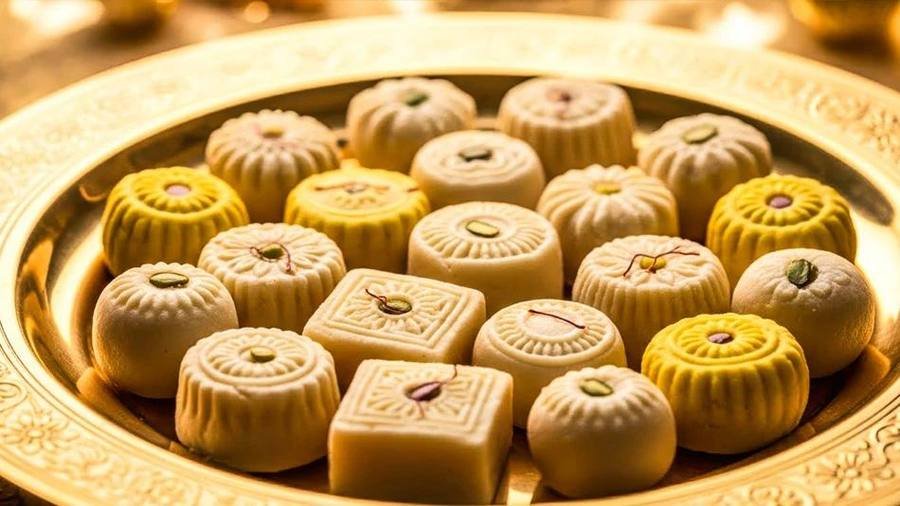
If rosogolla is the popular song, sandesh is the classical raga: fresh chhena kneaded with a whisper of sugar, sometimes flavoured with cardamom or saffron, then moulded into shapes. The best is eaten within hours — "nolen gurer sandesh" in winter, made with date-palm jaggery, is the season's holy grail. Where to eat it best: the old sweet shops of North Kolkata and Bhowanipore; winter mornings belong to nolen gur everything. What to pay: roughly ₹20–40 a piece for the good stuff. More on our sandesh dish page.
3. Mishti Doi

Bengal's set yoghurt, sweetened with caramelised sugar and set in earthen cups (bhaar) that wick away moisture and leave it spoon-standing thick. It closes every proper Bengali meal — and the cup, licked clean, is half the pleasure. Where to eat it best: any heritage sweet shop; the earthen cup is non-negotiable. What to pay: roughly ₹25–40 a cup. More on our mishti doi dish page.
Fish — the delta on a plate
4. Shorshe Ilish

The dish Bengalis write poetry about. Hilsa (ilish) — the silvery, bone-rich, impossibly fragrant fish of the monsoon rivers — steamed in a paste of ground mustard, green chillies and raw mustard oil. Pungent, oily, glorious, eaten with plain steamed rice and nothing else to distract you. Where to eat it best: in season at traditional Bengali restaurants in Kolkata; around Durga Puja, quality peaks. What to pay: roughly ₹300–500 a portion in season — genuine ilish is never cheap. More on our shorshe ilish dish page.
5. Macher Jhol
The everyday fish curry that built a cuisine: freshwater fish simmered in a thin, tomato-and-potato gravy with turmeric, cumin and green chillies — light enough for lunch every single day. Where to eat it best: the "pice hotels" of Kolkata's office para — canteen-style rice-and-fish lunches served on steel plates. What to pay: roughly ₹150–250 for a full fish lunch. More on our macher jhol dish page.
Meat & Sunday rituals
6. Kosha Mangsho
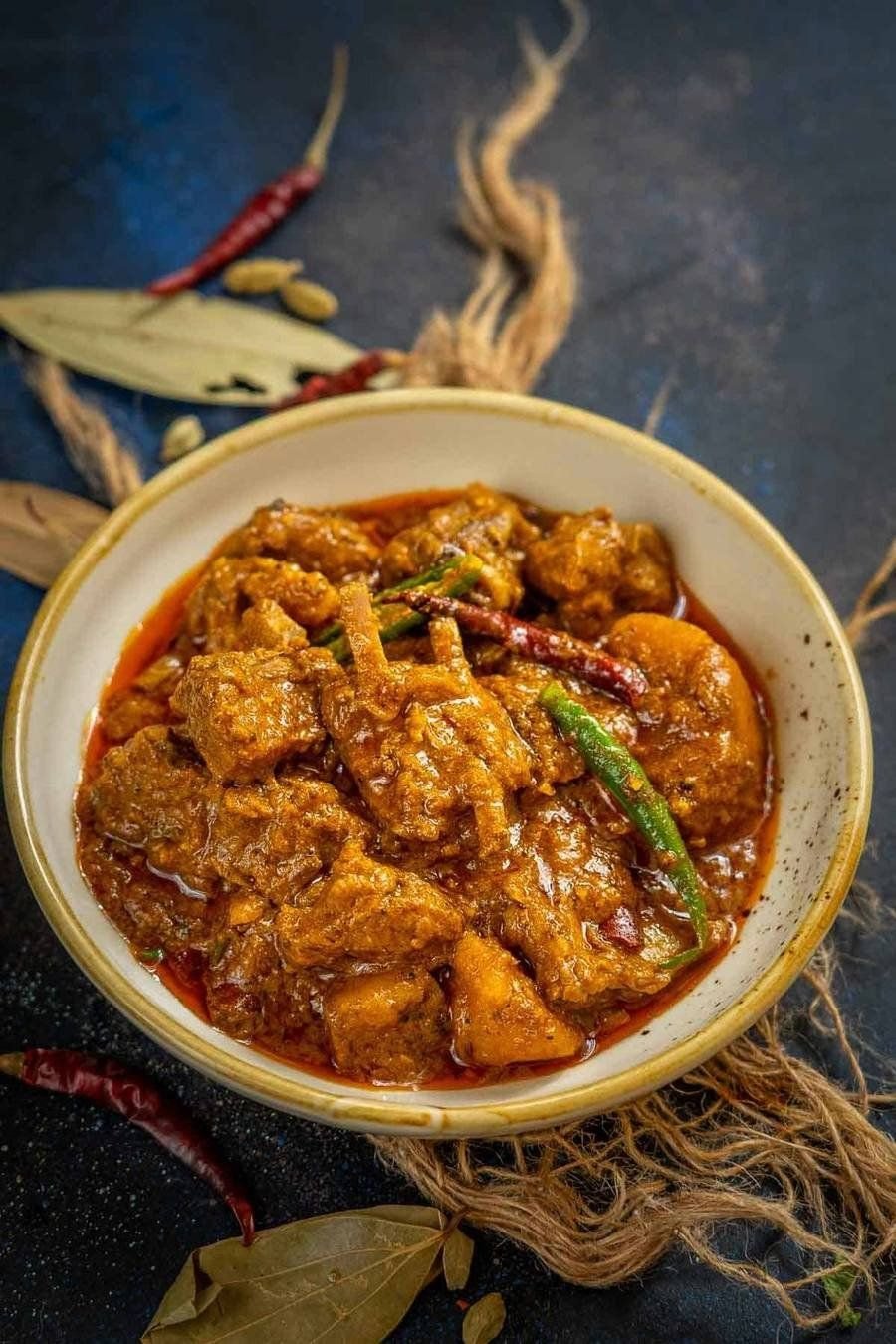
The Sunday lunch of Bengal: mutton braised low and slow in its own juices with onions, ginger and garam masala — until the gravy darkens, thickens and clings to the meat like lacquer. The Shyambazar institution Golbari has been the pilgrimage site for this dish for generations. Where to eat it best: Golbari at Shyambazar, or any old Bengali cabin on a Sunday afternoon. What to pay: roughly ₹250–400 a portion. More on our kosha mangsho dish page.
7. Chingri Malai Curry
The festive showpiece: large prawns simmered in coconut milk with turmeric, ginger and green chillies — mild, creamy and faintly sweet, served at weddings and celebrations. It is the gentle counterpoint to the mustard-sharp fish dishes. Where to eat it best: traditional Bengali restaurants during wedding season (winter) and Puja. What to pay: roughly ₹280–450 a portion.
Everyday classics & street food
8. Luchi Aloor Dom
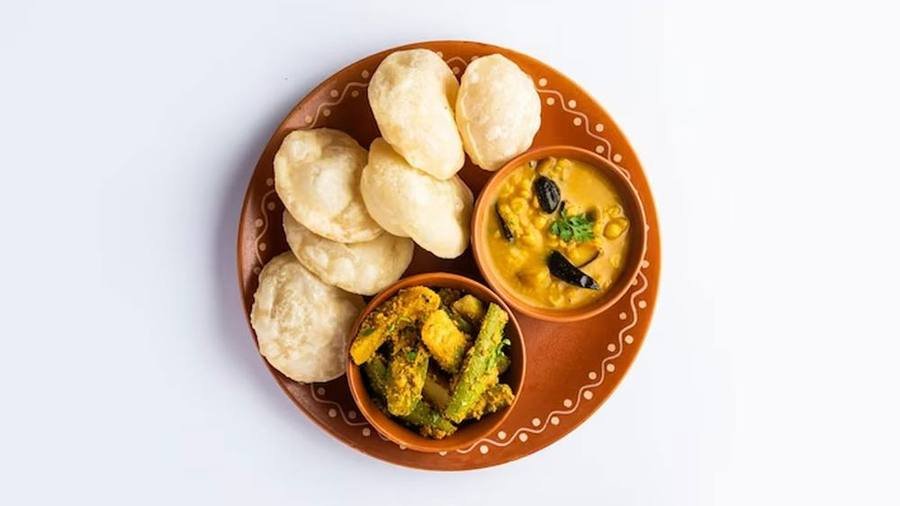
Bengal's beloved breakfast: luchi — the pale, puffed, maida-flour cousin of the puri — torn and scooped through aloor dom, a dark, spicy potato curry. Crisp-edged luchi against slow-cooked potato is one of Indian food's great texture pairings, and Sunday mornings in Kolkata run on it. Where to eat it best: old sweet-shop breakfast counters across North and South Kolkata. What to pay: roughly ₹60–120 a plate. More on our luchi aloor dom dish page.
9. Kathi Roll
Kolkata's gift to the world's street food: flaky paratha wrapped around skewer-grilled kebab, onion and green chilli — invented at Nizam's in New Market in 1932, when the kebab-maker started wrapping meats in paratha so hurried customers could eat on the move. The double-egg chicken roll is the canonical order. Where to eat it best: Nizam's at New Market for the original; Kusum Rolls on Park Street for the local favourite. What to pay: roughly ₹60–140 a roll.
10. Puchka & Jhal Muri
Puchka is Bengal's pani puri — a crisper shell, tangier tamarind water, spiced mashed-potato filling — eaten in one bite, standing at the cart. Jhal muri is the adda snack: puffed rice tossed with mustard oil, roasted peanuts, chopped onion and green chilli, mixed in a paper cone. Where to eat it best: the puchkawalla outside any para (neighbourhood) at dusk; Vivekananda Park in South Kolkata is a famous hunting ground. What to pay: roughly ₹30–60 a plate. More street legends in our best street food in India guide.
Kolkata institutions — where the city eats its history
11. Park Street legends: Flurys, Mocambo, Peter Cat

Park Street is Kolkata's edible heritage district. Flurys (1927) is the grand tearoom — rum balls, Swiss rolls and the famous English breakfast. Mocambo has served old-school continental since 1948. Peter Cat is where generations have queued for the Chelo Kebab. What to pay: roughly ₹800–1,500 for two.
12. Tiretta Bazaar & the pice hotels
Two working-class legends. Tiretta Bazaar — old Chinatown — hosts India's only Chinese breakfast street: at dawn, hawkers sell steamed momos, fish-ball soup and pork buns before the stalls vanish by 8 am. And the pice hotels of the office para serve the honest Bengali lunch — rice, dal, a vegetable, fish curry — on steel plates, priced for the people. What to pay: roughly ₹30–80 at Tiretta Bazaar; ₹150–250 for a pice-hotel lunch.
Where to eat in Kolkata: the short guide
Sweets first: Esplanade (K.C. Das) and Bhowanipore (Balaram Mullick) are the two historic sweet addresses; in winter, chase nolen gur (date-palm jaggery) versions of everything. New Market is kathi-roll country. Park Street is the heritage-restaurant strip. Shyambazar is kosha-mangsho territory. Tiretta Bazaar is the dawn breakfast run. And in October, everything orbits Durga Puja — the pandals feed the city for five days.
Practical tips: fish seasons, veg-friendliness, eating well
- Ilish is a monsoon fish — June to September is the season; off-season "ilish" is usually frozen and a different experience. Prices peak around Durga Puja.
- Vegetarians eat very well here — shukto (bitter-vegetable medley), aloo posto (potato in poppy-seed paste), begun bhaja (fried brinjal) and the entire mishti universe are vegetarian; a standard Bengali meal is mostly veg with one fish or meat item.
- Mustard oil is the flavour — shorshe dishes are pungent by design. New to it? Start with chingri malai curry or macher jhol.
- Sweets are bought by the piece and eaten the same day — morning-bought sandesh beats evening-bought.
- Carry cash for street carts — the best puchka and jhal muri stalls are cash-first.
- Best eating months are October to February — Puja season, then winter's nolen gur.
Watch: Feel Bengal's Food Before You Go
Two short films to feel the cuisine before you go: a street-food run through Kolkata — kathi rolls, puchka and the viral stalls — and a slow vegetarian food walk through old Kolkata's Burrabazar. Press play and start travelling.
Frequently Asked Questions
What is the most famous food of West Bengal?
Rosogolla is the state's signature — the soft chhena sweet invented in Kolkata in 1868. On the savoury side, shorshe ilish (hilsa in mustard) and machher jhol (everyday fish curry with rice) are the dishes Bengalis are most identified with.
Which shop sells the best rosogolla in Kolkata?
The two historic names are K.C. Das on Esplanade and Balaram Mullick & Radharaman Mullick in Bhowanipore. Buy them fresh and eat the same day.
When is hilsa (ilish) season in Bengal?
Monsoon, roughly June to September, when hilsa swims upriver to spawn. Prices peak around Durga Puja in October. Off-season ilish is usually frozen and not the same fish.
Is Bengali food good for vegetarians?
Yes. Shukto, aloo posto, begun bhaja, luchi-aloor dom, dal and the entire mishti range are vegetarian, and a traditional Bengali meal is mostly vegetables with one fish or meat preparation.
Where do locals actually eat in Kolkata?
Office workers eat at pice hotels for rice-and-fish lunches, dawn belongs to Tiretta Bazaar's Chinese breakfast hawkers, New Market is kathi-roll country, and the sweet shops come before everything else.
Twelve plates, one delta, and a city that treats eating as a cultural duty. For the rest of the state's table, see our best food in India guide and famous food of Rajasthan — and browse more on the blog.
Explore West Bengal's Full Guide
Kolkata, Darjeeling, the Sundarbans — and the complete food atlas.
Open the full West Bengal guide →