
Travel Guide · Kolkata
In a maze of narrow lanes in North Kolkata, in workshops open to the sky, men and women are shaping the goddess out of river mud. This is Kumartuli — the potters' quarter where every Durga idol in Kolkata begins, and where the story of the goddess and the buffalo-demon Mahishasura is made real in clay, straw and paint. Durga Puja 2026 has concluded; the next making season runs through August and September 2027, and this is the guide to visiting it.
Kumartuli is not a museum. It is a working neighbourhood, and it has been one for more than 250 years. The potters here — the kumars — were brought to Kolkata from Krishnanagar, Nabadwip and Shantipur in the 1700s, when the city was still new, and their families have been making the city's gods ever since. A visit here is the other half of Durga Puja: the festival is the goddess on display, and Kumartuli is where she is born.
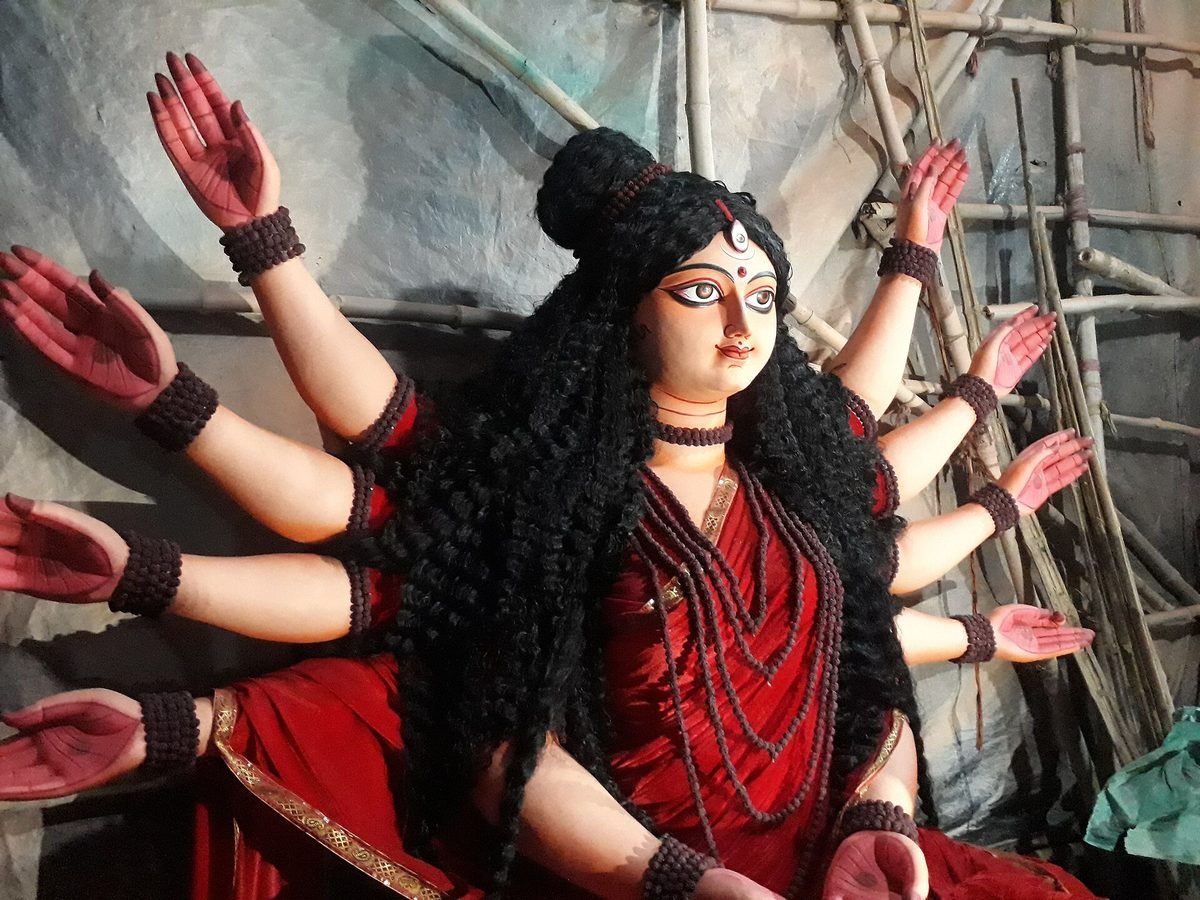
Kumartuli is the traditional potters' quarter of North Kolkata, between Rabindra Sarani and the Hooghly river. Its main street is Banamali Sarkar Street. The nearest metro station is Sovabazar Sutanuti on the Blue Line, about a 600-metre walk away. There is no entry fee — it is a public neighbourhood, not a ticketed attraction.
The best time to visit is August to early October. That is the making season, when the workshops are full of idols in every stage of construction — bare straw frames, half-finished clay bodies, and finished goddesses waiting for their eyes. Outside the season the workshops are quieter, but the potters work year-round on idols for other festivals too.
The idols are made from Hooghly river clay over straw-and-bamboo armatures. The eyes are painted last, in a rite called Chokkhu Daan, around Mahalaya — the moment the goddess is said to come alive. Ask before photographing artisans close up, and do not touch the idols.
Kumartuli sits in North Kolkata, between Rabindra Sarani — one of the city's oldest streets — and the Hooghly river. The main street is Banamali Sarkar Street, and the workshops line the lanes running off it towards the river.
The nearest metro station is Sovabazar Sutanuti on the Blue Line, about 600 metres away. From the station, walk north towards the river and ask anyone for Kumartuli — everyone in the area knows it. The lanes are narrow and unmarked, so the best approach is to wander: the workshops are open-fronted, and you will hear and smell the work before you see it.
There is no entry fee and no ticket. Kumartuli is a residential and working neighbourhood, not a tourist site, so you are walking through people's workplaces and homes. That is the point — and it is also why the etiquette matters. Do not block a workshop entrance, do not touch the idols, and ask before taking close photographs of the artisans at work. A small tip for a potter who poses for a photograph is appreciated but never expected.
Nearby, within walking distance: the Shobhabazar Rajbari, the 1757 palace where the modern Durga Puja began under Raja Nabakrishna Deb; the Dhakeswari Mata Temple; and Kumartuli Ghat and Bagbazar Ghat on the Hooghly, where the idols are immersed on Dashami. The Kumartuli Park Sarbojanin Puja, one of the neighbourhood's own community pandals, dates to 1933.
A Durga idol begins as a skeleton. The potter builds an armature of straw bound over a bamboo frame, shaping the body, the ten arms and the lion. Then comes the clay — first a coarse layer of Hooghly river clay mixed with straw, then finer and finer layers, until the surface is smooth enough to paint. The whole process takes weeks, and a large idol can take a team of artisans a month or more.
The clay matters. The potters use clay from the Hooghly river, and the tradition holds that a pinch of soil from a courtesan's doorway — punyamati — is mixed into the clay, because the goddess accepts offerings from everyone, including those society rejects. Whether or not every idol still carries that pinch, the story is part of what Kumartuli means.
The eyes come last. Chokkhu Daan — the giving of the eyes — is the final and most sacred step. The master artisan paints the goddess's eyes, usually around Mahalaya, and that is the moment the idol is said to come alive. Photographers gather in Kumartuli for Chokkhu Daan, and it is the single most-photographed moment of the making season. If you visit in the days before Mahalaya, you may see it happen.
Then the idol is dressed, jewelled and painted — the sari, the crown, the weapons in each of the ten hands — and carried out of the workshop to its pandal, on the shoulders of men, through the lanes, to the sound of drums. The making is finished. The festival begins.
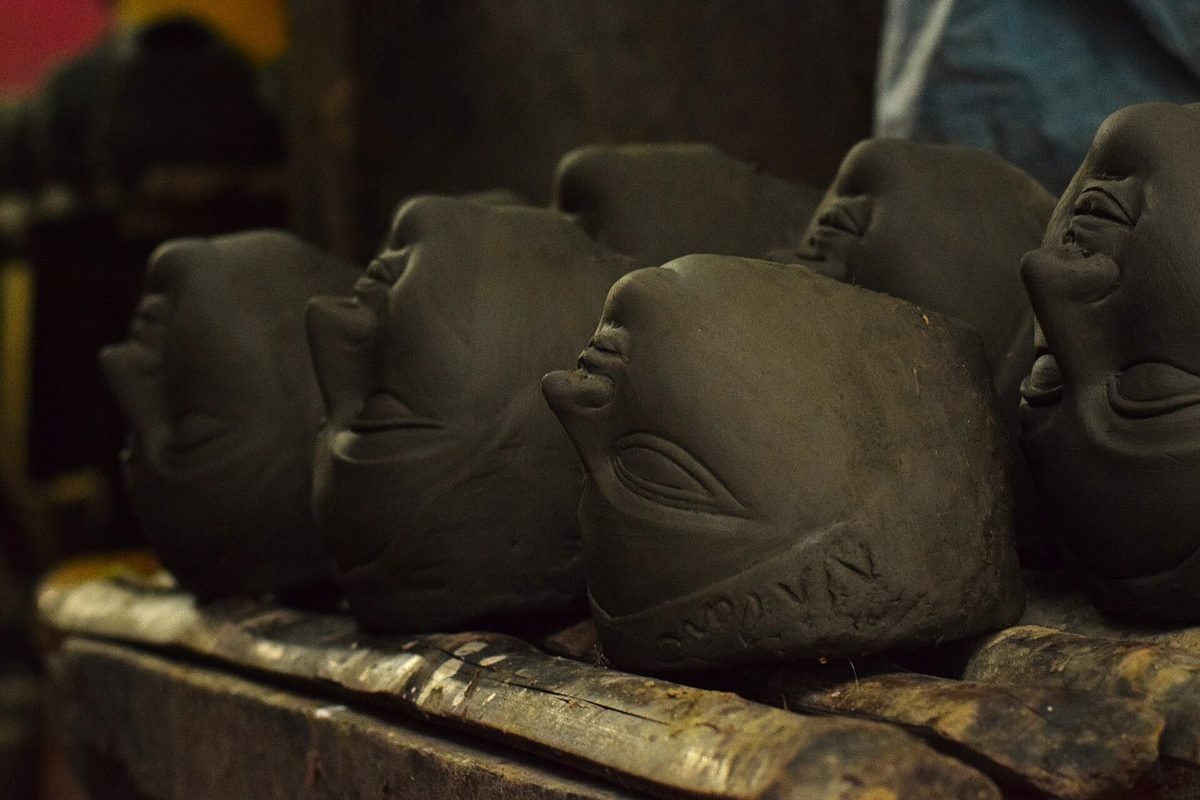
August to early October is the making season. By August the workshops are full of straw frames; by September the clay work is at its peak; in the last two weeks before the Puja the painting and dressing happen, and the lanes fill with finished idols waiting to be carried out. This is the best time to visit, and the busiest — come in the morning, when the light is good and the workshops are at work.
The days around Mahalaya are the most special. Mahalaya in 2027 falls on Wednesday 29 September, and Chokkhu Daan — the painting of the eyes — happens around then. If you can time your visit for the week before the Puja, you will see the idols at their most complete and the workshops at their most intense.
Outside the season, Kumartuli is quieter but still working. The potters make idols year-round — for Kali Puja, Saraswati Puja, Jagaddhatri Puja and other festivals — so there is always something to see. But the Durga season is when the quarter is at its fullest, and it is the season to aim for.
Kumartuli is one of the most photographed places in Kolkata, and the potters are used to cameras. But it is their workplace, not a studio, and a little respect goes a long way.
Ask before photographing artisans close up. A smile and a gesture at your camera is usually enough. Do not photograph children without asking their parents. Do not use flash on wet clay — it does nothing for the photograph and everything for the glare.
Do not touch the idols. The clay is fragile, the paint is fresh, and a fingerprint is damage. Keep your hands off the work, and keep your bag clear of the frames.
The best light is morning. The workshops face east and west down narrow lanes, and the morning light rakes across the clay in a way that afternoon light does not. Arrive before 10 AM for the best photographs and the quietest lanes.
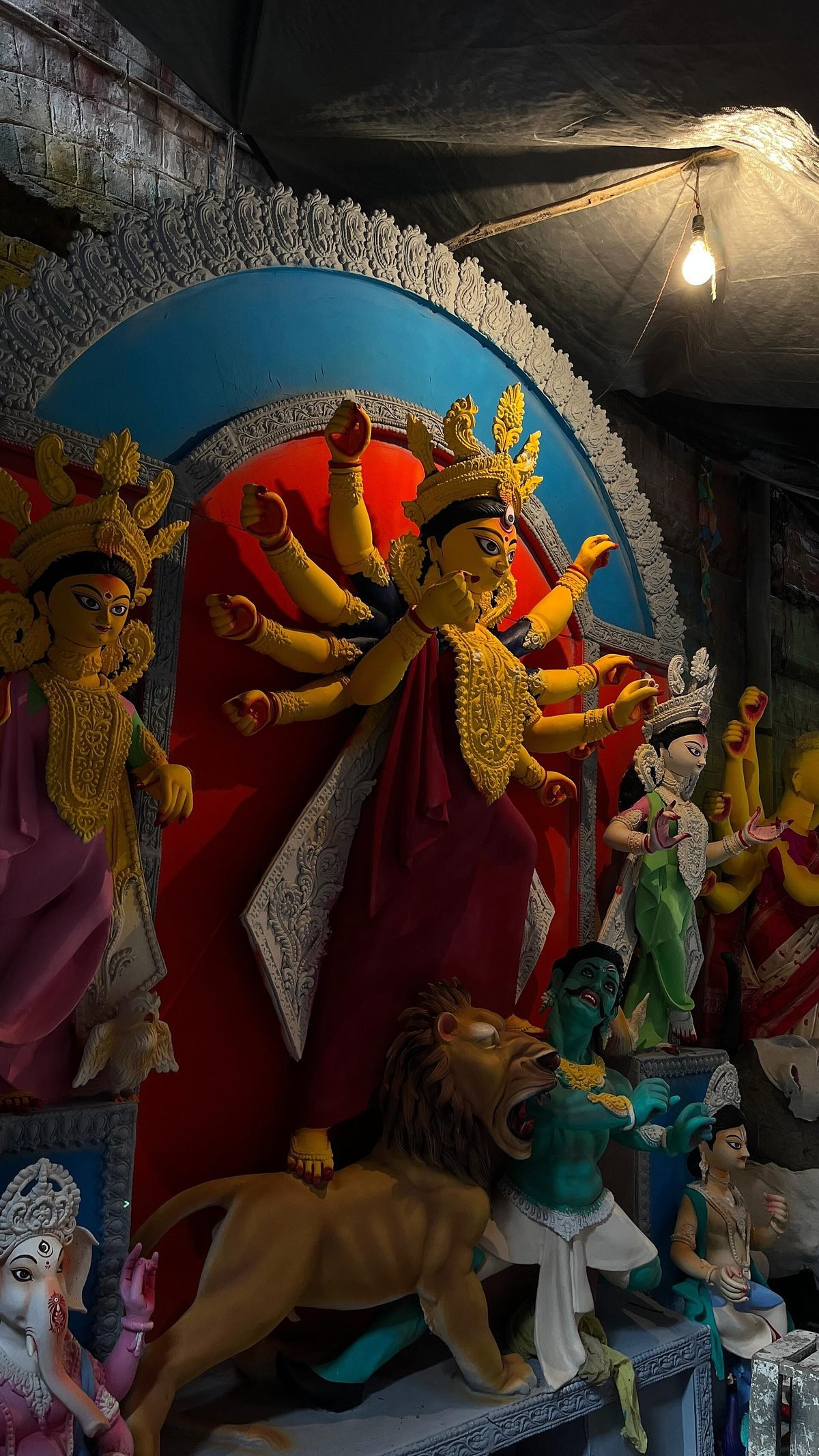
Every idol in Kumartuli tells the same story, and it is the story the whole festival is built on. Mahishasura was a buffalo-demon, the son of Rambha, who had won a boon from Brahma: no man and no god could kill him. Armed with that promise, he drove the gods from heaven and ruled in their place.
The gods, defeated, pooled their power. From their combined shakti — their energy — a goddess was born: Durga, ten-armed, riding a lion, carrying a weapon from each god. She went to meet Mahishasura, and they fought for nine days and nine nights. The battle is told in the Devi Mahatmya, the third chapter of the Markandeya Purana, a text from around the 6th century CE.
The end of the battle is what every Kumartuli idol shows. Durga binds Mahishasura with her noose, sets her foot on his neck, and drives her trident through him as he emerges from the body of the buffalo. That is why the idol always has a buffalo at her feet, and why the demon is shown half-man, half-buffalo, caught in the moment of his defeat. Durga's epithet from this victory is Mahishasuramardini — the slayer of Mahishasura.
The story is older than Kolkata. It is carved in stone at the Mahishasuramardini Mandapa in Mamallapuram, a 7th-century cave temple, where the same scene — the goddess, the lion, the buffalo — is cut into the rock. In Kumartuli the same scene is made fresh every year, in clay, and then given back to the river.
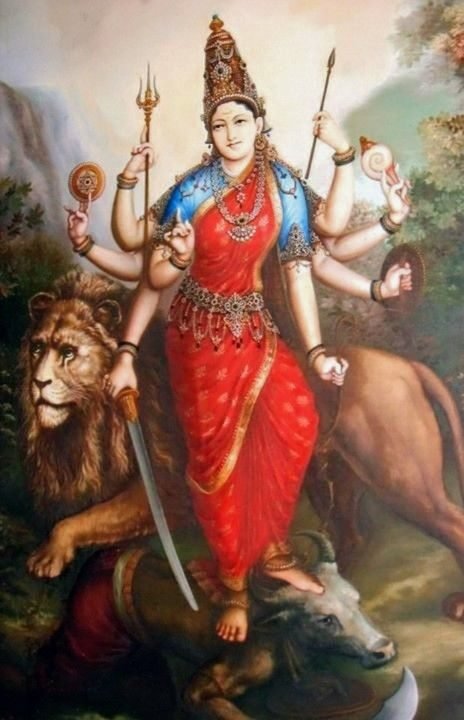
The story is also sung. The Mahishasura Mardini Stotram — the hymn "Aigiri Nandini" — is the devotional song most associated with the goddess's victory, and it is the hymn at the heart of the Mahalaya morning radio broadcast that begins the festival. You will hear it everywhere in Kolkata in the days before the Puja.
That is the loop the festival runs on: a story from a 1,400-year-old text, made in clay by hand in a North Kolkata lane, worshipped for five days, and immersed in the river. Kumartuli is where the loop starts. Go and see it being made — and then, in October, go and see it worshipped. Read our Durga Puja 2027 guide for the dates, the pandals and the routes, and our Durga Puja 2027 festival page for the full dates.
Kumartuli is the traditional potters' quarter of North Kolkata, between Rabindra Sarani and the Hooghly river. Its main street is Banamali Sarkar Street. The nearest metro station is Sovabazar Sutanuti on the Blue Line, about a 600-metre walk away.
Sovabazar Sutanuti on the Blue Line, about 600 metres from the workshops. Walk north towards the river from the station and ask anyone for Kumartuli.
The idols are built over straw-and-bamboo armatures, then layered with Hooghly river clay — coarse first, then finer — until the surface is smooth enough to paint. The eyes are painted last, in a rite called Chokkhu Daan, around Mahalaya. The whole process takes weeks.
August to early October, during the making season, when the workshops are full of idols in every stage of construction. The days around Mahalaya — 29 September in 2027 — are the most special, when the eyes are painted and the finished idols are carried out.
Mahishasura was a buffalo-demon who had a boon that no man or god could kill him. The gods pooled their power and created Durga, who fought him for nine days and nights, then bound him with her noose, set her foot on his neck, and killed him with her trident as he emerged from the buffalo. The story is told in the Devi Mahatmya, part of the Markandeya Purana (around the 6th century CE).
No. Kumartuli is a public neighbourhood, not a ticketed attraction. It is a working quarter — ask before photographing artisans close up, and do not touch the idols.
Yes, and it is one of the most photographed places in Kolkata. Ask before taking close photographs of artisans, do not photograph children without asking, and do not use flash on wet clay. The best light is in the morning, before 10 AM.