
Jodhpur · Markets & Shopping
Best Shopping Markets in Jodhpur

By Beauty of Bharat — India travel guide, every place, every flavour.
Guides covering all 36 States and UTs, researched from official sources and checked at publish time. Corrections welcome — see About Beauty of Bharat.

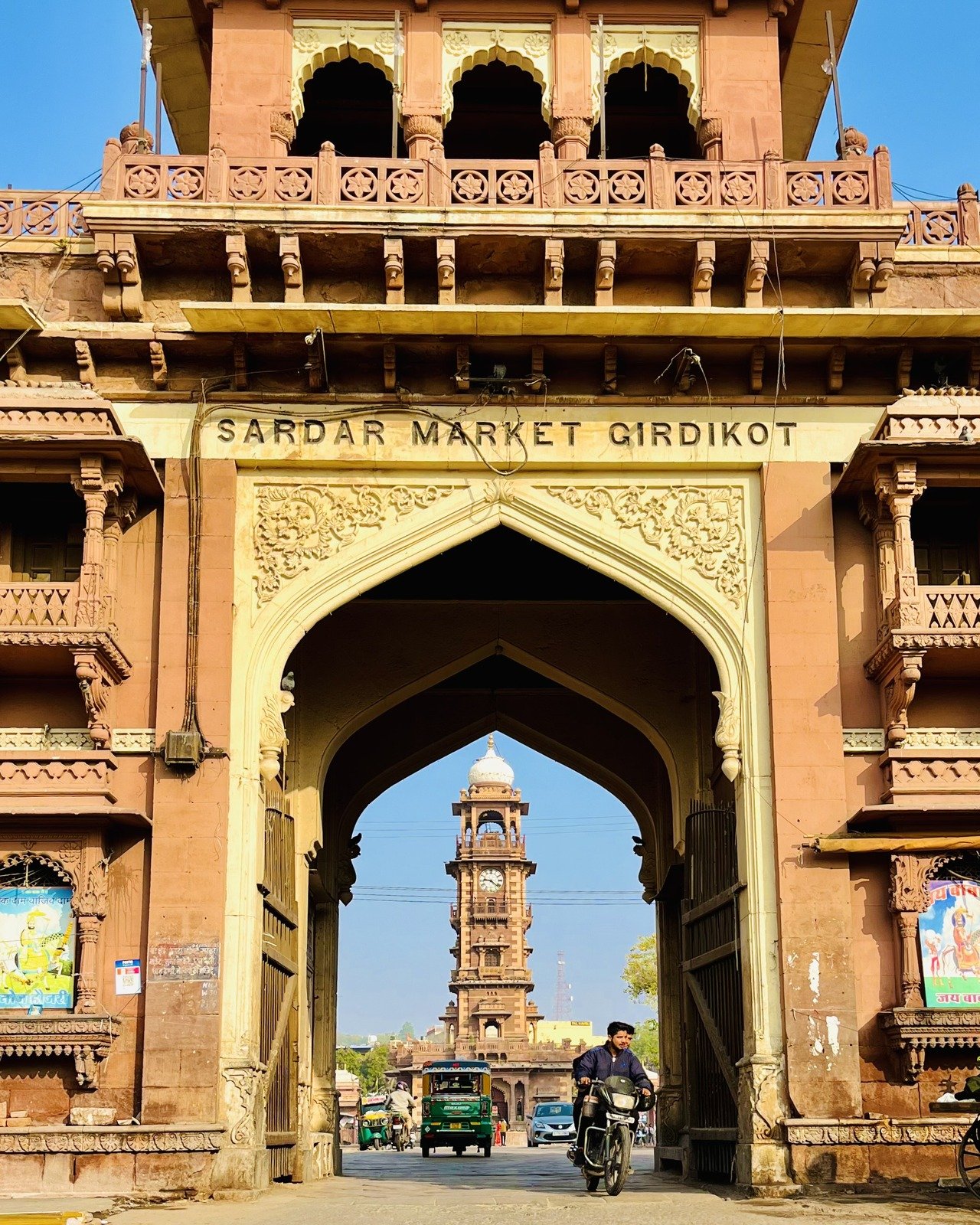
Jodhpur’s most famous market is entered through a gate whose name means “crowded gateway” — Girdikot — and the crowd is the point. One guide counts six to seven thousand shops in Sardar Market alone, all of them arranged around a clock tower built by the maharaja the market is named after. The short answer: start at Sardar Market and the Clock Tower for spices and a bit of everything, walk out through Nai Sarak for fabrics, then go to Sojati Gate for mojaris and Mochi Bazaar for leather, with Sarafa Bazaar for silver and Tripolia Bazaar for bangles. October to March is the season to do it in, and late afternoon is the hour.
The Best Shopping Markets in Jodhpur at a Glance
| Market | Best for | Rough hours |
| Sardar Market & Clock Tower | Spices, textiles, handicrafts, souvenirs, street food | About 10 am–9 pm |
| Nai Sarak | Bandhani, leheriya, saris, dress material, footwear | About 10 am–9 pm |
| Sojati Gate | Mojaris, juttis, clothes, everyday shopping | Daytime to evening |
| Mochi Bazaar | Handmade leather mojaris and juttis | Daytime to evening |
| Tripolia Bazaar | Lac bangles, Bandhani, wholesale textiles | Daytime to evening |
| Sarafa Bazaar | Silver jewellery, Kundan designs | Daytime to evening |
| Umaid & Airport Road | Antiques, carved furniture, metalwork | Daytime |
Hours are ranges only: published timings disagree from guide to guide, and some shops close on Sundays or around festivals, so check before you go.
Sardar Market & Clock Tower: the Heart of Jodhpur Shopping
Sardar Market is where every Jodhpur shopping trip starts, and it is the one market no other Rajasthani city can quite match. The market wraps around the Ghanta Ghar, the Clock Tower built by Maharaja Sardar Singh — the market takes its name from him, and Rajasthan Tourism lists the tower and the market together as one of the city’s landmarks, famous for spices, traditional clothes and fancy jewellery. You enter through the Girdikot gate, the “crowded gateway”, and the lanes fan out from there: spice shops with pyramids of Mathania red chilli, hand-ground masalas and herbal teas, textile stalls in bandhej and block print, silver and imitation jewellery, lacquer bangles, wooden toys, brassware, marble pieces, puppets and antiques. Most guides put the hours at about 10 am to 9 pm, with the best atmosphere between 4 pm and 7 pm. Come hungry: mirchi vada, mawa kachori and makhaniya lassi are the classics around the square. Bargaining is expected — one guide suggests opening at about 40 to 50% of the first quote and settling somewhere in the middle, staying friendly.
Nai Sarak: Fabrics, Saris and the Clothes Lanes
Nai Sarak, just outside Sardar Market, is the fabric street. The shops at the Girdikot entrance have long been lined with saris and shoes, and the street runs on dress material: bandhani and leheriya in every colour, sarees, suit pieces, dupattas and readymade clothing at budget-friendly prices. It is the stop for textiles in quantity and for the everyday clothes shopping the city itself does. Come here after the Clock Tower, when you know what you want — the lanes are busy and the choice is wide, so a short list helps. Ask to see the work where bandhani is sold: cloth pinched and tied into tiny dots before dyeing should show slight irregularities, which mean hands did the work.
Sojati Gate Market: Mojaris, Clothes and Everyday Shopping
Sojati Gate is the practical market of the set. The lanes around the gate are known for traditional mojari and jutti footwear, clothes and everyday shopping — less spectacle than Sardar Market, more useful buying. If the Clock Tower lanes are where you browse, Sojati Gate is where you buy the pair of shoes you will actually wear home. Try both feet before you pay: handmade leather stretches with wear, and the fit on the second foot is the one that matters. The same lanes carry dress material and ready-to-wear at local prices.
Mochi Bazaar: the Cobbler’s Lane for Handmade Leather
Mochi Bazaar is the narrow lane the name promises: the cobbler’s market, dedicated to handmade leather mojaris and juttis. The shoes here are the real thing — embroidered leather, made by hand, in styles from plain everyday pairs to heavily worked wedding footwear. Check the stitching and the finish before you buy, and look at the sole: a well-made mojari should feel solid, not stiff. Embroidered pairs make the best gifts because they pack flat and light, and a good pair only gets more comfortable.
Tripolia Bazaar: Lac Bangles, Bandhani and Wholesale Lanes
Tripolia Bazaar, just outside Sardar Market, is the traditional bangle and textile market: lanes lined with colourful lacquer bangle shops and Bandhani textile stores, with a wholesale side that rewards patient browsers. This is where to buy bangles by the set rather than the single piece, and where the deeper lanes feel most like the old city’s working market. Pair it with the Clock Tower rather than treating it as a separate half-day. The same lanes are a good place to compare bandhani across several shops before committing to a saree or a length of dress material.
Sarafa Bazaar: Silver and Kundan Jewellery
Sarafa Bazaar is the jewellery quarter, known for silver ornaments and traditional Kundan designs. Buy from reputable sellers and ask for purity details before you choose: for silver, ask for the rate per gram and look for the BIS hallmark, which certifies the silver content. Chunky tribal-style pieces — bangles, earrings and necklaces — are the local style, alongside finer Kundan work. Check the going rate at a reputable shop first, then bargain in the lanes with a number in mind. Our best shopping markets in Jaipur guide covers the same trip’s other jewellery city.
Umaid & Airport Road: Antiques, Furniture and Metalwork
The antique and furniture trade sits away from the old-city lanes, in the shops around Umaid Bhawan Palace and the warehouses along Airport Road. The stock is carved doors and window frames, restored colonial-era furniture, metalwork and decorative pieces — the big, heavy buys that make Jodhpur a furniture destination as much as a textile one. Be cautious about authenticity claims for antiques, and ask about shipping before you fall in love with a carved door: freight is part of the price. If you have a half-day to spare, Salawas village, about 22 kilometres from the city towards Pali, is a centre for hand-woven cotton carpets and durries, pottery and block printing, where you can watch the weavers and potters at work — Rajasthan Tourism lists it among the craft stops around Jodhpur.
Shopping in Jodhpur in December: the Best Month
December is when Jodhpur’s markets are at their fullest. The best shopping season runs from October to March, when the weather is pleasant enough to walk the old-city lanes, and by December every stall is open and the wedding season brings extra crowds to the jewellery and textile lanes — so the good pieces go early in the day. Our Rajasthan in December guide covers the month beyond the markets. Travelling in the new year? See Rajasthan in January.
Best Shopping Places in Jodhpur for Clothes
If clothes are the whole trip, start at Nai Sarak for bandhani and leheriya sarees, dupattas, dress material and wedding wear, then try Sojati Gate for Rajasthani suits, kurtas and footwear at local prices, with Tripolia Bazaar for Bandhani by the metre. For wedding shopping, the Nai Sarak and Tripolia lanes are the ones the city itself uses. A Jodhpuri suit — the bandhgala jacket the city gave its name to — is the tailored buy, so allow time for fittings if you order one. See our best shopping markets in Udaipur guide for the same trip’s other city.
What to Buy in Jodhpur
Spices: Mathania Chillies and Masalas
The spice buy in Jodhpur starts with Mathania red chilli — the local variety, mild but flavourful — and runs through garam masala, turmeric, cumin, coriander and Rajasthani blends like dal-bati-churma and ker-sangri masala. The Clock Tower lanes are where the spice trade concentrates, and many shops will vacuum-pack for travel, which is worth asking for: ground spices lose their scent fast in an open bag. Buy saffron only from a shop you trust, since it is the most faked spice in any Indian bazaar. Our famous food of Rajasthan and what to eat in Rajasthan guides cover the dishes these spices go into.
What Souvenirs to Buy in Jodhpur
Jodhpur’s own crafts are the souvenirs that come from here: embroidered mojaris, lac bangles, kathputli puppets, clay figurines, miniature camels and elephants, block-printed bedcovers and scarves, marble inlay work and blue pottery. A pair of mojaris or a lac bangle set packs easily; a marble box does not, so check the weight before you fly. Antiques and curios are fun to browse, but treat age claims with care and buy the object, not the story.
Mojaris, Bandhani and Silver: the Wearable Buys
The wearable buys are mojaris, bandhani and silver. Mojaris are best bought in Mochi Bazaar or around Sojati Gate. Bandhani is cloth pinched and tied into tiny dots before dyeing; leheriya gives diagonal waves — look for slight irregularities, which mean hands did the work, and buy the dupatta or saree from Nai Sarak or Tripolia rather than the first stall you see. Silver is best bought in Sarafa Bazaar, asking for the rate per gram and the BIS hallmark. For ladies, the classic Jodhpur set is a bandhani dupatta, a pair of embroidered mojaris and a silver bangle or two — all three pack light and all three are made here.
Shopping Tips: Bargaining, Timings and Getting Around
Bargaining is expected in Sardar Market, Tripolia Bazaar and the small stalls, and not at fixed-price emporiums or established galleries, where prices are set. Most guides suggest opening at about 40 to 50% of the asking price and being ready to walk away — the next stall sells the same thing. Carry cash as well as UPI: the smallest stalls are still cash-friendly. Autos can drop you at the market gates, but the lanes are narrow and crowded, so walk once you are inside. Walk the lanes in one circuit — the Clock Tower and spice lanes in the late afternoon, Nai Sarak and Sojati Gate in the morning. Go early, between 9 and 11 am, for lighter crowds, or in the evening when it is lively and cooler. Treat every timing as a range and check before you go: some shops close on Sundays or around festivals. See our best places to visit in Rajasthan guide, our best places to visit in India guide and our state-by-state guide for the trip around the shopping.
Watch & Feel the Place
Videos are by their respective creators.
Best Shopping Markets in Jodhpur FAQs
Which is the best market in Jodhpur?
Sardar Market, around the Clock Tower, is the best first stop: spices, textiles, handicrafts, jewellery and street food in one place. Add Nai Sarak for fabrics, Sojati Gate and Mochi Bazaar for mojaris, Sarafa Bazaar for silver, and Tripolia Bazaar for lac bangles and Bandhani.
What is famous to buy in Jodhpur?
Mathania red chillies and Rajasthani spice blends, bandhani and leheriya textiles, handmade leather mojaris, lac bangles, silver jewellery, blue pottery, puppets and miniature camels and elephants, and antique and reproduction furniture.
What are the timings of Sardar Market Jodhpur?
Most guides put Sardar Market at about 10 am to 9 pm daily, with some food stalls open later. Published timings disagree — some guides say 9 am to 9 pm, others 10:30 am to 8:30 pm — so treat the hours as a range. The best time to go is between 4 pm and 7 pm, and some shops close on Sundays or around festivals.
What souvenirs to buy in Jodhpur?
A pair of embroidered mojaris, a bandhani dupatta, a set of lac bangles, a kathputli puppet or a clay figurine, a packet of Mathania chilli or a spice blend, or a small marble or blue pottery keepsake. Mojaris and dupattas pack light; marble does not, so check the weight before you fly.
What to buy in Jodhpur for ladies?
Bandhani and leheriya sarees and dupattas from Nai Sarak or Tripolia Bazaar, embroidered mojaris from Mochi Bazaar or Sojati Gate, silver jewellery from Sarafa Bazaar, and lac bangles from Tripolia Bazaar. The classic set — a bandhani dupatta, mojaris and a silver bangle — is all made in Jodhpur.
Which market is best for clothes in Jodhpur?
Nai Sarak for bandhani and leheriya sarees, dupattas, dress material and wedding wear; Sojati Gate for Rajasthani suits, kurtas and everyday clothes at local prices; and Tripolia Bazaar for Bandhani by the metre. For a tailored Jodhpuri suit, allow time for fittings.
The gate is still called the Crowded Gate, and the crowd is still the point: six or seven thousand shops, one clock tower, and a lane of red chilli that you can smell before you see. Come for the fort, and leave with Mathania chilli from the Clock Tower, bandhani from Nai Sarak and a pair of mojaris from Mochi Bazaar. Next, read our Jodhpur guide and our Jaipur–Jodhpur–Udaipur 6-day itinerary.
Plan your Jodhpur trip
Sardar Market for spices and a bit of everything, Nai Sarak for fabrics, Sojati Gate and Mochi Bazaar for mojaris — and Sarafa Bazaar for silver. One day covers the old-city lanes.
Jodhpur destination guide →