
Delhi · State Guide
Best Places to Visit in Delhi: Red Fort, India Gate & More

By Beauty of Bharat — India travel guide, every place, every flavour.
Guides covering all 36 States and UTs, researched from official sources and checked at publish time. Corrections welcome — see About Beauty of Bharat.

Every Delhi guidebook used to agree on one rule: never plan the Red Fort for a Monday. That rule stopped being true on 16 February 2026, when the Archaeological Survey of India opened the fort on all seven days — and it is the least surprising thing about a city where eight capitals have risen on the same plain. Delhi is not one city but a stack of them — a 12th-century minaret, a 16th-century tomb, a 17th-century bazaar and a 1930s avenue, all within one metro ride. The short answer: three full days, October to March, grouped by neighbourhood. These are the ten places to build that trip around.
The Best Places in Delhi at a Glance
| Place | Why go | Best time |
| Red Fort | Shah Jahan’s citadel — the Monday rule is gone | October–March; two hours |
| India Gate | 42-metre war memorial, best at dusk | October–March; an evening |
| Qutub Minar | 72.5-metre tower and the rust-free Iron Pillar | October–March; 90 minutes |
| Humayun’s Tomb | The garden tomb the Taj Mahal learned from | October–March; 90 minutes |
| Lotus Temple | Nine-sided Bahá’í house of worship | October–March; 45 minutes |
| Akshardham | Carved pink-sandstone temple city | October–March; half a day |
| Chandni Chowk & Jama Masjid | Old Delhi’s bazaar and its great mosque | October–March; one morning |
| Agrasen ki Baoli | 14th-century stepwell beside Connaught Place | October–March; 30 minutes |
| Lodhi Art District | India’s first open-air art district | October–March; an hour on foot |
| Mehrauli Archaeological Park | A thousand years of ruins in one park | October–March; two hours |
Timings, fees and hours are as reported at publish time; confirm them before you go.
Red Fort (Lal Qila): the Fort That Stopped Closing on Mondays
Shah Jahan began his red-sandstone citadel in 1639, when he moved his capital from Agra and founded Shahjahanabad, and finished it in 1648. Every Independence Day since 1947 the prime minister has addressed the nation from its ramparts. Enter through the Lahori Gate, walk the covered bazaar of Chhatta Chowk, and stand in the Diwan-i-Aam and Diwan-i-Khas, the halls of public and private audience. Then the fact that rewrites every old guidebook: the fort no longer closes on Mondays. An Archaeological Survey of India order dated 13 February 2026 opened it on all seven days, and it opened on Monday 16 February. Daytime hours run about 9:30 am to 4:30 pm — some listings give sunrise to 9 pm, which covers the evening sound-and-light show — so check the day’s hours before you go. Indian visitors pay &rupee;35 online (&rupee;50 at the gate); foreign visitors &rupee;550 online (&rupee;600 at the gate); children under 15 enter free. It also shuts for about a month each summer, roughly 15 July to 15 August, and in late January around Republic Day; the evening show runs Tuesday to Sunday, never on Mondays. See our Red Fort guide.

India Gate and Kartavya Path: Delhi at Its Most Photographed
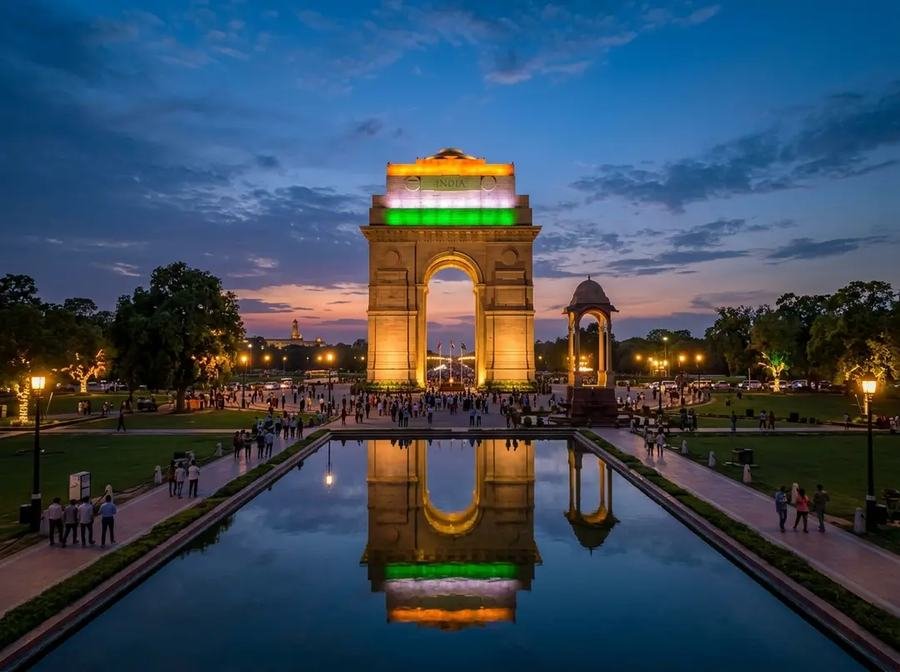
India Gate is a 42-metre arch of sandstone on Kartavya Path, designed by Edwin Lutyens and unveiled in 1931 to honour the Indian soldiers who died in the First World War; more than 13,000 of their names are carved into the stone. By day it is a war memorial. At dusk it becomes Delhi’s living room — families on the lawns, ice-cream sellers, photographers, and the arch lit gold against a darkening sky. There is no ticket and no closing time that matters to a visitor; the nearest metro is Central Secretariat. See our India Gate guide.
Qutub Minar: the Tower That Started Delhi’s Story
Begun in 1193 by Qutb-ud-din Aibak, the Qutub Minar is a 72.5-metre tower of fluted red sandstone — the tallest brick minaret in the world — and the first thing Delhi’s sultans built when they made this plain their capital. It stands in a complex of ruins: the Quwwat-ul-Islam mosque, the first mosque built in India, and the Iron Pillar, a 7-metre column of iron some 1,600 years old that has barely rusted. The tower itself has been closed to climbers for decades; the visit is the complex, the carvings and the pillar, about ninety minutes. It is open every day from sunrise to sunset — some listings run to 8 pm — and the ASI fees match the Red Fort’s. Come late in the afternoon, when the sandstone turns gold. See our Qutub Minar guide.

Humayun’s Tomb: the Garden Tomb the Taj Mahal Learned From
Humayun’s Tomb was raised around 1570 — the first great garden tomb on the subcontinent — and everything the Taj Mahal became starts here: the charbagh garden divided by water channels, the red sandstone against white marble, the great double dome floating over it all. It is quieter than the Taj and often more atmospheric, especially in the late afternoon, when the light warms the stone. The complex holds more than a hundred graves, including the emperor’s. UNESCO listed it in 1993. Open every day from sunrise to sunset; the ASI fees match the Red Fort’s. See our Humayun’s Tomb guide.

Lotus Temple: Nine Sides of Silence
Completed in 1986 to a design by the architect Fariborz Sahba, the Lotus Temple is a Bahá’í House of Worship built as a lotus of twenty-seven free-standing marble petals — and it is one of the most visited buildings in the world. Inside there is no sermon, no idol and no ritual: just a vast, silent hall open to every faith. Come for the quiet after the noise of the monuments, and for the gardens. Entry is free. It is closed on Mondays; hours run about 9 am to 5:30 pm in winter, later in summer. The nearest metro is Kalkaji Mandir. See our Lotus Temple guide.

Akshardham Temple: a Modern Temple Carved Like an Old One
Akshardham opened on 6 November 2005 — built by the BAPS organisation under Pramukh Swami Maharaj — and it is the newest of Delhi’s great sights and the most astonishing to walk through: a pink-sandstone and marble temple carved with some 20,000 figures, 234 pillars and nine domes, a Guinness-record temple. Entry to the grounds is free; the exhibitions and the Sahaj Anand water show after sunset are ticketed. Leave phones, cameras and bags at your hotel — none are allowed inside, and the security queue is long. Closed on Mondays; first entry is at 10 am and last entry at 6:30 pm. Allow three to four hours, and come late in the day so you see the carvings in daylight and stay for the water show. See our Akshardham guide.

Chandni Chowk and Jama Masjid: Old Delhi in One Morning
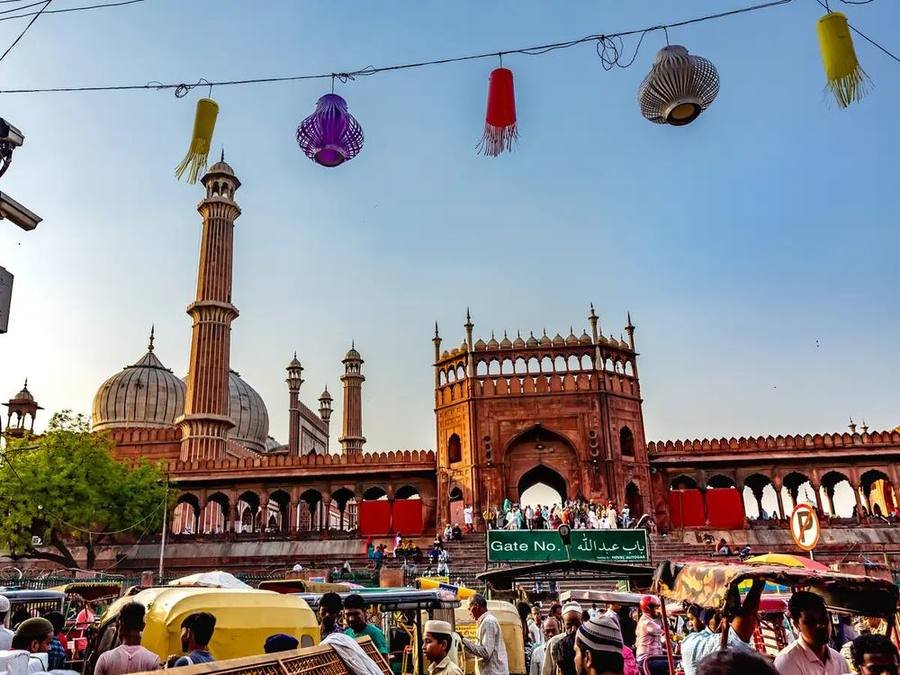
Chandni Chowk was laid out in 1650 by Jahanara Begum, Shah Jahan’s daughter, as the main street of his new capital — a wide avenue with a canal down its centre that caught the moonlight, which is where the name, Moonlight Square, comes from. The canal is gone; the crowd is not. Start at the Red Fort end, take a cycle rickshaw past the spice mountain of Khari Baoli, Asia’s largest wholesale spice market, and stop in Paranthe Wali Gali, where stuffed flatbreads have been fried since the 19th century. At the street’s western end stands the Jama Masjid, built between 1650 and 1656 and still India’s largest mosque, its courtyard holding 25,000 people. Dress modestly at the mosque, and keep the morning for it. Eat as you walk — parathas, kebabs, jalebis, a lassi to finish — and see our Old Delhi guide, our Delhi street food guide, and our parathas, kebabs and chaat guides.
Agrasen ki Baoli: the Stepwell Hiding Beside Connaught Place
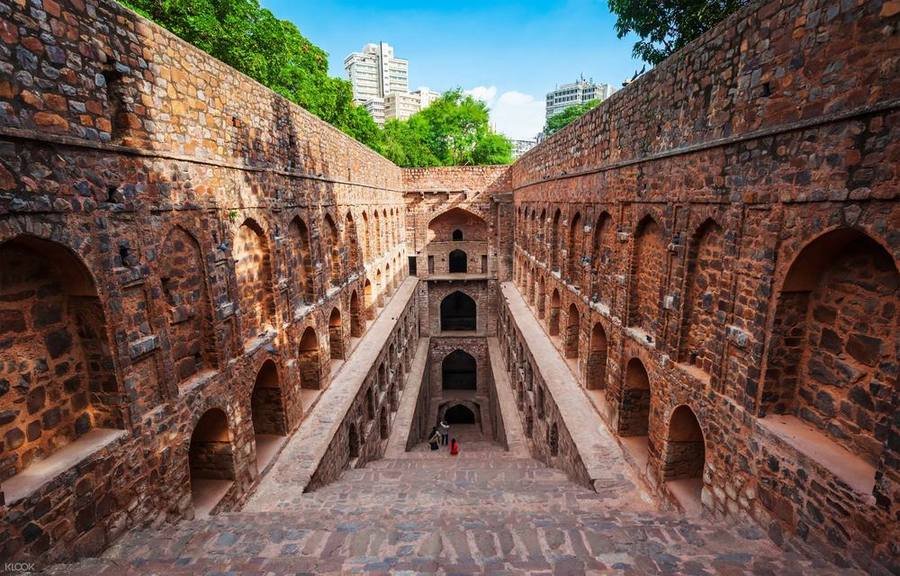
Five minutes’ walk from Connaught Place’s white colonnades, between office towers on Hailey Road, a staircase of 108 stone steps drops into the earth. Agrasen ki Baoli is a 14th-century stepwell — three levels of arched niches closing in on a dark well — and it is the most photogenic thirty minutes in central Delhi. Legend credits it to Maharaja Agrasen; the stonework is Tughlaq-era. Entry is free, it is open from sunrise to sunset, and the lower landings stay several degrees cooler than the street.
Lodhi Art District: India’s First Open-Air Art Gallery
The Lodhi Art District is the newest sight on this list and the most unexpected: the plain government blocks of Lodhi Colony, painted since 2016 by the St+Art India Foundation into India’s first open-air public art district — around fifty building-sized murals by artists from more than 25 countries, each one telling a story about the city. It is free, entirely walkable and nearly empty on weekday afternoons. Walk it slowly, then cross to Lodhi Garden, the 90-acre park of 15th-century Sayyid and Lodhi tombs beside it.

Mehrauli Archaeological Park: a Thousand Years in One Walk
Beside the Qutub Minar, the Mehrauli Archaeological Park spreads over 200 acres of scrub and tombs — more than a hundred monuments from a thousand years of Delhi, from Lal Kot, the city’s first walls, to Mughal tombs and British follies. The highlights are the Jamali Kamali mosque and tomb, with its painted ceilings, the tomb of Balban, and the Rajon ki Baoli stepwell, quieter than Agrasen’s and older in feeling. It is free, unticketed and usually deserted — the calmest two hours in Delhi, and the best place to understand that the city was never built once. Pair it with the Qutub Minar on the same morning; the two share a wall and a metro stop. Go in the morning, with water and good shoes: there is little shade and no ticket counter, no guides and no crowds.

Best Places to Visit in Delhi at Night
Delhi changes after dark, and the best of it is free. India Gate is the first stop: the arch lit gold and the lawns full of families. From there, the Sahaj Anand water show at Akshardham — a 24-minute fountain of water, light and music after sunset — is the one ticketed evening worth planning around. Chandni Chowk is the third: the lanes cool down, the paratha shops and kebab stalls fill, and the Jama Masjid glows against the night sky. The Red Fort’s evening sound-and-light show runs Tuesday to Sunday in season — never on Mondays.
Places to Visit in Delhi in One Day
One day is tight, but it works if you follow the geography instead of a checklist. Morning: the Red Fort at opening, then a rickshaw through Chandni Chowk to the Jama Masjid. Midday: the metro south to Humayun’s Tomb, with lunch on the way. Afternoon: the Qutub Minar, then the Lotus Temple on the way back north. Evening: India Gate at dusk. That is five of the ten places — the honest version of a first day. Our Delhi 3-day itinerary spreads the same route over three unhurried days.
What Is the Best Time to Visit Delhi?
October to March, without argument: clear skies, dry roads and days you can walk in. November to February is the peak, with foggy mornings in December and January. February and March are the mildest months, with Holi colouring the city if your dates line up. Avoid May and June, when the plains regularly cross 45°C, and expect humid monsoon weather from July to September.
How Many Days Do You Need in Delhi?
Three full days covers Old Delhi, central Delhi and the southern monuments without rushing — that is the answer most Delhi guides give, and it is the right one. Two days is workable if you skip the museums and keep to the ten places above. Five days adds Agra or Jaipur as a day trip.
How to Get Around Delhi
Fly into Indira Gandhi International Airport, or arrive by rail at New Delhi, Old Delhi or Hazrat Nizamuddin stations — the Shatabdi and Vande Bharat trains link Delhi to Agra and Jaipur in a few hours. Inside the city, the metro does the work: air-conditioned, cheap and punctual, with stations at the Red Fort (Lal Quila), Chandni Chowk, the Qutub Minar, Kalkaji Mandir for the Lotus Temple, and Akshardham itself. Use it between neighbourhoods and walk or take a rickshaw inside them. For the wider trip, see our best places to visit in India guide and our state-by-state guide, and for the classic extension, our Golden Triangle itinerary.
Watch & Feel the Place
Videos are by their respective creators.
Best Places to Visit in Delhi FAQs
How many days do you need in Delhi?
Three full days covers Old Delhi, central Delhi and the southern monuments without rushing. Two days is workable if you skip the museums; five days adds Agra or Jaipur as a day trip.
What is the best time to visit Delhi?
October to March, with clear skies and days you can walk in. February and March are the mildest months. Avoid May and June, when the plains regularly cross 45°C, and expect humid monsoon weather from July to September.
Is the Red Fort open on Monday?
Yes. The Archaeological Survey of India ended the weekly Monday closure by an order dated 13 February 2026, and the fort opened on Monday 16 February. It is now open all seven days, though the evening sound-and-light show still does not run on Mondays.
What are the best places to visit in Delhi with family?
The Red Fort, India Gate at dusk, the Qutub Minar, Humayun’s Tomb, the Lotus Temple and Akshardham suit every age. Keep one morning for Chandni Chowk’s food lanes.
What are the best places to visit in Delhi at night?
India Gate and Kartavya Path, the Sahaj Anand water show at Akshardham, the food lanes of Chandni Chowk, and the Red Fort’s evening sound-and-light show (Tuesday to Sunday). The ASI monuments close by early evening, so plan the ticketed sights for daylight.
Can I see Delhi in one day?
Yes, for the highlights: the Red Fort and Chandni Chowk in the morning, Humayun’s Tomb at midday, the Qutub Minar and the Lotus Temple in the afternoon, and India Gate at dusk. It is a long day — give it three days if you can.
Ten places, eight centuries, and one rule that no longer applies: Delhi rewards the traveller who groups by neighbourhood and leaves the checklist behind. Start at the Red Fort on any day of the week — even a Monday. Next, read our Delhi street food guide — because here, the table is half the trip.