
Goa · Hotels & Stays
Best Heritage Hotels in Goa: Palaces, Plantation Houses & Colonial Stays

By Beauty of Bharat — India travel guide, every place, every flavour.
Guides covering all 36 States and UTs, researched from official sources and checked at publish time. Corrections welcome — see About Beauty of Bharat.
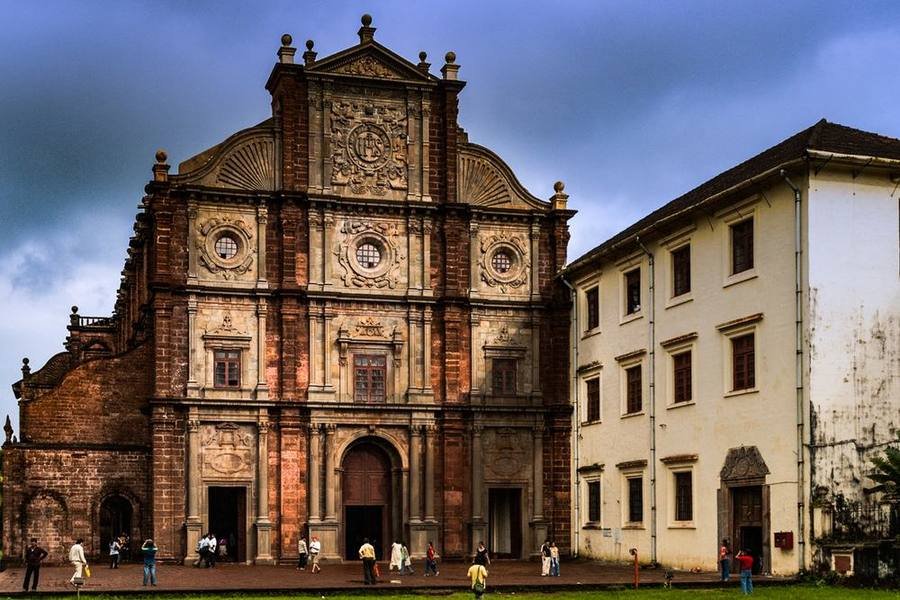
In August 1954, a group of satyagrahis walked into a Portuguese fort at the northern tip of Goa, raised the Indian flag over its ramparts, and held it there for a day before they were captured. Today you can sleep in that same fort, in one of seven rooms inside its walls, overlooking the river and the sea. The history is not behind glass. You stay inside it. This guide gathers the eight best of them, from a 350-year-old manor to the first heritage hotel in Fontainhas. December is Goa’s peak season, so book early — most of these houses have only a handful of rooms.
Goa was ruled by Portugal for more than 450 years, until 1961, and it still looks like nowhere else in India: colour-washed houses with oyster-shell windows, laterite forts on river mouths, and mansions built around cool central courtyards. Every stay below is a real heritage property — a restored Portuguese-era house, a fort, or a colonial retreat in the old capital — not a new resort dressed up in old clothes. The Palácio do Deão in Quepem and the Braganza House in Chandor are not on the list: they are private homes you visit, not places you can sleep in.
Which Are the Famous Heritage Hotels in Goa?
| Hotel | Where | What it is | Best for |
| WelcomHeritage Panjim Inn | Fontainhas, Panjim | 1800s family mansion, Goa’s first heritage hotel | Culture, food and walking the Latin Quarter |
| Surya Kiran Heritage Hotel | Campal, Panjim | 100-year-old villa, five colour-named rooms | A quiet, personal stay in the capital |
| Siolim House | Siolim, North Goa | 350-year-old Hindu-Portuguese manor | Village Goa, slow days, old-world rooms |
| Granpa’s Inn (Hotel Bougainvillea) | Anjuna, North Goa | 200-year-old Portuguese mansion | Families and the Anjuna market scene |
| Fort Tiracol Heritage Hotel | Tiracol, far North Goa | 17th-century fort on a river mouth | History, solitude and sea views |
| Taj Fort Aguada Resort & Spa | Candolim, North Goa | Resort on the ramparts of a 16th-century fort | A grand beach stay with history attached |
| Vivenda dos Palhaços | Majorda, South Goa | 100-year-old Hindu-Portuguese house | Quiet South Goa and long, lazy lunches |
| The Postcard Velha | Old Goa | Six-room colonial retreat on a two-acre estate | Churches, calm and old-capital atmosphere |
Room counts and histories are as reported by the hotels and travel guides at publish time; check dates and availability directly with each property before you book.
WelcomHeritage Panjim Inn: Goa’s First Heritage Hotel
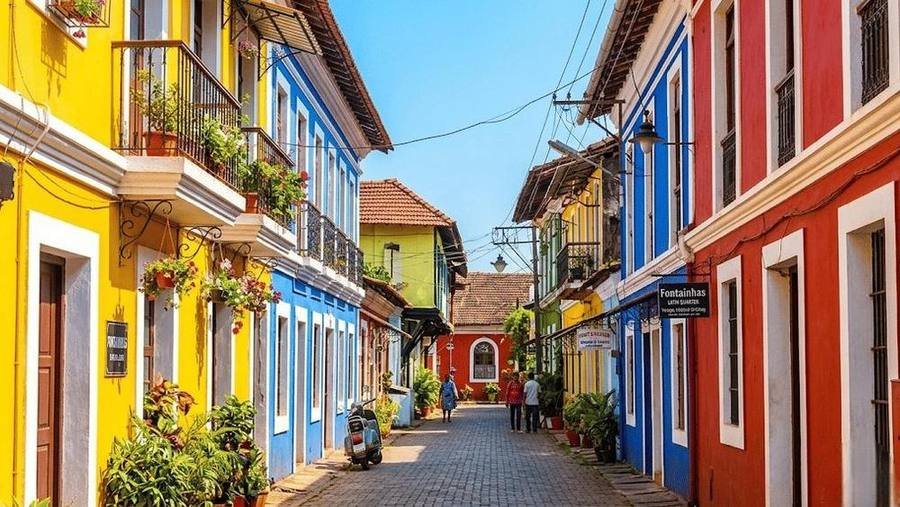
Begin in Fontainhas, Panjim’s Latin Quarter, where the lanes are painted yellow, blue and rose. The Panjim Inn was one of the first mansions built in the quarter, the family home of a landed businessman named Francis Assis D’Silveria, raised in the 1800s. In the 1980s his great-grandson Ajit Sukhija restored the house and began renting out rooms — and it became the first official heritage hotel in Goa. His son Jack runs it now. The hotel has 24 simple rooms with period furniture, and a restaurant serving Goan and Indian food on an airy veranda. See our Panaji guide and our best places to visit in Goa.
Surya Kiran Heritage Hotel: A Colour-Named Villa in Campal
A short walk from Fontainhas, in quiet Campal, stands a bright yellow villa that has welcomed guests since March 2018. Surya Kiran is a 100-year-old Portuguese villa, restored over more than a year by its owners Pritam and Sai Bijlani: high ceilings, arched windows, wide verandahs and the ceramic tiles that are the signature of Portuguese Goa. There are just five rooms, each named in Portuguese for the colour it is painted — Azul in blue, Amarelo in yellow, Pessego in peach, Marrom in brown, and the Verde suite in green. At the centre is a courtyard garden around an old chikoo tree, with a koi pond. See our Panaji guide.
Siolim House: A 350-Year-Old Manor in a North Goan Village
Siolim is a quiet village a few miles west of Mapusa, and its great house is the oldest stay in this guide. Siolim House is a Hindu-Portuguese manor built in 1675, some 350 years old, which once belonged to the governor of Macao. By the 1990s it was dilapidated; Goan businessman Varun Sood restored it room by room, and it became a finalist for the 2001 UNESCO Award for Cultural Heritage Conservation. The house sits in a village rather than on a beach, and that is the point: mornings here are church bells and fishermen on the Chapora river, and the beaches of Anjuna are a short drive away. See our best places to visit in Goa and our Goa state guide.
Granpa’s Inn: A 200-Year-Old Mansion in Anjuna
Anjuna is famous for its Wednesday flea market and cliff-top sunsets, and just back from the beach road, in a green and quiet pocket of the village, stands Granpa’s Inn, also known as Hotel Bougainvillea. The hotel was renovated from a 200-year-old Portuguese-style Goan mansion: high ceilings, thick walls, a mosaic swimming pool in spacious old gardens, and rooms called Ancestral Suites, some with private gardens and some poolside suites with their own outdoor showers. The hotel sits within a short drive of Anjuna, Calangute, Candolim and Baga beaches. See our Anjuna guide and our what to eat in Goa guide.

Fort Tiracol Heritage Hotel: Sleep Inside a 17th-Century Fort
Here is the hook, paid off. At the very northern tip of Goa, where the Tiracol river meets the Arabian Sea, a small hilltop fort has stood since the 17th century, built by Khem Sawant Bhonsle, the Raja of Sawantwadi, to guard the river and the coast. The Portuguese captured it in 1746, rebuilt it in 1764, and held it until December 1961. In 1954, satyagrahis protesting Portuguese rule entered the fort and flew the Indian flag there for a day. Today the restored fort is a heritage hotel, reached by a short ferry across the river — there is no road bridge. Inside the walls are seven rooms and suites, each named after a day of the week. See our Goa in December guide.
Taj Fort Aguada Resort & Spa: A Grand Stay on 16th-Century Ramparts
At the other end of the scale is the grandest stay on this list. The Taj Fort Aguada Resort & Spa stands on the ramparts of the 16th-century Fort Aguada at Sinquerim, Candolim, and it is Goa’s first luxury resort — a beachfront hotel that has hosted heads of state, royalty and film stars over the decades. The resort spreads across 46 acres of landscaped hillside above Sinquerim beach, with 131 rooms, villas and suites in Portuguese style, direct access to the beach, a large outdoor pool, a spa, and four restaurants and a bar. See our Calangute and Baga guide and our Goa in November guide.
Vivenda dos Palhaços: A 100-Year-Old House in Majorda
South Goa moves slower, and Vivenda dos Palhaços is the house that proves it. Tucked down a coconut-fringed cul-de-sac in the village of Majorda, a short walk from one of South Goa’s loveliest white-sand beaches, the Vivenda is a carefully restored Hindu-Portuguese house about a hundred years old: a Portuguese mansion built in 1929 at the front, and an older Hindu house behind it, built of thick rammed-earth walls. Every room is named after a place in India the owning family loved — Konnagar and Alipore after old Calcutta, Madras and Ooty after Tamil Nadu — each with its own colour and furniture, down to a cast-iron bathtub saved from the Royal Bombay Yacht Club. There are no televisions or telephones in the rooms. One caution: the house has listed seasonal closures, so check its dates before you book. See our Goa state guide and our famous food of Goa.
The Postcard Velha: Six Rooms in Old Goa
The quietest stay in this guide is also the closest to Goa’s history. The Postcard Velha sits on the two-acre Champakali estate in Old Goa, the former Portuguese capital the Portuguese called Velha Goa, a stone’s throw from the Basilica of Bom Jesus, where the relics of St Francis Xavier rest. The hotel has just six rooms in sun-kissed villas and suites, each with a private balcony looking over gardens and the valley beyond, and at the heart of the estate stands a 300-year-old banyan tree. The luxury is the seclusion, the pool, the spa, and Goan-Portuguese food served in dining pavilions with views of the Mandovi. See our Old Goa guide and our Feast of St Francis Xavier guide.
Heritage Houses to Visit, Not Stay In
Two of Goa’s grandest heritage houses do not take overnight guests, and it is worth knowing before you plan around them. The Palácio do Deão in Quepem, an 18th-century mansion built in 1787 by the founder of Quepem town, is a private home restored by its owners Ruben and Celia Vasco da Gama, who welcome visitors for a tour and a by-appointment Goan-Portuguese lunch — call ahead. The Braganza House in Chandor, the biggest Portuguese mansion in Goa, is likewise a private family home, open for visits rather than stays, as is the Figueiredo House in Loutolim.
How to Choose a Heritage Hotel in Goa
Choose by what you want the trip to feel like, not by the size of the building. For culture and walking, stay in Panjim: the Panjim Inn puts you in Fontainhas itself, and Surya Kiran puts you in quiet Campal, ten minutes away on foot. For village Goa and slow mornings, Siolim House or Vivenda dos Palhaços, one north and one south, are the pair to compare. For the beach with a family, Granpa’s Inn in Anjuna or the Taj at Fort Aguada cover the two ends of the north’s beach belt. For history itself, nothing beats sleeping inside Fort Tiracol — and for the old capital at its calmest, the Postcard Velha in Old Goa. Most of these houses have between five and twenty-four rooms, so December books out early.
What Is the Best Time to Visit Goa?
November to February is the window, and December is the peak of it: dry days, calm seas, and the state at its most festive. The Feast of St Francis Xavier fills Old Goa in early December, Christmas lights up the villages, and the Serendipity Arts Festival fills Panjim in mid-December. That is also when heritage hotels are fullest and hardest to book, so reserve early. January and early February are calmer and still dry. From June to September the monsoon turns Goa lush and slow, and some small guesthouses run reduced hours or shut for the season. See our Goa in December, Christmas in Goa 2026 and Goa Carnival guides.
Watch & Feel the Place: Goa’s Heritage on Film
Videos are by their respective creators.
Best Heritage Hotels in Goa FAQs
Which are the famous heritage hotels in Goa?
The best-known are the WelcomHeritage Panjim Inn in Fontainhas, Siolim House in Siolim, Fort Tiracol Heritage Hotel at the far north, the Taj Fort Aguada Resort & Spa in Candolim, Granpa’s Inn in Anjuna, Vivenda dos Palhaços in Majorda, Surya Kiran Heritage Hotel in Campal, and The Postcard Velha in Old Goa.
What is the best time to visit Goa?
November to February, when the weather is dry and sunny. December is the festive peak, with the Feast of St Francis Xavier, Christmas and the Serendipity Arts Festival, so heritage hotels book out early. January and early February are calmer and still dry, and October is a good shoulder-season choice.
Where should I stay in Goa for heritage?
Stay in Panjim for the Latin Quarter: Fontainhas for the Panjim Inn, or Campal for Surya Kiran. Stay in Old Goa, at The Postcard Velha, for the UNESCO-listed churches on your doorstep. For village heritage, choose Siolim in the north or Majorda in the south, and for a fort stay, head to Tiracol or Fort Aguada.
How many days are enough for Goa?
Four to five days covers Goa well: two days in the north for the beaches, Anjuna and the forts, a day in Panjim and Fontainhas, and a day in Old Goa and the south. Add a day if you stay in a heritage house itself, because the slow mornings are half the experience.
Is December a good time to visit Goa?
Yes — December is Goa at its most festive, with dry weather, Christmas in the villages, the Feast of St Francis Xavier in Old Goa and the Serendipity Arts Festival in Panjim. It is also the busiest month of the year, so book heritage hotels well ahead.
Goa’s heritage hotels are not a theme — they are the houses, forts and mansions the state actually lived in, still standing and still taking guests. Sleep in a fort where a flag flew for a day, or eat lunch on a veranda in the Latin Quarter, and Goa stops being a beach holiday and becomes a place with a past you can touch. Next, read our Goa in December guide and our Goa state guide.
Plan your Goa trip
Eight heritage stays, from a 17th-century fort to a six-room retreat in the old capital — pick your corner of Goa and book early for December.
Goa state guide →