
Offbeat Place · South India
Pattadakal: Where North and South Temples Meet

By Beauty of Bharat — India travel guide, every place, every flavour.
Guides covering all 36 States and UTs, researched from official sources and checked at publish time. Corrections welcome — see About Beauty of Bharat.
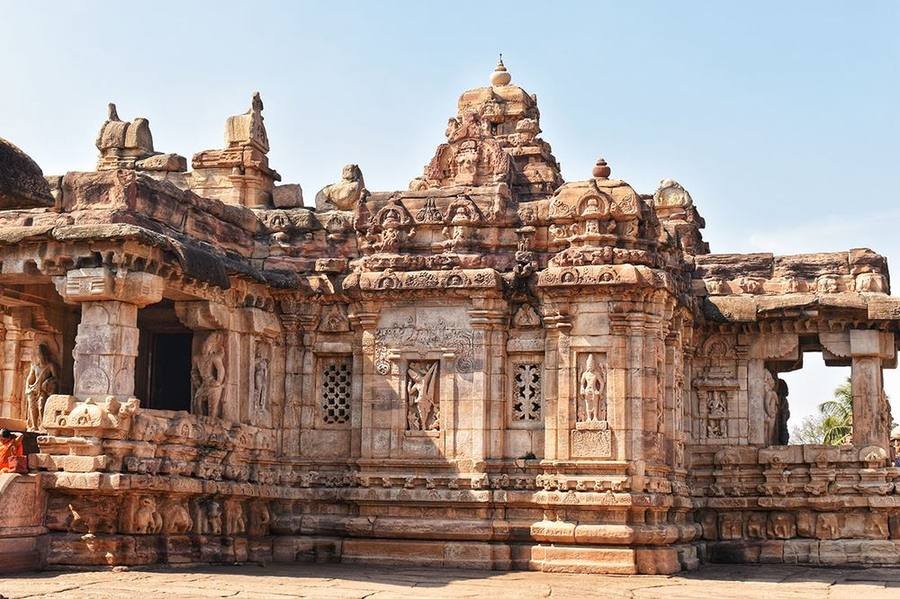
Pattadakal, in northern Karnataka on the Malaprabha River, was the ceremonial coronation place of the Chalukya kings, and its temple group is now a UNESCO World Heritage Site. Here the Virupaksha and Mallikarjuna temples rise in the southern Dravida style, while nearby shrines carry northern Nagara towers, all carved with epics, gods and courtly life. It is Badami and Aihole's ideas brought to confident, monumental maturity in honey-toned stone. The group stands in neat lawns maintained by the Archaeological Survey of India, yet the surrounding village fields and river ghats keep it rooted in the agricultural landscape its royal builders knew well.
Despite its importance, Pattadakal stays surprisingly quiet, partly because it is a village site rather than a town and partly because many itineraries squeeze it into an hour. Stay longer and the mood changes: garden lawns, river light and near-empty carved halls let you study sculpture in peace. Local life continues around the enclosure, and a slow visit here feels less like ticking off a monument and more like reading a royal chapter undisturbed. Evenings are especially fine, when day visitors leave, the stone warms in low light and local families arrive at the river, restoring the site to the living place it has always been.
Pattadakal at a Glance
| State | Karnataka |
| Region | South India |
| Known for | Pattadakal is known for Chalukyan heritage at its most accomplished, a riverside group of temples where… |
| Gateway | Badami railway station & Hubballi airport |
| Best time to visit | October to February offers pleasant light and comfortable walking around the open temple lawns. |
| Time needed | half a day, with Aihole and Badami |
| State capital | Bengaluru |
| More offbeat in Karnataka | 4 more places in this guide |
Why Pattadakal Stays Off the Beaten Path
Pattadakal is known for Chalukyan heritage at its most accomplished, a riverside group of temples where northern Nagara and southern Dravida towers stand side by side, built for royal coronations beside the Malaprabha River. Pattadakal has stayed off the standard circuit because it sits a little beyond the usual route through Karnataka — close enough to reach in a day, far enough to keep its quiet.
Presented honestly as lesser-known, never as an “undiscovered secret”: Pattadakal is known and loved locally, and facilities are plainer than in Bengaluru. Go for the place itself — the slower mornings, the unhurried conversations, the sense of Karnataka without a crowd in front of it — and it will not disappoint.
Things to Do in Pattadakal
The highlights below are the reasons to make the detour. None of them need a packed schedule — Pattadakal rewards travellers who pick two or three and linger over them.
Enter the Virupaksha Temple
Explore the grandest temple here, modelled on Kanchipuram's Kailasanatha, with richly carved pillars narrating scenes from the Ramayana and Mahabharata.
Compare Mallikarjuna Temple
Study its southern tower and fine sculpture beside Virupaksha, noticing how two royal temples interpret similar themes differently.
Find the Nagara Shrines
Seek out the northern-style towers among the group to see two great Indian temple traditions standing within a single enclosure.
Walk to the Papanatha Temple
Visit this slightly separate temple for its longer hall and dense carving, a rewarding extension beyond the main group.
Sit by the Malaprabha
Pause near the river that framed royal coronations here, taking in the temples as part of a living sacred landscape.
Best Time to Visit Pattadakal
October to February offers pleasant light and comfortable walking around the open temple lawns. The Malaprabha looks fullest after the monsoon, when greenery softens the stone, while summer visits are best kept to early morning or late afternoon.
Across Karnataka the wider season runs like this: October–February for many circuits; coastal and hill weather varies. Time Pattadakal inside that window and you get the place at its best — and, this being the offbeat list, usually without the peak-season pressure of the headline stops.
How to Reach Pattadakal
Pattadakal is reached by road from Badami as part of the Chalukya circuit, with Badami the nearest railhead and Hubballi the main air and rail gateway for the region. Most travellers hire a car to combine Pattadakal, Aihole and Badami comfortably.
Most travellers fold Pattadakal into a wider Karnataka trip rather than coming only for it — paired with Bengaluru or the state guide's headline stops, it becomes the quiet chapter of the journey.
Pattadakal — Transport at a Glance
| Nearest airport | Hubballi Airport (HBX) is the main air gateway for the region |
| Nearest railway station | Badami is the nearest railhead |
| By road | By road from Badami on the Chalukya circuit; most travellers hire a car to combine Pattadakal, Aihole and Badami comfortably |
| Getting around | The UNESCO temple group is walked in one compact enclosure; your car links the three Chalukya capitals |
More Offbeat Places in Karnataka
Pattadakal is one of 5 offbeat corners in the Karnataka state guide — pair it with a sibling below for a slower, deeper trip.
Badami
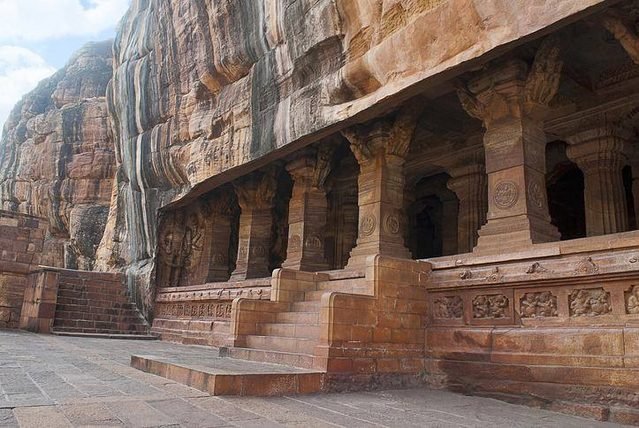
Known for: cave temples and sandstone cliffs. Nothing about Badami is staged for visitors. Come outside the short peak window and you may share its best hours with almost no one — that, more than any single sight, is the luxury here.
Aihole

Known for: early temple architecture. Aihole has stayed off the standard circuit because it sits a little beyond the usual route through Karnataka — close enough to reach in a day, far enough to keep its quiet.
Agumbe

Known for: rainforest and sunset landscapes. Agumbe has stayed off the standard circuit because it sits a little beyond the usual route through Karnataka — close enough to reach in a day, far enough to keep its quiet.
Dandeli

Known for: river and wildlife. It helps that Dandeli asks a little more of the traveller — a slower road, a plainer stay, a plan made around seasons rather than weekends — and repays the effort with room to breathe.
While You Are in Karnataka
Start from the full Karnataka travel guide for the complete picture. Headline destinations to pair with this trip: Bengaluru · Mysuru · Hampi. And eat the state properly while you are there — Bisi bele bath · Mysore pak lead the table in the Food Atlas.
Frequently Asked Questions
What is Pattadakal known for?
Pattadakal is known for Chalukyan heritage at its most accomplished, a riverside group of temples where northern Nagara and southern Dravida towers stand side by side, built for royal coronations beside the Malaprabha River. It sits in this atlas on Karnataka's offbeat list — the state's quieter, lesser-visited side.
What is the best time to visit Pattadakal?
October to February offers pleasant light and comfortable walking around the open temple lawns. The Malaprabha looks fullest after the monsoon, when greenery softens the stone, while summer visits are best kept to early morning or late afternoon. For Karnataka as a whole, October–February for many circuits; coastal and hill weather varies.
How do I reach Pattadakal?
Pattadakal is reached by road from Badami as part of the Chalukya circuit, with Badami the nearest railhead and Hubballi the main air and rail gateway for the region. Most travellers hire a car to combine Pattadakal, Aihole and Badami comfortably. The usual gateway is Badami railway station & Hubballi airport.
How many days do I need for Pattadakal?
Plan on half a day, with Aihole and Badami. Most travellers pair Pattadakal with Badami and Aihole or the headline stops in the Karnataka state guide rather than rushing it as a whistle-stop.
What makes Pattadakal different from Badami and Aihole?
Badami is famed for cave temples and Aihole for early experiments, while Pattadakal shows the mature result: large, finished structural temples built for royal coronations, where northern and southern styles stand side by side in one UNESCO-listed riverside group.
Every Place. Every Flavour.
Pattadakal is one of 154 offbeat places in this atlas — alongside 36 states and union territories, 188 destinations and 213 regional dishes, each with its own full guide page.
Explore all 36 states Read the blog